Filters

6 filtered results

Clear all filters
Favorites
With answer key
Interactive

6 filtered results

Difficulty Level

Grade


Unlock your child’s potential with our vibrant Vocabulary Development Letter Sounds Worksheets for Ages 3-7! These engaging, printable activities are designed to enhance early learning by focusing on essential skills: recognizing letter sounds, building vocabulary, and boosting reading confidence. Perfect for preschool and early elementary students, our worksheets incorporate fun illustrations and interactive exercises that make learning enjoyable and effective. Give your child a head start in their educational journey by fostering a strong foundation in phonics and vocabulary, all while sparking their curiosity and love for reading! Discover more at Kids Academy and support your child’s academic growth.

Check out this FREE Trial Lesson on Letter Sounds for age 3-7!

Review

Favorites
With answer key
Interactive
  • 3-7
  • Vocabulary development
  • Letter Sounds
Letter N and O Sounds Worksheet

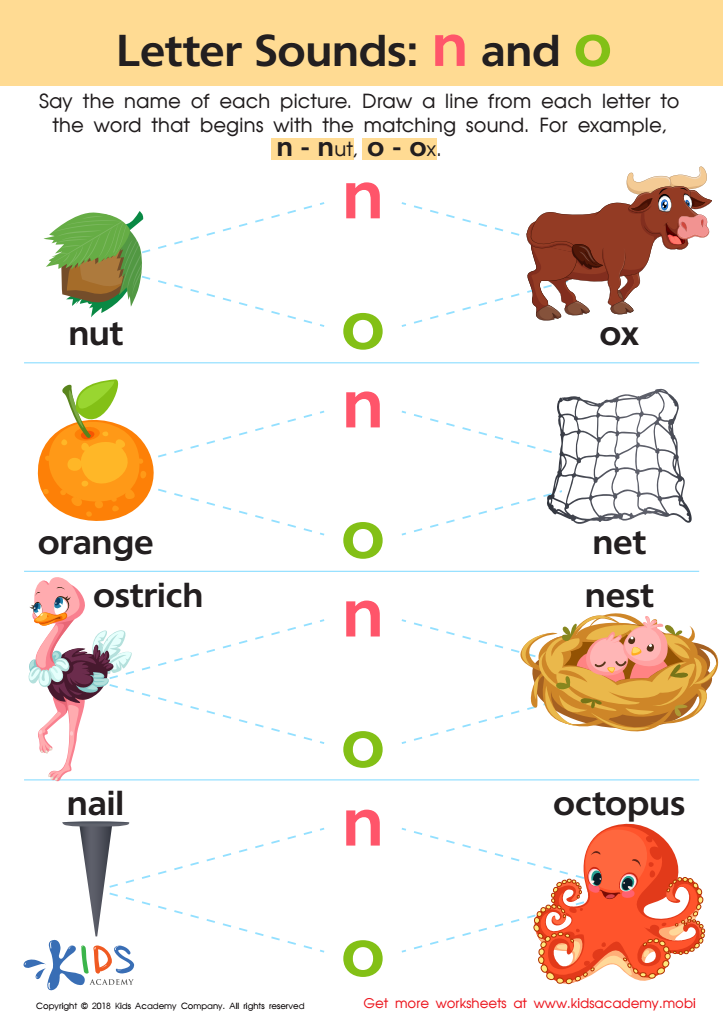
Letter N and O Sounds Worksheet

Help your preschooler learn to recognize the N and O letter sounds with this vibrant worksheet from Kids Academy! Have them say the name of each picture and listen for N or O. Trace the dotted line from letter to its match to complete the phonics review. It's a fun way to help them master the difference between the two sounds!
Letter N and O Sounds Worksheet
Worksheet
Letter f sounds worksheet

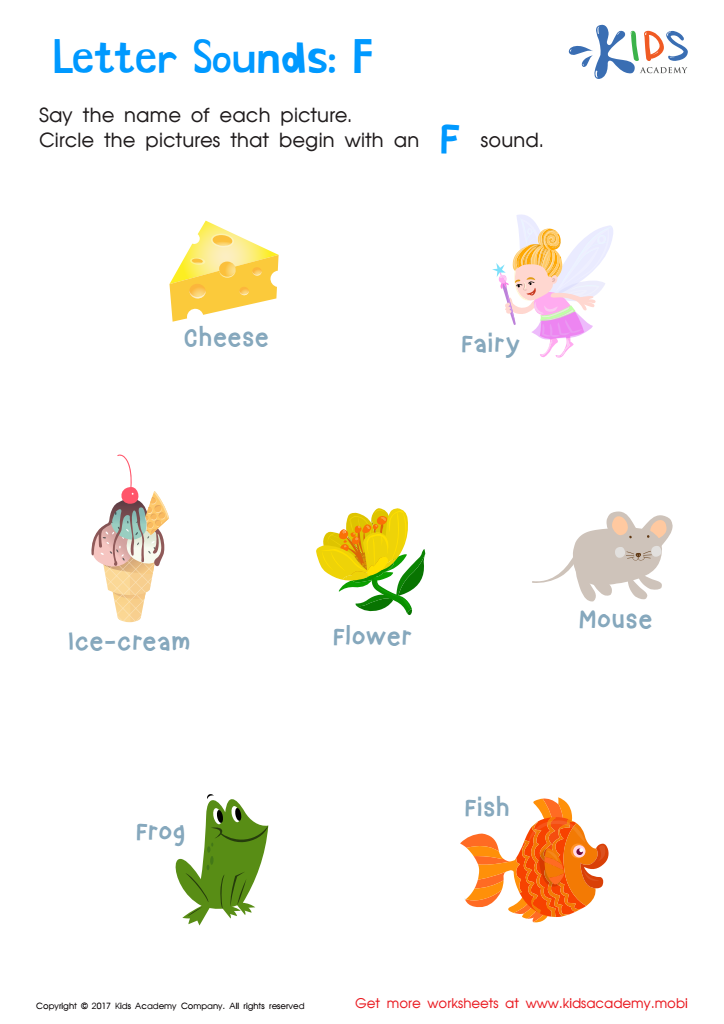
Letter F Sounds Worksheet

Kids will practice identifying 'f' words, tracing, and coloring the letter F for a great way to learn phonics. Help your child discover the wonders of the letter 'F' with this fun worksheet! Kids will practice identifying 'F' words, tracing and coloring the letter, and building early reading skills. Stimulate their learning and let them connect letter sounds to words they know. An enjoyable way to practice phonics!
Letter F Sounds Worksheet
Worksheet
Identify the Written Words Worksheet

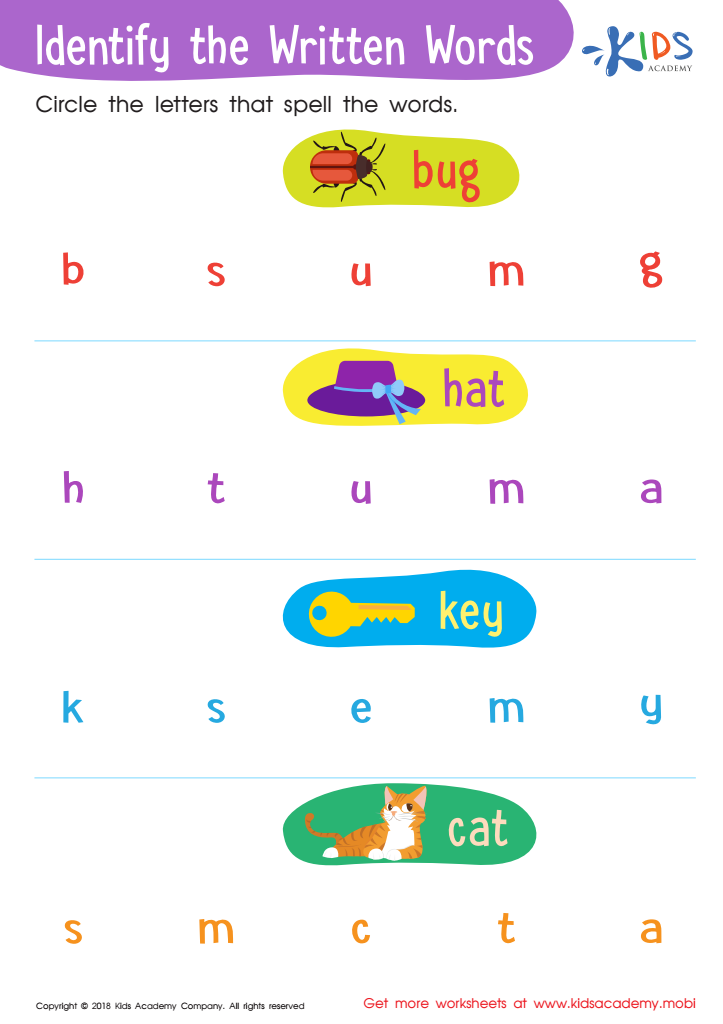
Identify the Written Words Worksheet

Have your students identify the objects on the printout, then spell the words. If they already know how to spell, this exercise should be easy. Help them circle the correct letters from the set to spell out the words. This is a great way to reinforce reading and spelling skills. Max 80 words.
Identify the Written Words Worksheet
Worksheet
Letter R and S Sounds Worksheet

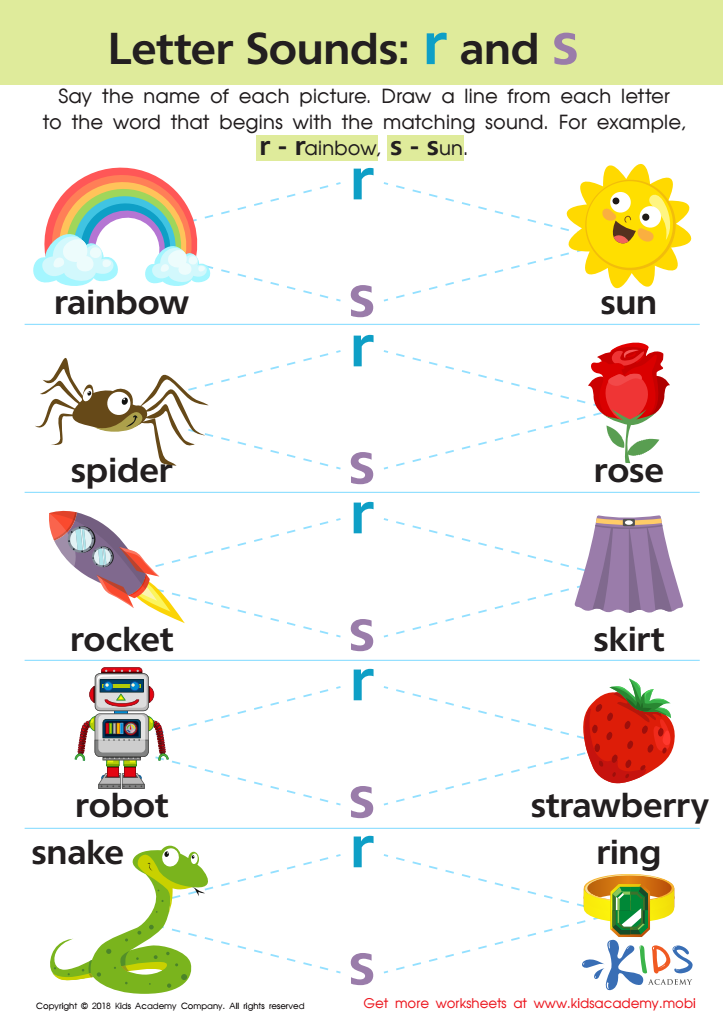
Letter R and S Sounds Worksheet

Kids Academy's phonics worksheet is full of fun and color! Help your child name the pictures and read the words under each one. Does it begin with an R or S? Then, use a pencil to trace the dotted line from the letter to its image. It's a great way to practice phonics skills!
Letter R and S Sounds Worksheet
Worksheet
Finding the Sounds Worksheet

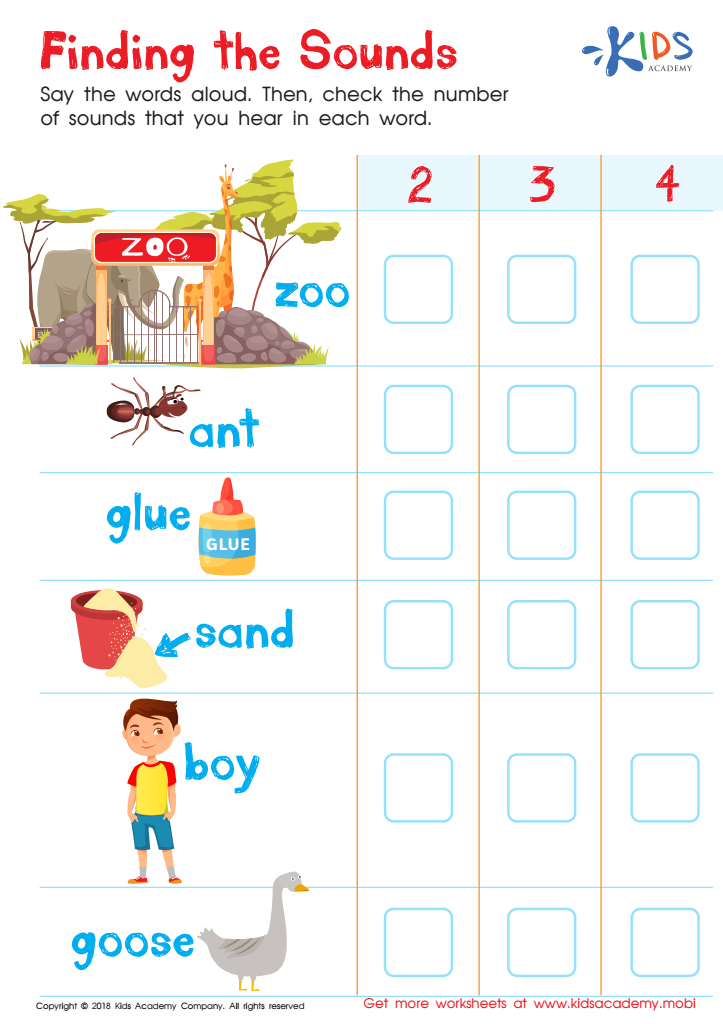
Finding the Sounds Worksheet

This free colorful worksheet assists children in learning words and breaking them down into sounds. It boosts auditory discrimination, phonological awareness and fine motor skills. Picture clues help them read confidently, and they can check the appropriate boxes to practice their reading skills.
Finding the Sounds Worksheet
Worksheet
Letter D and E Sounds Worksheet


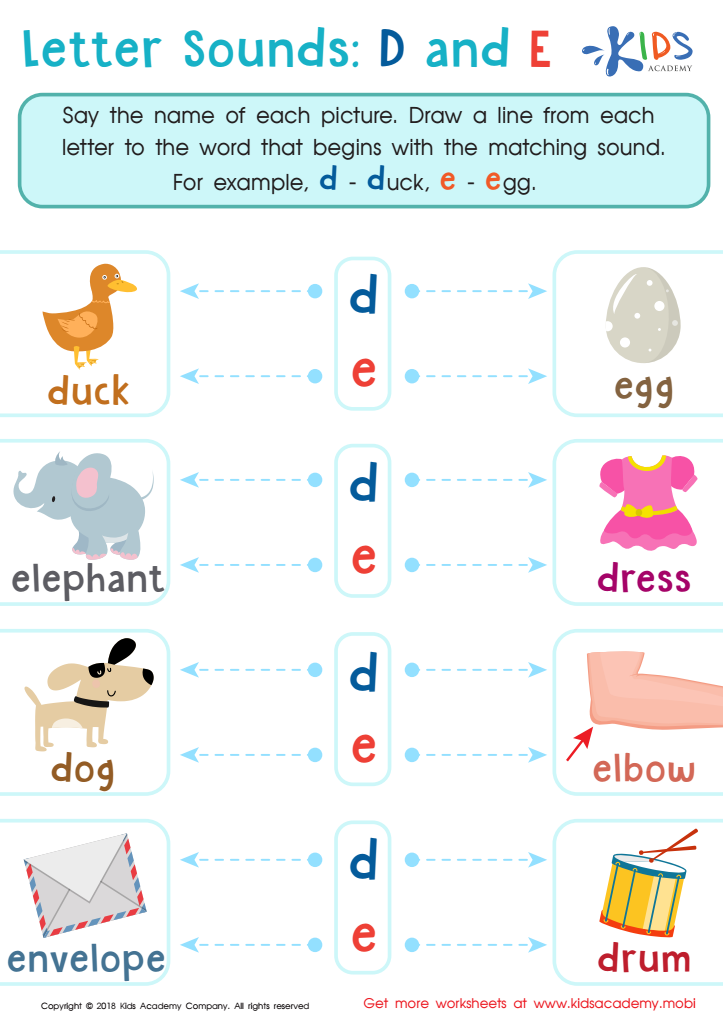
Letter D and E Sounds Worksheet

Kids can use picture clues and visual discrimination to name cheerful pics and isolate the beginning sound. This free PDF worksheet will help them develop phonological awareness, differentiate between "D" and "E", and hone fine-motor skills. It'll also boost their confidence as they become readers.
Letter D and E Sounds Worksheet

Worksheet


Vocabulary development and understanding letter sounds in children ages 3-7 are foundational to their literacy skills, crucial for academic success and effective communication. During these formative years, a child's brain is highly receptive to learning new words and sounds, establishing cognitive connections that impact their language proficiency. Vocabulary development is not merely about learning new words; it enhances comprehension, critical thinking, and expressive abilities, allowing children to articulate ideas clearly and understand others.

Knowledge of letter sounds is integral to phonemic awareness, a predictor of later reading success. Recognizing that letters have specific sounds helps children decode unfamiliar words, boosting their reading fluency and confidence. This phonological skill forms the cornerstone of phonics-based reading instruction, facilitating smoother transitions into more complex literacy tasks.

Parents and teachers are pivotal in nurturing these skills through engaging, age-appropriate activities. Storytelling, interactive reading, phonics games, and conversations enrich a child’s linguistic environment, making learning enjoyable. Attentive and proactive engagement in a child's vocabulary and phonemic growth not only paves the way for academic achievements but also fosters a lifelong love for reading and learning. Prioritizing these elements equips children with the essential tools to excel both inside and outside the classroom.