Letter identification Phonics Worksheets for Ages 3-7
3 filtered results
-
From - To
Discover engaging Letter Identification Phonics Worksheets designed for children ages 3-7! Our fun, interactive worksheets help young learners develop critical letter recognition skills through vibrant illustrations and easy-to-follow activities. Ideal for preschool and early elementary classrooms, these resources reinforce phonics fundamentals, promoting confidence in reading and writing. Each worksheet encourages kids to identify, trace, and color letters, making learning enjoyable and effective. Tailored to meet developmental milestones, our Letter Identification worksheets provide a solid foundation for language skills. Empower your child’s literacy journey today with our thoughtfully crafted, printable worksheets that foster a love for learning from an early age!
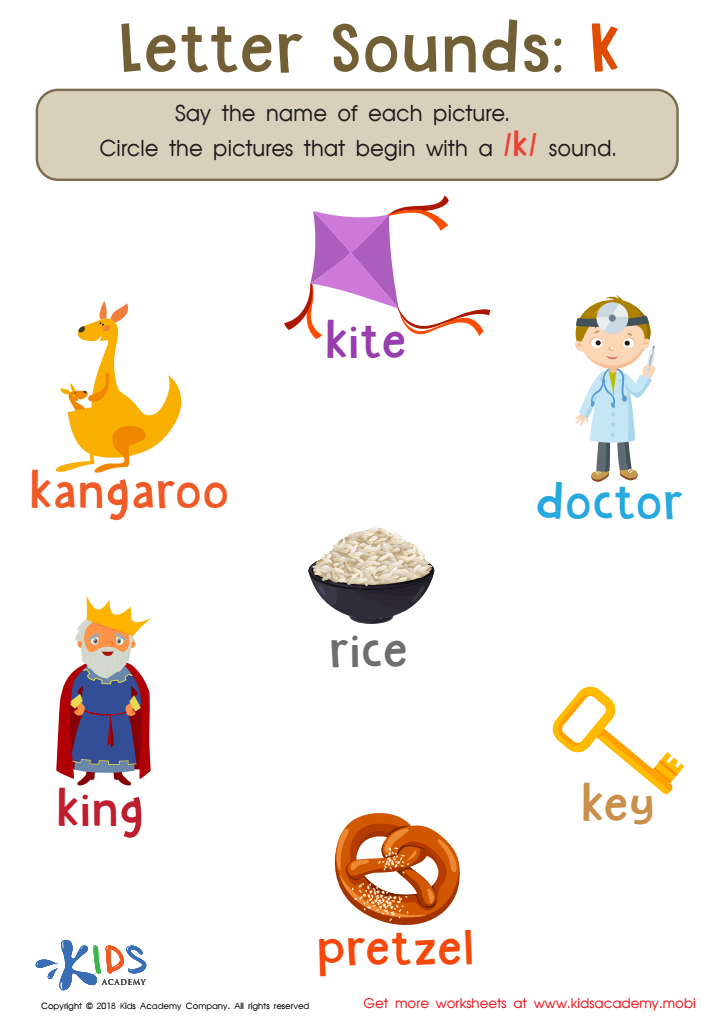
Letter K Sounds Worksheet
 Assign to My Students
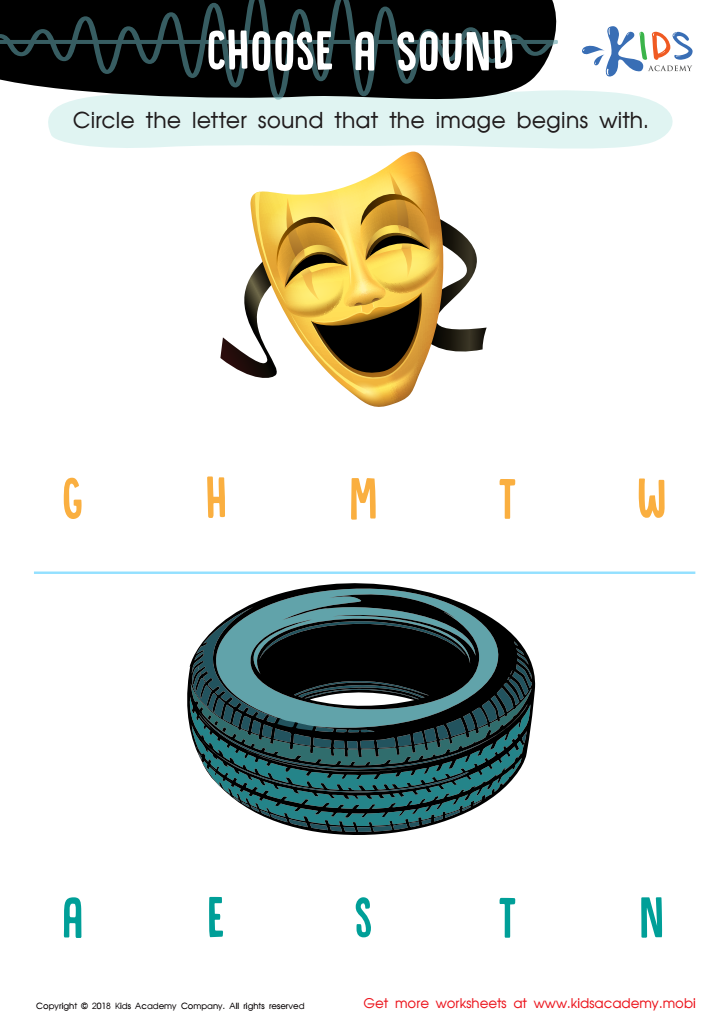
Choose a Sound Worksheet
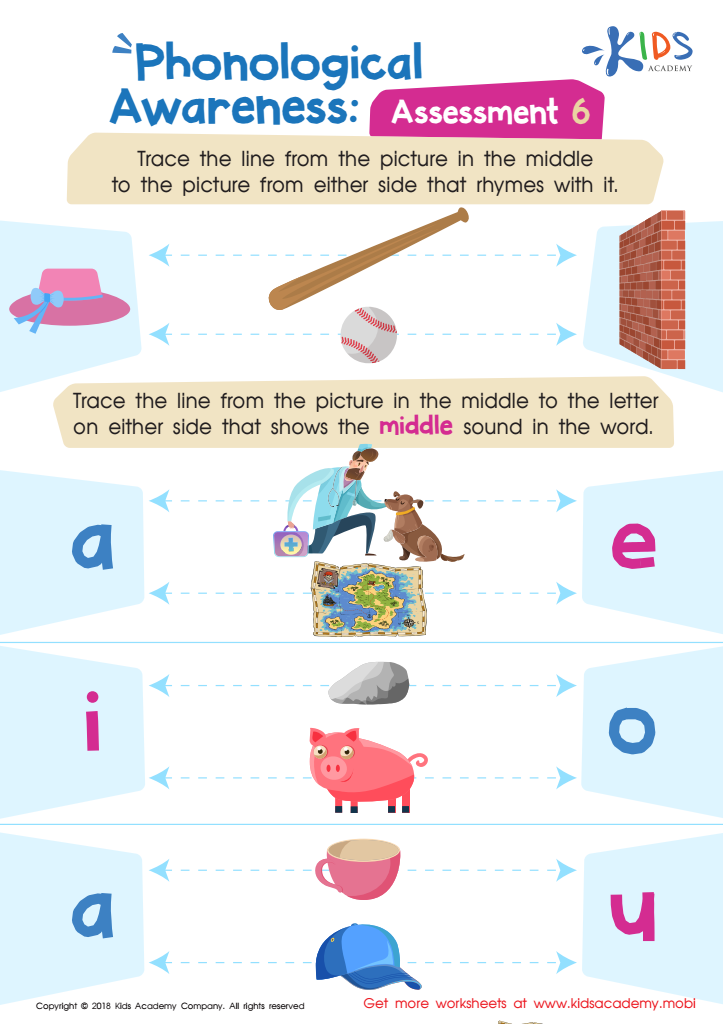
Phonological Awareness: Assessment 6 Worksheet








Letter identification and phonics are crucial for children aged 3 to 7, forming the foundation of literacy development. Early exposure to letter identification helps children recognize letters and their sounds, which is essential for reading and writing. When children can identify letters and associate them with their corresponding sounds, they begin to understand that letters represent sounds in spoken language, a concept crucial for learning to read.
For parents and teachers, supporting letter identification and phonics promotes effective communication skills and boosts confidence in young learners. This stage also fosters a love for reading by connecting letters to stories and activities, making learning enjoyable. Mastery of these skills sets the groundwork for more advanced literacy skills, enhancing academic success in the long run.
Moreover, understanding phonics aids in spelling and decodable reading, allowing children to unlock new words independently. Parents and teachers can engage children through interactive games, songs, and storytelling, transforming these skills into fun learning experiences. All in all, prioritizing letter identification and phonics is vital, as it equips children with essential tools for effective communication, critical thinking, and overall academic achievement.







