Long vowel recognition Phonics Worksheets for Ages 3-7
3 filtered results
-
From - To
Discover engaging Long Vowel Recognition Phonics Worksheets perfect for ages 3-7 at Kids Academy. Our expertly designed resources aid young learners in identifying and pronouncing long vowel sounds, building crucial reading skills. Featuring vibrant illustrations and diverse activities, these worksheets make learning fun and effective. Ideal for home or classroom use, they enhance phonemic awareness and boost literacy confidence. Nurture your child's reading journey with our comprehensive collection suited for early readers. Delight in watching them master new skills with our reliable and educational materials. Explore our collection online and elevate your child's phonics learning today!
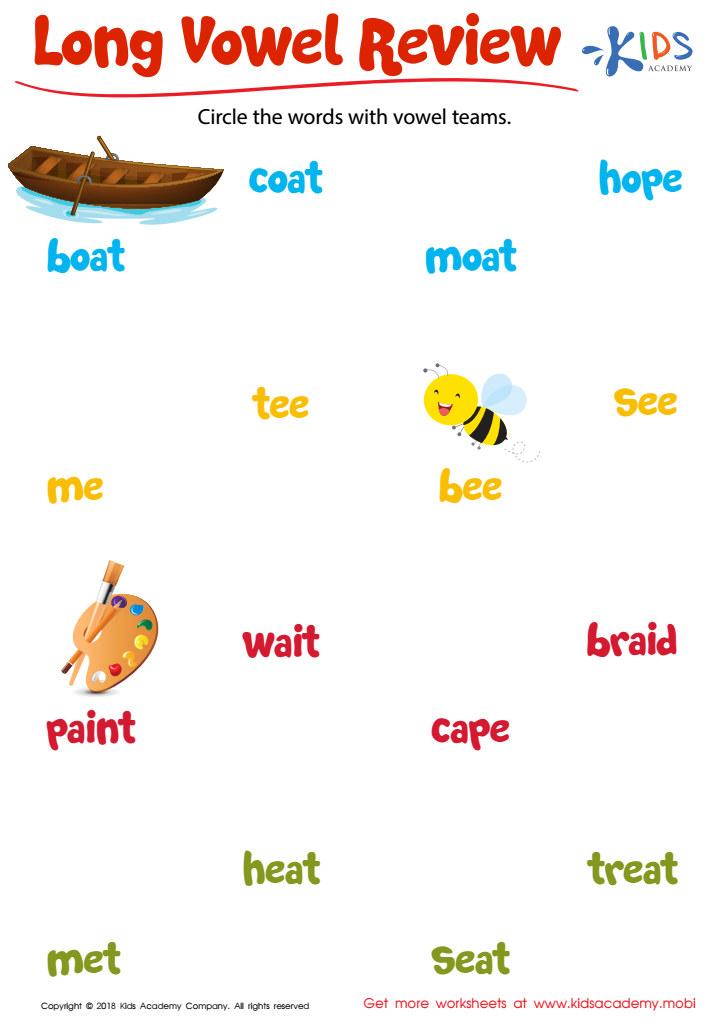
Long Vowel Review Worksheet
 Assign to My Students
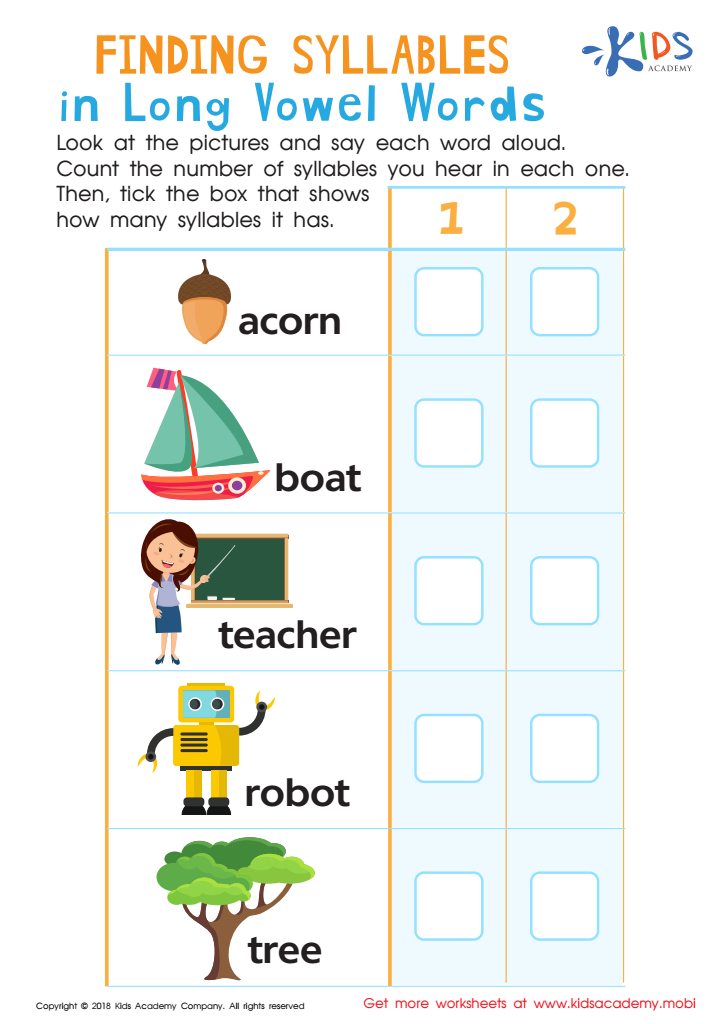
Finding Syllables in Long Vowel Words Worksheet
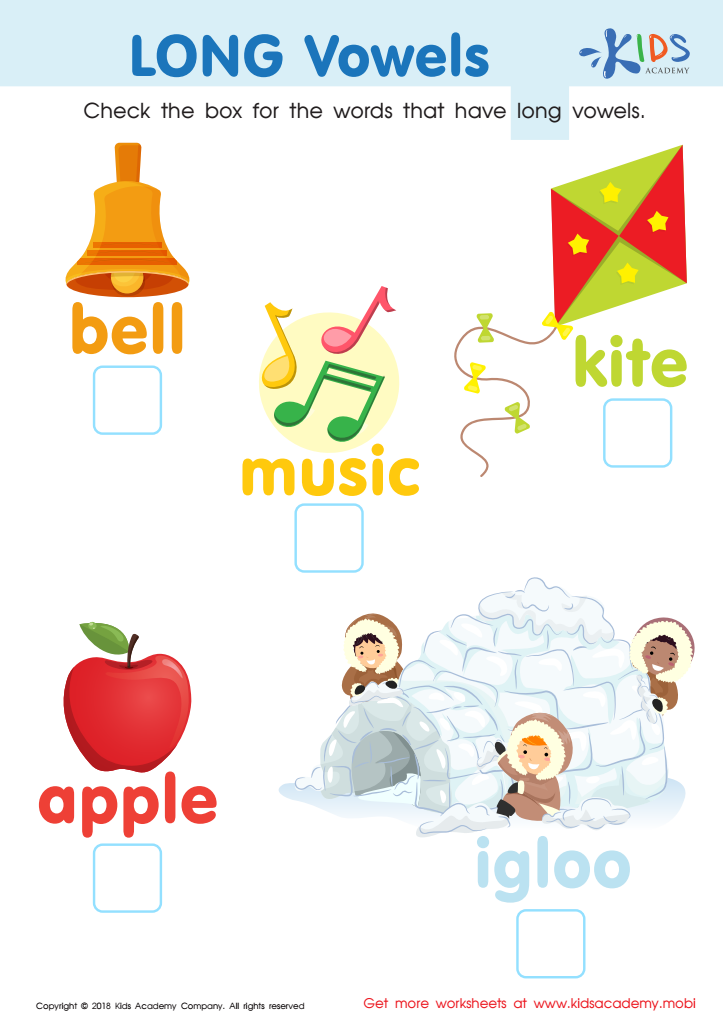
long vowels Worksheet








Long vowel recognition phonics is crucial for children aged 3-7 as it forms the foundation of their reading and writing skills. During these early years, children's brains are highly receptive to language acquisition, making it an ideal time to introduce important phonetic concepts. Recognizing long vowels helps kids differentiate between similarly spelled words, enhancing their decoding ability, which is crucial for fluent reading.
When children understand the difference between short and long vowels, they become better equipped to tackle more complex words and comprehend reading material effectively. For example, knowing that “bite” has a long "i" sound compared to "bit" can significantly change the meaning they derive from sentences. This skill translates to improved literacy, a strong vocabulary, and better academic performance.
Furthermore, mastering phonics, including long vowels, boosts children's confidence. Early success in reading promotes a positive attitude towards learning, encouraging them to engage actively in their education. Parents and teachers who prioritize long vowel recognition are investing in a child's ability to communicate clearly, both in writing and speech.
In summary, long vowel recognition is a fundamental component of early literacy that aids in reading proficiency, spelling accuracy, and overall language development, making it essential for children's academic and personal growth.







