Phonics practice Short Vowels Worksheets for Ages 3-7
4 filtered results
-
From - To
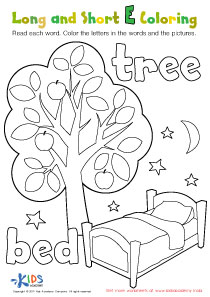
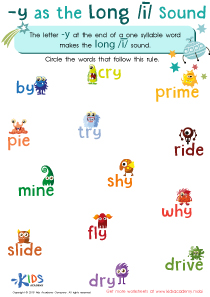
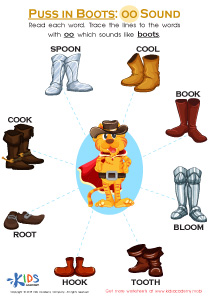
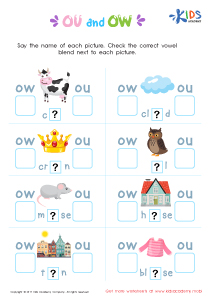
Enhance your child's reading skills with our Phonics Practice Short Vowels Worksheets, designed specifically for kids aged 3-7. These engaging worksheets help young learners recognize and master short vowel sounds—an essential foundation for reading and literacy. With various fun activities, including coloring, tracing, and matching games, children will enjoy practicing their phonics while developing critical thinking and fine motor skills. Our resources are ideal for both classroom and home environments, ensuring that learning is enjoyable and effective. Join us on this exciting journey to improve phonics skills and boost your child's confidence in reading!
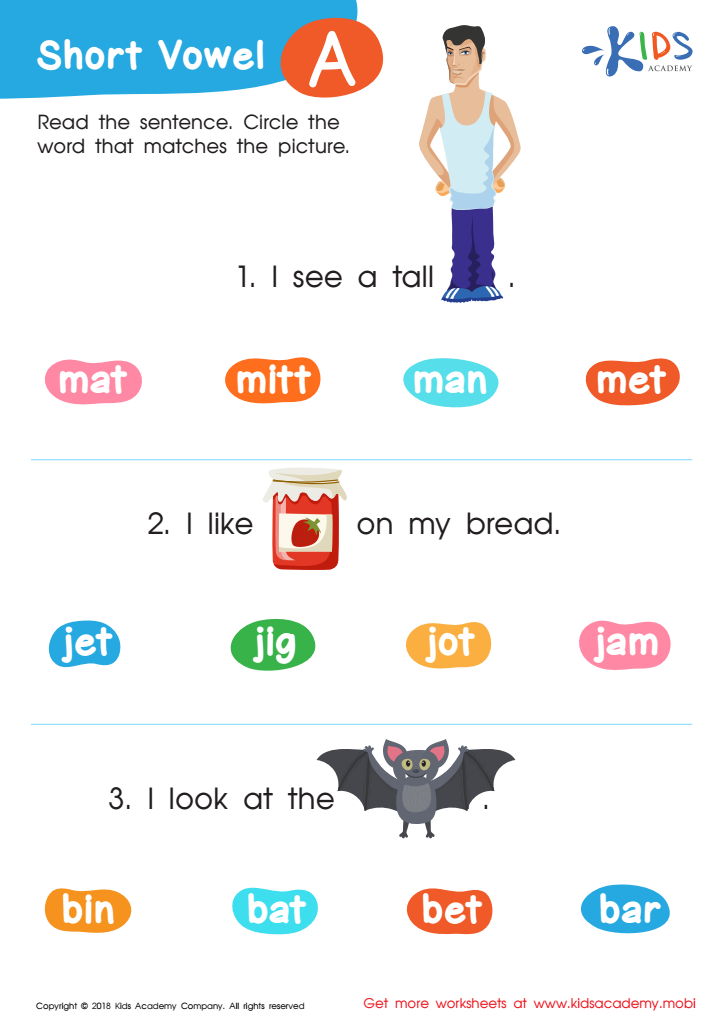
Short Vowel /a/ Worksheet
 Assign to My Students
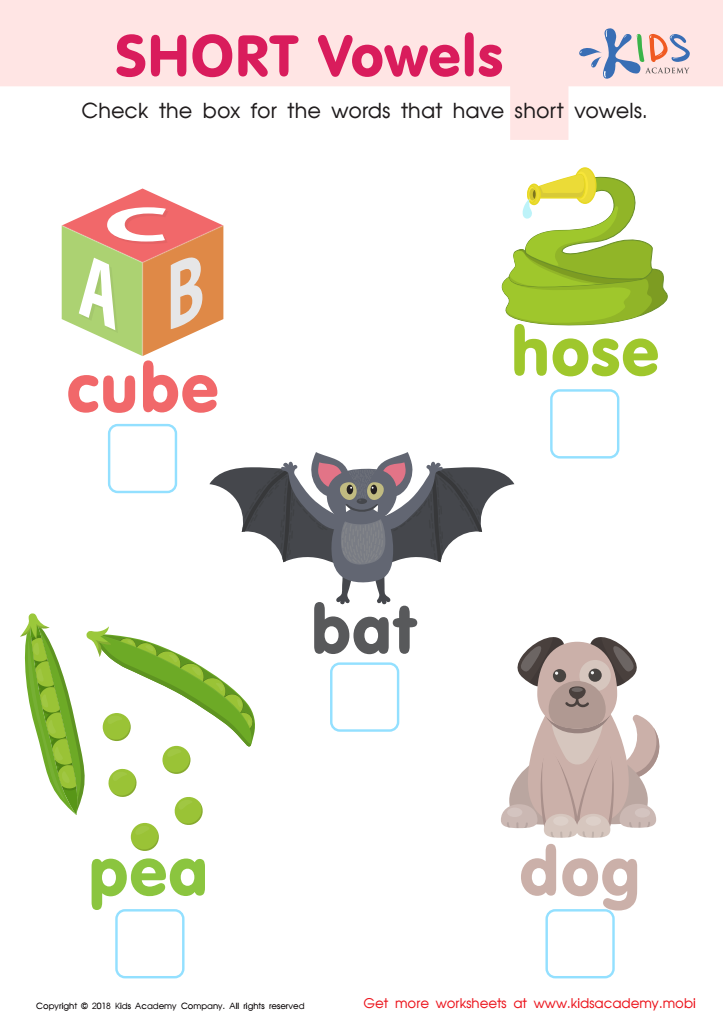
short vowels Worksheet
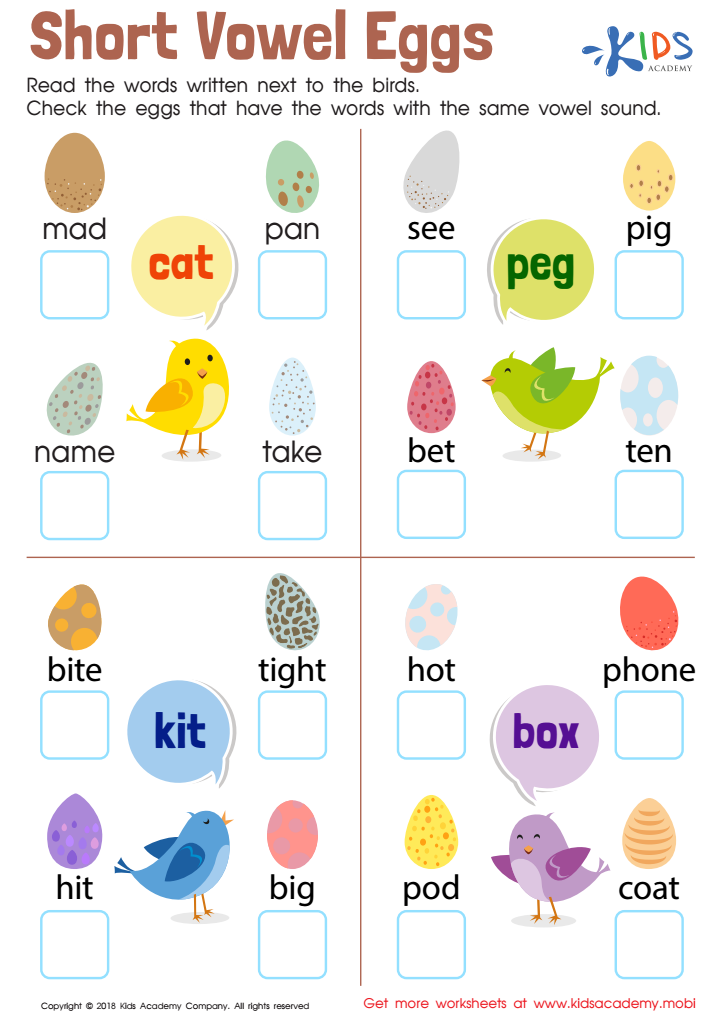
Short Vowel Eggs Worksheet
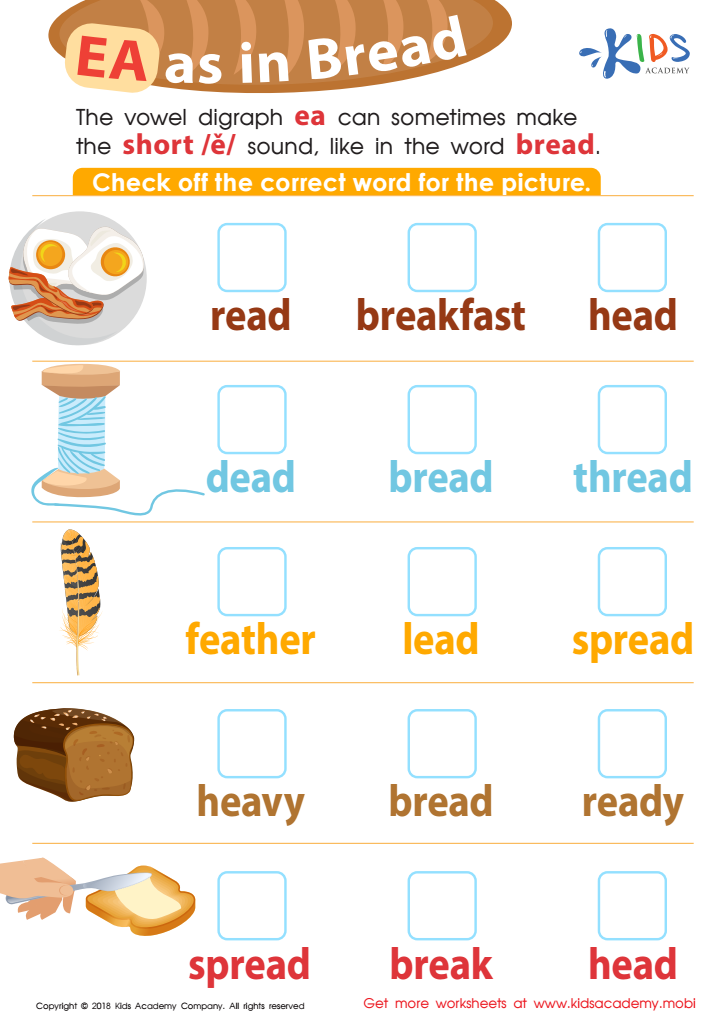
Reading: EA as in Bread Worksheet



Phonics practice, particularly focusing on short vowels, is crucial for the reading development of children aged 3 to 7. At this stage, young learners are building foundational skills that will enhance their literacy and comprehension abilities. Short vowels, such as 'a,' 'e,' 'i,' 'o,' and 'u,' are integral to understanding word formation and pronunciation.
Firstly, mastering short vowel sounds helps children decode unfamiliar words. As they encounter new vocabulary, the ability to identify and use these sounds aids in fluency and confidence. This knowledge allows them to progress from sounding out words to reading smoothly and with understanding.
Secondly, early phonics practice supports phonemic awareness—the ability to hear and manipulate sounds which is critical for spelling and writing. By engaging with short vowels, children strengthen their cognitive skills, enhancing memory and focus through playful activities and structured learning.
Additionally, this foundational skill fosters a love for reading, crucial in today’s information-rich society. Parents and teachers encourage loving reading habits by integrating short vowel practice in fun, engaging ways, ultimately nurturing lifelong learners ready to tackle more complex language tasks in the future. In short, prioritizing phonics practice ensures academic success and instills confidence in young readers.