Phonics skills development Short Vowels Worksheets for Ages 3-7
3 filtered results
Difficulty Level
Grade
Age
-
From - To
Subject
Activity
Standards
Discover our Phonics Skills Development Short Vowels Worksheets designed for children ages 3-7! These fun and engaging worksheets from Kids Academy are perfect for helping young learners master the essential short vowel sounds. Each activity encourages children to practice pronunciation, sound recognition, and word formation in a playful and educational manner. Developed by experts, our worksheets provide the foundation for critical reading and language skills. Equip your child with the tools they need to become confident readers. Explore our collection and watch your child’s phonics abilities flourish!
Favorites
With answer key
Interactive
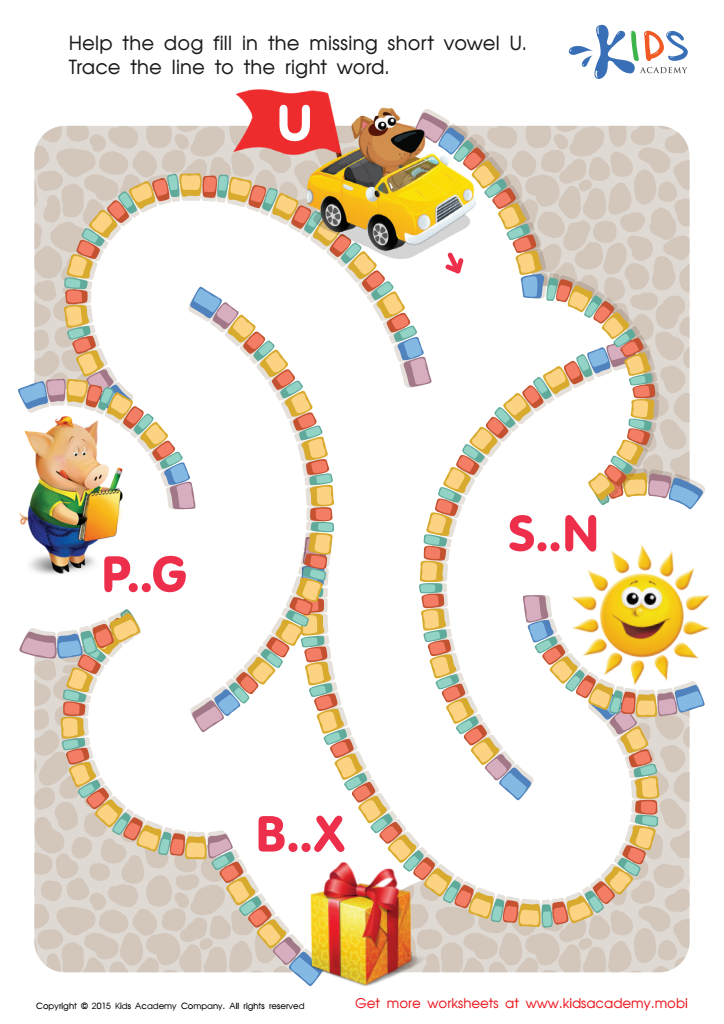
Short Vowel Sound U Worksheet
Practice abc phonics to help young learners link sounds to letters. This free printable phonics worksheet helps your kid learn the short vowel sound U. Guide them through the maze to help the dog complete the word "sun". Make sure they say the word out loud to emphasize the short U sound. Check out more phonics worksheets with mazes here.
Short Vowel Sound U Worksheet
Worksheet
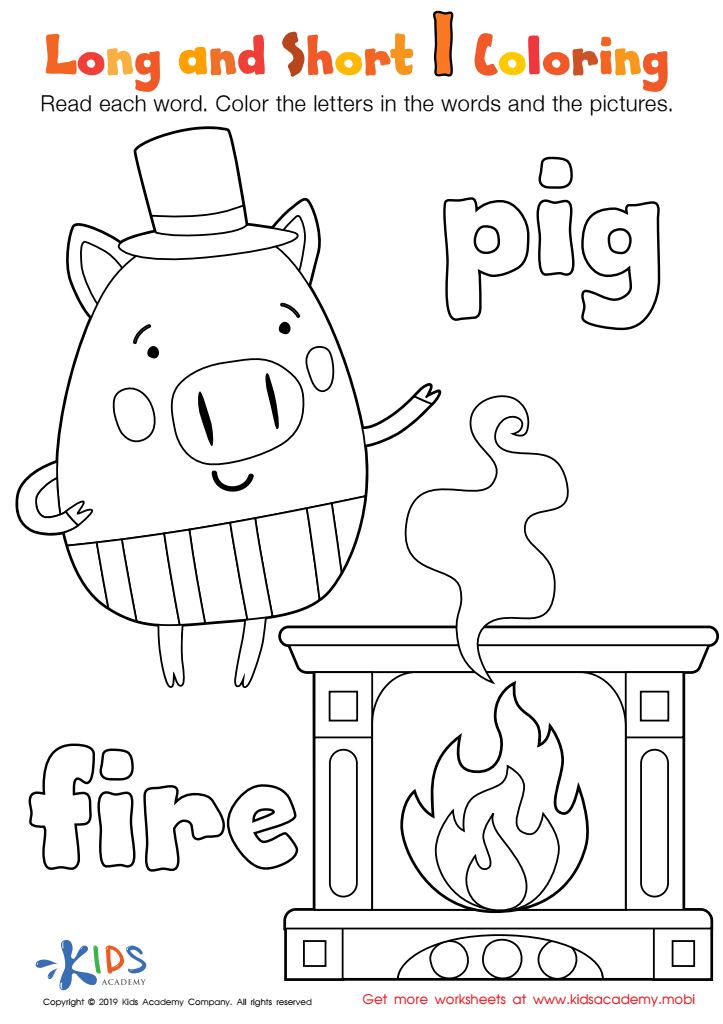
Long and Short I Worksheet
Print the worksheet and have the students read "pig" and "fire". Check for understanding the difference between long and short vowels. Color in words and pictures to make learning phonics fun! This exercise is perfect for introducing the topic to your students.
Download (PDF)
 Assign to My Students
Assign to My Students
Long and Short I Worksheet
Worksheet
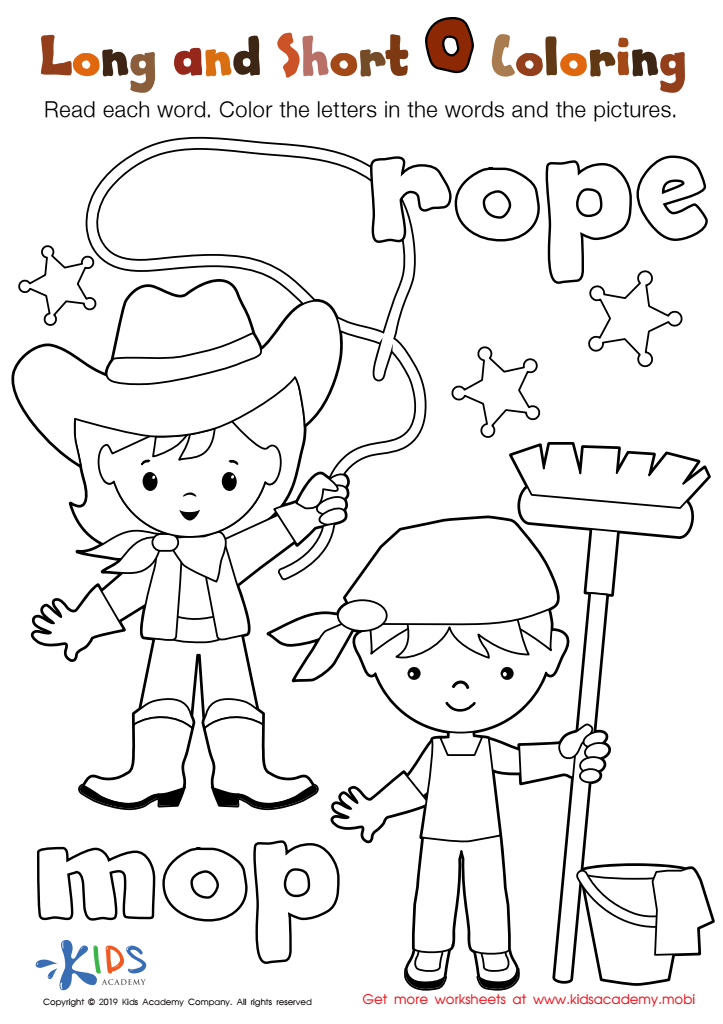
Long and Short O Worksheet
Help your students recognize the difference between long and short «Os» with this fun printout. Let them read and color-in "rope" and "mop" simultaneously. Listen to the different sounds, then color the words and pictures. Great for classes, it'll make your phonics lesson memorable and enjoyable.
Download (PDF)
Assign to My Students
Assign to My Students
Long and Short O Worksheet
Worksheet
Join Kids Academy for Free
Who is primarily going to use this learning content?



Phonics skill development, especially in recognizing short vowels, is crucial for children aged 3-7 because it serves as the foundational step in learning to read and write. During these formative years, children's brains are particularly receptive to language acquisition. Short vowels (a, e, i, o, u) form the building blocks of basic English words and are vital in helping children understand the sound-letter correspondence essential for decoding words during reading.
Mastering short vowel sounds aids in developing early literacy skills. It boosts children's ability to sound out words accurately, leading to better reading fluency and comprehension. Early phonemic awareness, achieved through structured phonics programs, ensures that children can distinguish between the subtle differences in vowel sounds, enabling them to spell simple words correctly and gradually move to more complex ones.
For parents and teachers, prioritizing phonics skills means equipping children with the tools necessary for academic success. It fosters confidence as young learners become proficient readers and writers. Additionally, strong phonics skills impact other areas of learning, as reading proficiency is linked to broader educational outcomes, fostering a lifelong love of learning and intellectual curiosity. Investing in phonics development, particularly in short vowels, sets the stage for overall educational achievement and empowers children with the critical skill of literacy.