
Letter-sound association Tracing Letters Worksheets for Ages 3-7
5 filtered results
Difficulty Level
Grade
Age
-
From - To
Subject
Activity
Standards
Discover our engaging Letter-Sound Association Tracing Letters Worksheets, designed for children aged 3-7! These worksheets help young learners connect letters with their corresponding sounds, laying a strong foundation for reading and writing. Activities are tailored to enhance motor skills as kids trace each letter, promoting hand-eye coordination while reinforcing phonemic awareness. With vibrant illustrations and interactive content, your child will enjoy the process of learning letters and sounds. Foster a love for literacy in a fun and creative way! Perfect for homeschooling, classroom activities, or supplementary learning at home. Start enhancing your child’s educational journey today!
Favorites
With answer key
Interactive
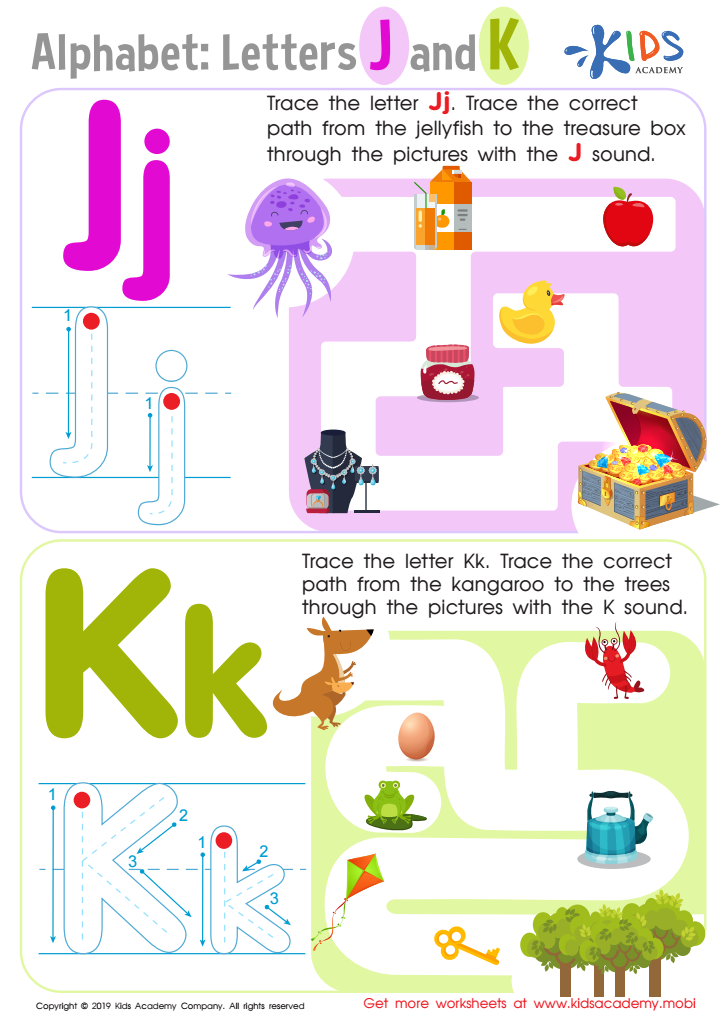
Letters J and K Tracing Worksheet
Tracing the letters «J» and «K» is the first step. Help the jellyfish find a path to the treasure chest with pictures of the «J» sound, and assist the kangaroo in finding a path to the trees with pics of «K». Fun, educational and enjoyable for children!
 Assign to My Students
Letters J and K Tracing Worksheet
Worksheet
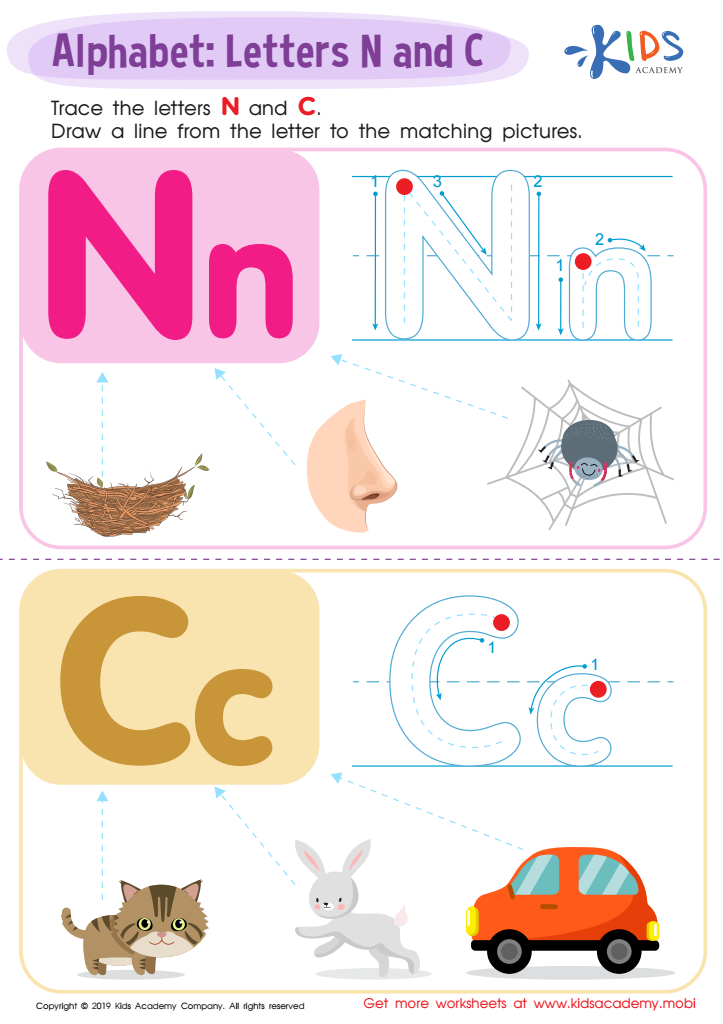
Letter N and C Tracing Worksheet
Kids can trace the letters N and C, then draw a line to the words starting with each letter. This worksheet helps them practice letter writing, distinguish capital and lowercase letters, and match pictures with the right letter. It also teaches essential skills for learning letters efficiently.
Letter N and C Tracing Worksheet
Worksheet
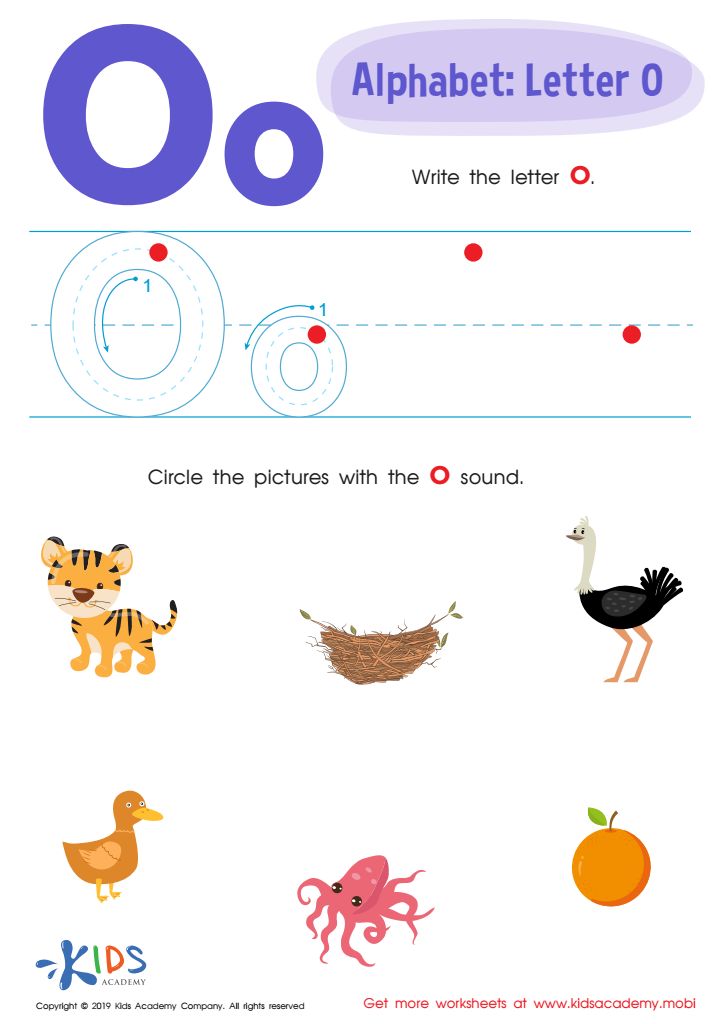
Letter O Tracing Worksheet
This worksheet gives kids the chance to trace the letter "O" while also circling pictures that have the "O" sound. Visual and hands-on learners will benefit from the visuals and tracing, helping them learn the letter "O" with ease. It's the perfect way to learn what "octopus" and "ostrich" start with!
Letter O Tracing Worksheet
Worksheet
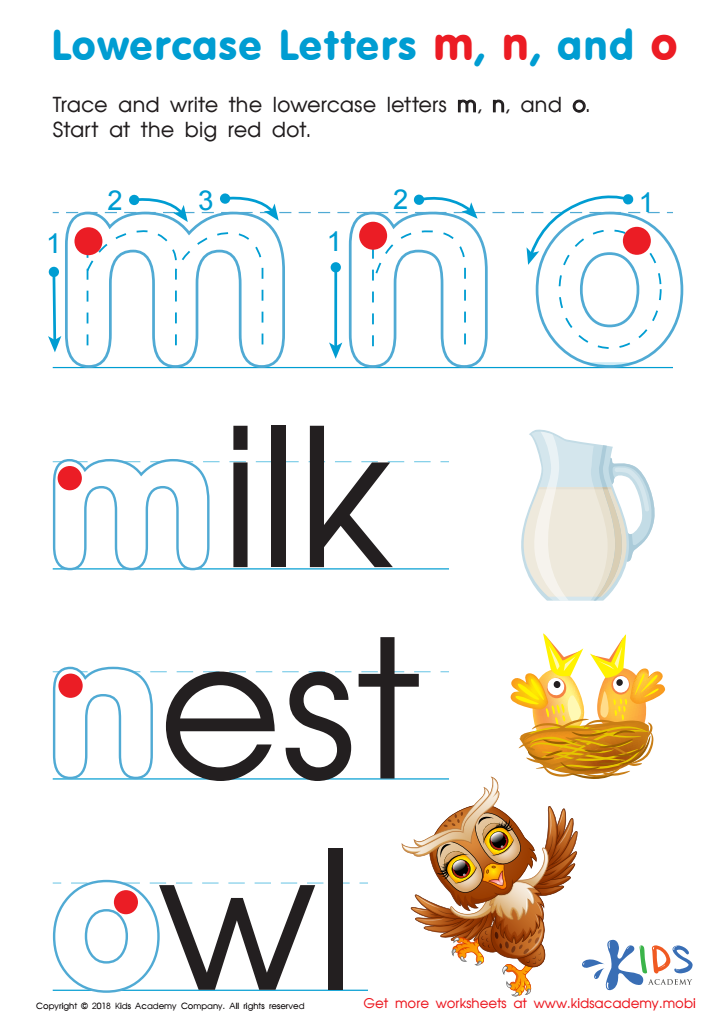
Lowercase Letters m n o Worksheet
Help your child learn the alphabet with letter tracing. Show them the difference between uppercase and lowercase letters by working through this free worksheet, tracing and writing lowercase m, n and o.
Lowercase Letters m n o Worksheet
Worksheet
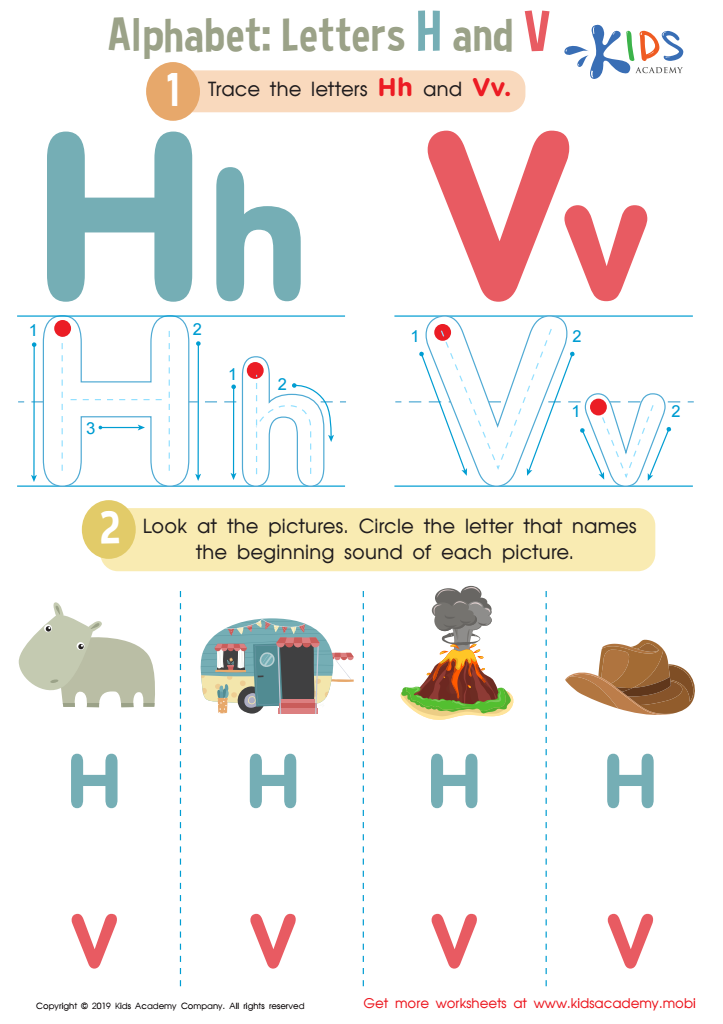
Letters H and V Tracing Worksheet
Kids will trace the letters H and V and circle the letter of the beginning sound of each picture. This helps strengthen writing and identify objects with their beginning sound, with two letter options to choose from.
Letters H and V Tracing Worksheet
Worksheet
Join Kids Academy for Free
Who is primarily going to use this learning content?






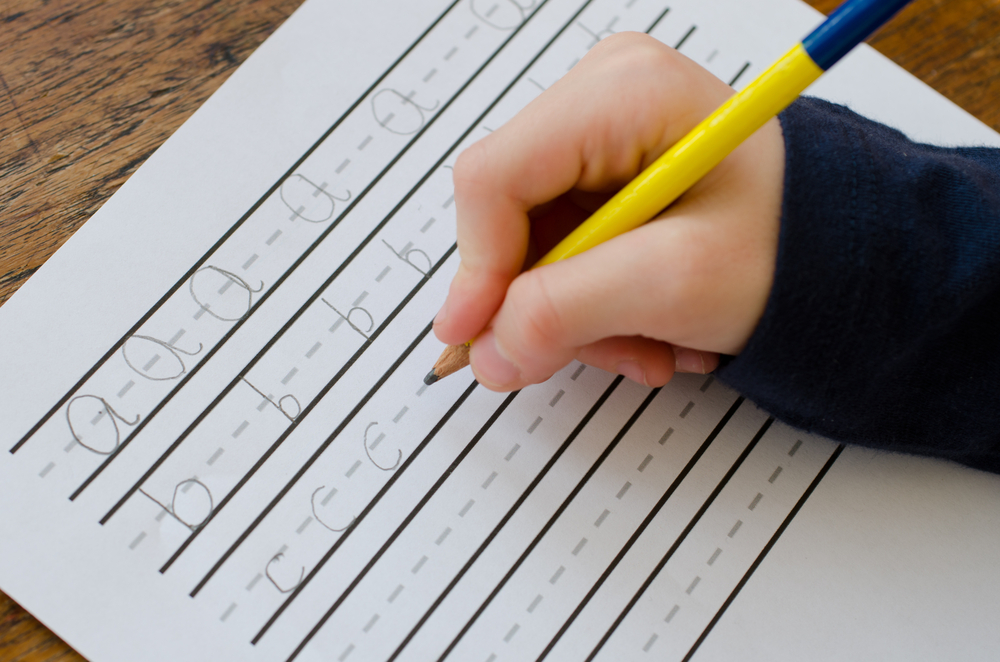
Parents and teachers should prioritize letter-sound association and letter tracing for children aged 3-7 because these foundational skills underpin literacy development. At a young age, children are in a crucial stage of phonemic awareness, wherein they learn how letters correspond to specific sounds, enabling them to decode words as they start reading. A strong grasp of these basics sets the groundwork for fluent reading, writing, and overall communication skills.
Tracing letters helps develop fine motor skills, improving hand-eye coordination and pencil grip, which are vital for writing proficiency. Moreover, the physical act of tracing cements letter recognition and reinforces the connection between letters and their sounds, aiding memory retention.
Engaging in letter tracing activities also provides opportunities for children to explore creativity and expression, making learning enjoyable and interactive. When parents and teachers actively participate in these activities, they model positive learning behaviors and increase children's motivation and interest in literacy.
Overall, emphasizing letter-sound association and tracing in early education helps foster a love for reading, equips children with essential skills for academic success, and ultimately builds their confidence in communication as they grow.








