Word Recognition Two Letter Phonics Worksheets for Ages 3-7
6 filtered results
-
From - To
Introduce your little learners to the world of reading with our engaging Word Recognition Two Letter Phonics Worksheets, designed specifically for ages 3-7. These worksheets focus on the essential skill of identifying and recognizing two-letter words, helping young children build their vocabulary and boost their confidence in reading. With a variety of fun exercises, including matching, fill-in-the-blanks, and coloring activities, kids will enjoy mastering phonics through hands-on learning. Our user-friendly resources not only enhance reading skills but also promote early literacy development in a playful and interactive manner. Start your child's reading journey today with these creative worksheets!
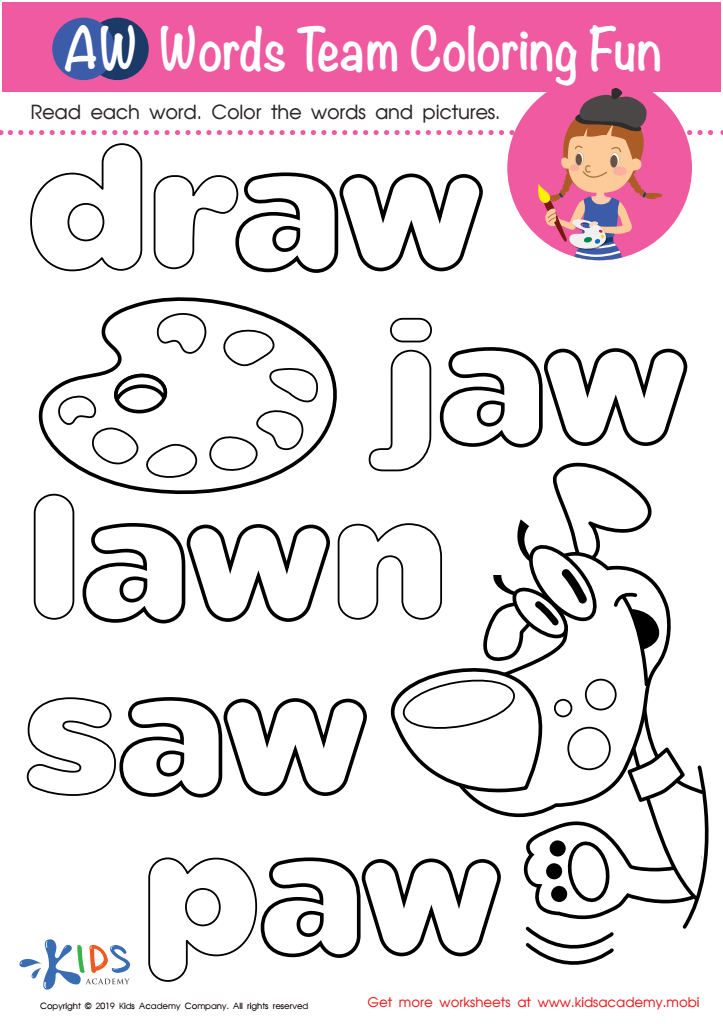
AW Words Team Coloring Fun Worksheet
 Assign to My Students
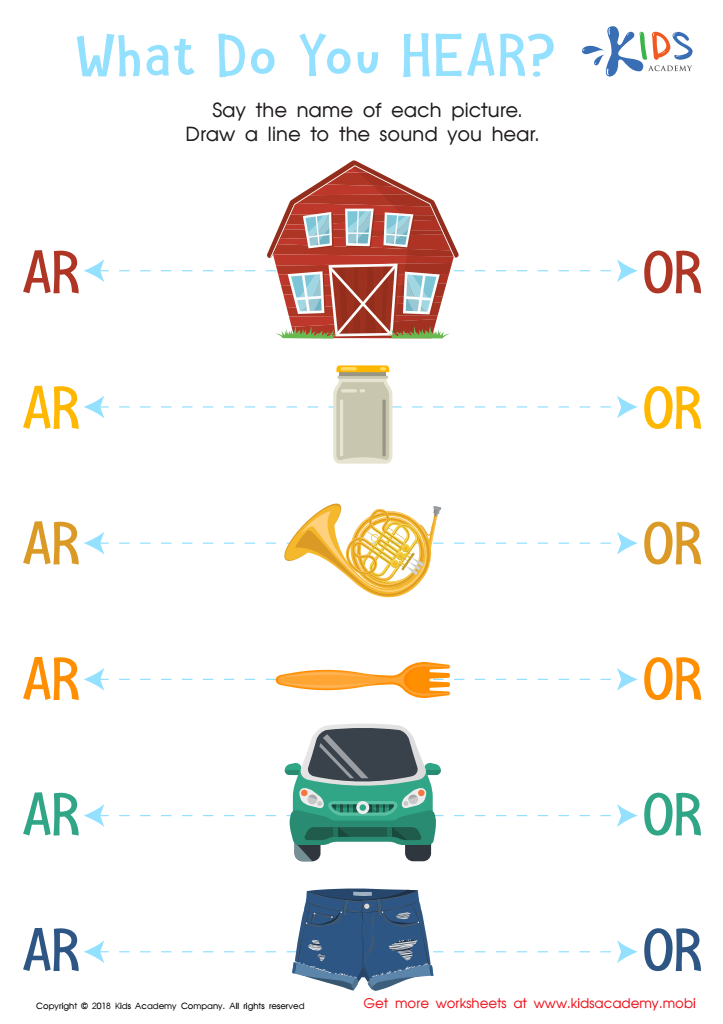
What do you hear Worksheet
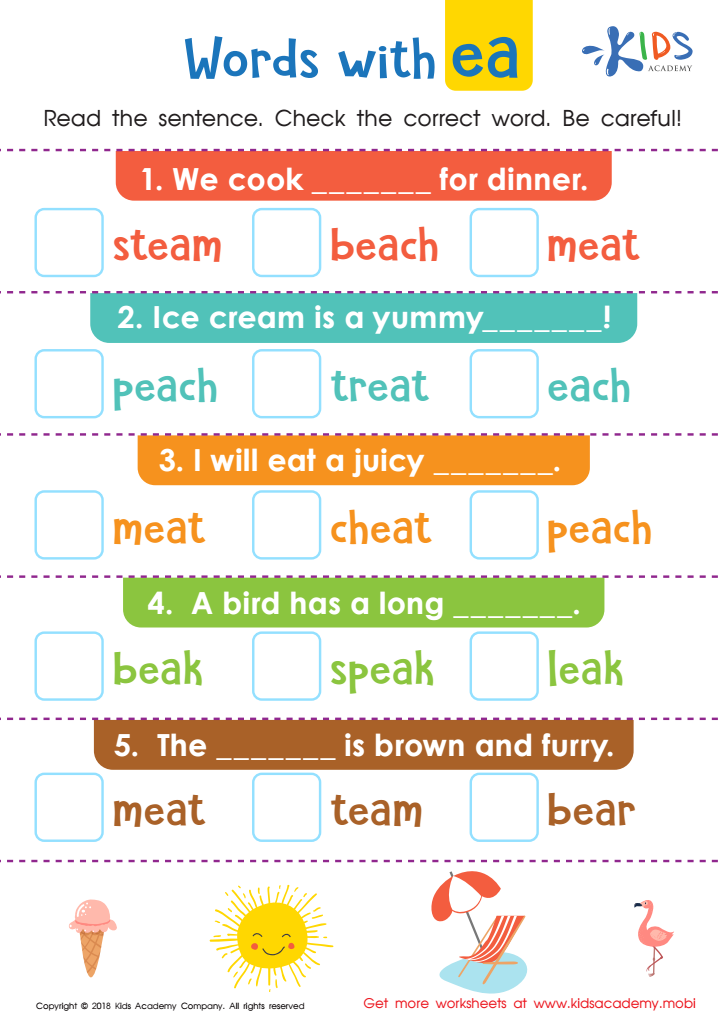
Words with ea Worksheet
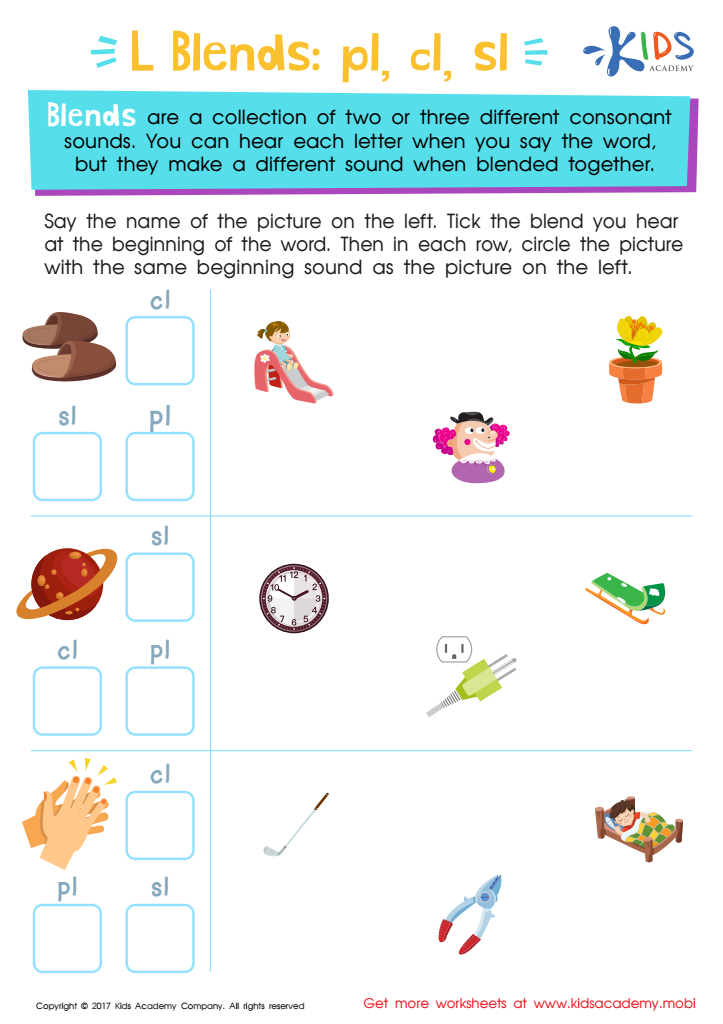
L Blends: "Pl", "Cl" and "Sl" Printable
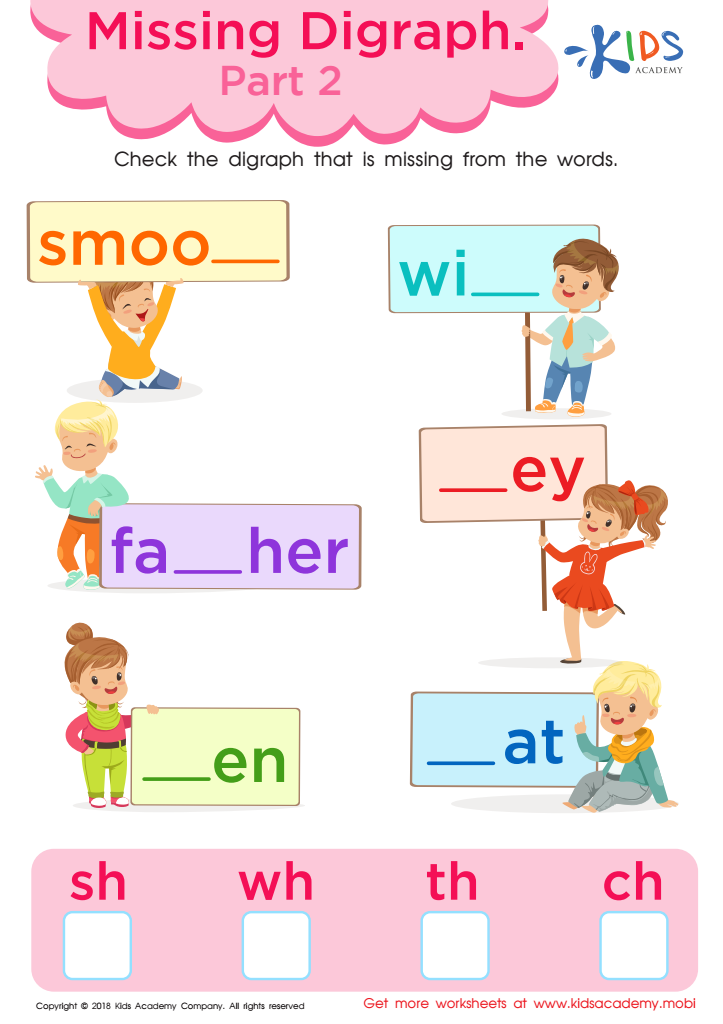
Missing Digraph: Part 2 Worksheet
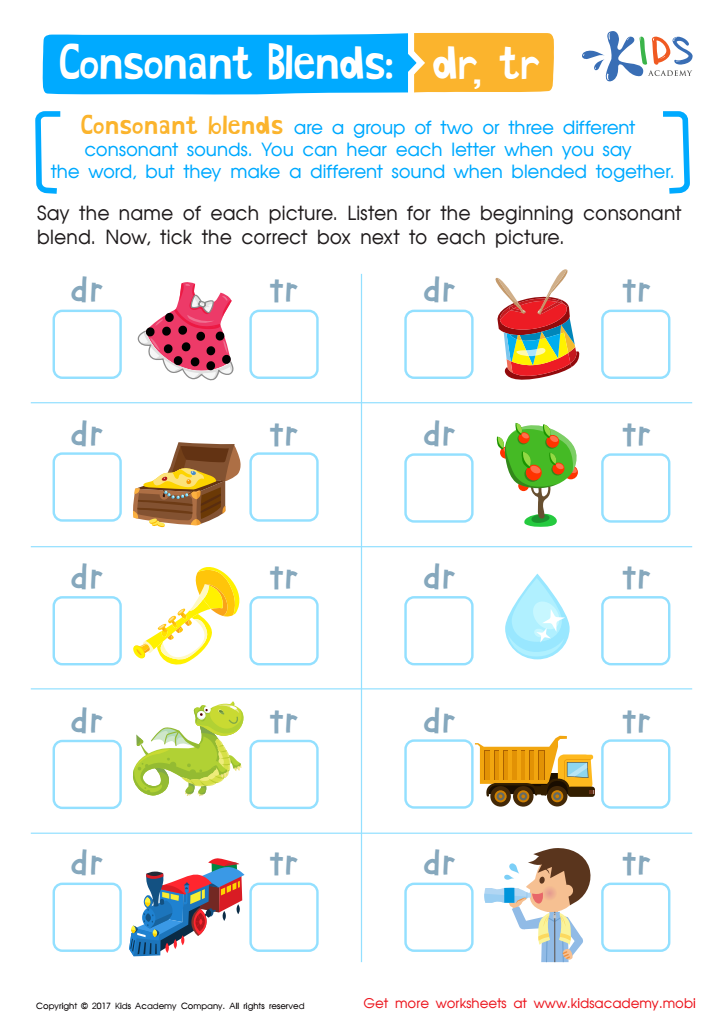
Consonant Blends: "Dr" and "Tr" Printable



Word recognition and two-letter phonics are foundational skills for early learners aged 3-7, making them crucial for parents and teachers to focus on. At this formative stage, children begin to decode words, an essential skill for reading fluency and overall literacy development. Two-letter phonics, or digraphs and blends, often provide the building blocks for understanding how sounds merge to form words. When children recognize patterns in phonics, like "ch," "sh," or "th," they can identify longer words more easily, boosting their confidence and enthusiasm.
Caring about word recognition and phonics helps children develop crucial reading strategies that foster a love for literature and learning. Reading proficiency often correlates with academic success across subjects, paving the way for future educational opportunities. Furthermore, engaging young learners in these skills can create a positive learning environment that emphasizes play and exploration, key elements of this age group’s development.
By investing time in teaching these skills, parents and teachers not only enhance reading abilities but also strengthen language development and cognitive skills. Ultimately, fostering a solid foundation in word recognition and phonics is an investment in children's lifelong learning journey.







