Phonics practice Vowels Worksheets for Ages 3-7
9 filtered results
-
From - To
Discover engaging and educational phonics practice worksheets focused on vowels for children aged 3 to 7! Our specially designed worksheets enhance early literacy skills through fun activities tailored for young learners. From identifying short and long vowel sounds to matching vowels with corresponding images, each worksheet provides hands-on practice that fosters reading confidence. Interactive tasks captivate children’s attention, making learning exciting and effective. Ideal for home, preschool, or afterschool programs, our phonics worksheets support a solid foundation in language. Explore our vibrant collection and nurture your child's love for learning through phonics today!
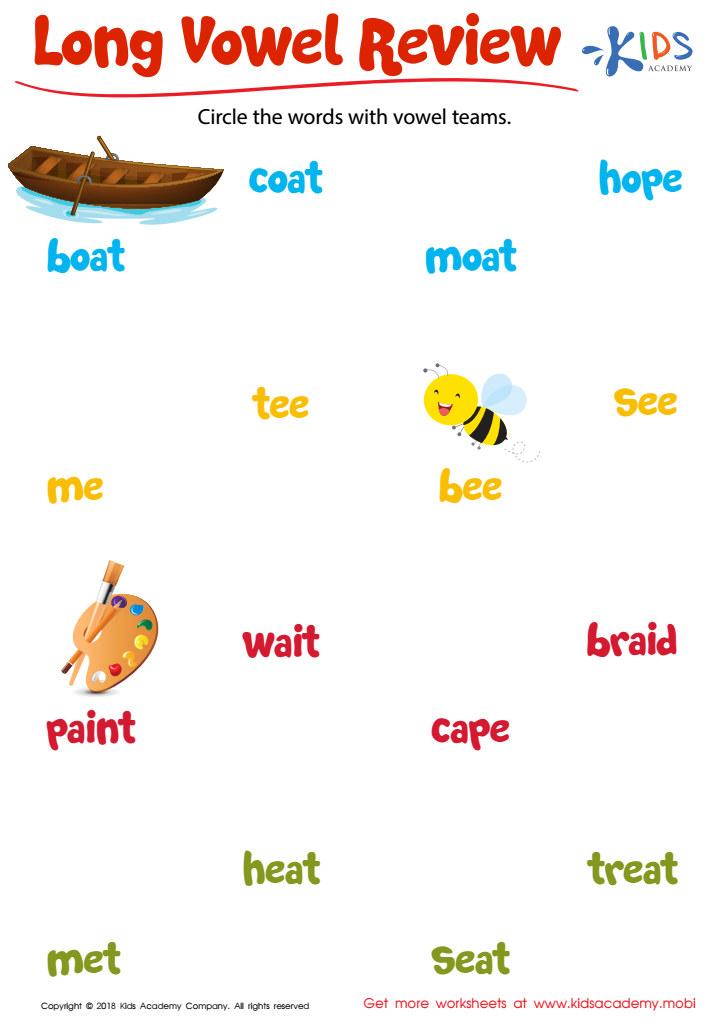
Long Vowel Review Worksheet
 Assign to My Students
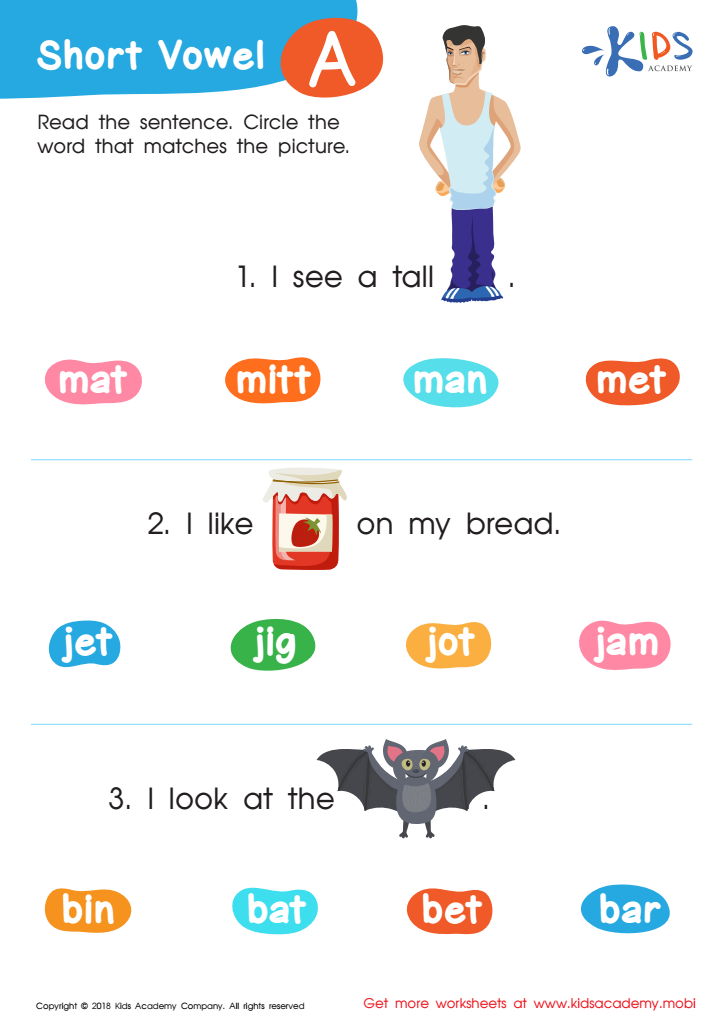
Short Vowel /a/ Worksheet
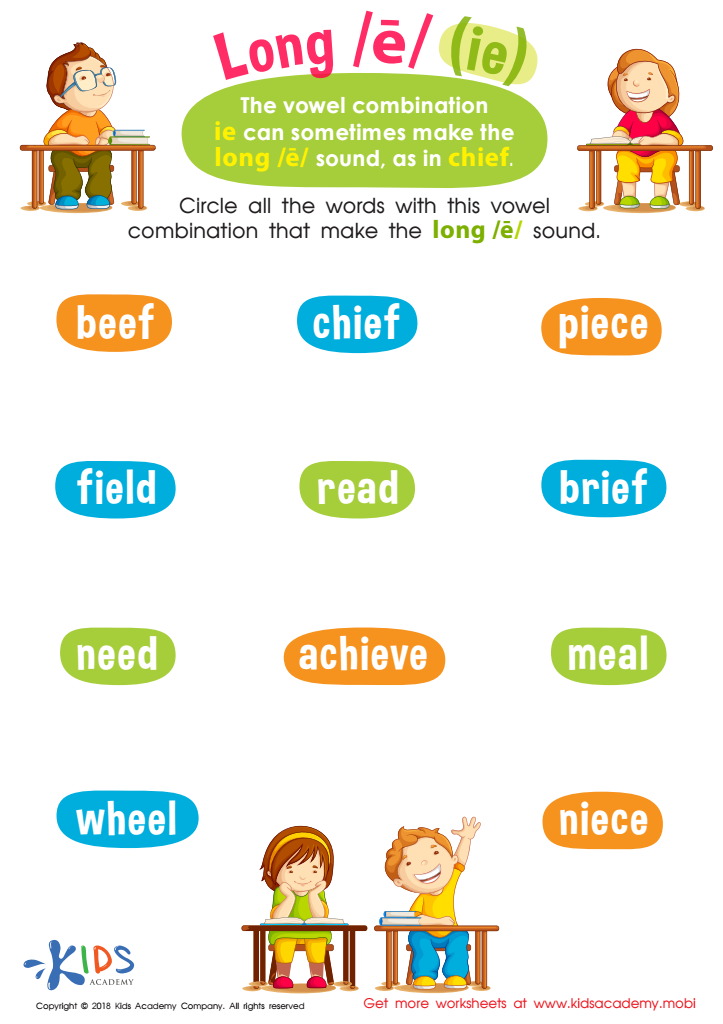
Reading: Long E and IE Worksheet
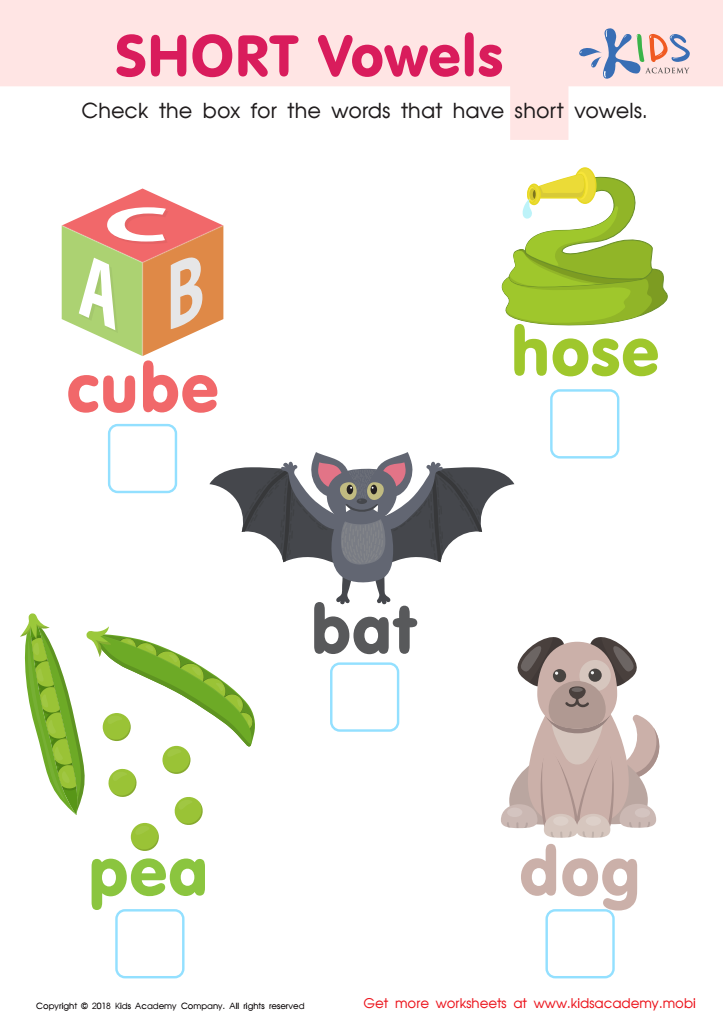
short vowels Worksheet
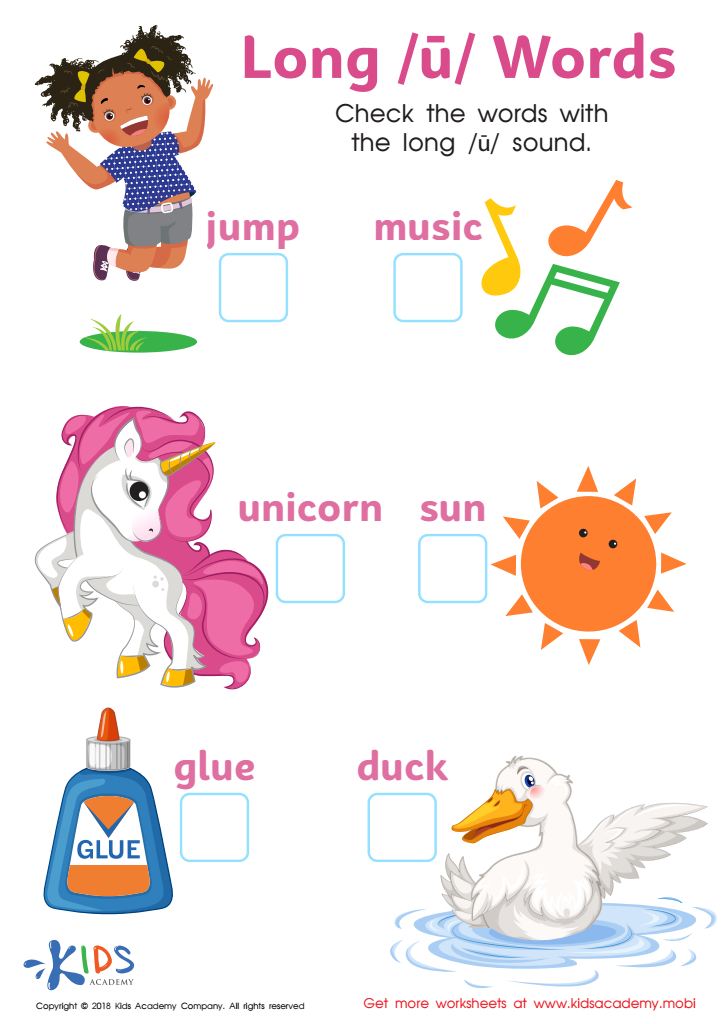
Long U Words Reading Worksheet
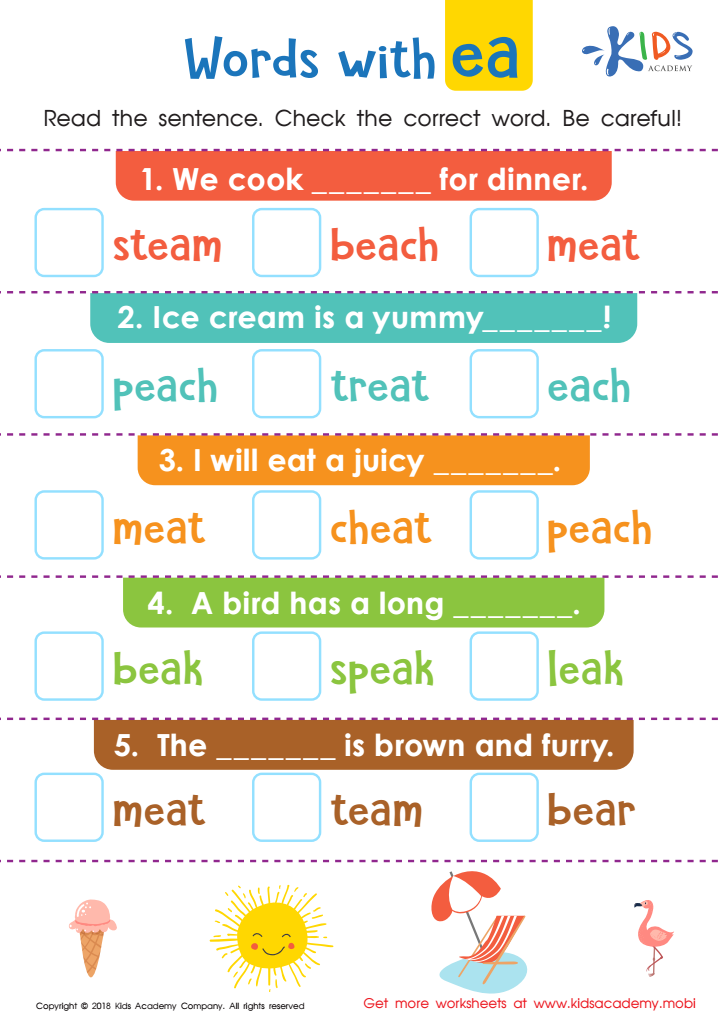
Words with ea Worksheet
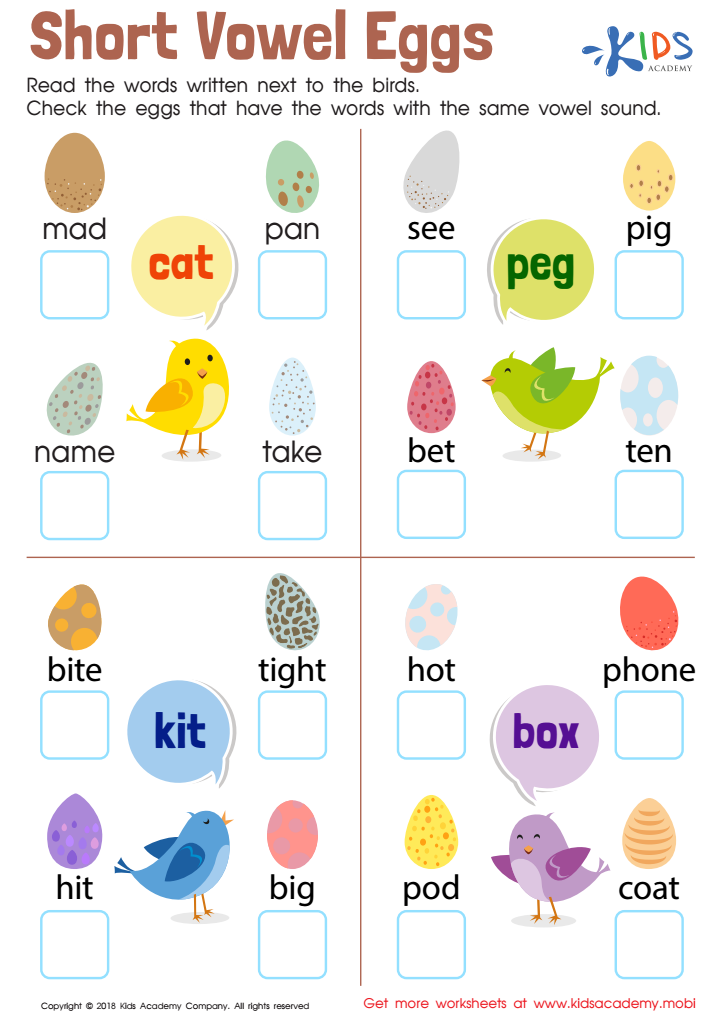
Short Vowel Eggs Worksheet
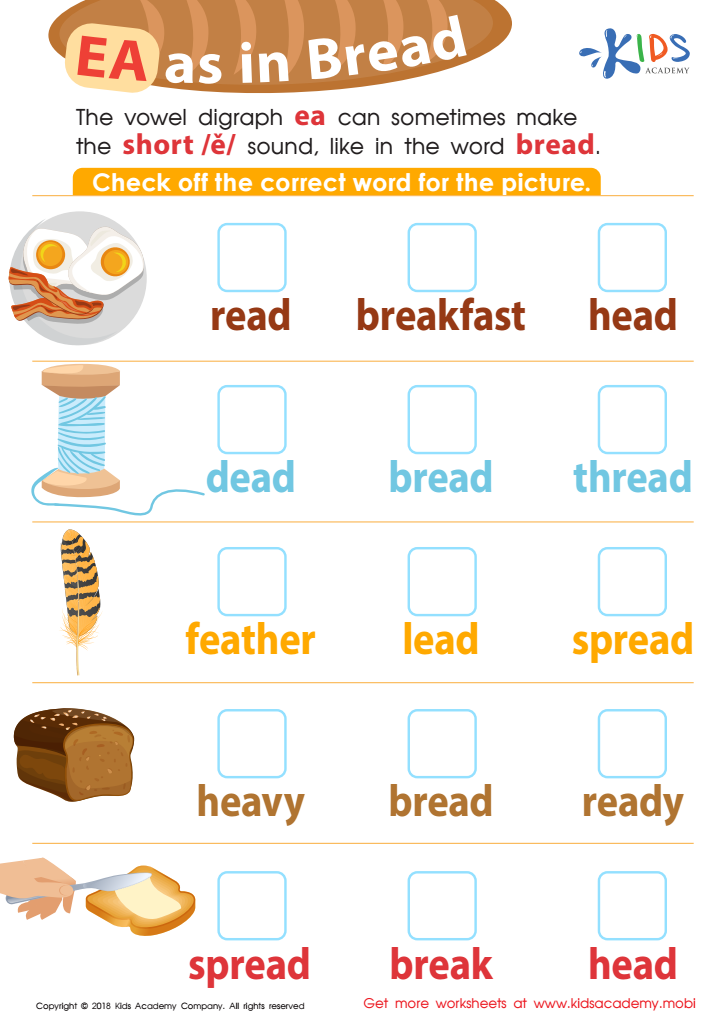
Reading: EA as in Bread Worksheet
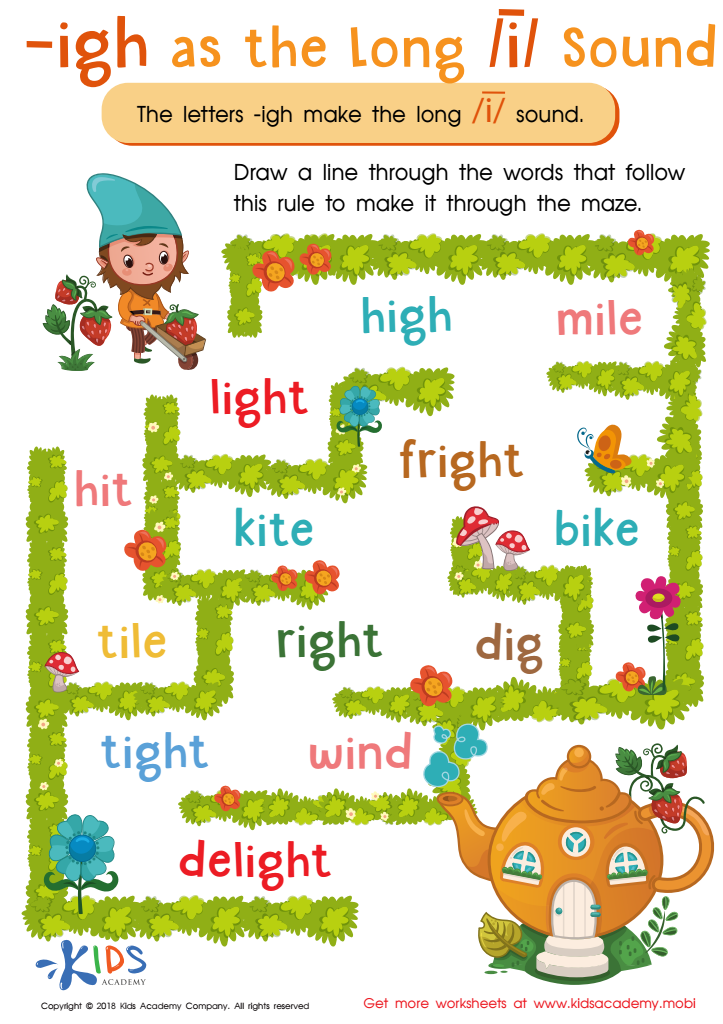
Reading: IGH as Long I Worksheet





Phonics practice, particularly focusing on vowels, is crucial for children aged 3-7 as it lays the foundation for reading and language development. Vowels are the building blocks of words and are essential for decoding written language. When children learn the sounds associated with vowels, they become equipped to sound out words independently, fostering early literacy skills. This period is formative for language acquisition; thus, targeted phonics instruction helps children recognize patterns in language.
Moreover, phonics practice enhances children’s confidence as they begin to read. By mastering the sounds of vowels and understanding their usages within words, children develop the ability to tackle more complex texts as they progress. Engaging children in interactive and enjoyable phonics activities nurtures a positive attitude toward reading, encouraging lifelong learning.
For parents and teachers, investing time in vowels through phonics practice ensures that children have the necessary skills to succeed academically. It promotes essential language skills, including listening, speaking, and comprehension. When children feel competent in their reading abilities, they are more likely to develop a passion for books and learning, ultimately benefiting their overall educational journey. Emphasizing phonics at an early age creates a strong foundation for future literacy skills and success.







