Spelling improvement Vowels Worksheets for Ages 3-7
4 filtered results
-
From - To
Enhance your child's language skills with our "Spelling Improvement Vowels Worksheets" designed for ages 3-7. These engaging and interactive worksheets focus on teaching vowels, helping young learners improve their spelling abilities in a fun way. With a variety of creative activities, including matching, filling in blanks, and word recognition exercises, children will build a strong foundation in vowel sounds and gain confidence in their writing. Perfect for home or classroom use, our worksheets aim to make spelling enjoyable while developing essential literacy skills. Unlock your child's potential today with our thoughtfully crafted vowel worksheets!
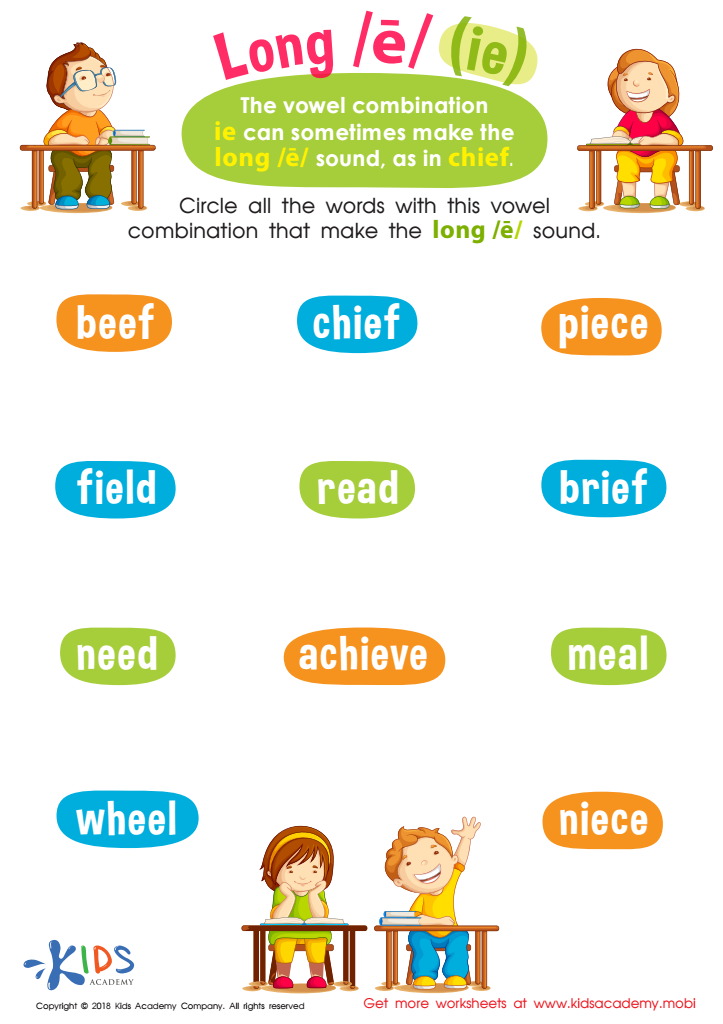
Reading: Long E and IE Worksheet
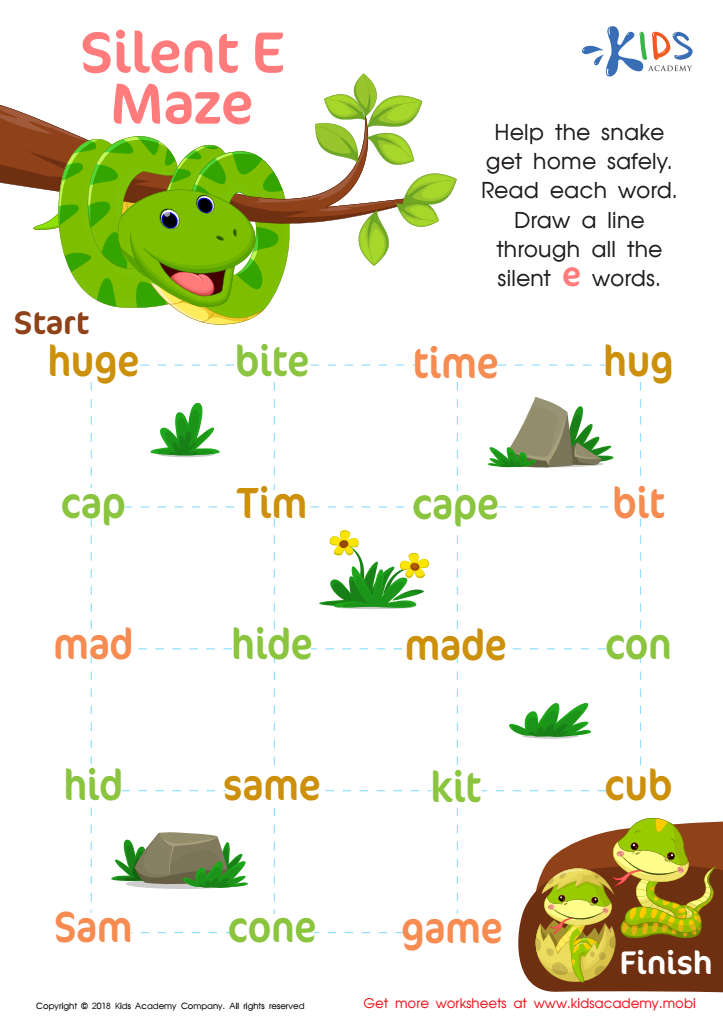
Silent E Maze Worksheet
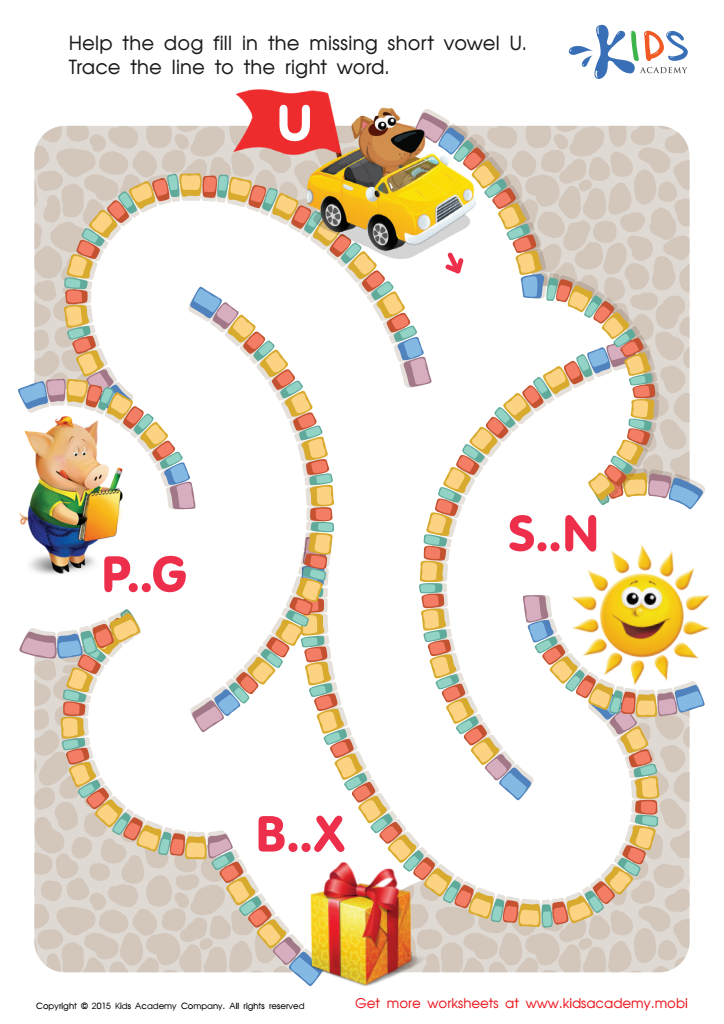
Short Vowel Sound U Worksheet
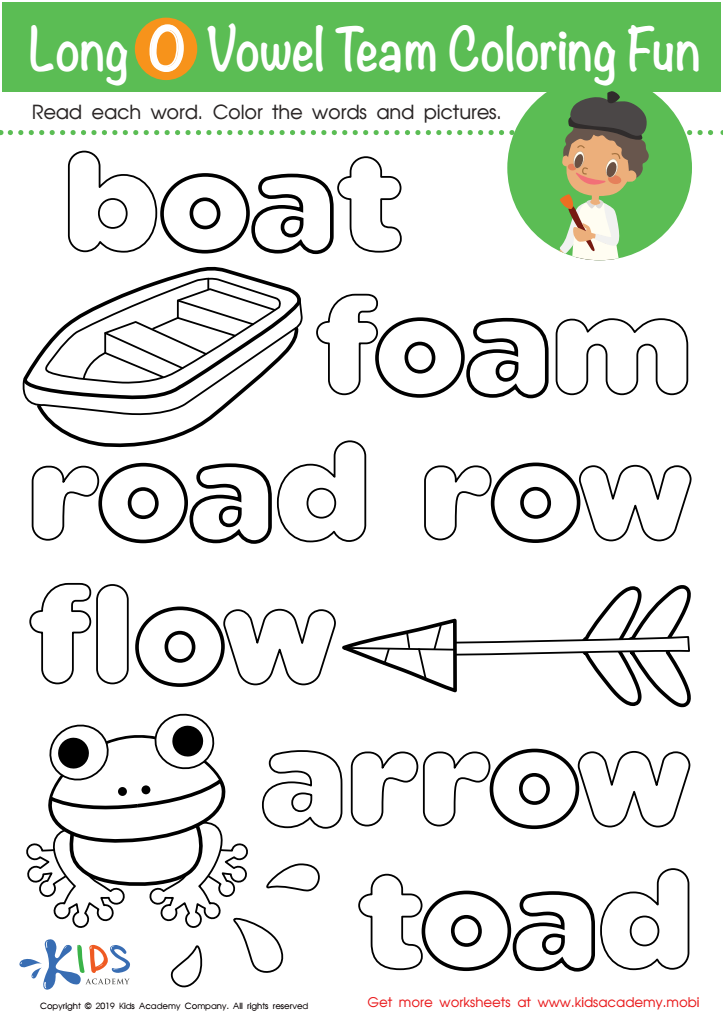
Long O Vowel Team Coloring Worksheet
 Assign to My Students





Spelling improvement, particularly with vowels, is essential for children aged 3-7 as it lays the foundation for literacy skills that will be crucial throughout their education. Young children are still developing their language abilities, and mastering vowels is vital for word recognition and reading fluency. Vowels play a significant role in phonics—the relationship between letters and sounds—which is a cornerstone of early literacy. By focusing on vowel spelling, teachers and parents can help children decode words more effectively, leading to improved reading comprehension and confidence.
Additionally, spelling and phonetic skills enhance children's expressive abilities, empowering them to communicate their thoughts and ideas more clearly in writing. Engaging in activities that reinforce vowel recognition can be enjoyable, turning learning into a playful experience, which is particularly important at this age filled with curiosity.
Moreover, children who struggle with spelling may feel discouraged and less motivated in their academic pursuits. By prioritizing vowel mastery, parents and educators can create a supportive learning environment that cultivates a love for language, enabling children to become thriving readers and writers. In summary, spelling improvement in vowels is crucial for linguistic development, supporting children’s overall academic success and self-assurance in their abilities.







