Critical thinking development Chess Worksheets for Ages 3-7
5 filtered results
Difficulty Level
Grade
Age
-
From - To
Subject
Activity
Standards
Unlock your child's potential with our Critical Thinking Development Chess Worksheets tailored for ages 3-7. Fun and engaging, these worksheets introduce young minds to the strategic world of chess, encouraging problem-solving, analytical skills, and strategic planning. Perfect for beginners, our exercises blend colorful graphics and age-appropriate challenges to maintain interest while stimulating brain development. Ideal for parents and educators, these printables make learning chess accessible and enjoyable, paving the way for academic excellence and cognitive growth. Start your child's journey into critical thinking today with our expertly crafted worksheets. Available now on Kids Academy!
Favorites
With answer key
Interactive
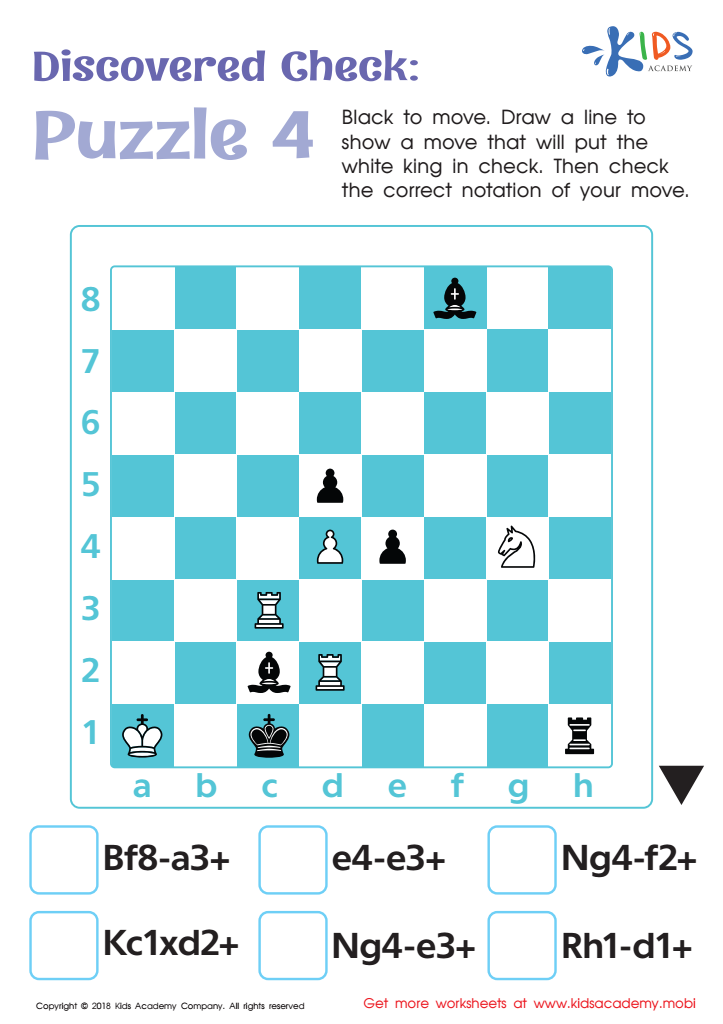
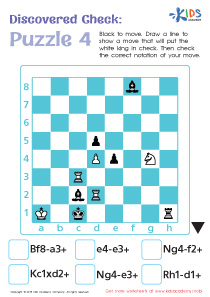
Discovered Check: Puzzle 4 Worksheet
Let your child test their chess skills with this easy worksheet. Have them take control of the black pieces and try to put the white king in checkmate. Ask them to draw a line from their chess piece to the white king, showing the move they'll make, then check the correct answer.
Discovered Check: Puzzle 4 Worksheet
Worksheet
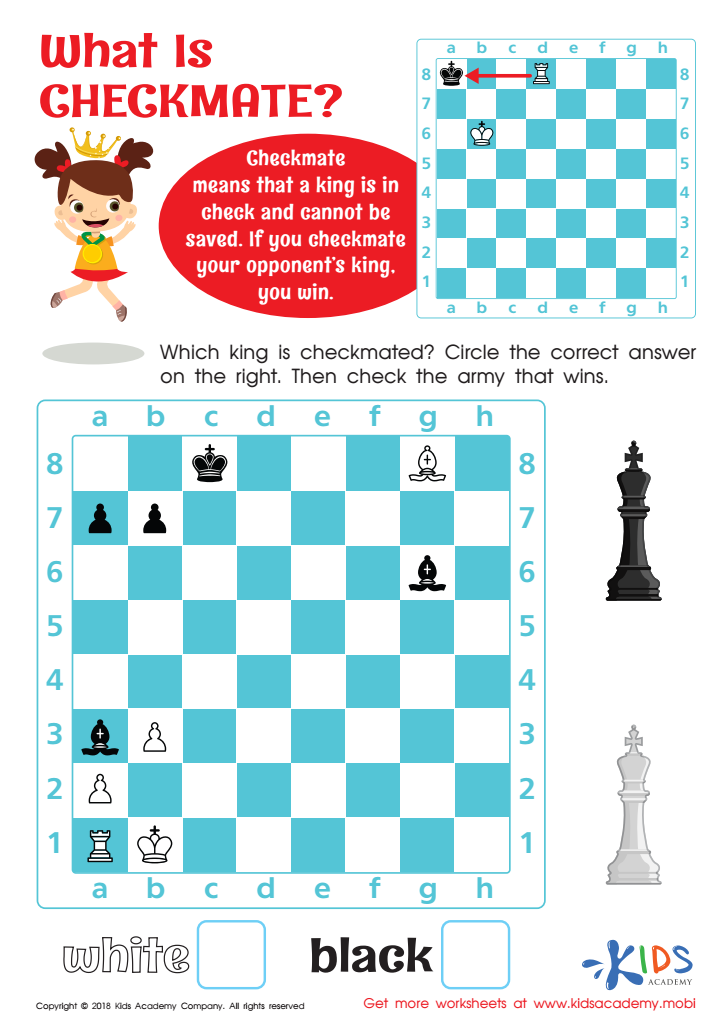
What is Checkmate? Worksheet
This downloadable PDF worksheet lets your child practice identifying when a king is checkmated and how it looks on a chessboard. Checkmate is the best move and with this colorful worksheet, they'll learn that it means their opponent's king is in check and cannot be saved, so they can win!
 Assign to My Students
What is Checkmate? Worksheet
Worksheet
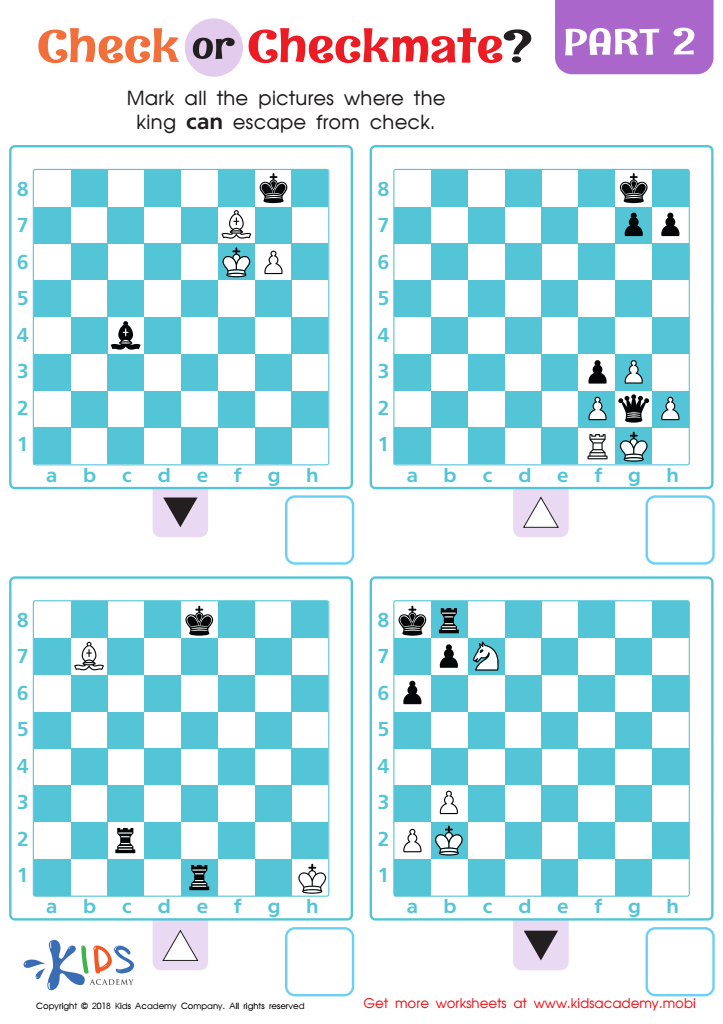
Check or Checkmate: Part 2 Worksheet
Chess is a fun and competitive way for your child to practice strategic thinking, problem-solving and critical reasoning. This free PDF will help them sharpen their skills, by analyzing boards and marking ones where the king can escape check. An invaluable skill when playing on real boards.
Check or Checkmate: Part 2 Worksheet
Worksheet
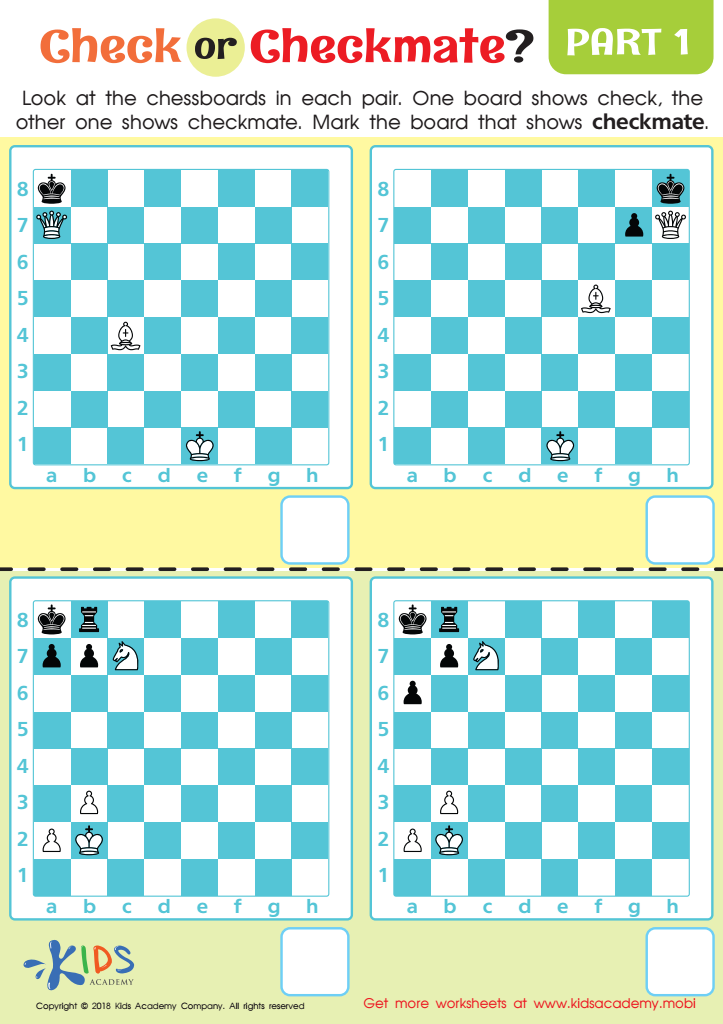
Check or Checkmate: Part 1 Worksheet
Kids can learn and strengthen problem-solving and strategic thinking skills with this free chess worksheet. They'll have fun as they look at the pair of chessboards and decide which is check and which is checkmate. It's the perfect way to get them playing the game and making checkmates without even realising they're exercising their brains!
Check or Checkmate: Part 1 Worksheet
Worksheet
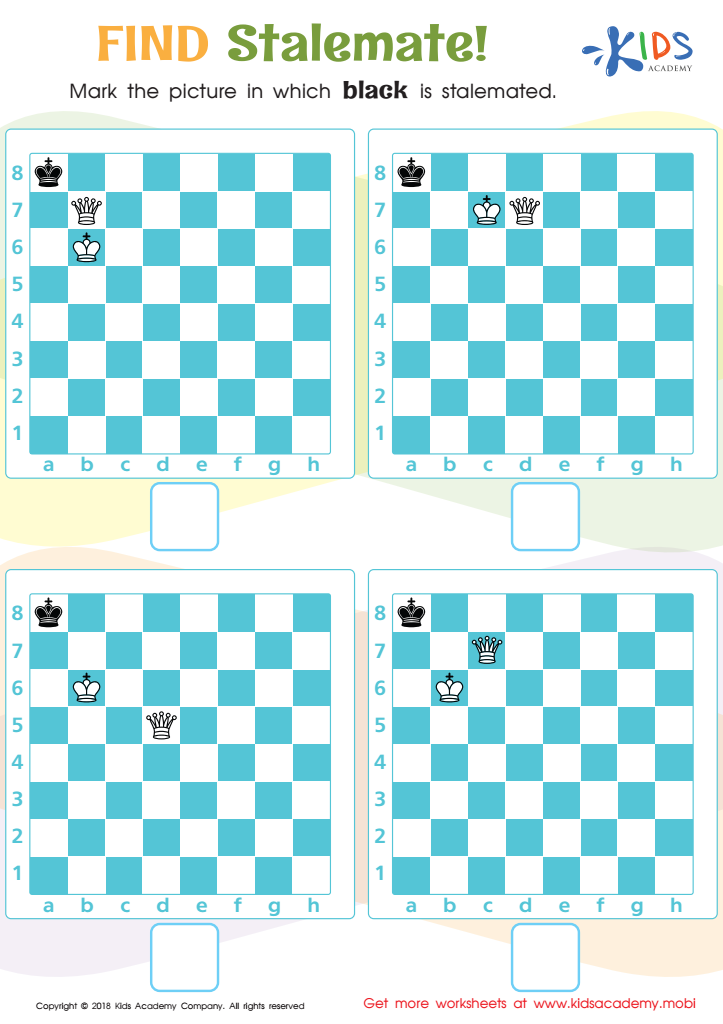
Find Stalemate! Worksheet
Teach your kids Chess and give them more than a hobby - equip them with critical thinking, rationale and problem-solving skills! This free worksheet helps them understand stalemates by examining various sample boards. By providing visual discernment and the joy of the game, your child's logical skills will soar!
Find Stalemate! Worksheet
Worksheet
Join Kids Academy for Free
Who is primarily going to use this learning content?





Critical thinking skills are fundamental for young children as they lay the groundwork for future problem-solving and decision-making abilities. Chess, even at an introductory level, can be an excellent tool for fostering these skills in children aged 3-7.
When young children engage in playing chess, they learn to think ahead, anticipate potential moves of their opponents, and think more abstractly. This helps them develop a mindset oriented towards planning and foresight. These skills can easily translate to better academic performance and logical reasoning in various contexts.
Moreover, chess encourages pattern recognition, a critical skill in literacy and math. Noticing patterns in a chess game can enhance a child's ability to recognize patterns of letters, numbers, and shapes. Also, playing chess involves a lot of concentration and memory usage, which helps improve focus and retention abilities in children.
Importantly, chess introduces kids to the concept of losing gracefully and persevering despite challenges. This builds resilience and emotional intelligence. Early exposure to these skills instills a growth mindset, where children learn that their abilities can improve with practice and effort—an invaluable lesson for lifelong learning.
In summary, integrating chess into early childhood education not only bolsters critical thinking but also contributes to emotional and cognitive development, making it a worthwhile pursuit for parents and educators.