Alphabetical order understanding English for Beginners Worksheets for Ages 3-7
4 filtered results
-
From - To
Welcome to our "Alphabetical Order Understanding" worksheets designed specifically for English language beginners ages 3-7. Our engaging and interactive resources help young learners grasp the concept of alphabetical order through fun-filled activities tailored to stimulate their curiosity and enthusiasm. These worksheets feature colorful illustrations, simple instructions, and age-appropriate exercises that make learning enjoyable. Children will practice arranging words and letters alphabetically, enhancing their reading and organizational skills. Perfect for home or classroom use, these worksheets are an excellent tool for educators and parents looking to support early literacy development. Explore our collection today and inspire a love for learning!
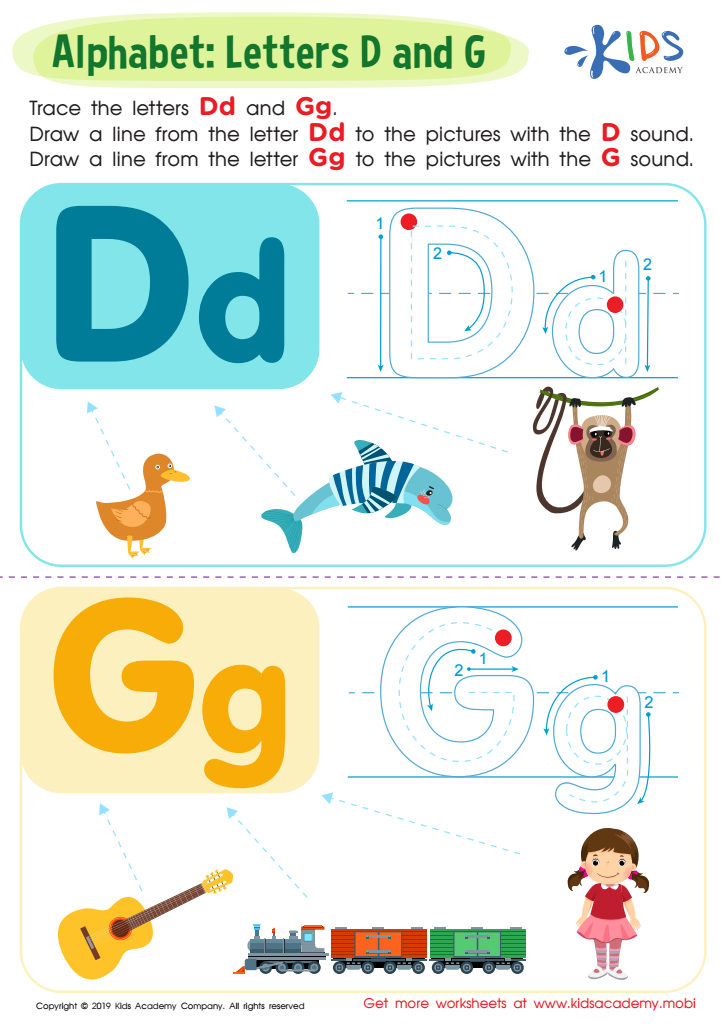
Letter D and G Tracing Worksheet
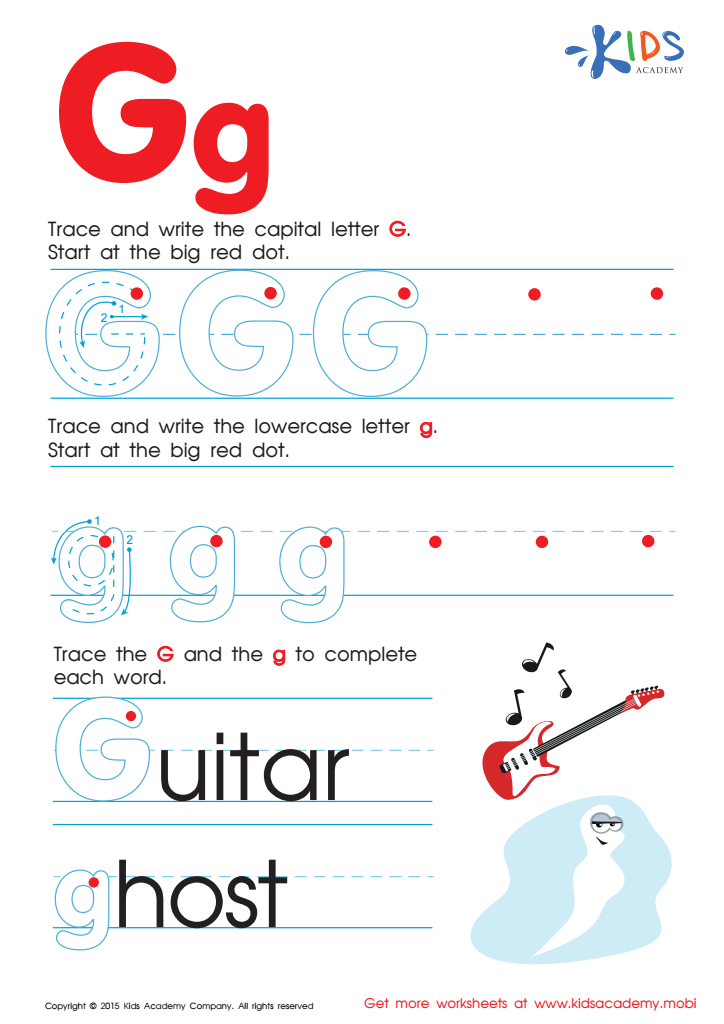
Letter G Tracing Page
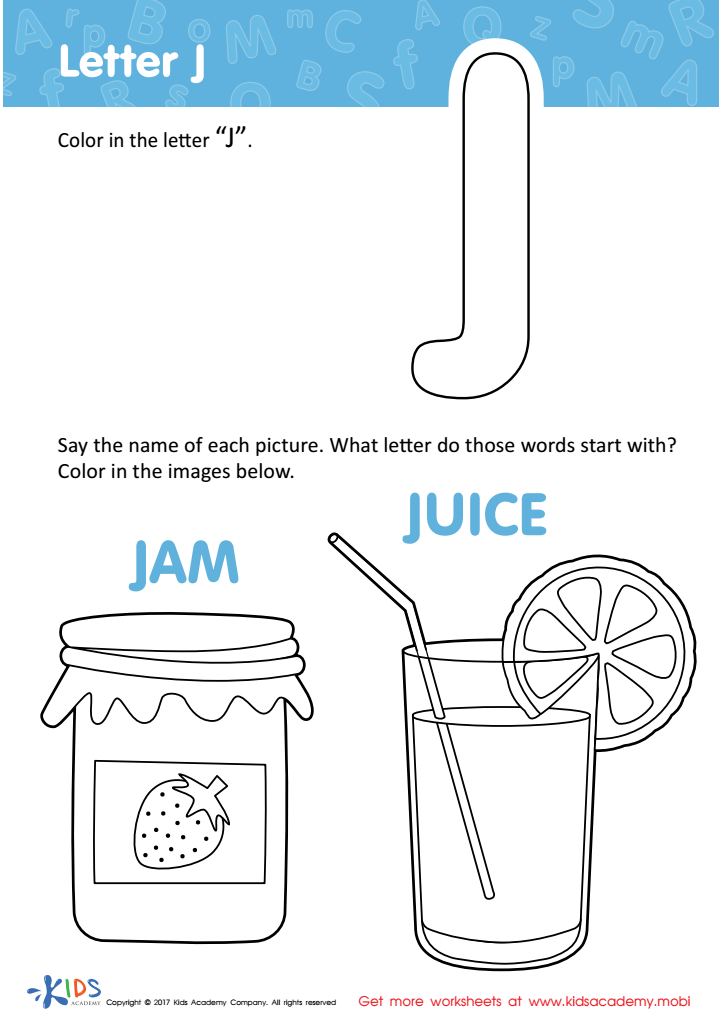
Letter J Coloring Sheet
 Assign to My Students
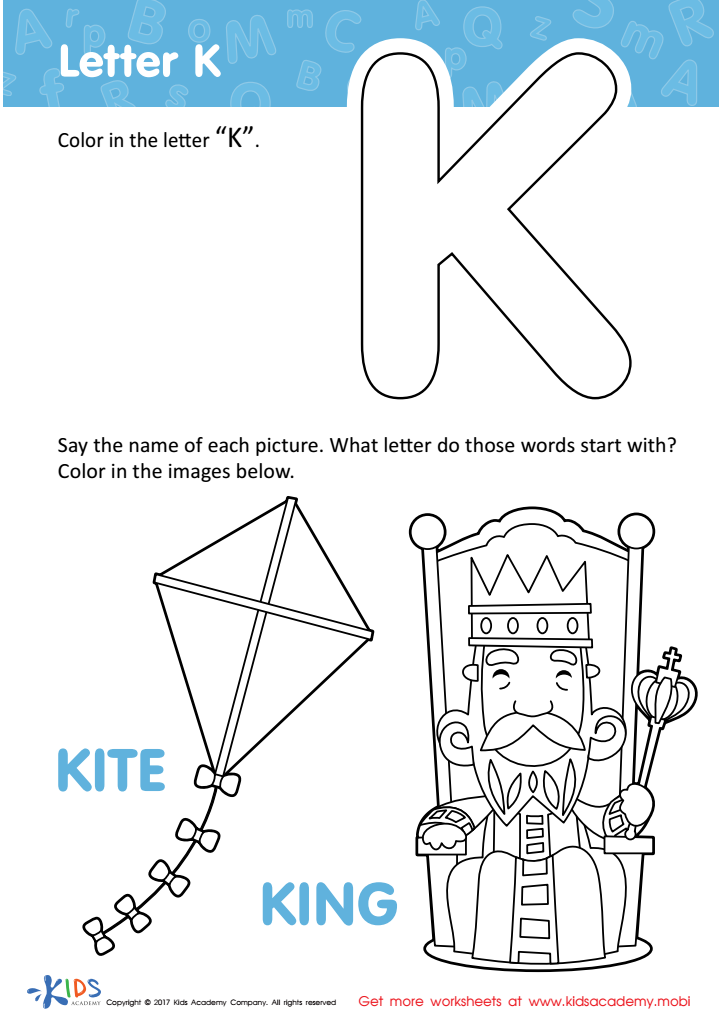
Letter K Coloring Sheet
Assign to My Students





Understanding alphabetical order is a foundational literacy skill that is vital for children aged 3-7 as they learn English. For parents and teachers, fostering this skill is crucial because it lays the groundwork for reading and writing proficiency. As children gain familiarity with the alphabet and its sequence, they enhance their ability to recognize words and improve their spelling, making it easier to locate words in dictionaries and indexes—a skill that becomes increasingly important as they progress in their education.
Teaching alphabetical order also helps children develop cognitive skills such as categorization and comparison. As they learn to sort letters and words, they are engaged in critical thinking processes that promote cognitive development. Moreover, mastering this concept encourages a love for learning and a sense of achievement, as children can confidently locate and understand words within their reading materials.
Engagement in alphabetical activities, such as songs, games, and books, not only makes the learning process enjoyable but also fosters positive parent-child and teacher-student interactions—a key element in their emotional and social development. Ultimately, an understanding of alphabetical order sets the stage for successful lifelong learning. Parents and teachers should prioritize this essential skill to support children's literacy journey effectively.