Analog Clock Understanding Worksheets for Ages 3-7
3 filtered results
-
From - To
Enhance your child's understanding of time with our engaging Analog Clock Understanding Worksheets designed for ages 3-7! These fun worksheets introduce young learners to the fundamentals of reading analog clocks, pairing visuals with hands-on activities. Children will explore concepts such as hour and minute hands, o'clock times, and gradual increments, making learning both intuitive and enjoyable. With a variety of exercises that cater to different skill levels, these resources are perfect for parents and educators looking to foster early math skills. Help your little ones master the art of telling time, building a foundation for their lifelong learning journey!
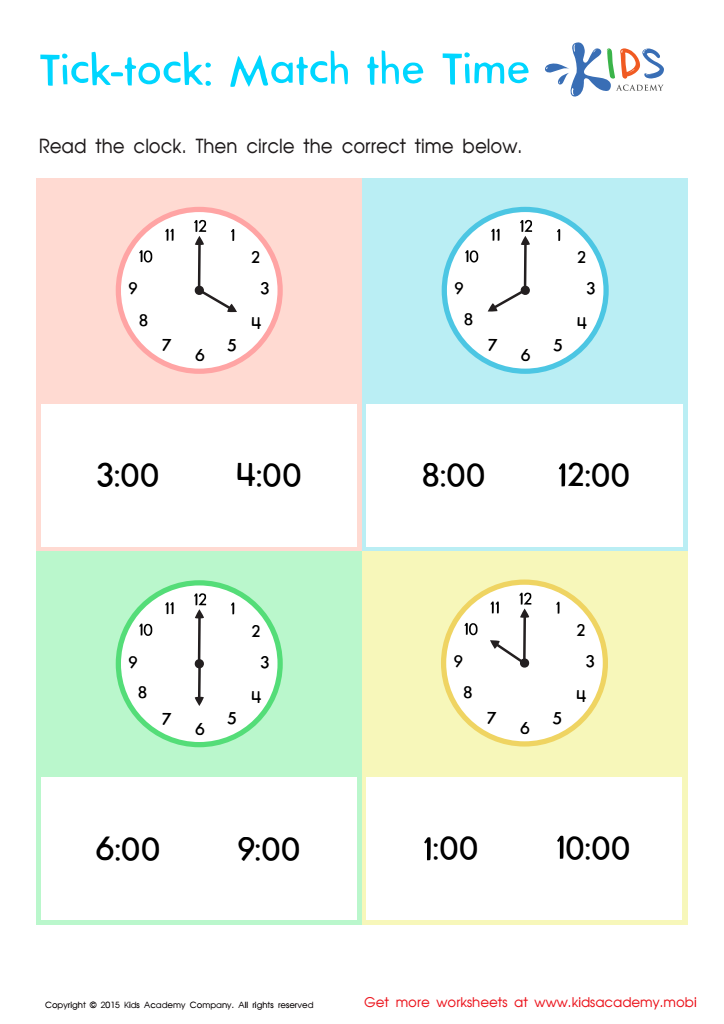
Telling The Time Worksheet: Part 4
 Assign to My Students
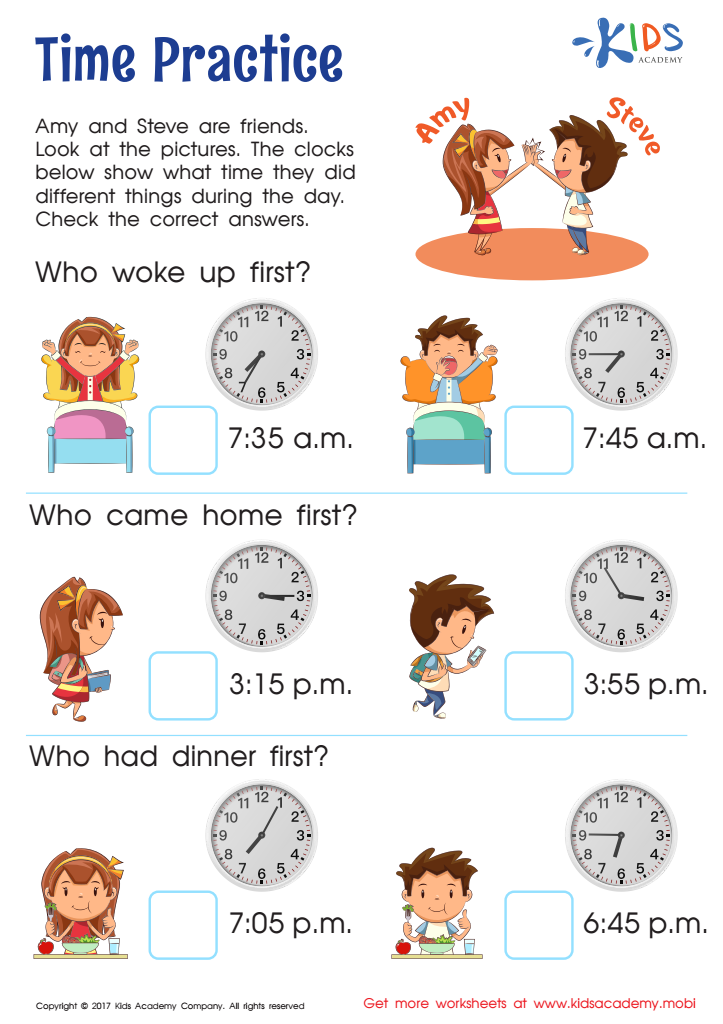
Time Practice Worksheet
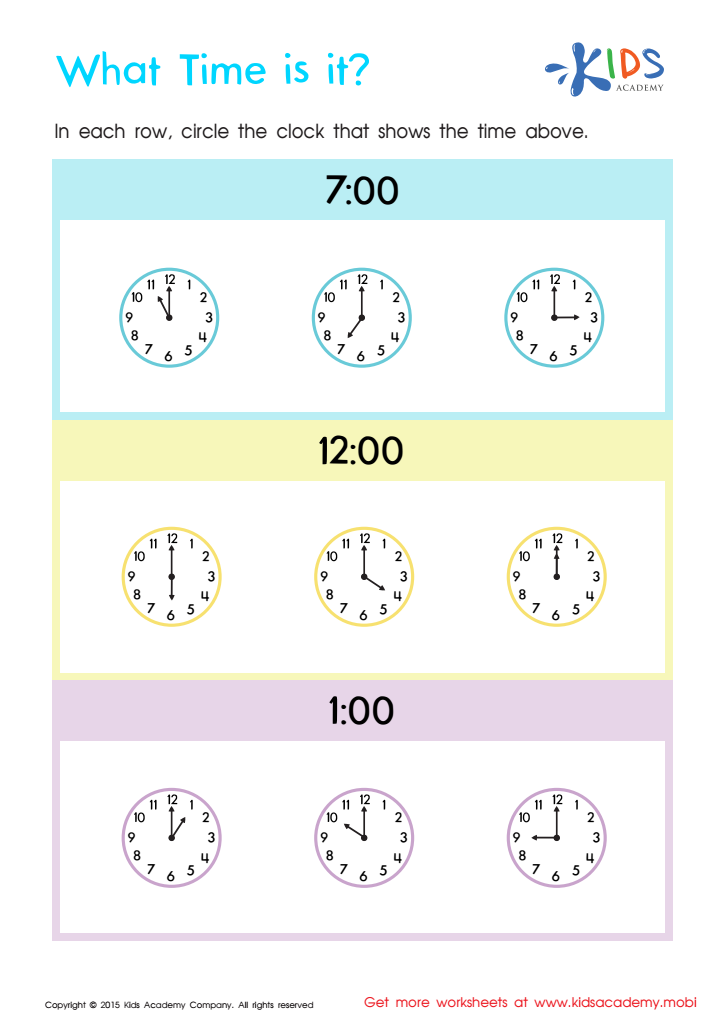
Telling The Time Worksheet: Part 3








Understanding analog clocks is an essential skill for children aged 3-7 as it lays the foundation for time management and enhances their cognitive development. Learning to read analog clocks fosters spatial awareness and helps develop critical thinking skills. By recognizing hour and minute hands, children gain a sense of how time progresses, which can lead to better organizational skills as they grow older.
Moreover, the ability to tell time on an analog clock supports language development. Children learn to express time verbally, use comparative language (e.g., "half past," "quarter to"), and understand concepts like "before" and "after." This foundational knowledge promotes numeracy, as it encourages counting and understanding divisions of time into segments.
Engaging with analog clocks also cultivates persistence and patience, as mastering this skill requires practice and determination. Additionally, serving as a bridge between traditional notions of time and the digital age helps children grasp both concepts more effectively.
For parents and teachers, fostering analog clock comprehension helps instill a sense of autonomy in children, empowering them to manage schedules, which builds confidence and responsibility—attributes crucial for their overall development into independent, time-conscious individuals.
In summary, analog clock understanding is vital for cognitive, linguistic, and personal growth in young learners.








