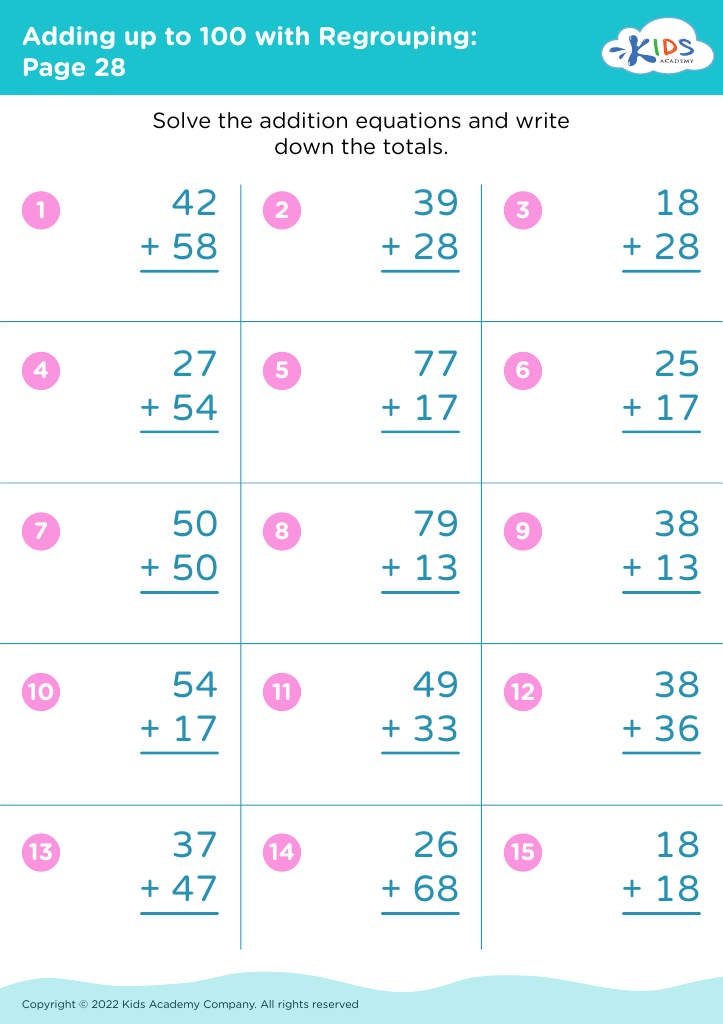








Basic arithmetic skills are foundational for young children aged 3-7, serving as a crucial building block for future learning. During these formative years, children's brains are rapidly developing, and exposure to fundamental mathematical concepts can significantly enhance cognitive growth. Learning skills like counting, addition, and subtraction not only prepares them for more complex math in later grades but also fosters logical reasoning and problem-solving abilities.
Parents and teachers should care because early arithmetic knowledge promotes confidence and a positive attitude toward learning. Children who grasp basic math concepts early are more likely to enjoy and succeed in mathematics as they progress through school. This can improve overall academic performance, as math tasks are critical in both everyday life and various subjects.
Additionally, integrating arithmetic with everyday activities—such as measuring ingredients while cooking or counting toys—makes learning engaging and enjoyable. It helps children relate math to real-world situations, enhancing their critical thinking skills. By prioritizing basic arithmetic skills, parents and teachers can empower children to become proficient learners, laying a solid foundation for their academic journey and equipping them with skills essential for lifelong success.








