Comprehension skills Worksheets for Ages 3-7 - Page 2
27 filtered results
-
From - To
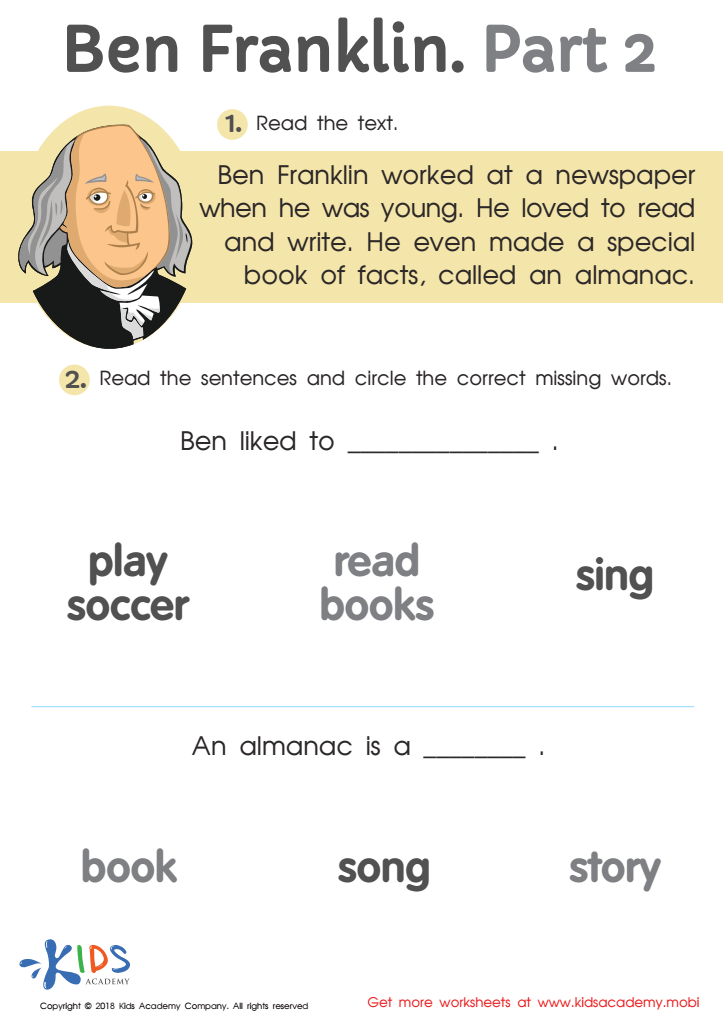
Ben Franklin Part 2 Worksheet
 Assign to My Students







Comprehension skills are crucial for children aged 3-7 as this is a foundational period for literacy development. During these early years, children begin to understand the connection between spoken language, text, and meaning. Strong comprehension skills enable children to make sense of what they hear and read, fostering their ability to express their thoughts and emotions effectively.
Parents and teachers should prioritize comprehension skills because they are directly linked to future academic success. When children comprehend stories and information, they develop critical thinking abilities, allowing them to identify key ideas, make predictions, and draw conclusions. This skill also enhances their vocabulary and language acquisition, essential for effective communication.
Additionally, fostering comprehension skills supports emotional and social development. Understanding stories helps children relate to characters and scenarios, promoting empathy and improving their ability to navigate social situations. Engaging in discussions about stories and sharing thoughts cultivates a positive relationship with learning, setting the stage for lifelong curiosity.
In summary, nurturing comprehension skills in early childhood not only enhances literacy but also promotes emotional intelligence and critical thinking, all vital components for success in school and beyond. Investing in these skills during ages 3-7 pays dividends as children advance through their educational journey.








