Cultural awareness Worksheets for Ages 3-7
18 filtered results
-
From - To
Discover engaging Cultural Awareness Worksheets designed for children ages 3-7. These printable resources from Kids Academy help young learners explore and appreciate diverse cultures through fun and educational activities. Each worksheet is crafted to develop important skills such as empathy, inclusivity, and global understanding. Through interactive exercises, vibrant images, and age-appropriate challenges, children will gain insights into different traditions, languages, and customs. Perfect for classrooms, homeschooling, or supplemental learning, these worksheets encourage early cultural literacy, fostering open-mindedness and respect for all. Encourage a lifetime of cultural appreciation and awareness with Kids Academy's thoughtfully designed worksheets.
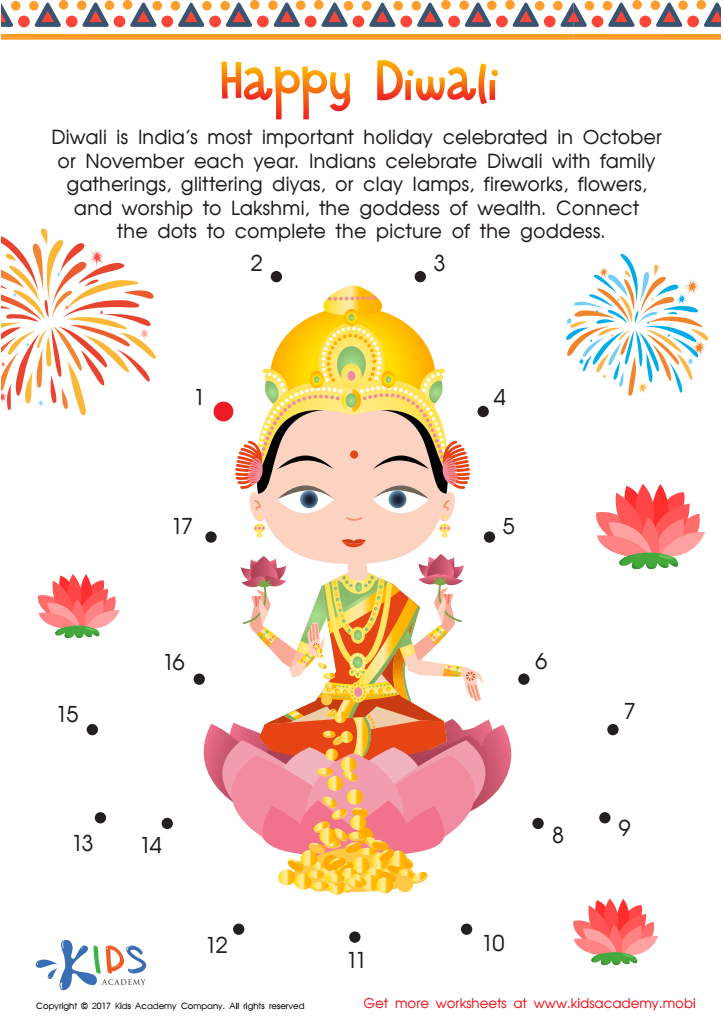
Happy Diwali Printable
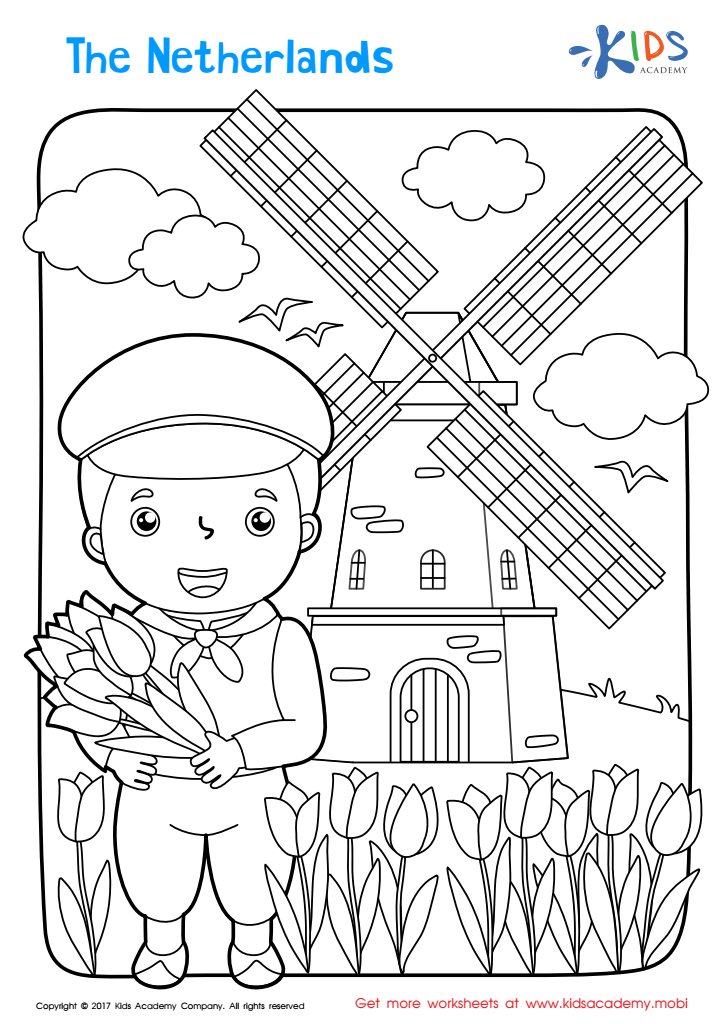
The Netherlands Printable
 Assign to My Students
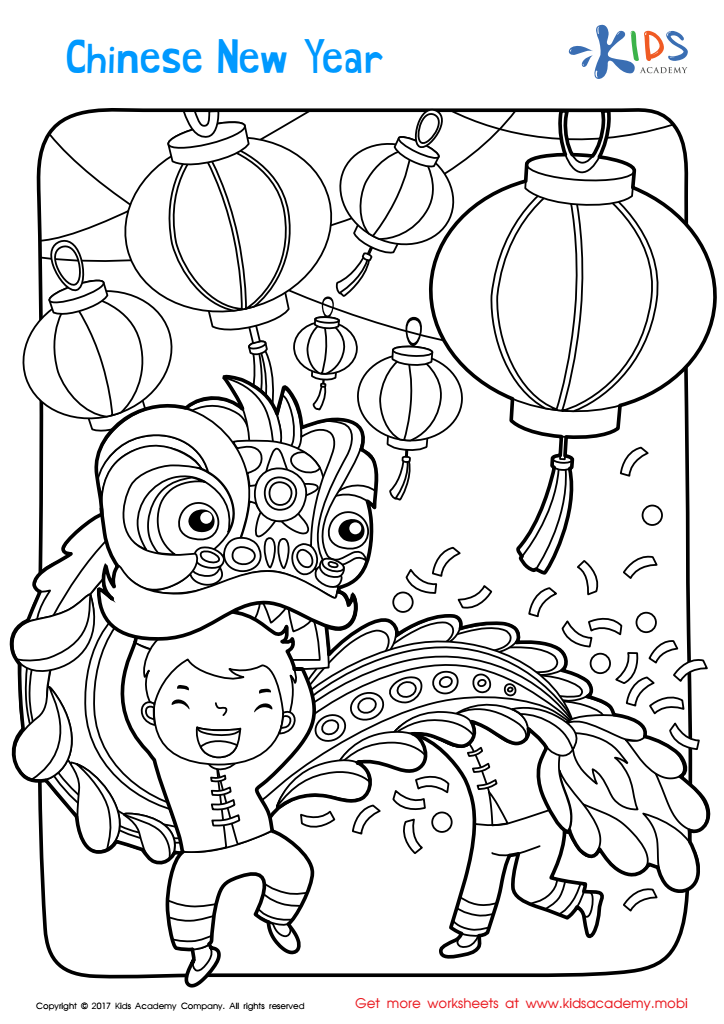
Chinese New Year Worksheet
Assign to My Students
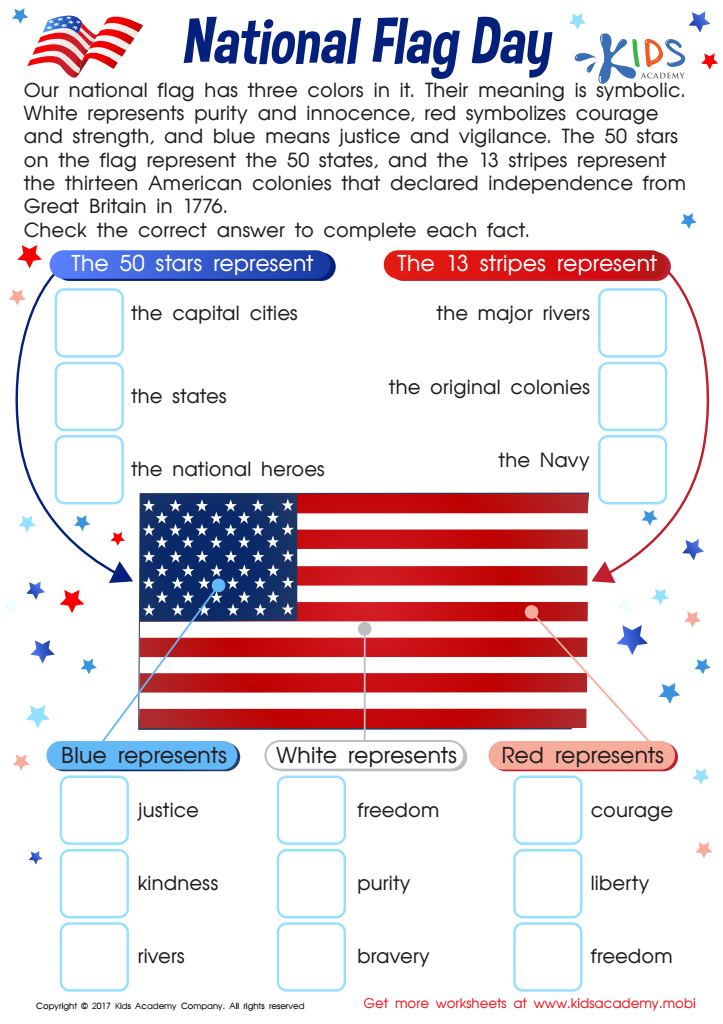
US National Flag Day Worksheet
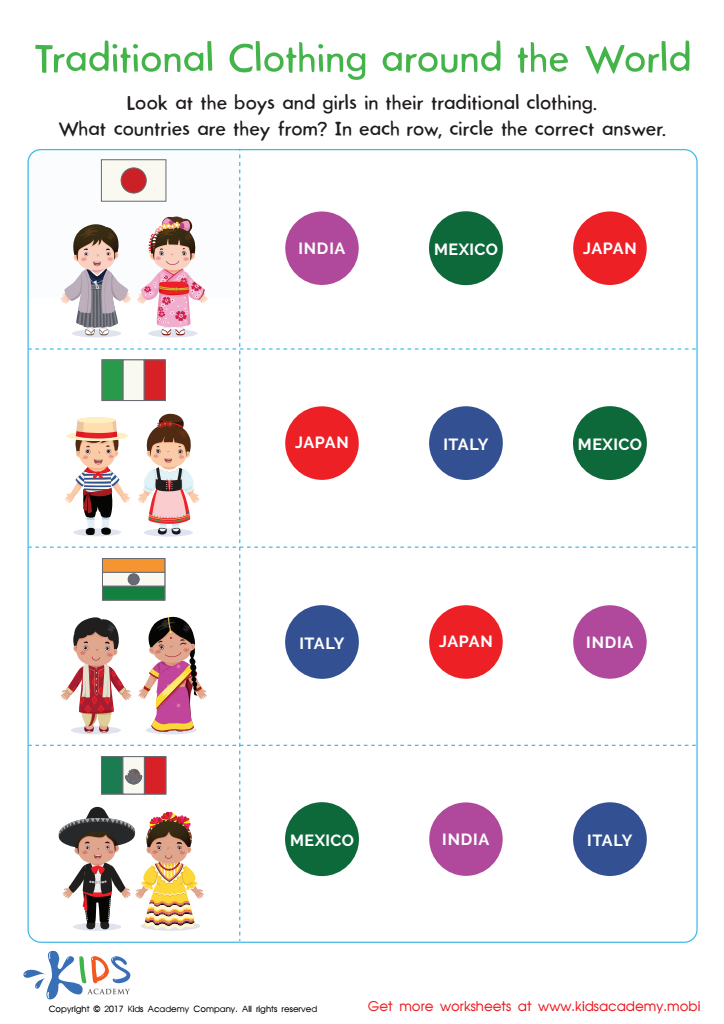
Traditional Clothing Worksheet
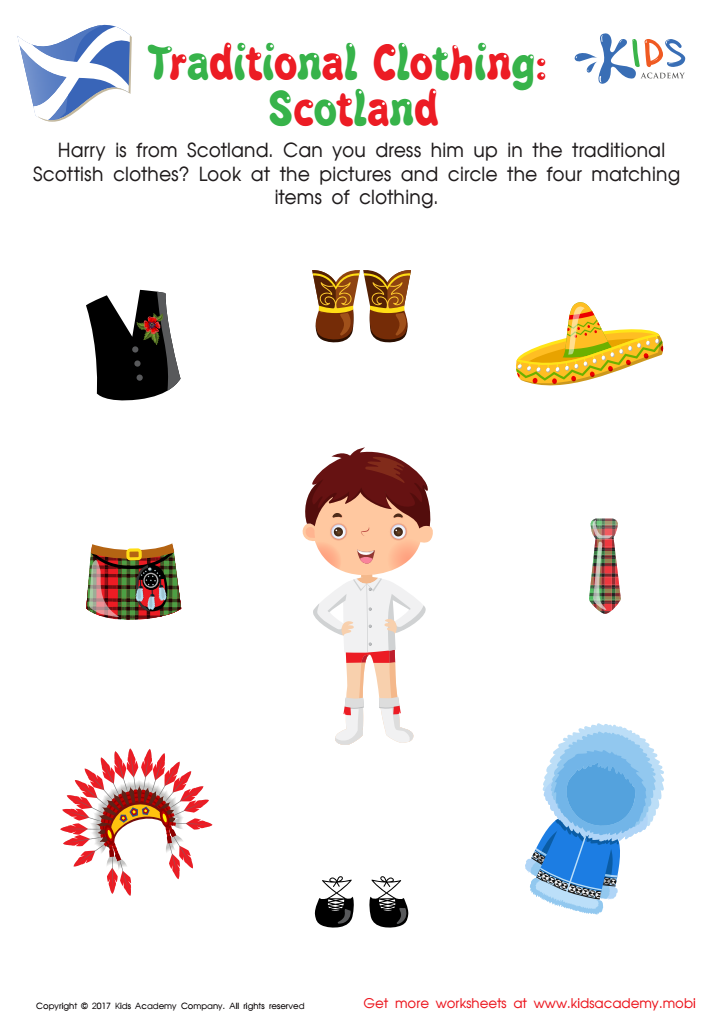
Traditional Clothing in Scotland Worksheet
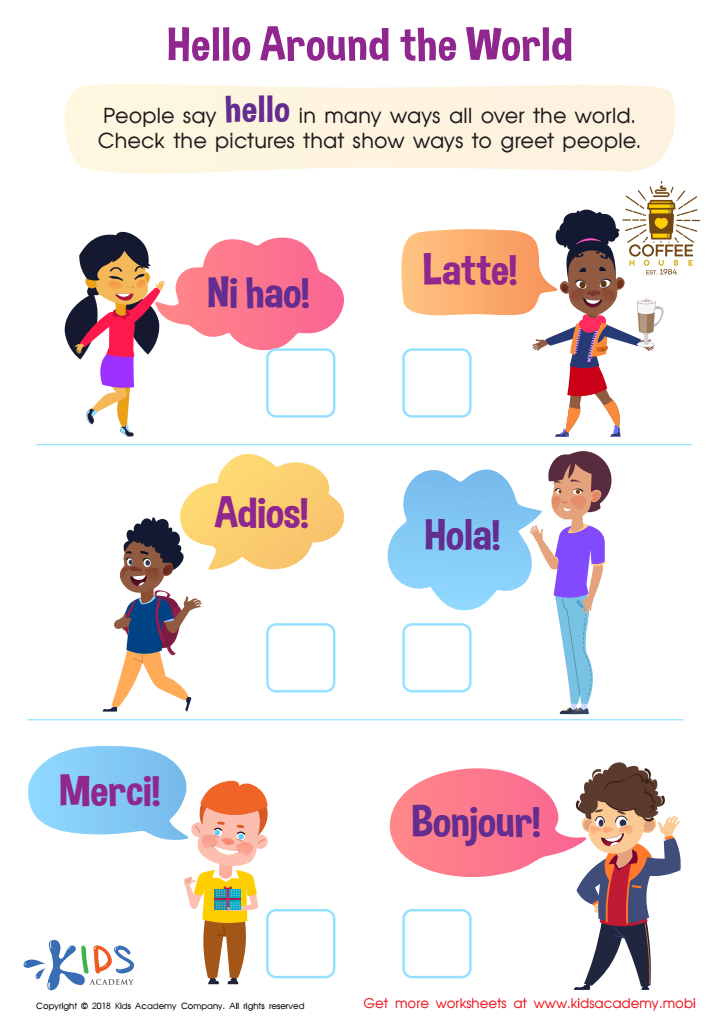
Hello Around the World Worksheet
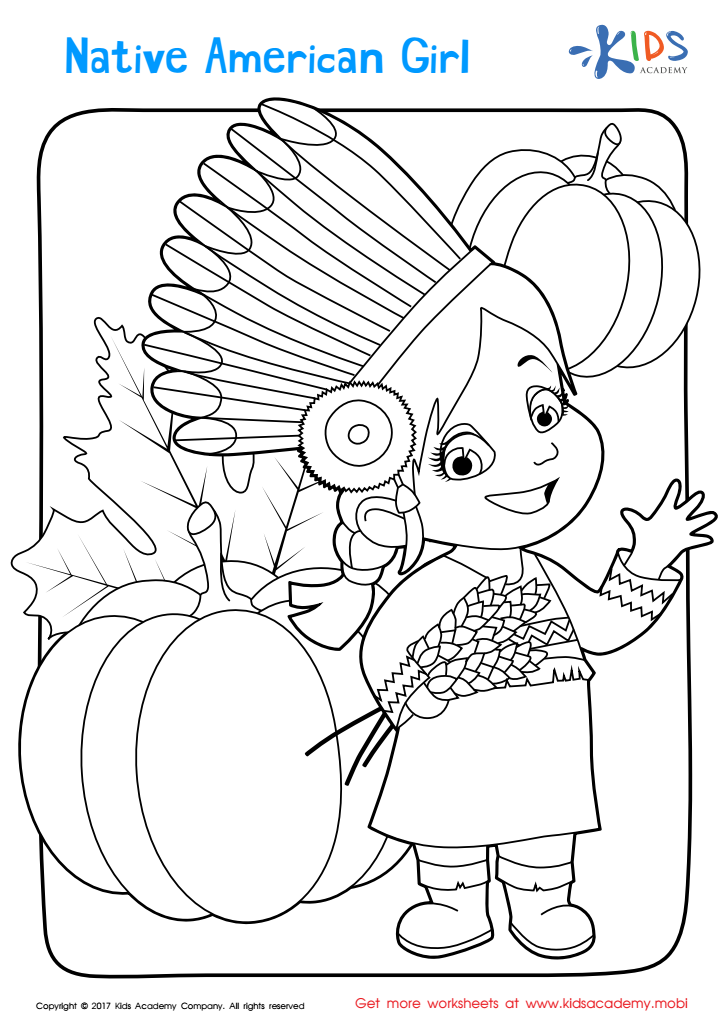
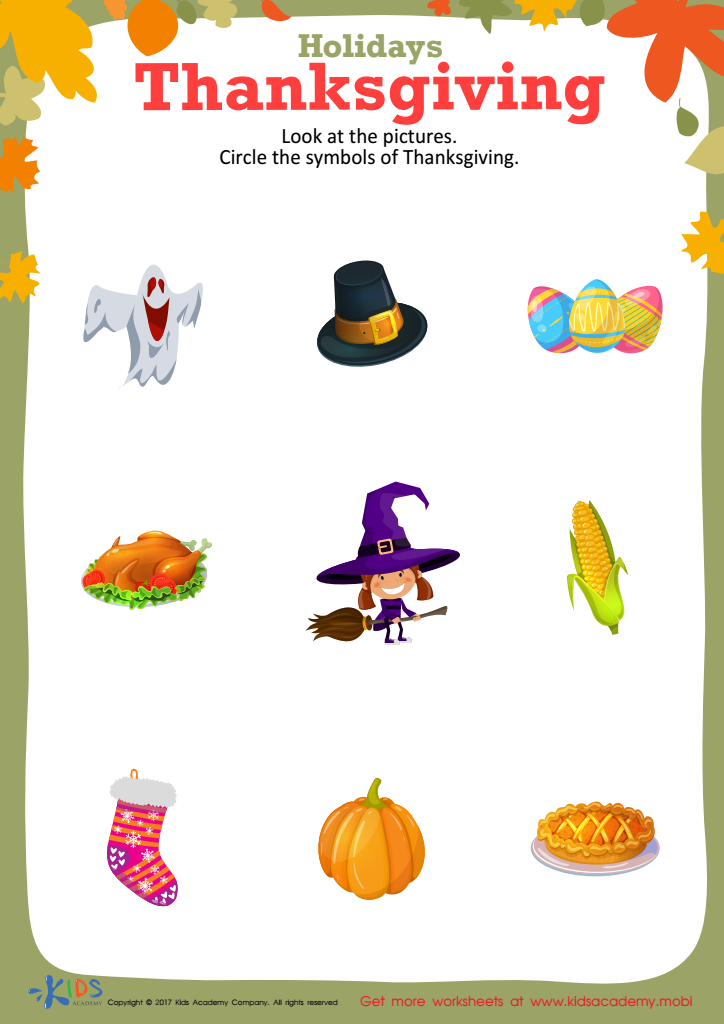
Thanksgiving Holiday Printable
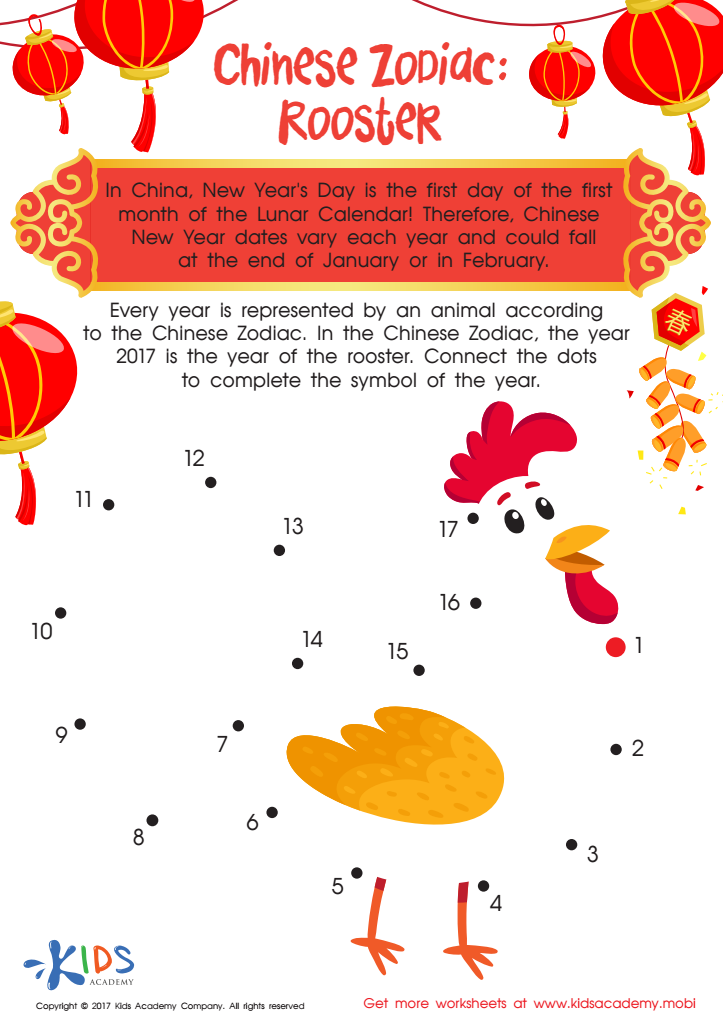
Chinese Zodiac Printable
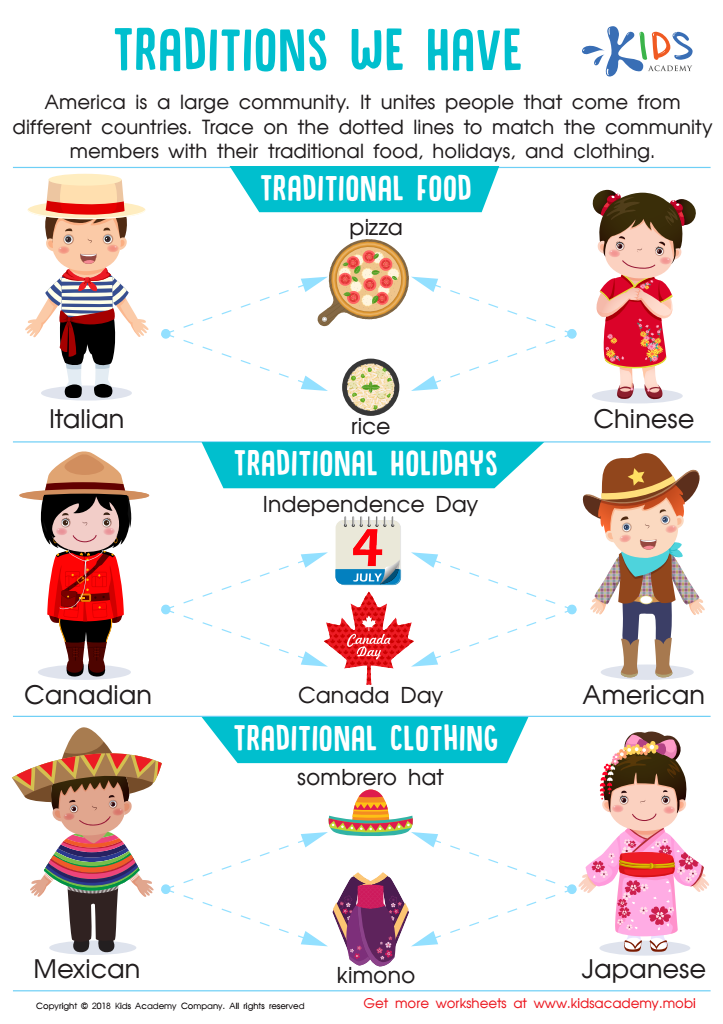
Traditions We Have Worksheet
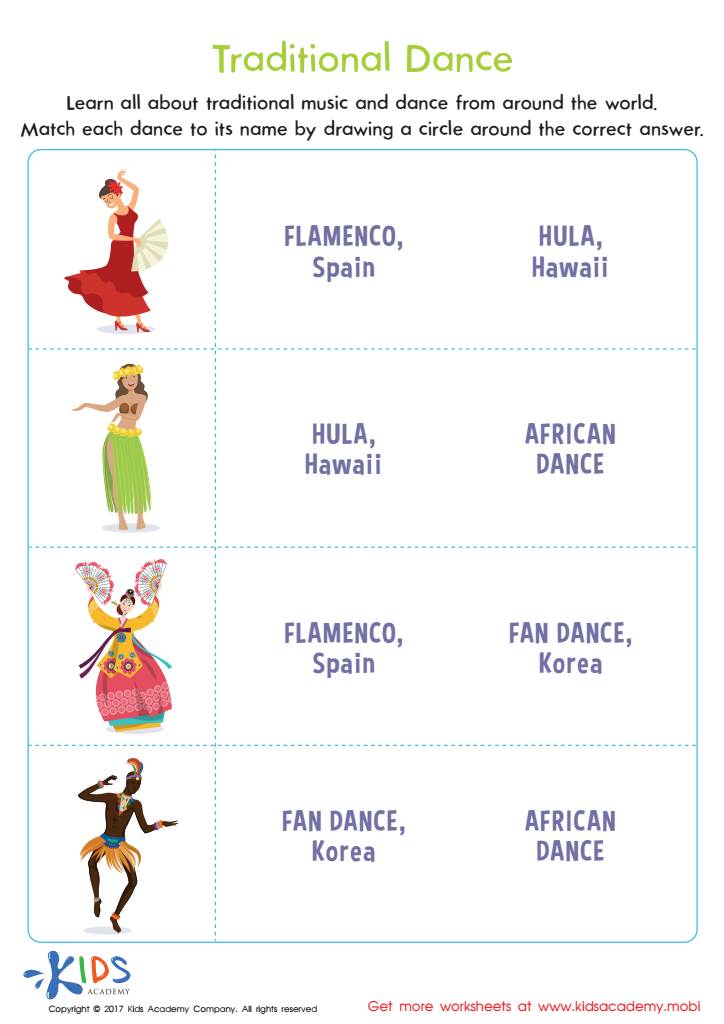
Traditional Dance Printable
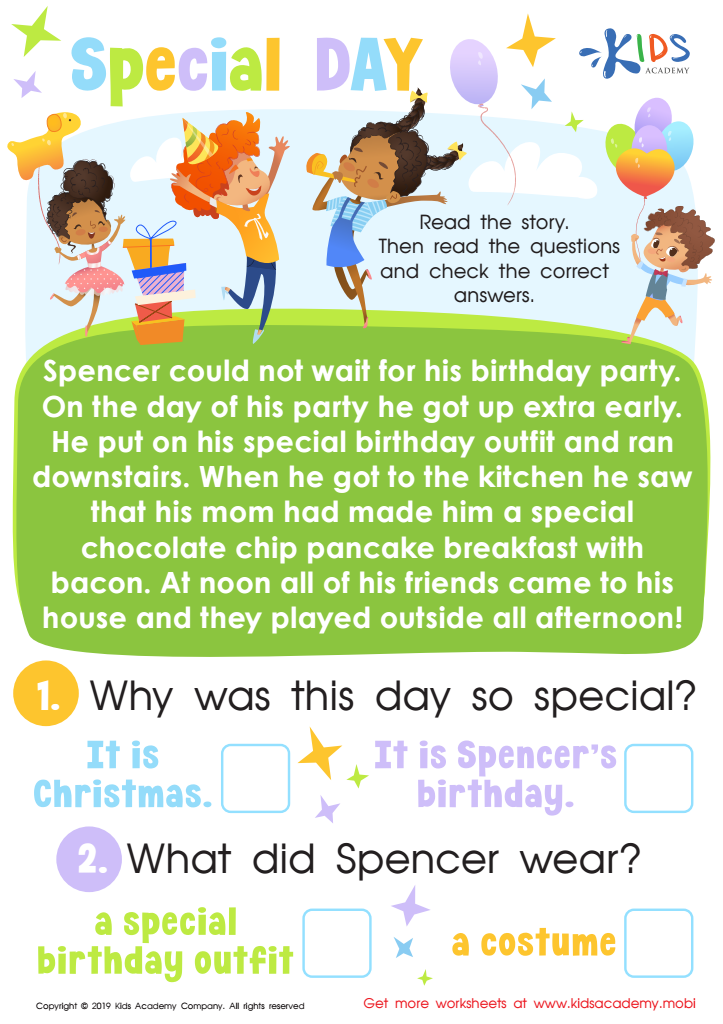
Special Day Worksheet
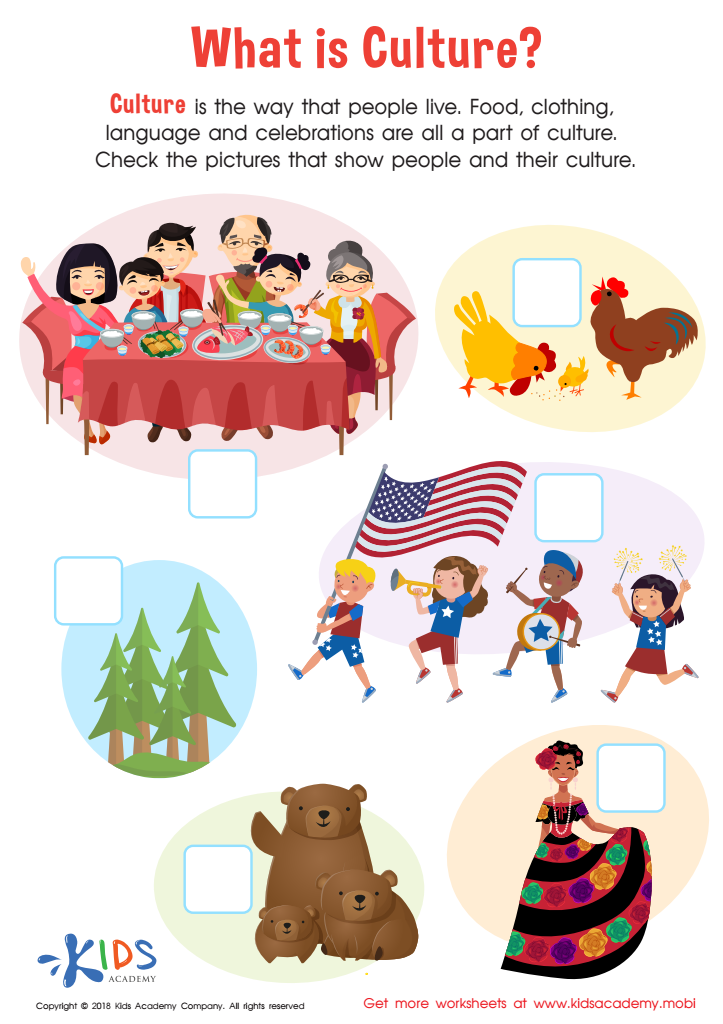
What Is Culture? Worksheet
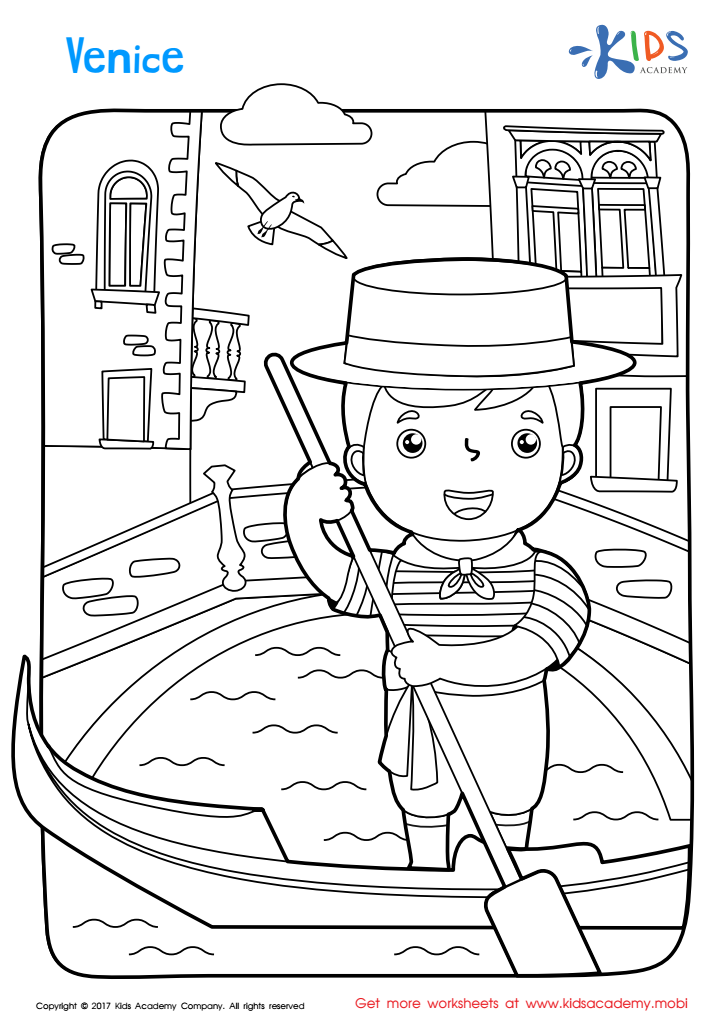
Venice Worksheet
Assign to My Students
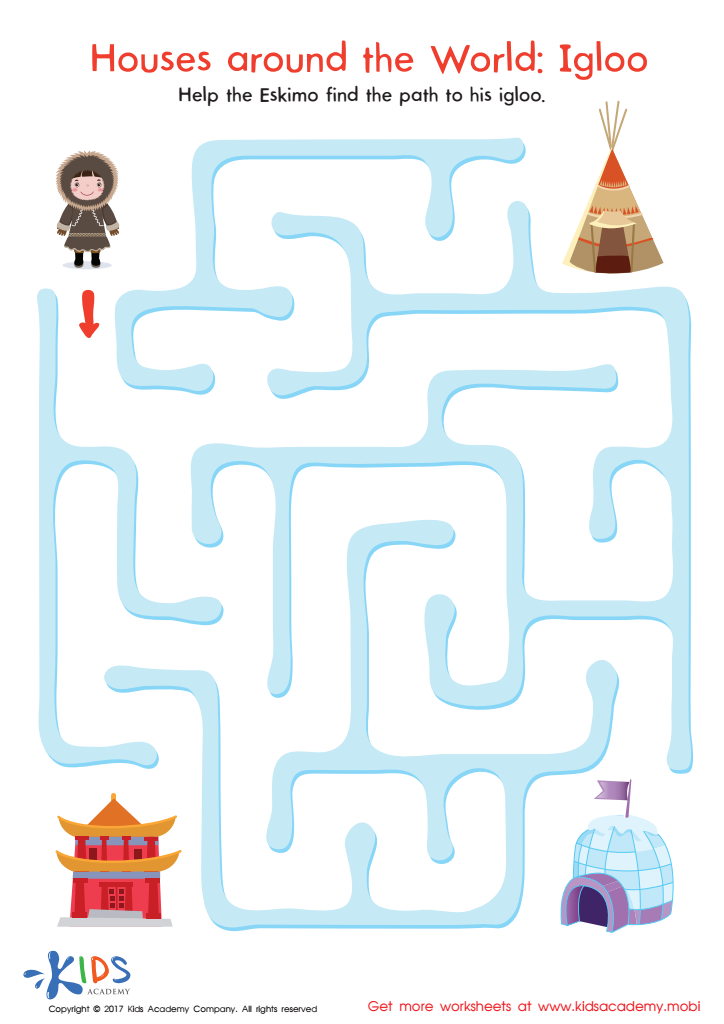
Houses Around the World: Igloo Printable








Cultural awareness is vital for young children aged 3-7 as it lays the foundation for a more inclusive and empathetic worldview. At this tender age, children are remarkably impressionable and start forming their core attitudes and perceptions about the world. By exposing them to diverse cultures, parents and teachers can instill values of acceptance, respect, and empathy early on.
Understanding cultural diversity helps children appreciate similarities and differences, which fosters a sense of curiosity and open-mindedness. This is crucial for social development and can reduce instances of prejudice and bullying later in life. In a globalized world, cultural awareness also equips children with essential social skills to interact harmoniously with people from varied backgrounds.
Moreover, cultural awareness encourages children to take pride in their own heritage while valuing the traditions of others, contributing significantly to their sense of identity and self-esteem. Activities like storytelling, cultural festivals, music, and art can make this learning both enjoyable and impactful.
By nurturing cultural awareness, parents and teachers are not only contributing to the formation of kind, respectful individuals but also paving the way for a more connected and cooperative society. The benefits of such an education extend far beyond the classroom, influencing the child's lifelong attitude towards diversity and inclusivity.








