Drawing conclusions Worksheets for Ages 3-7
3 filtered results
-
From - To
Introduce young learners to critical thinking with our engaging Drawing Conclusions Worksheets designed for ages 3-7! These fun, educational activities help children develop the ability to infer and draw logical conclusions from stories, images, and simple texts. Perfect for home or classroom use, these worksheets are tailored to enhance early reading comprehension and cognitive skills. With colorful illustrations and age-appropriate exercises, children will enjoy learning to make predictions based on evidence. Boost your child's analytical thinking with our Drawing Conclusions Worksheets and watch their confidence soar as they master this essential skill.
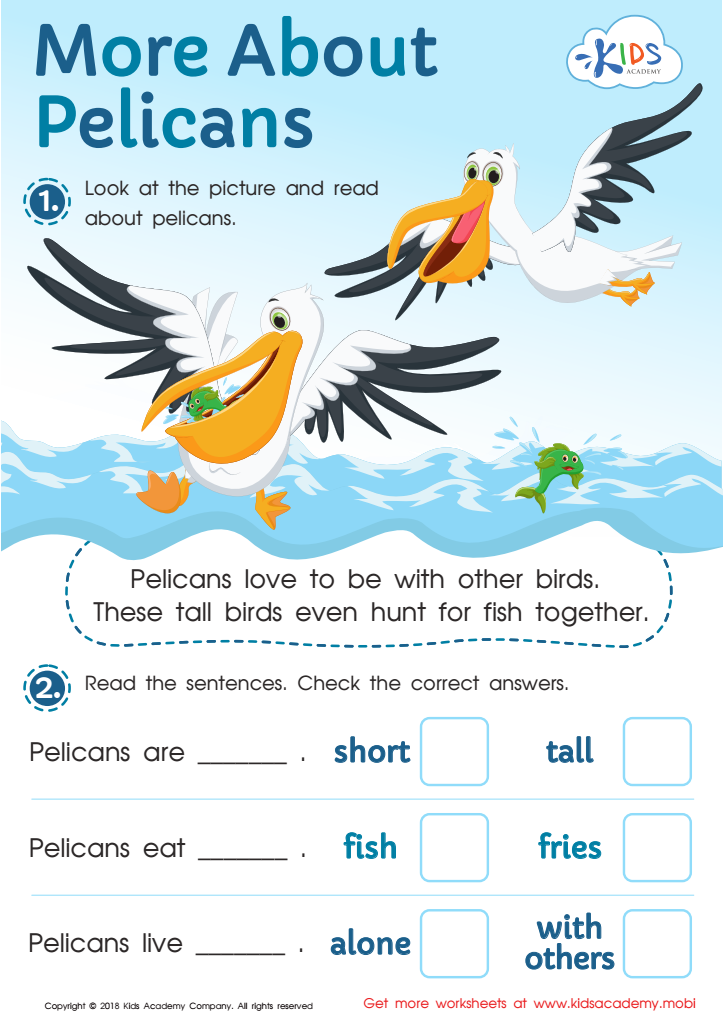
More About Pelicans Worksheet
 Assign to My Students
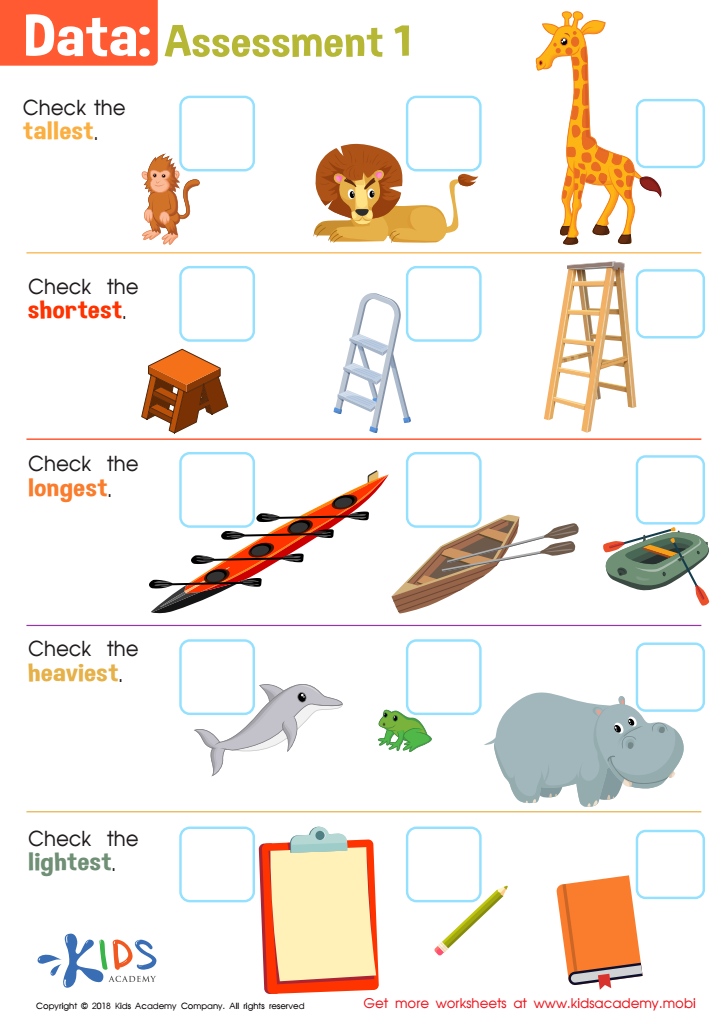
Data: Assessment 1 Worksheet








Drawing conclusions is a vital skill for young children aged 3-7 because it lays the foundation for critical thinking and comprehension abilities. This age range is crucial for cognitive development, and engaging in activities that encourage drawing conclusions stimulates children's analytical thinking. When parents and teachers encourage children to observe, ask questions, and make inferences based on available information, they help foster a deeper understanding of their environment and experiences.
For example, if a child sees that the sky is cloudy and hears a rumble, leading them to carry an umbrella, they are practicing drawing conclusions by predicting rain. This skill is not only essential for math and science, where making predictions based on data is key, but also for reading and storytelling, where understanding plot connections enhances comprehension.
Engaging in such cognitive activities early on ensures that children are not just passive learners, but active participants in their educational journeys. It encourages curiosity, problem-solving, and independent thought processes—all attributes that contribute to lifelong learning and adaptability. Moreover, reinforcing these skills in a supportive environment, where making mistakes is part of the learning process, boosts children's confidence and willingness to tackle complex tasks. Thus, both parents and teachers play a vital role in nurturing this important cognitive skill in early childhood.








