







Enhancing counting skills in children aged 3-7 is crucial for their overall cognitive development and future academic success. During these formative years, children build foundational number sense that is essential for more advanced mathematical concepts. Mastering counting not only helps them understand quantities and number relationships but also fosters critical thinking and problem-solving abilities.
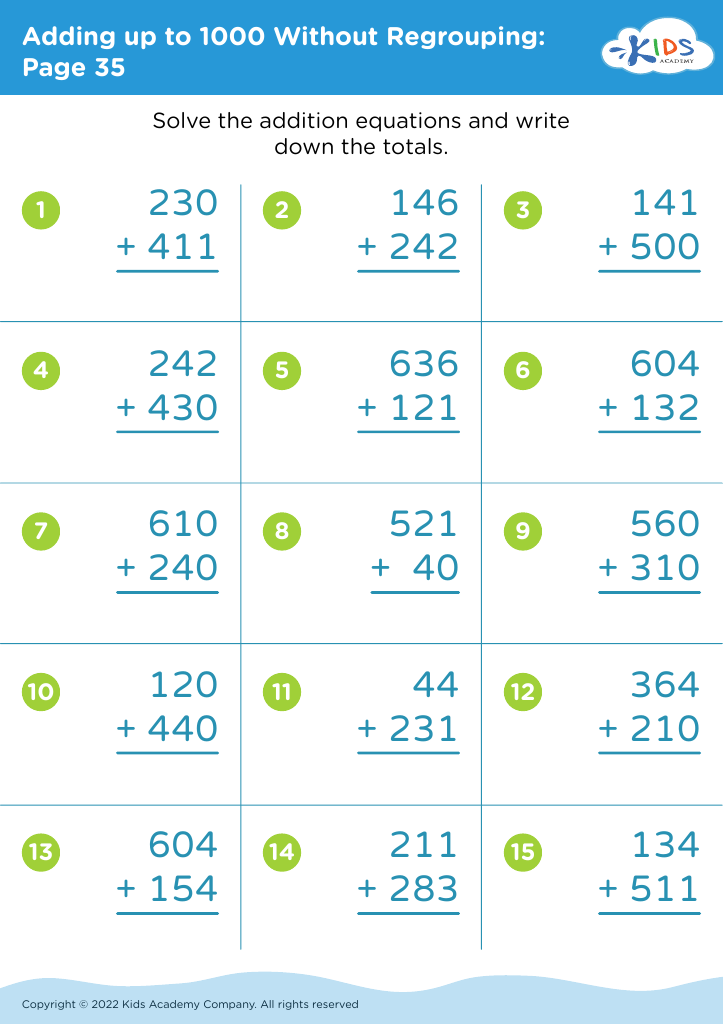
Moreover, counting serves as an introduction to math-related concepts such as addition, subtraction, and measurement. Research shows that early numeracy skills directly correlate with later math achievement. For parents and teachers, engaging children in counting activities—such as counting objects around the house or in the classroom—can be both an enjoyable and educational experience.
It also encourages their cognitive flexibility and spatial reasoning. As these skills develop, children gain confidence and curiosity in exploring mathematics. Additionally, early counting experiences support language development, as children learn to verbalize numbers and engage with peers or adults around them. In fostering counting skills, we empower children to become confident learners, equipped with the tools they need to thrive academically and in everyday life. Supporting this essential skill sets the stage for meaningful learning experiences that resonates throughout their education.








