
Identifying differences Worksheets for Ages 3-7
3 filtered results
Difficulty Level
Grade
Age
-
From - To
Subject
Activity
Standards
Discover our engaging “Identifying Differences Worksheets” designed specifically for children aged 3-7! These fun and interactive worksheets encourage young learners to sharpen their observation skills as they explore various images to spot differences. Tailored to promote critical thinking and visual discrimination, each worksheet incorporates vibrant illustrations and relatable themes relevant to young minds. Ideal for parents and educators, these resources provide valuable practice in noticing details, enhancing cognitive development, and fostering early problem-solving abilities. With a variety of levels to suit different learning stages, your child will enjoy hours of enriching and educational activity while building fundamental skills. Explore now!
Favorites
With answer key
Interactive
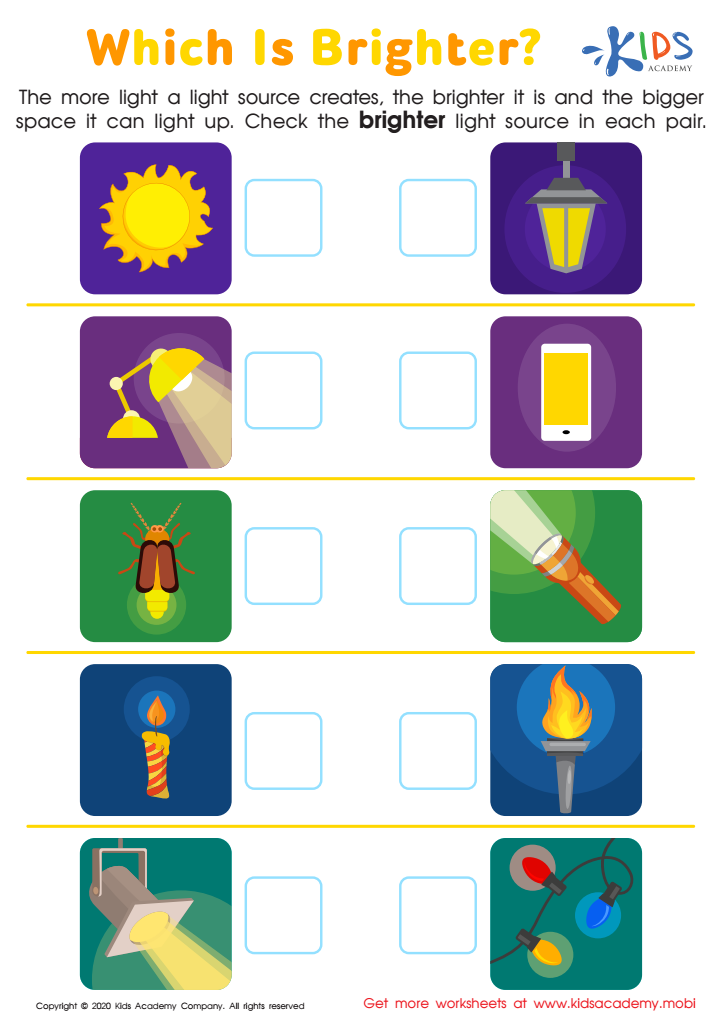
Which Is Brighter? Worksheet
Before the exercise, ask students to recall sources of light. Use this worksheet to explain that the brighter the light source, the more space it can light up. Identify the different light sources in the pictures, then check the brighter light source in each pair. The biggest natural source of light is the sun.
 Assign to My Students
Which Is Brighter? Worksheet
Worksheet
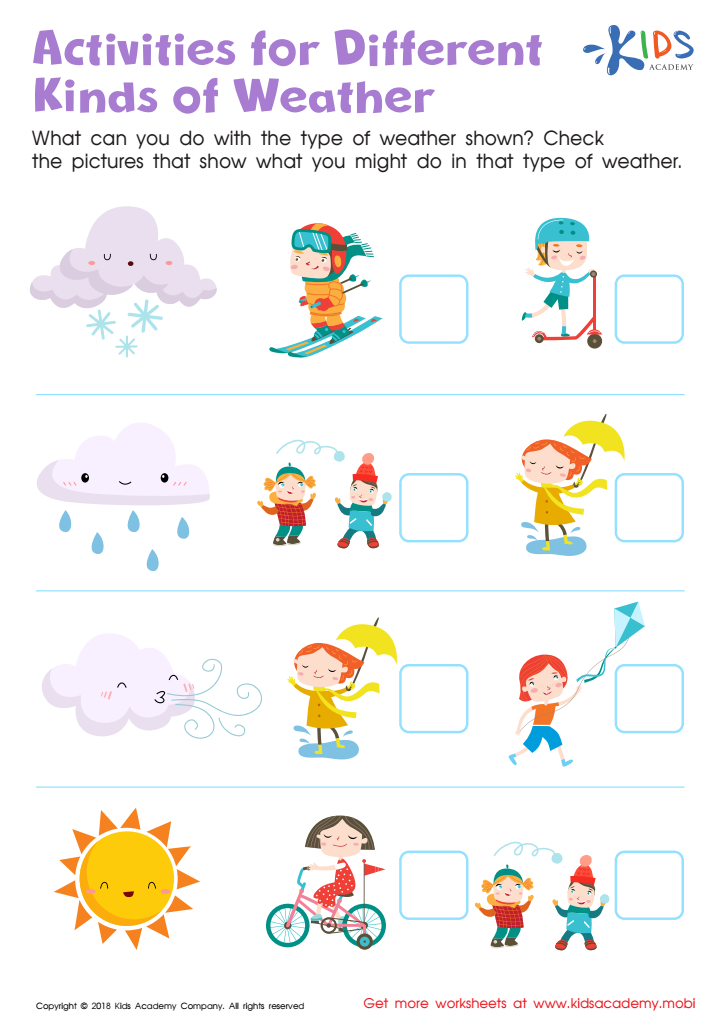
Activities for Different Kinds of Weather Worksheet
Help your child explore the changing seasons with this interactive worksheet. Ask them to name the different seasons and activities associated with each type of weather. Show the pictures and explain what they can do in that kind of weather. Have them check off the activities to help them learn and enjoy the changing seasons.
Activities for Different Kinds of Weather Worksheet
Worksheet

Take a Look - Part 1 Worksheet
Young learners gain understanding when using picture clues when reading. Looking at illustrations can help students learn the meaning of key vocabulary when reading fiction or informational text. Ask your students to look at the worksheet and observe what they can learn from the picture. It's a great comprehension strategy for early readers.
Take a Look - Part 1 Worksheet
Worksheet
Join Kids Academy for Free
Who is primarily going to use this learning content?








Identifying differences in young children, especially between the ages of 3-7, is crucial for their overall development and well-being. During this formative stage, children are developing foundational skills in social interaction, emotional regulation, and cognition. Recognizing individual differences—such as varying learning styles, interests, and developmental milestones—allows parents and teachers to tailor their approaches to meet each child's unique needs.
By acknowledging these differences, educators can create inclusive classrooms that celebrate diversity and foster a sense of belonging among all students. This helps prevent feelings of frustration or inadequacy in children who may struggle if their learning preferences are overlooked. Additionally, parents who understand their child’s specific strengths and weaknesses can advocate for appropriate resources and support, ensuring that their child thrives.
Furthermore, early identification of differences can lead to timely interventions for those who might need additional assistance, enhancing their chances of success later in life. Ultimately, by caring about and actively identifying the differences in children, parents and teachers foster an environment that nurtures growth, confidence, and a love of learning, laying the groundwork for a bright future.








