
Money identification Worksheets for Ages 3-7
5 filtered results
Difficulty Level
Grade
Age
-
From - To
Subject
Activity
Standards
Introducing our Money Identification Worksheets for Ages 3-7 at Kids Academy! Designed to make learning fun and effective, these printable worksheets help young children recognize and understand various coins and bills. With engaging activities tailored for preschoolers and early elementary students, your child will build essential skills in counting, sorting, and distinguishing different denominations. Perfect for at-home practice or classroom use, these resources foster early financial literacy in an enjoyable, interactive way. Start your child's educational journey with our expertly crafted worksheets, making money identification a fun and rewarding experience! Ready to learn? Join us today!
Favorites
With answer key
Interactive
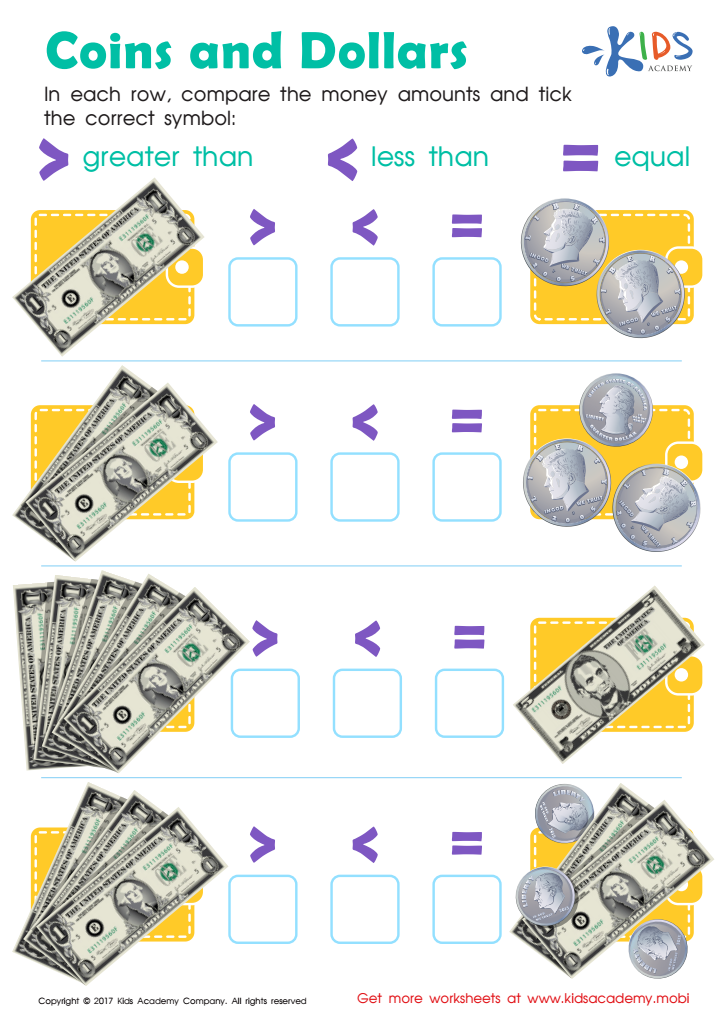
Money: Coins Dollars Printable
Motivate your kid to learn and practise essential math skills, like 'greater than' and 'less than', by introducing the importance of money! The money worksheet "Coins and Dollars" will give them a hands-on experience of counting coins and dollars, making math symbols more memorable.
 Assign to My Students
Money: Coins Dollars Printable
Worksheet
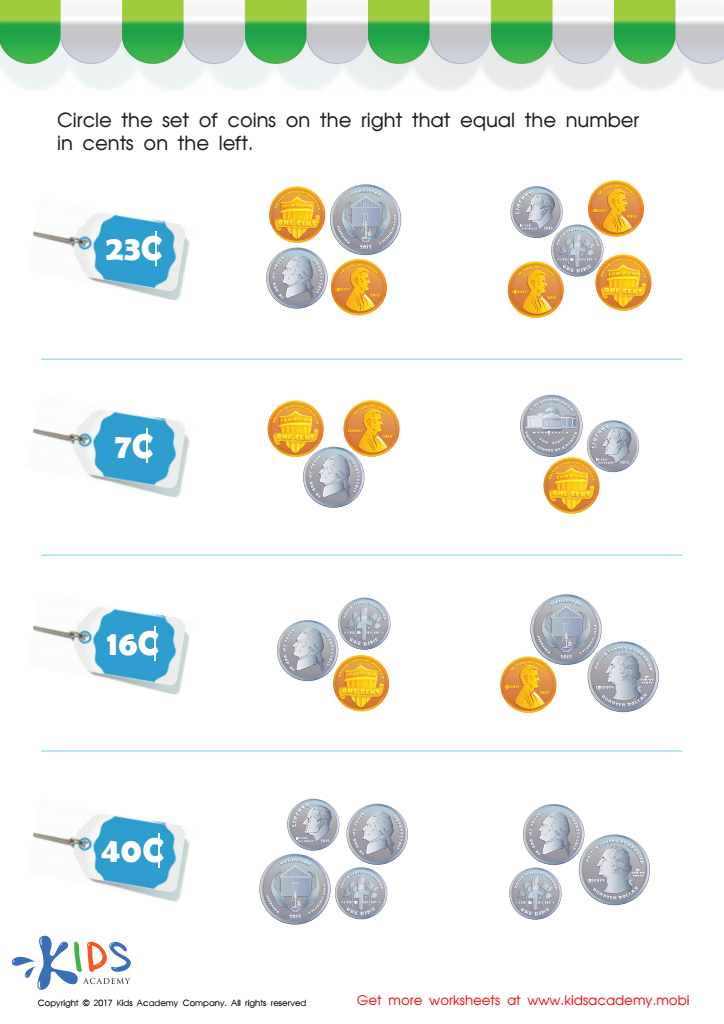
Picking the Coins You Need Money Worksheet
Let's learn to count money with Parents and Kids Academy! Investigate a real shop together: buy a globe, pencils, books, and a school bag using coins. Then, circle the coins you'll need. Visit our website for more free and fun money games for kids!
Picking the Coins You Need Money Worksheet
Worksheet
Join Kids Academy for Free
Who is primarily going to use this learning content?








Understanding money and its value is a crucial skill that has lasting implications for children’s cognitive development and adult financial literacy. Introducing money identification to children ages 3-7 creates a foundational awareness essential for future financial competence. At this early age, children are highly receptive to new concepts due to their formative cognitive flexibility, which means that lessons about money management are likely to sink in deeply and persist.
First, identifying money helps children develop number recognition and basic math skills. They learn to recognize different denominations, add simple amounts, and grasp the concept of value, which are important steps toward more complex arithmetic. This boosts their numeracy skills, which are vital for academic success in various subjects.
Second, understanding money fosters practical life skills such as saving, spending, and sharing. Children begin to comprehend that money is a limited resource, which in turn nurtures decision-making and prioritization abilities. This early education demystifies the concept of money, making it less intimidating and more manageable in their adult lives.
Finally, early money identification activities often involve playful, hands-on interaction—using coins and notes as physical objects to sort, count, and identify—a process that can make learning fun. This tactile learning reinforces cognitive connections and promotes better retention. Overall, early exposure to money identification equips children with critical academic and life skills that will support their future independence and financial well-being.








