
Motor skills improvement Worksheets for Ages 3-7
3 filtered results
Difficulty Level
Grade
Age
-
From - To
Subject
Activity
Standards
Enhance your child’s development with our Motor Skills Improvement Worksheets, perfect for ages 3-7. These expertly crafted resources empower children to improve their fine and gross motor skills through engaging and educational activities designed to boost hand-eye coordination, dexterity, and muscle strength. Ideal for young learners, these worksheets feature fun exercises like coloring, cutting, tracing, and drawing that not only foster motor development but also promote creativity and cognitive growth. Spark your child's potential with our comprehensive collection of motor skills improvement worksheets, designed to make learning an enjoyable and impactful experience.
Favorites
With answer key
Interactive
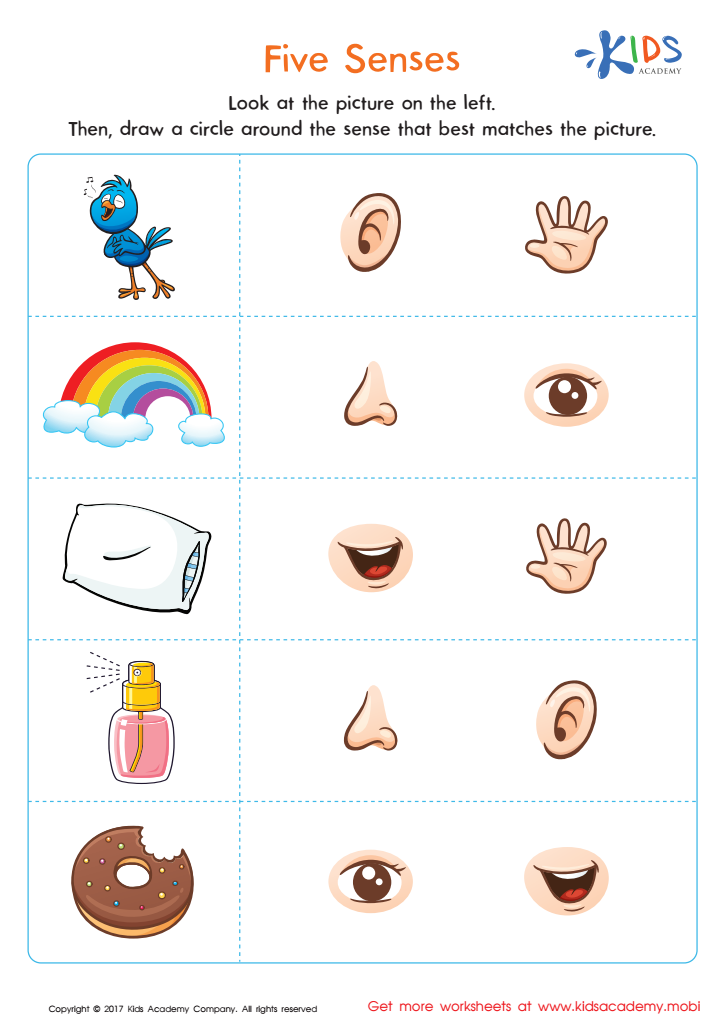
Five Senses Printable
For an easy way to jumpstart your child's critical thinking and introduce the five senses, print our free worksheets! These are great for reviewing each sense and practicing critical thinking skills. Work with your child and discuss each image. After completing the worksheet, find objects around the house so they can quiz themselves!
 Assign to My Students
Five Senses Printable
Worksheet
Join Kids Academy for Free
Who is primarily going to use this learning content?







Parents and teachers should prioritize motor skills development for children aged 3-7 because these skills form the foundation for a child's ability to interact with their environment effectively. Fine motor skills, such as grasping a pencil or manipulating small objects, are essential for tasks like writing, drawing, and buttoning clothes. Improved fine motor skills lead to better hand-eye coordination and dexterity, which are crucial for school readiness and academic success.
On the other hand, gross motor skills, involving larger muscles for activities like running, jumping, or climbing, are equally important. These skills support overall physical health, enabling children to participate in various physical activities that promote cardiovascular health, strength, and endurance. Moreover, developing gross motor skills boosts a child's confidence and social skills, as they can more easily join in playground activities or team sports.
Importantly, both fine and gross motor skills support cognitive development. Engaging in activities that require motor planning and control also strengthens neural pathways that contribute to skills like problem-solving, attention, and spatial awareness. For these reasons, promoting motor skills from an early age not only enhances children’s physical abilities but also sets a strong foundation for their intellectual and social development.








