
Musical instruments recognition Worksheets for Ages 3-7
3 filtered results
Difficulty Level
Grade
Age
-
From - To
Subject
Activity
Standards
Discover our engaging Musical Instruments Recognition Worksheets designed for children aged 3-7! These fun and interactive resources help young learners identify various musical instruments while developing essential skills in recognition, matching, and fine motor control. Each worksheet features vibrant illustrations and simple tasks that capture your child's imagination, making learning an enjoyable experience. Perfect for both home and classroom settings, our worksheets support early childhood education by fostering creativity and musical appreciation. Download and print our exciting activities today to enhance your child’s recognition skills and inspire a lifelong love for music! Start the musical journey now!
Favorites
With answer key
Interactive
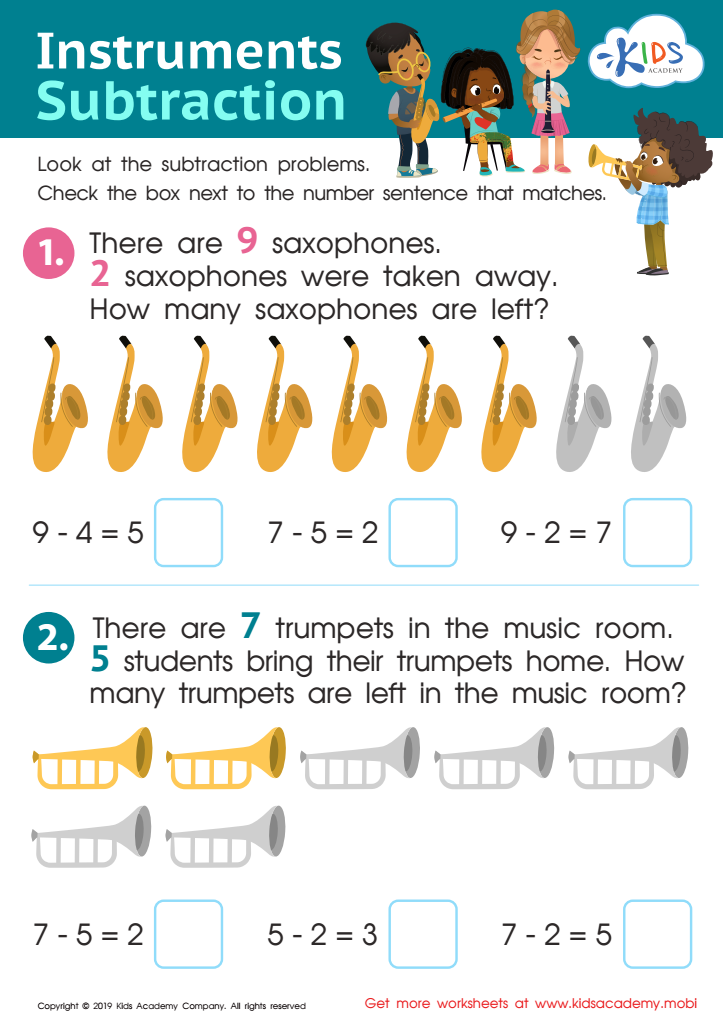
Instrument Subtraction Worksheet
Encourage kids to practice their addition and subtraction by having them identify the musical instruments on the worksheet, then read the subtraction problems and check the box with the matching number sentences.
 Assign to My Students
Instrument Subtraction Worksheet
Worksheet
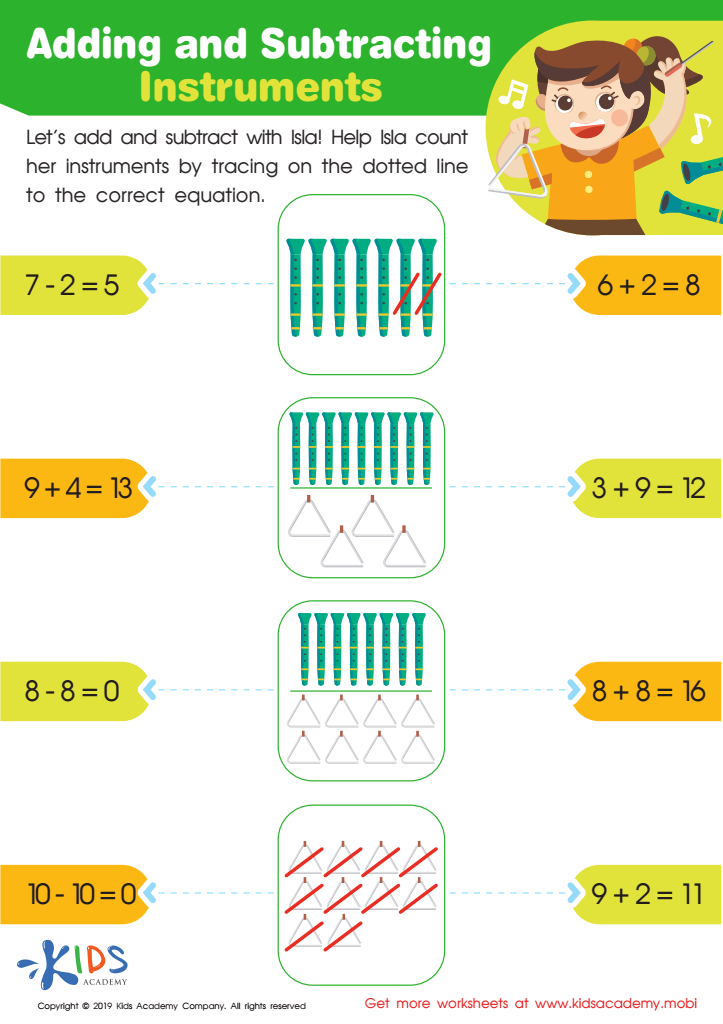
Adding and Subtracting: Instruments Worksheet
Children can help Isla count her musical instruments with this fun worksheet. The downloadable PDF gives them a chance to practice addition and subtraction by connecting pictures to equations. It's also a great way to learn the order of operations.
Adding and Subtracting: Instruments Worksheet
Worksheet
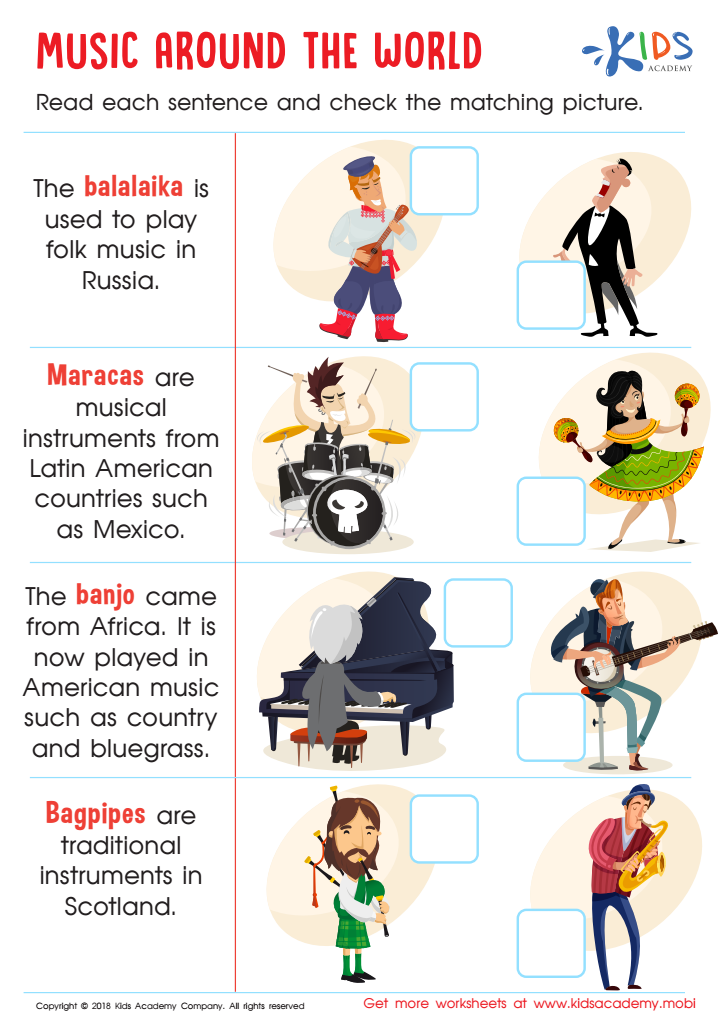
Music Around the World Worksheet
Have your kids read the sentences in this exercise, or assist them if they're not confident readers. The pictures teach them about different cultures' music, like the banjo which comes from Africa and is a part of some American genres. Read each sentence and have them match it to the right image.
Music Around the World Worksheet
Worksheet
Join Kids Academy for Free
Who is primarily going to use this learning content?







Musical instrument recognition plays a crucial role in the development of children ages 3-7, making it an important focus for both parents and teachers. Early exposure to music can significantly enhance brain development, improve cognitive skills, and foster creativity. By teaching children to recognize musical instruments, educators and parents promote auditory discrimination, which is vital for language acquisition and overall communication skills.
Additionally, understanding various instruments nurtures a child’s appreciation for diverse musical genres, enriching their cultural knowledge. Engaging with music also encourages social skills, as children often participate in group activities involving instruments, fostering teamwork and cooperation.
Moreover, musical exploration supports fine motor skills development, as children learn to handle and play different instruments. It aids in physical coordination and spatial awareness. Recognizing instruments can also instill a sense of discipline and patience as children practice and refine their musical abilities.
Lastly, music is a fun, joyous tool that can enhance emotional expression. This recognition not only builds foundational musical knowledge but also delivers critical life skills, ensuring that children not only grow academically but also socially and emotionally as they navigate the world around them.








