Number Matching Worksheets for Ages 3-7
4 filtered results
-
From - To
Explore our engaging Number Matching Worksheets designed specifically for children aged 3-7! These fun and interactive printables are perfect to develop your little ones' number recognition and matching skills. With colorful illustrations and age-appropriate activities, kids will learn to associate numbers with quantities while enhancing their cognitive abilities. Our worksheets cater to varying skill levels, allowing for tailored learning experiences that keep young minds excited and motivated. Whether at home or in the classroom, these resources provide fabulous opportunities for kids to practice essential early math skills. Begin the number adventure today and watch your child's confidence in math soar!
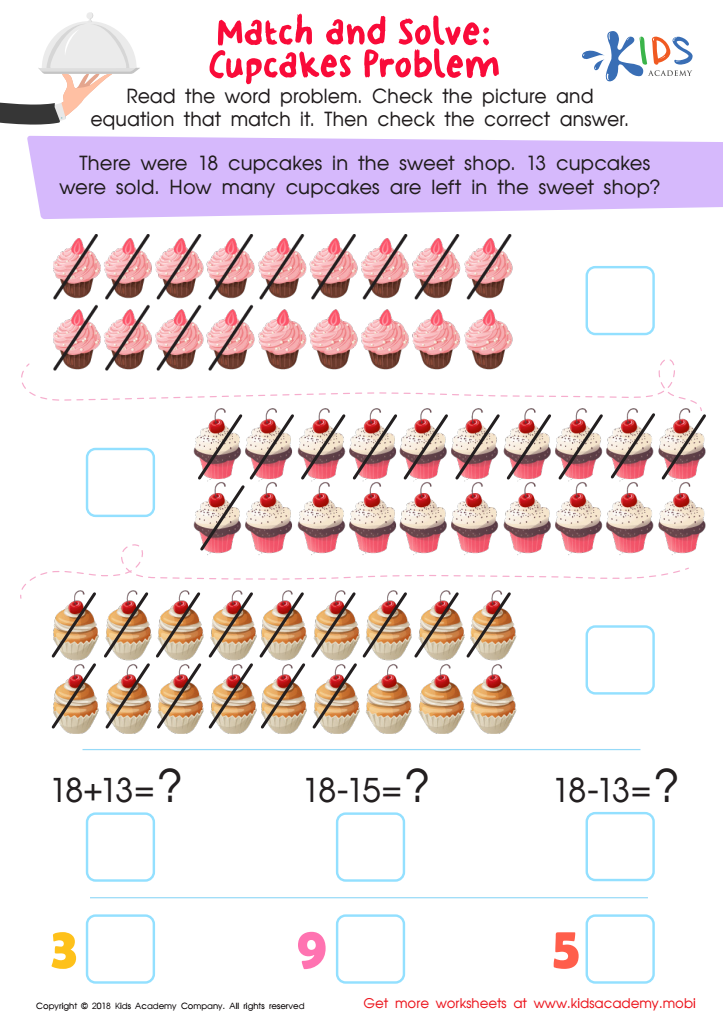
Match and Solve: Cupcakes Problem Worksheet
 Assign to My Students
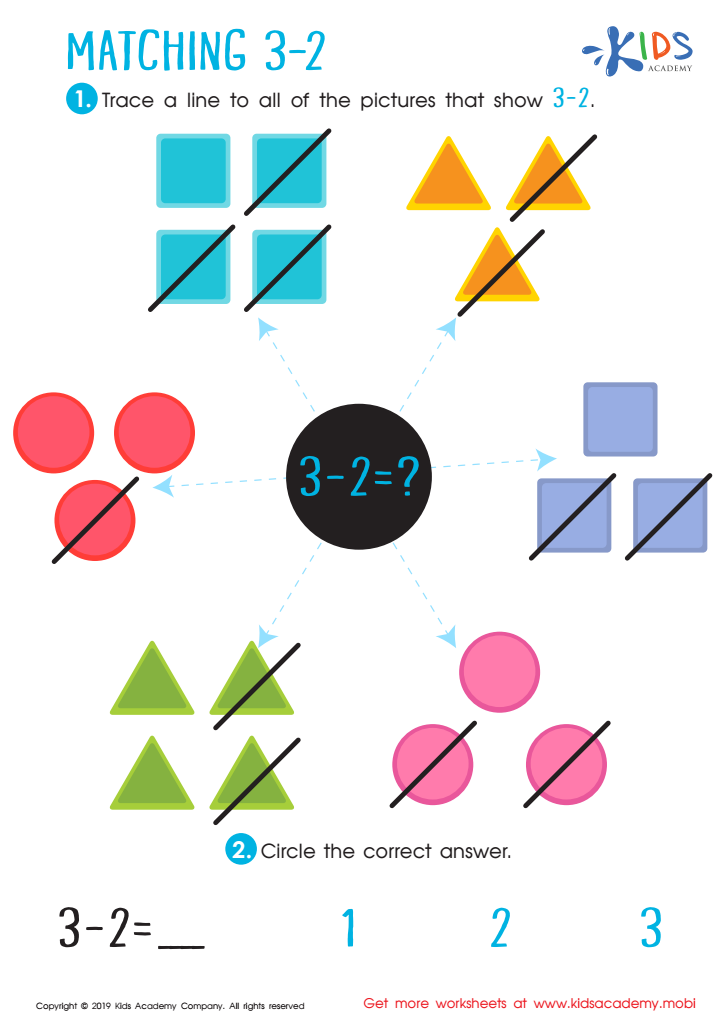
Matching 3-2 Worksheet
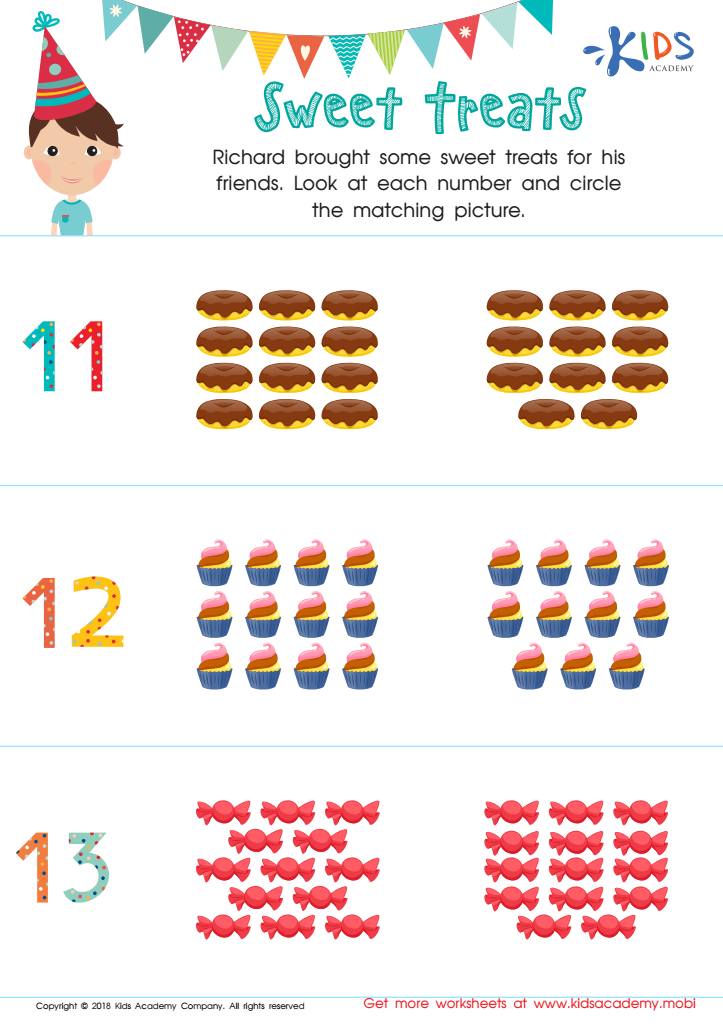
Kindergarten Math Worksheet Matching Numbers
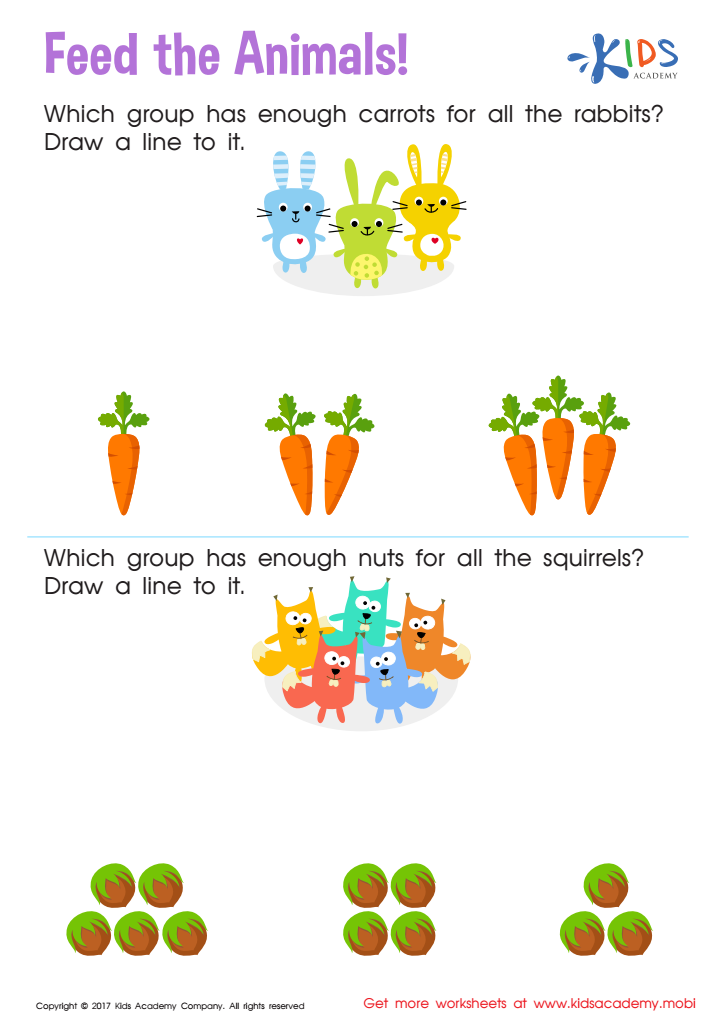
Count and Match: Feed the Animals Worksheet





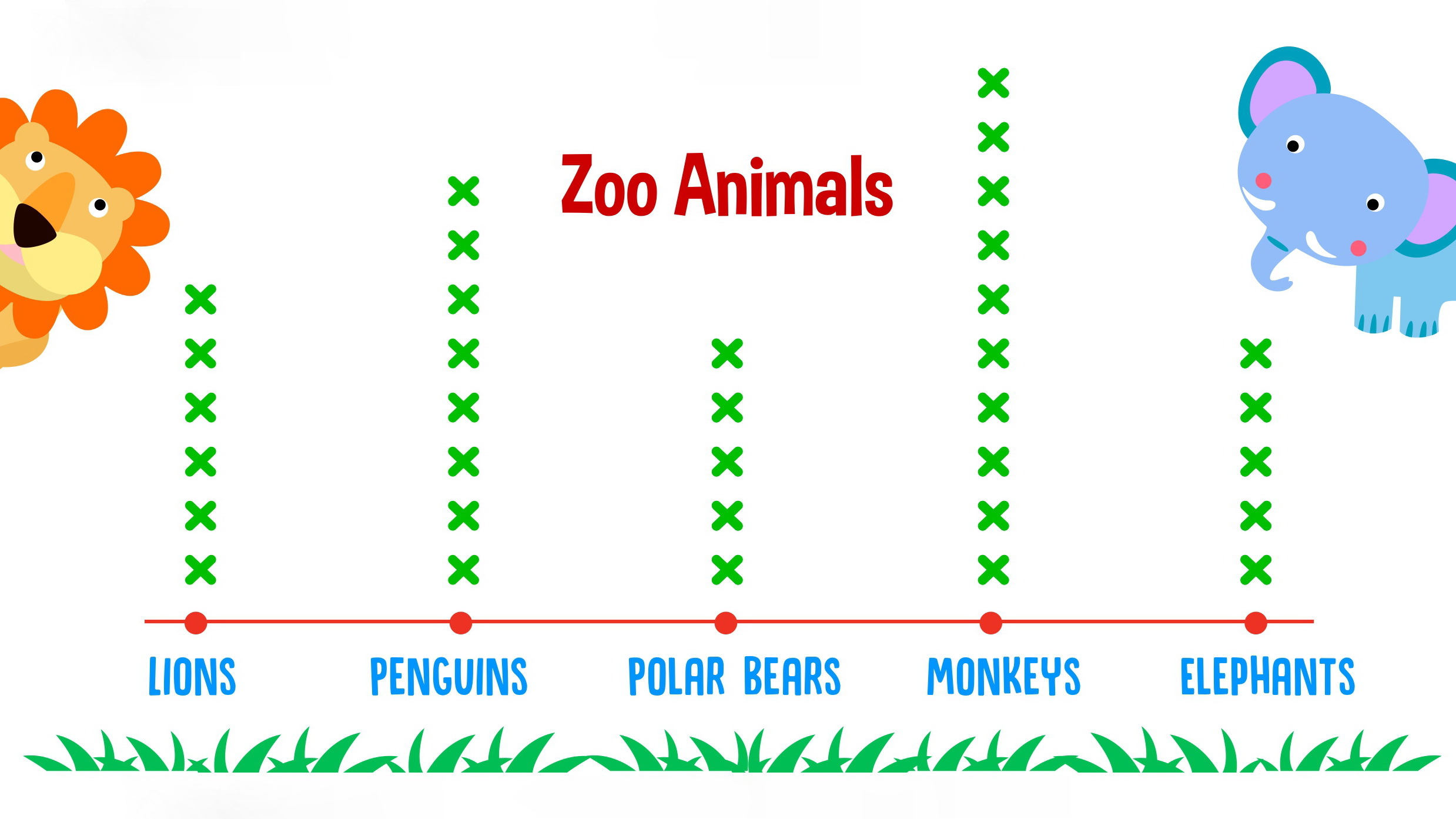


Number matching is a crucial developmental activity for children ages 3-7, as it lays the foundation for essential mathematical skills. During this formative stage, children are naturally curious and ready to explore numeracy concepts. Engaging in number matching helps enhance their understanding of basic concepts such as counting, quantity recognition, and number relationships.
When parents or teachers prioritize number matching, they foster children's cognitive development through hands-on learning. This activity promotes critical thinking as children learn to associate numerals with corresponding quantities, reinforcing their counting abilities. Additionally, it aids in strengthening fine motor skills through tactile interaction with objects, further supporting overall motor development.
Moreover, number matching encourages children to problem-solve and think critically, skills that are invaluable throughout their education. Social aspects are also involved since collaborative number-matching activities can help develop communication skills, allowing children to articulate their thought processes and engage with peers.
In summary, understanding the importance of number matching for ages 3-7 equips parents and teachers to create enriching learning environments. This foundational activity not only prepares children for future mathematical challenges but also contributes to their complete developmental growth.








