Phonetic awareness Worksheets for Ages 3-7
3 filtered results
-
From - To
Boost your child's reading foundation with our Phonetic Awareness Worksheets for Ages 3-7. Designed to enhance early literacy, these engaging worksheets help young learners recognize and manipulate sounds in words. Through playful activities and exercises, children will improve their phonemic awareness, vital for fluent reading and writing. Whether it's matching sounds, identifying beginning and ending consonants, or blending sounds to form words, our worksheets offer a fun, educational experience that keeps kids entertained. Perfect for preschoolers and early elementary students, these resources set the stage for a lifelong love of reading!
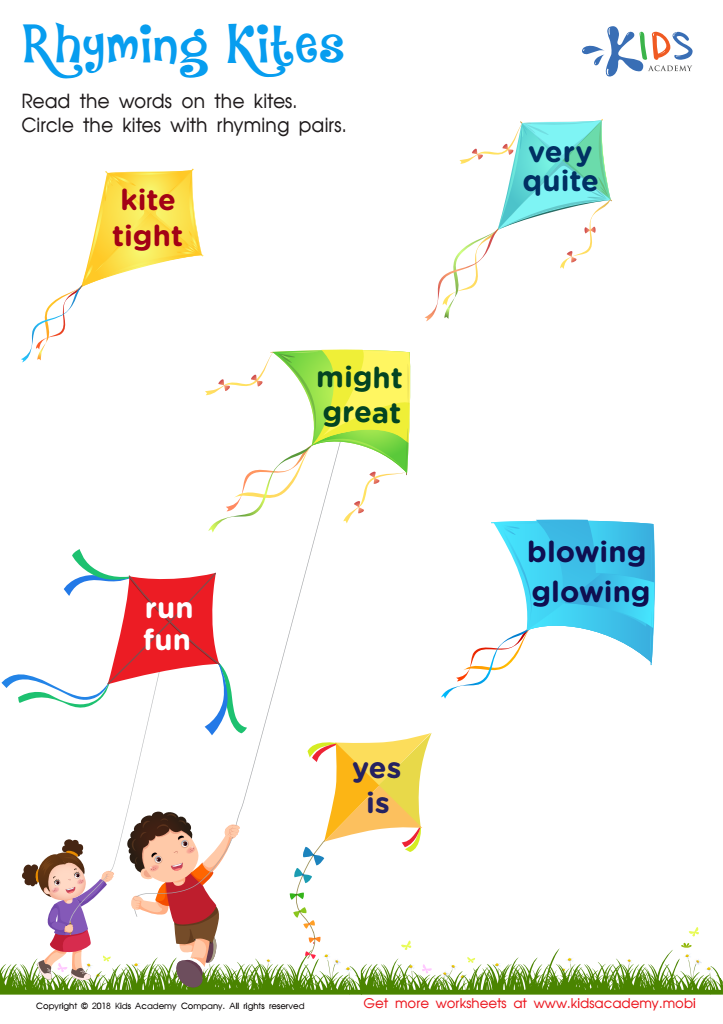
Rhyming Kites Worksheet
 Assign to My Students
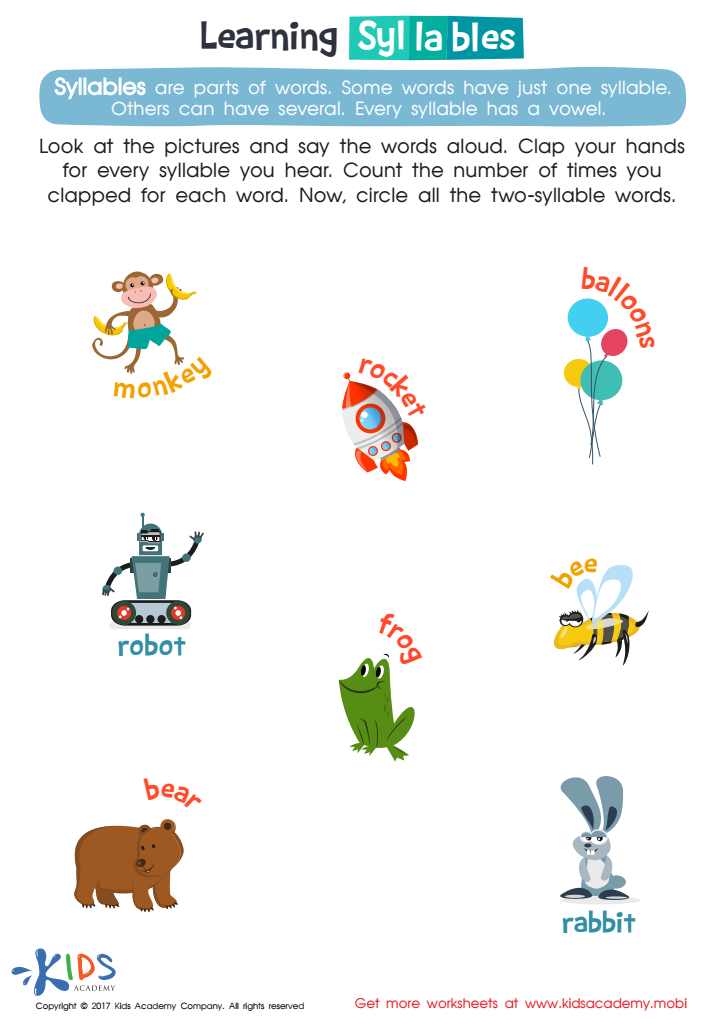
Learning Syllables Word Structure Worksheet
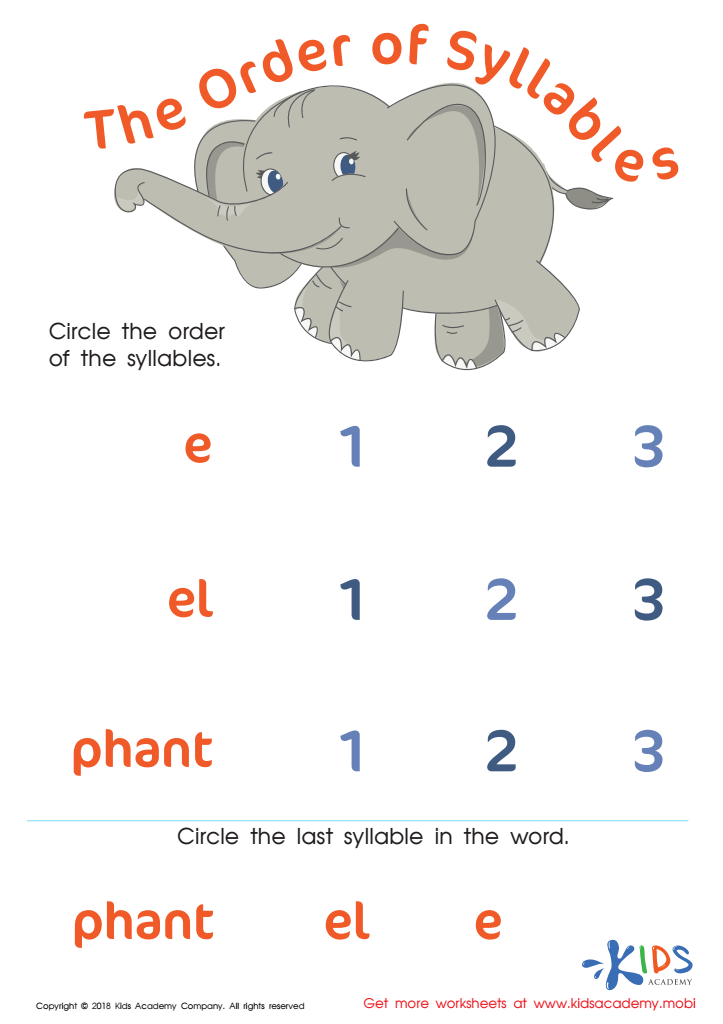
The Order of Syllables Worksheet








Phonetic awareness is crucial for children ages 3-7 as it lays the foundation for reading and writing skills, essential for academic success and lifelong learning. During these early years, children’s brains are highly receptive to language development. Phonetic awareness, or the ability to hear, identify, and manipulate individual sounds in spoken words, helps children understand the relationship between letters and sounds—a key step in decoding words while reading.
When parents and teachers emphasize phonetic awareness, children become adept at recognizing sound patterns, which aids in word recognition and pronunciation. This skill helps children become more confident readers, reducing frustration and boosting enthusiasm for learning. Additionally, phonetic awareness activities promote vocabulary growth and comprehension, as children are better able to connect spoken language with written text.
Engaging children in playful, sound-based activities such as rhyming games, clapping to syllables, and segmenting sounds prepares them for more complex literacy tasks. Early intervention in phonetic awareness can also help identify and address potential reading difficulties, ensuring all students receive the support they need.
By prioritizing phonetic awareness, parents and teachers set a robust literacy groundwork, cultivating capable readers and proactive learners who are poised for future academic and personal achievements.








