
Phonics comprehension Worksheets for Ages 3-7
3 filtered results
Difficulty Level
Grade
Age
-
From - To
Subject
Activity
Standards
Discover our engaging Phonics Comprehension Worksheets designed specifically for children ages 3-7! These worksheets foster early reading skills by combining phonics practice with comprehension activities. Each resource encourages children to sound out words and understand their meanings, laying a strong foundation for literacy. Our colorful, age-appropriate pages make learning fun and interactive, helping young learners to boost their vocabulary and understand sentence structures. Perfect for homeschooling, preschool, or classroom settings, these worksheets are an invaluable tool for both educators and parents. Start your child's journey to reading success today with our expertly crafted phonics comprehension worksheets!
Favorites
With answer key
Interactive
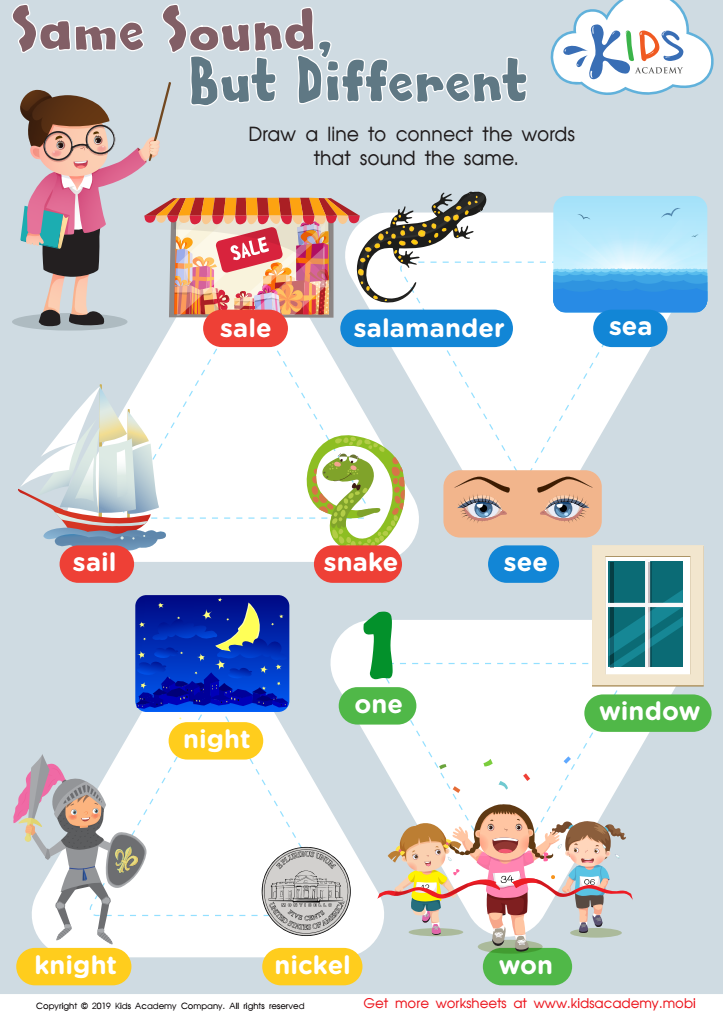
Sound Different Worksheet
Homophones can be tricky for new readers and writers. This PDF worksheet helps kids understand the differences using pictures. It asks them to draw lines to connect the homophones and provides concrete imagery for reference. It's a great way to learn the right definition and spelling of words that sound the same.
 Assign to My Students
Sound Different Worksheet
Worksheet
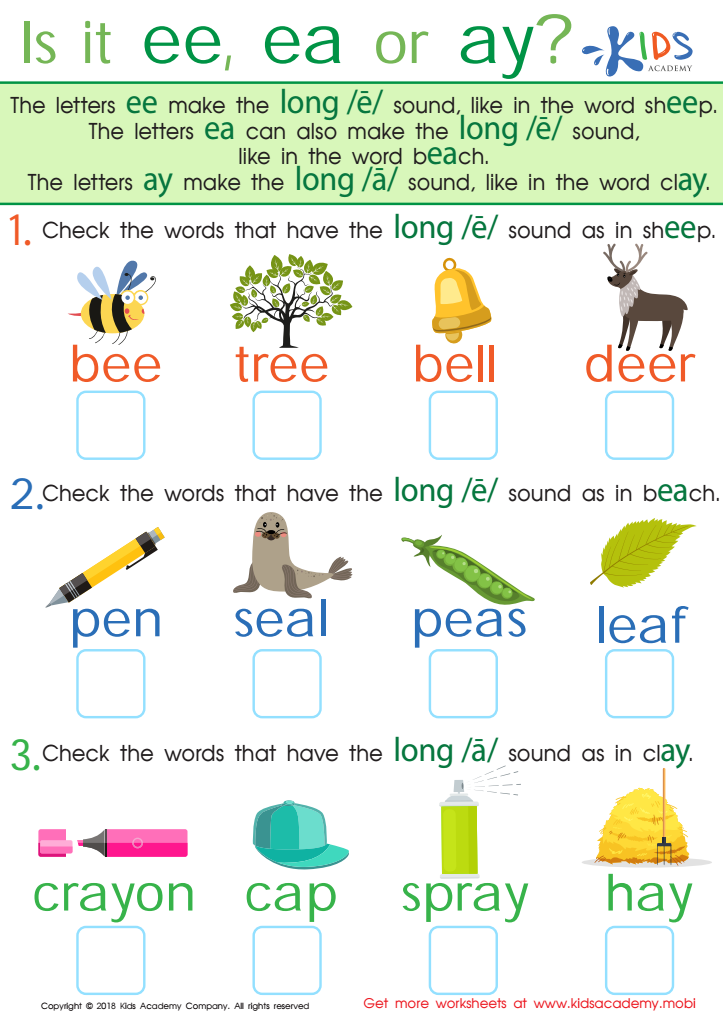
Is It EE, EA, or AY? Worksheet
When 'ee', 'ea' and 'ay' are in words, they usually make the long /e/ and /a/ sounds. Examples of words with 'ee' are "sheep", 'beach' and 'seat' with 'ea', and 'clay' and 'play' with 'ay'. Check this colourful worksheet with your kids; help them find the words that make the long /e/ sound like 'sheep'.
Is It EE, EA, or AY? Worksheet
Worksheet
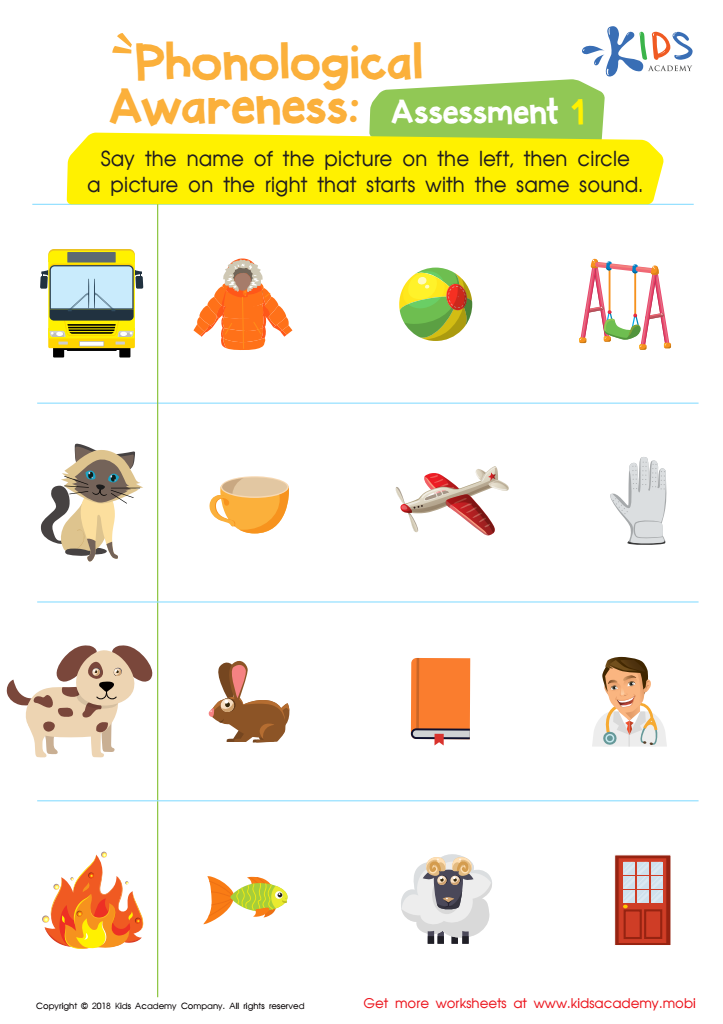
Phonological Awareness: Assessment 1 Worksheet
This worksheet helps kids build key phonics skills for pre-reading. They say each picture name aloud, focusing on the starting sound. Then, they match the sound with an image in the same row. Use as a checkpoint for kindergarten or grade 1 phonics readiness.
Phonological Awareness: Assessment 1 Worksheet
Worksheet
Join Kids Academy for Free
Who is primarily going to use this learning content?







Phonics comprehension for children ages 3 to 7 is crucial as it serves as the foundation for reading and writing skills. During these formative years, children begin to connect the sounds of spoken language with the letters and letter patterns in written language. This understanding enables them to decode words, which is essential for literacy development.
By focusing on phonics, parents and teachers can help children improve their reading fluency and comprehension, ultimately fostering a love for reading. When children grasp the basic sounds that letters represent, they become more confident in their ability to tackle new words, leading to greater engagement with books and learning materials.
Moreover, strong phonics skills have been linked to academic success across subjects, enhancing vocabulary, spelling, and overall communication skills. Early intervention with phonics can also mitigate reading difficulties later on, ensuring that all children have the opportunity to thrive in educational settings.
Finally, encouraging phonics comprehension at a young age supports cognitive development, critical thinking, and problem-solving skills, critical attributes for lifelong learning. By prioritizing phonics, parents and teachers cultivate a strong foundation for literacy and overall academic achievement, empowering young learners to succeed in their educational journeys.








