
Predicting outcomes Worksheets for Ages 3-7
3 filtered results
Difficulty Level
Grade
Age
-
From - To
Subject
Activity
Standards
Discover an amazing range of Predicting Outcomes Worksheets for ages 3-7 at Kids Academy! Our worksheets help young learners develop crucial critical thinking and comprehension skills. Through engaging activities, children predict story outcomes, solve picture puzzles, and enhance their understanding of cause and effect. These activities not only make learning fun but also build a strong foundation for reading and cognitive skills. Explore our vibrant, kid-friendly designs and give your preschool and early elementary children the tools they need to succeed. Boost their confidence and curiosity today with our easy to use, printable predicting outcomes worksheets!
Favorites
With answer key
Interactive
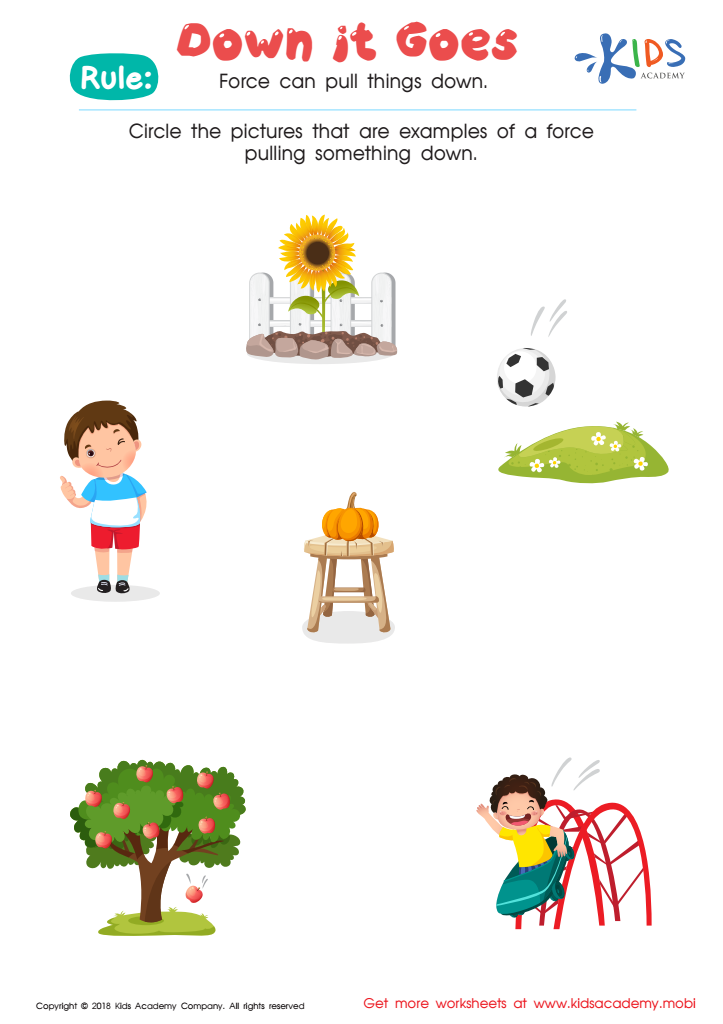
Down it Goes Worksheet
Explain gravity to your child using this fun worksheet. Ask them to give examples of things pulled down with force, then instruct them to circle the pictures that show this. It's a great way to help them understand the concept of gravity.
 Assign to My Students
Down it Goes Worksheet
Worksheet
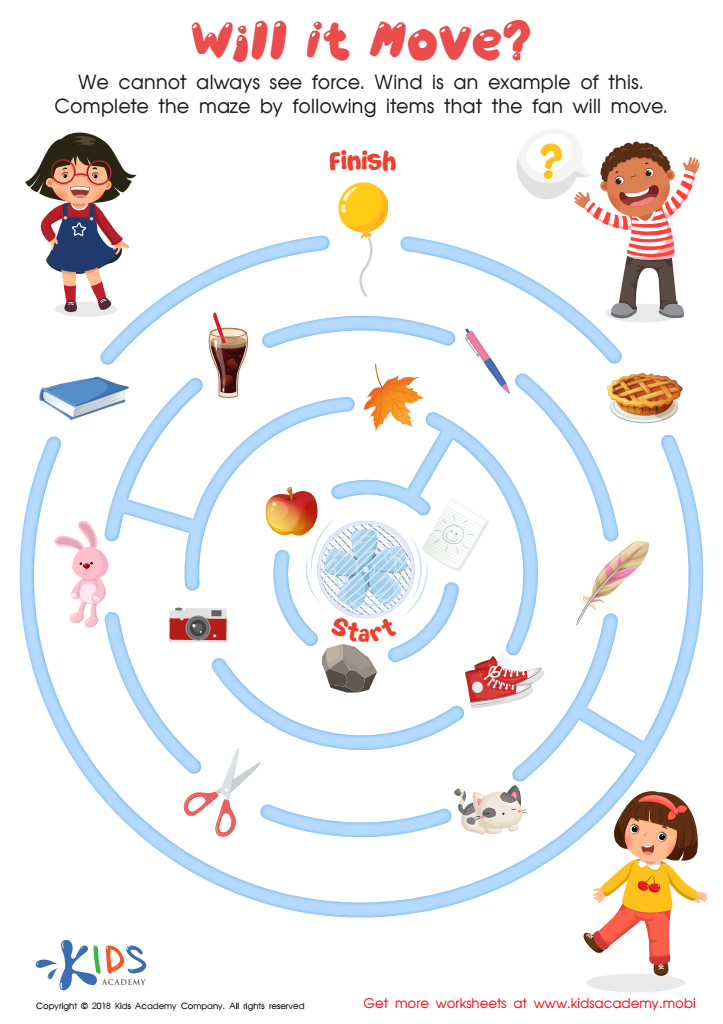
Will it Move? Worksheet
Does your child know about force? If yes/no, this worksheet can help. Force is invisible - like wind - but it moves objects. Ask your child to complete the maze, following the path of items moved by the wind. 80 words.
Will it Move? Worksheet
Worksheet
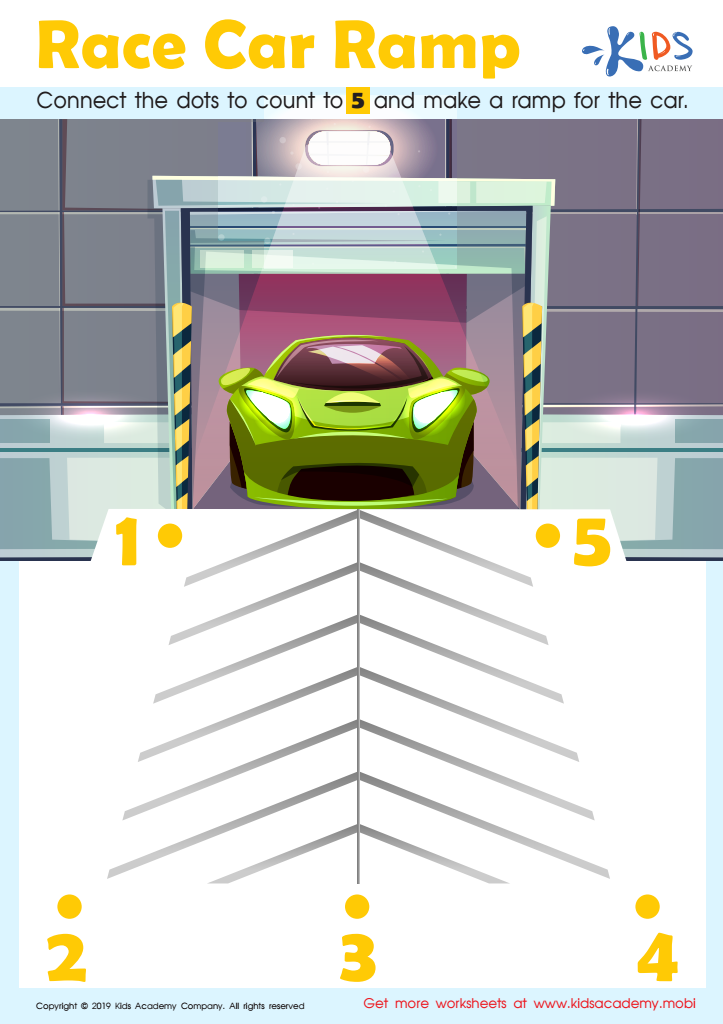
Race Car Ramp Worksheet
Kids can learn numbers quickly and have fun with this worksheet! It teaches preschoolers counting to 5 and allows them to draw a car ramp. It's a creative way to learn numbers, making them fun and easy to remember.
Race Car Ramp Worksheet
Worksheet
Join Kids Academy for Free
Who is primarily going to use this learning content?



%20(1).jpg)



Predicting outcomes for children aged 3-7 is crucial for parents and teachers because this formative period significantly impacts a child’s development. During these early years, children's brains develop rapidly, making them highly receptive to learning and interventions that can shape their future success. By anticipating outcomes, parents and teachers can tailor educational strategies to cater to the individual needs of each child.
For example, early predictors of language and social skills can help identify children who may struggle with communication or interaction, thereby enabling timely support. Early intervention can prevent minor issues from becoming significant problems, fostering a smoother learning trajectory.
Moreover, understanding potential outcomes also helps in setting realistic goals and expectations. Parents and teachers who are well-informed about developmental milestones can offer appropriate challenges that foster growth without causing undue stress.
Additionally, early prediction and intervention can contribute to a more inclusive education system. Recognizing and addressing diverse learning styles and needs from a young age promotes equity, ensuring that all children have the opportunity to thrive.
In essence, caring about predicting outcomes equips caregivers and educators with the tools to provide a nurturing, responsive, and supportive environment, ultimately contributing to the holistic success of children in their early years and beyond.








