Problem-solving development Worksheets for Ages 3-7
3 filtered results
-
From - To
Unlock your child’s potential with our Problem-Solving Development Worksheets designed for ages 3-7. Tailored to boost critical thinking and creativity, these worksheets offer engaging activities that make learning fun and effective. From puzzles and matching games to mazes and logical quests, our resources inspire young minds to approach challenges with confidence and curiosity. Perfect for both classroom environments and at-home practice, each worksheet is crafted to meet educational standards and foster essential skills. Help your child build a solid foundation in problem-solving today with our expertly designed printables. Visit Kids Academy for endless learning adventures!
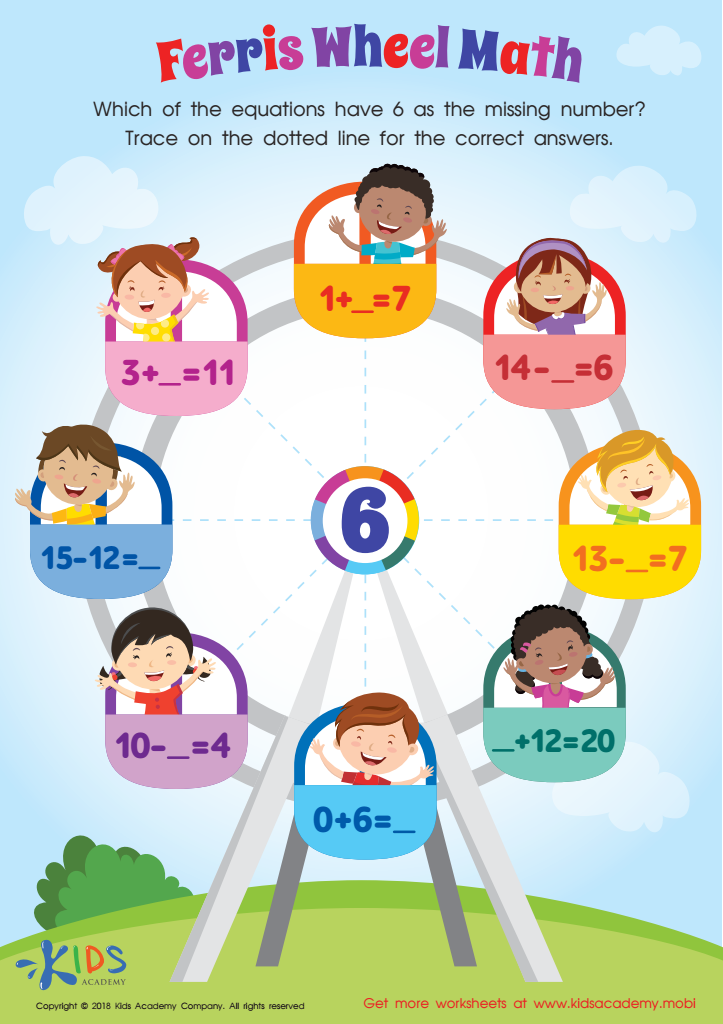
Missing Number: Ferris Wheel Math Worksheet
 Assign to My Students
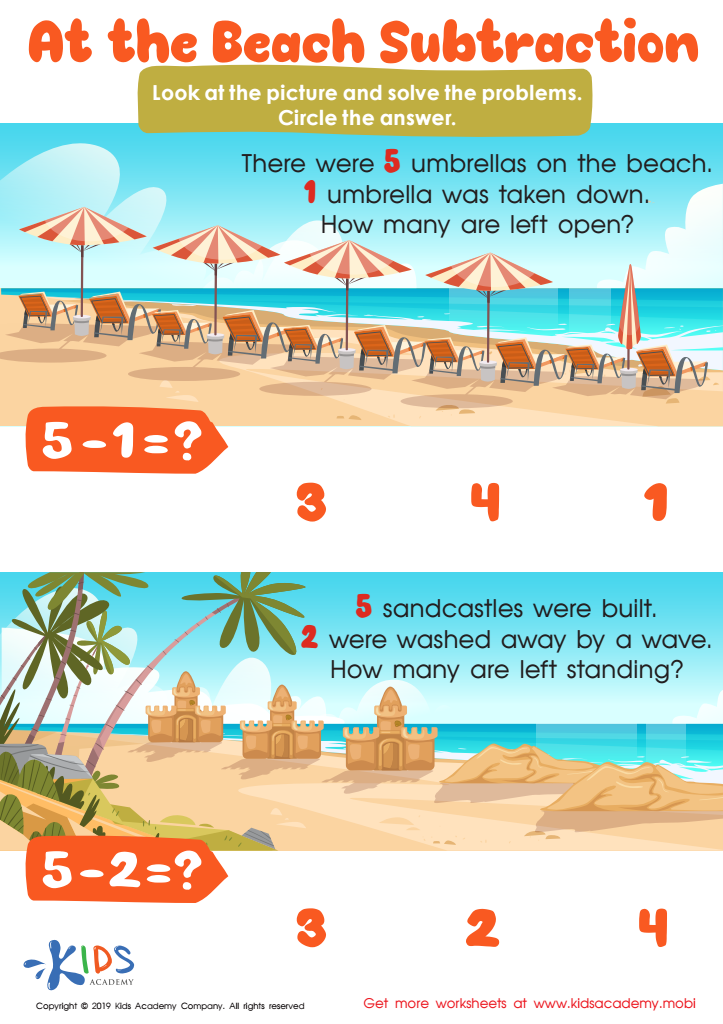
At the Beach Subtraction Worksheet
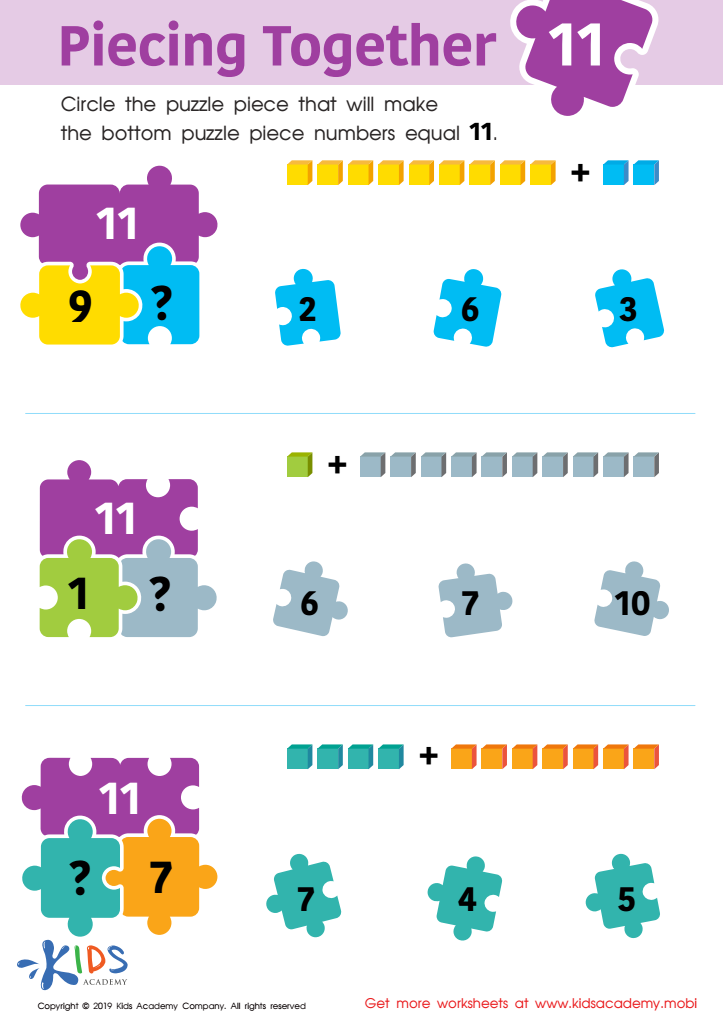
Piecing Together 11 Worksheet



.jpg)



Problem-solving development for children ages 3-7 is essential because it lays the foundational skills for critical thinking, emotional intelligence, and independence. During these formative years, young children are natural explorers, and their minds are constantly absorbing and trying to make sense of the world around them. Teaching problem-solving offers numerous benefits that can vastly improve their overall development.
Firstly, problem-solving enhances cognitive development by encouraging thinking skills, such as analyzing situations, making decisions, and predicting outcomes. This kind of mental exercise builds neural connections that support future learning and adaptability.
Secondly, problem-solving activities boost emotional resilience. Children learn that challenges are part of life and develop coping mechanisms to deal with frustration and failure, thus fostering a growth mindset. This is significant for their self-esteem and confidence, equipping them with the resilience needed for future endeavors.
Moreover, social skills are also developed as children learn to express their thoughts, negotiate, and collaborate with peers. Effective problem-solving requires clear communication and empathy, both critical for building healthy interpersonal relationships.
Lastly, embracing problem-solving early on inspires a love for learning. When children see themselves as capable problem solvers, they are more likely to engage and take initiative in various activities, cultivating an enduring enthusiasm for discovery and education.








