Problem-solving practice Worksheets for Ages 3-7 - Page 2
27 filtered results
-
From - To
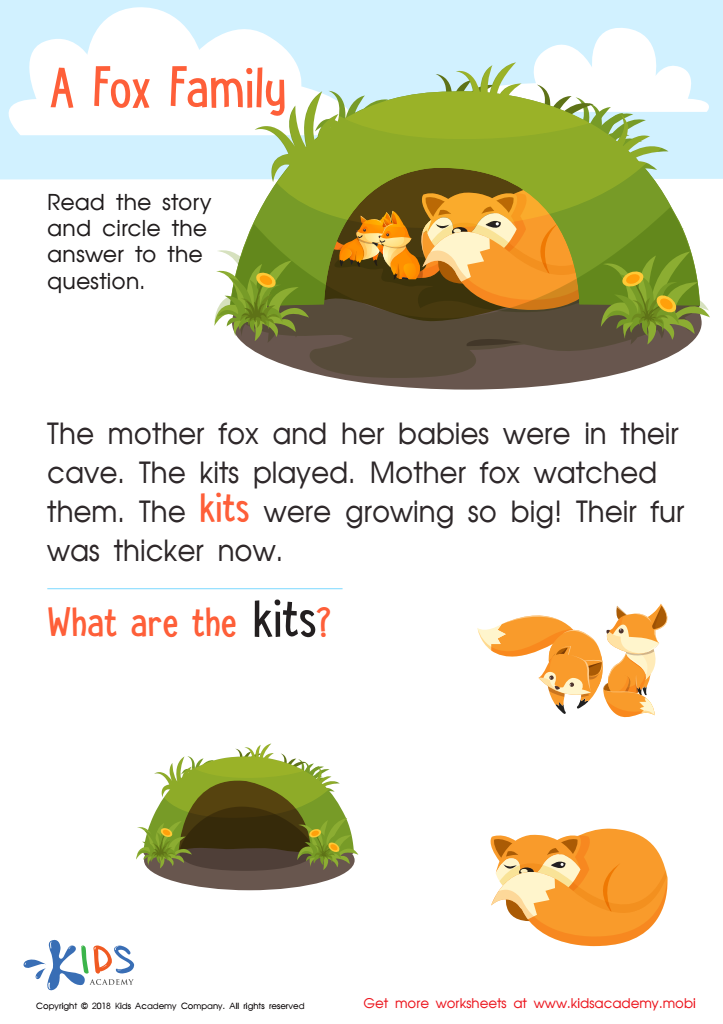
A Fox Family Worksheet
 Assign to My Students








Problem-solving practice for children aged 3-7 is crucial for their cognitive and emotional development. At this tender age, their brains are rapidly growing, and introducing problem-solving skills can set the foundation for critical thinking, creativity, and resilience. By engaging in problem-solving activities, children learn to approach challenges with confidence, understand cause-and-effect relationships, and enhance their reasoning abilities.
For parents, encouraging problem-solving equips children with the tools they need to navigate daily life independently, from tying their shoes to resolving conflicts with peers. It fosters a growth mindset, helping children understand that perseverance can lead to success, and mistakes are just learning opportunities.
Teachers, on the other hand, can integrate problem-solving into the curriculum to make learning more engaging and interactive. It encourages active participation and collaboration among students, promoting social skills like communication, cooperation, and empathy.
Overall, problem-solving practice prepares young minds for future academic and personal challenges. It nurtures intellectual curiosity and a sense of achievement. Both parents and teachers have a responsibility to create an environment that stimulates these skills, as early practice can lead to lifelong benefits, including better academic performance and a more prosperous, problem-solving mindset.








