
Science knowledge Worksheets for Ages 3-7
5 filtered results
Difficulty Level
Grade
Age
-
From - To
Subject
Activity
Standards
Discover a world of curiosity with our engaging Science Knowledge Worksheets designed specifically for children ages 3-7! These printable resources introduce young learners to fundamental concepts in life science, earth science, and physical science through colorful illustrations and interactive activities. Each worksheet aims to spark interest in the natural world, promoting critical thinking and observational skills. Our carefully crafted materials cater to diverse learning styles and encourage hands-on exploration. Perfect for home or classroom use, these science worksheets provide a fun and educational way for kids to expand their scientific understanding while developing essential skills. Start your child's scientific journey today!
Favorites
With answer key
Interactive
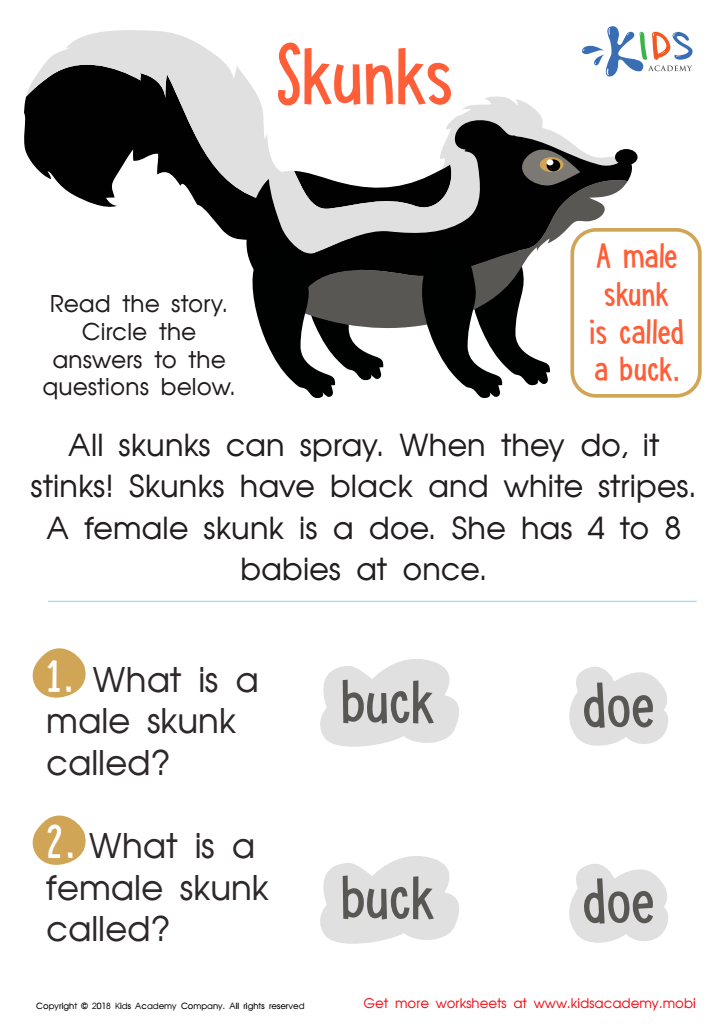
Skunks Worksheet
Kids can learn fascinating information about a beloved and smelly animal with this fun worksheet. They'll read articles, texts, and look at an accompanying picture while reading. Captions and sidebars can give extra details. Finally, answer the given questions by selecting the correct response. Reading is a fun and informative way to gain knowledge!
 Assign to My Students
Skunks Worksheet
Worksheet
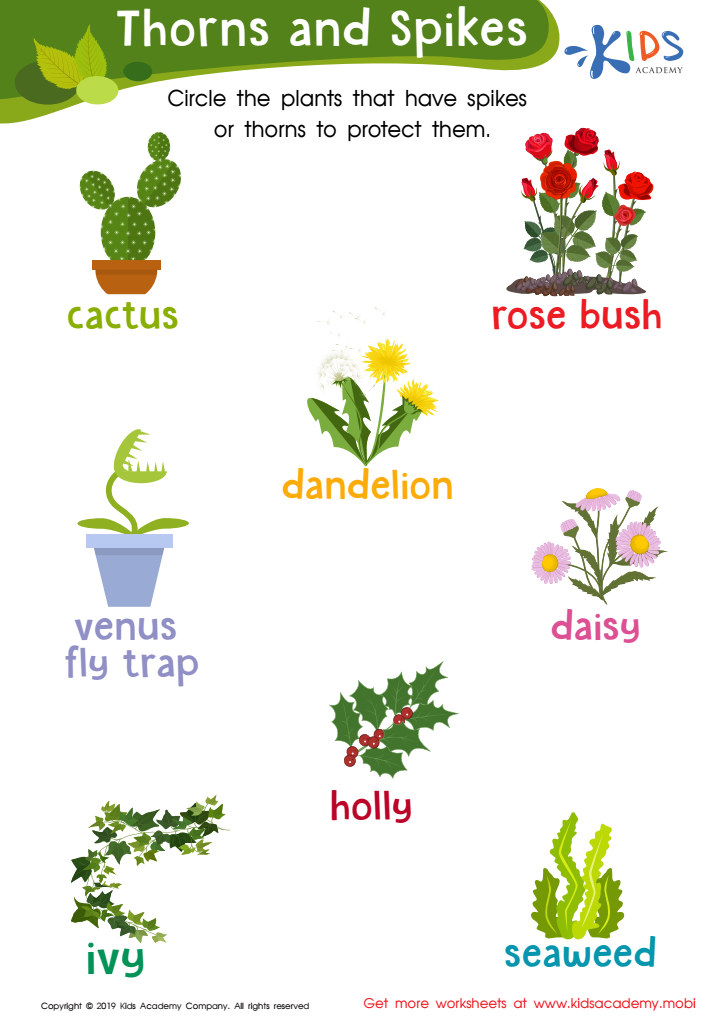
Thorns and Spikes Worksheet
Can your students name and identify the plants and flowers in this worksheet? Ask them to read out the names and circle the ones with spikes or thorns. Help them appreciate nature's beauty and understand how plants protect themselves.
Thorns and Spikes Worksheet
Worksheet
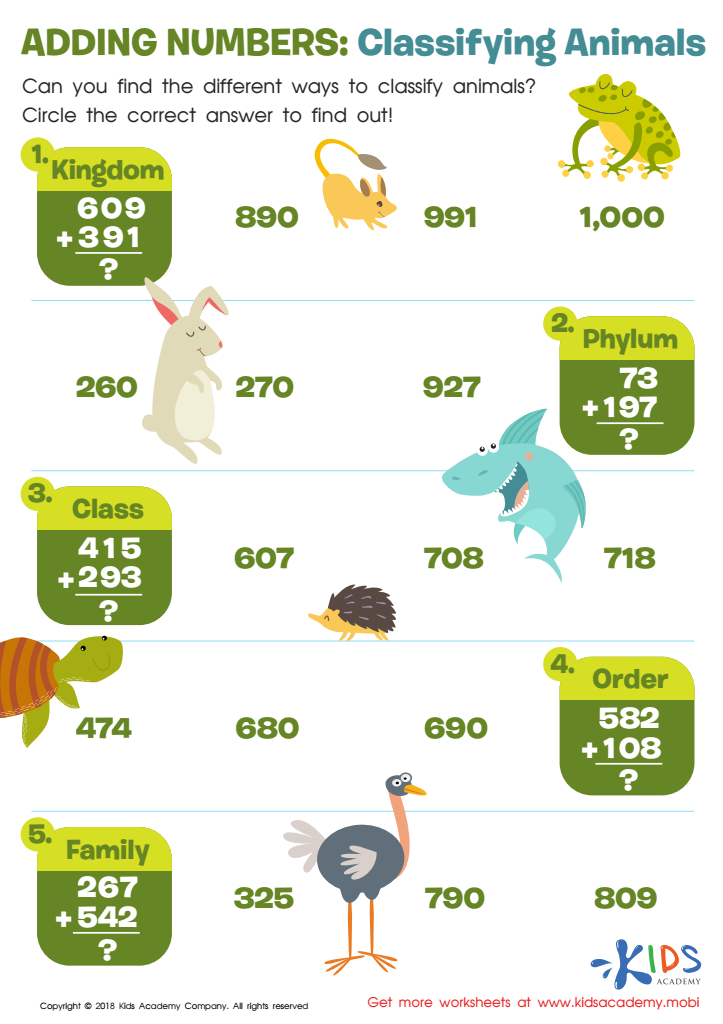
Adding Numbers: Classifying Animals Worksheet
Your kids can learn to classify animals in Biology. This worksheet helps them do this by solving 5 equations. Circle the right answer to complete the task.
Adding Numbers: Classifying Animals Worksheet
Worksheet
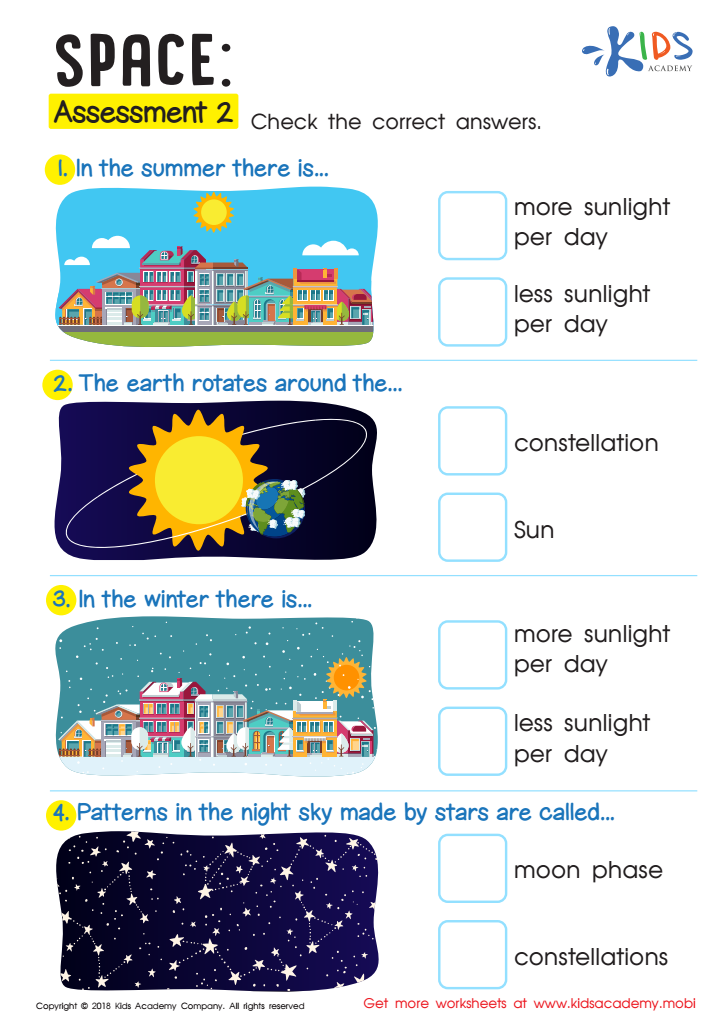
Space: Assessment 2 Worksheet
Test your kids' knowledge of the weather, constellations and Earth with this worksheet. Show them the 4 images and ask what's happening; then read the questions and options and help them pick the right answers. This printout is a helpful and fun way to learn!
Space: Assessment 2 Worksheet
Worksheet
Join Kids Academy for Free
Who is primarily going to use this learning content?







Parents and teachers should deeply value science knowledge for children ages 3-7 because this early foundation sets the stage for lifelong curiosity, critical thinking, and problem-solving skills. At this age, children are inherently curious about their surroundings, often asking "why" and "how." Engaging them with science nurtures that curiosity, allowing them to explore and understand the world around them through hands-on experiences and observation.
Learning basic science concepts at this stage promotes cognitive development and encourages imaginative play. For instance, through simple experiments, children can grasp fundamental ideas like cause and effect, classification, and the scientific method. This blending of inquiry and learning empowers them to ask questions, seek answers, and develop a sense of agency in their learning journey.
Additionally, early science education supports social skills as children collaborate on projects and share findings. It can also enhance literacy by introducing them to specific vocabulary and concepts related to the natural world. Ultimately, fostering a solid science background in these formative years helps to cultivate lifelong learners who are more equipped to face future challenges, embrace technology, and engage meaningfully in a rapidly evolving society. Thus, prioritizing science knowledge during these critical years is crucial for holistic development.








