Science vocabulary expansion Worksheets for Ages 3-7
4 filtered results
-
From - To
Discover a world of learning with our Science Vocabulary Expansion Worksheets designed for children ages 3-7! These engaging resources cultivate young minds by introducing essential science terms and concepts through fun and interactive activities. Each worksheet is crafted to encourage exploration and enhance language skills while sparking curiosity about the natural world. Perfect for classrooms or home learning, our worksheets promote vocabulary growth, critical thinking, and a love for science. Watch your child’s understanding flourish as they connect words to real-world experiences. Start their scientific journey today and empower them with the vocabulary they need to explore and learn effortlessly!
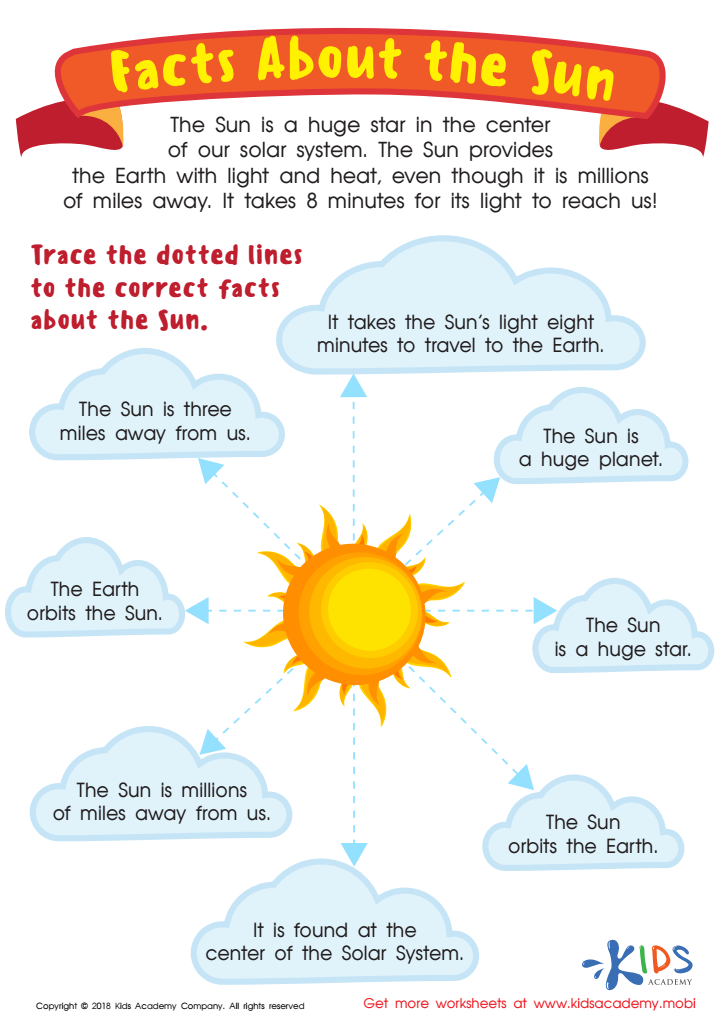
Facts About the Sun Worksheet
 Assign to My Students
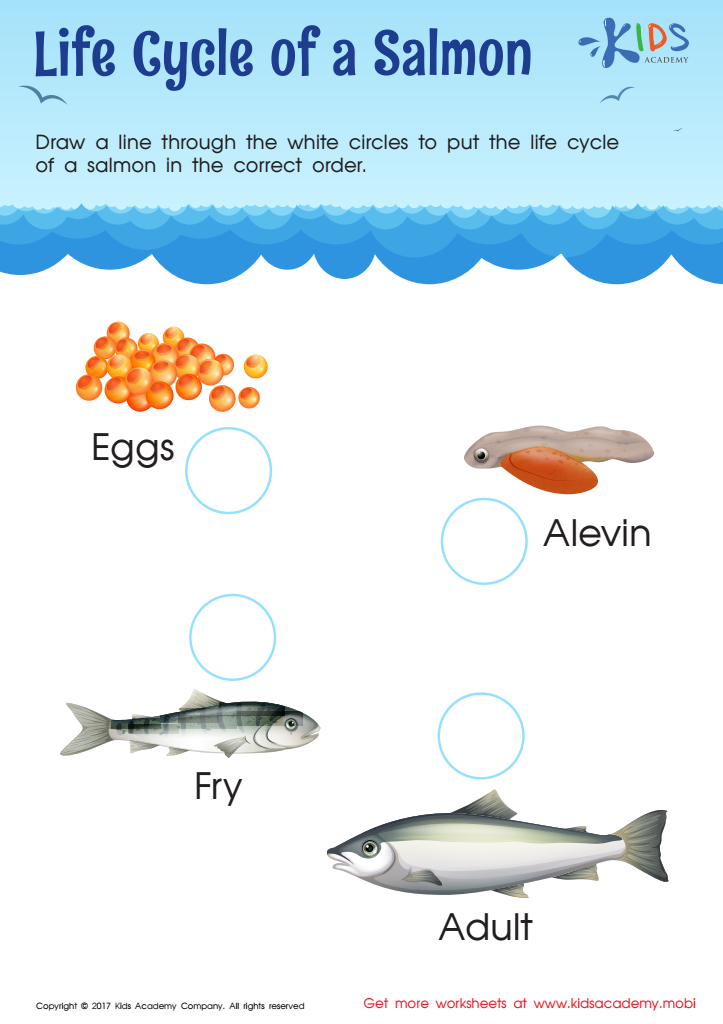
Cycle Of Salmon Worksheet
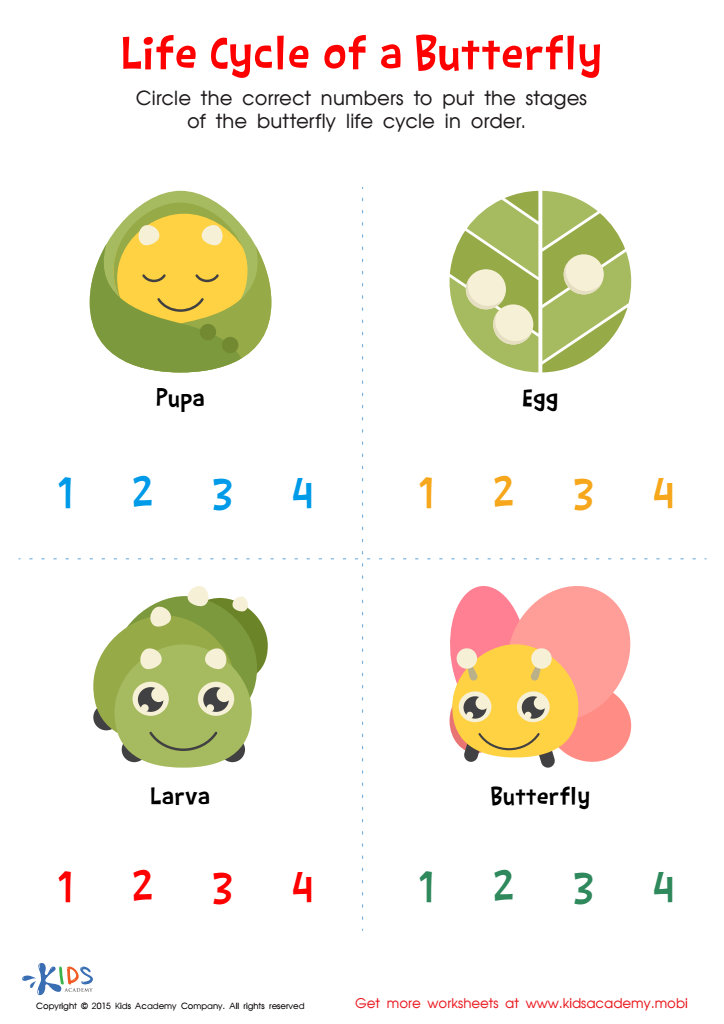
Life Cycle of Butterfly Printable
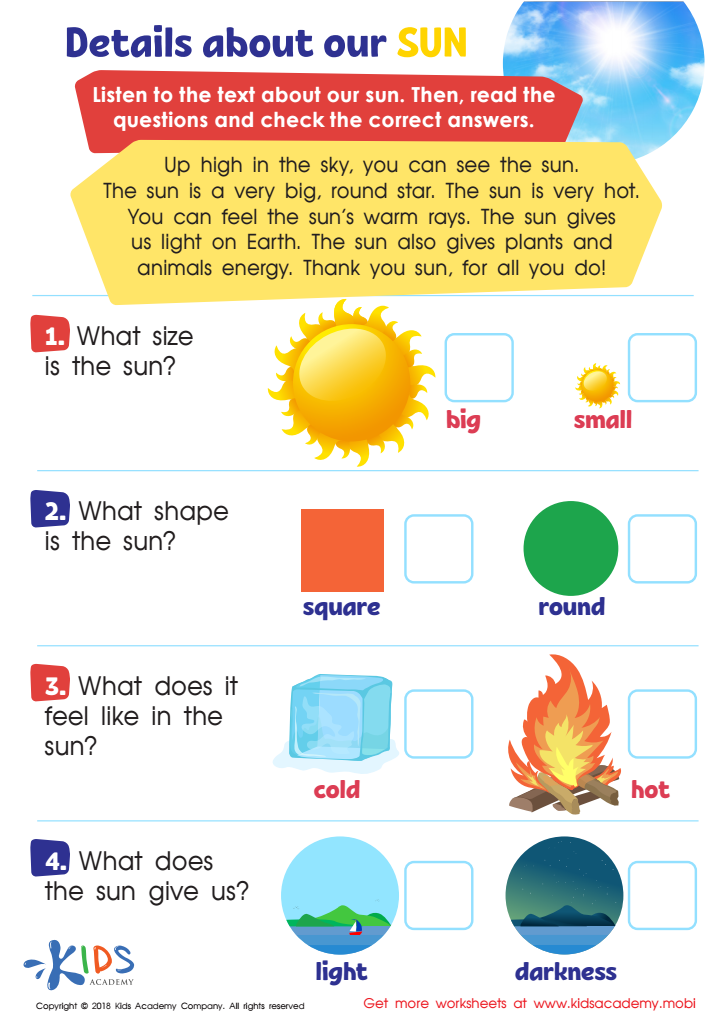
Details About Our Sun Worksheet







Expanding science vocabulary for children aged 3-7 is crucial for several reasons. First, early exposure to scientific terms enhances language development, helping young learners articulate their thoughts more precisely. This foundational vocabulary sets the stage for effective communication, crucial in a child’s social interactions and academic success.
Second, science vocabulary helps cultivate curiosity. Young children are naturally inquisitive, and introducing them to words related to their environment—such as "habitat," "energy," or "growth"—fuels their interest and encourages a habit of questioning. This inquiry-based mindset is essential for scientific thinking and problem-solving later in life.
Moreover, a robust science vocabulary can bolster critical thinking skills. Children learn to categorize and classify information, enabling them to make connections between different concepts. For instance, understanding terms like "absorb," "evaporate," or "magnet" allows them to better grasp the underlying principles of experiments and the world around them.
Finally, focusing on science vocabulary promotes equity in education. It empowers children from diverse backgrounds to access and engage with scientific concepts, ensuring that all learners have equal opportunities to develop their skills and interests. Therefore, parents and teachers play a vital role in nurturing this essential aspect of early education.








