
Story sequencing skills Worksheets for Ages 3-7
3 filtered results
Difficulty Level
Grade
Age
-
From - To
Subject
Activity
Standards
Enhance your child's story comprehension and critical thinking with our Story Sequencing Skills Worksheets, designed specifically for ages 3-7. These engaging, age-appropriate worksheets help young learners develop the ability to understand the order of events in a story, promoting better reading skills and enhanced imagination. Through a variety of fun activities, children will practice arranging picture sequences and filling in missing steps, solidifying their understanding of narrative structure. Perfect for home or classroom use, our worksheets foster creativity, build vocabulary, and prepare children for future literacy success. Discover the power of storytelling and boost your child's learning journey today!
Favorites
With answer key
Interactive
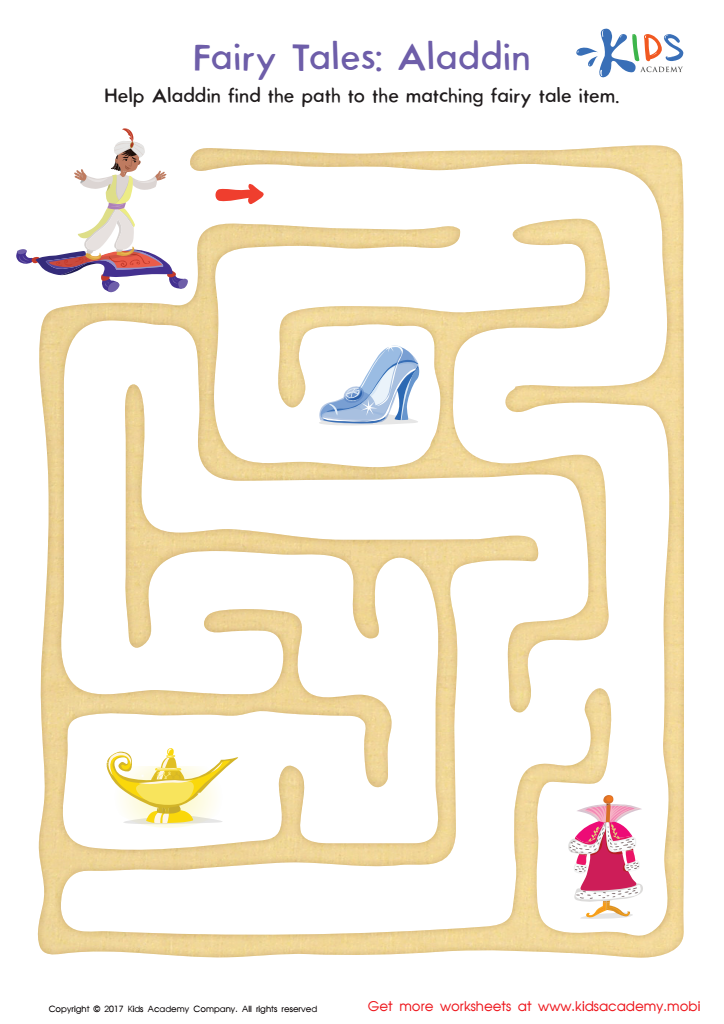
Fairy Tales Aladdin Printable
Test your child's reading recall with this challenge: the Aladdin maze worksheet! Guide your learner to identify objects linked to the story, then ask them to retell it afterwards. Hone those memory skills while having fun!
 Assign to My Students
Fairy Tales Aladdin Printable
Worksheet
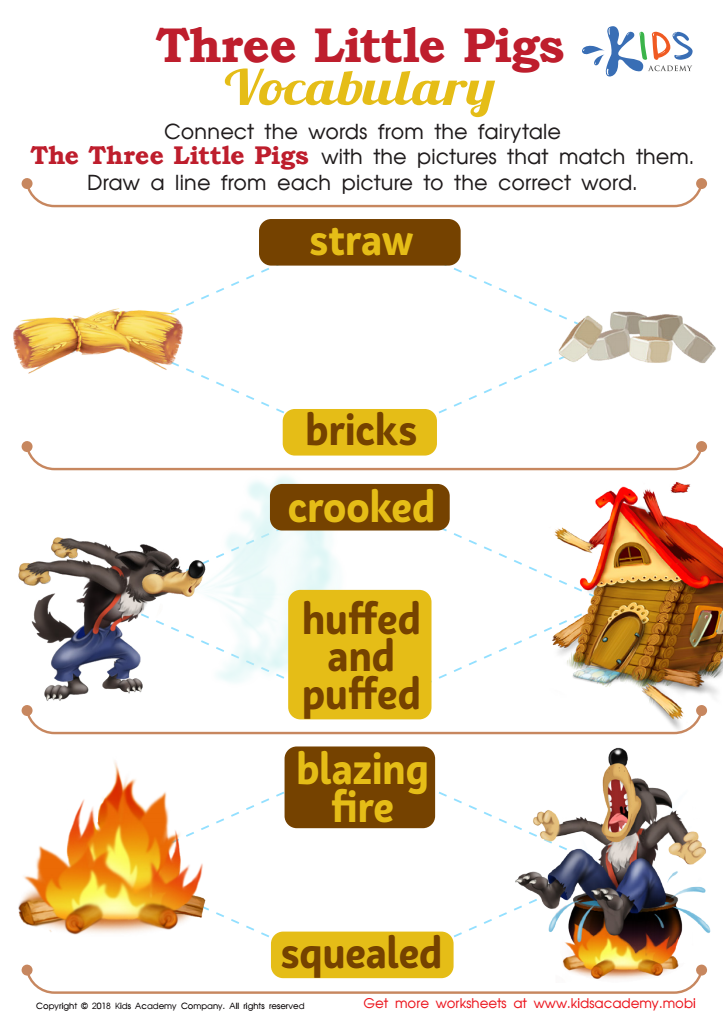
Three Little Pigs Vocabulary Worksheet
Read the Three Little Pigs to your children. Have them use the tracing sheet to connect the story words with the pictures. This is a fun and educational way to help them build their vocabulary.
Three Little Pigs Vocabulary Worksheet
Worksheet
Join Kids Academy for Free
Who is primarily going to use this learning content?


.jpg)


Story sequencing skills are crucial for children ages 3-7 as they serve as a foundation for literacy development and cognitive growth. At this developmental stage, children begin to understand that stories have a beginning, middle, and end. By mastering sequencing, they learn to recognize cause-and-effect relationships, enhance their comprehension skills, and develop their ability to narrate events clearly.
For parents and teachers, fostering these skills promotes critical thinking and improves communication abilities. Children who can sequence stories can better express their thoughts and feelings, making them more effective communicators. This skill also lays the groundwork for reading fluency and writing, as children who can order events are more likely to understand the texts they encounter.
Furthermore, engaging in story sequencing activities, such as retelling stories, arranging picture cards, or using digital tools, promotes creativity and imagination. It’s an opportunity for parents and teachers to bond with children through interactive storytelling and guided discussions. Ultimately, prioritizing story sequencing skills during early education ensures that children are not only prepared for more complex storytelling and reading tasks but also fosters a lifelong love for stories and learning.








