Syllable identification Worksheets for Ages 3-7
4 filtered results
-
From - To
Dive into our engaging Syllable Identification Worksheets designed for children aged 3-7! These printable activities help young learners develop crucial phonemic awareness by identifying syllables in words. Each worksheet is colorful and interactive, promoting learning through play. With a variety of exercises, children will enhance their listening skills and improve their reading abilities as they break down words into syllables. Ideal for both home and classroom use, these resources support early literacy development in a fun and approachable way. Empower your child’s reading journey with our motivating syllable identification worksheets, and watch their confidence soar as they master this essential skill!
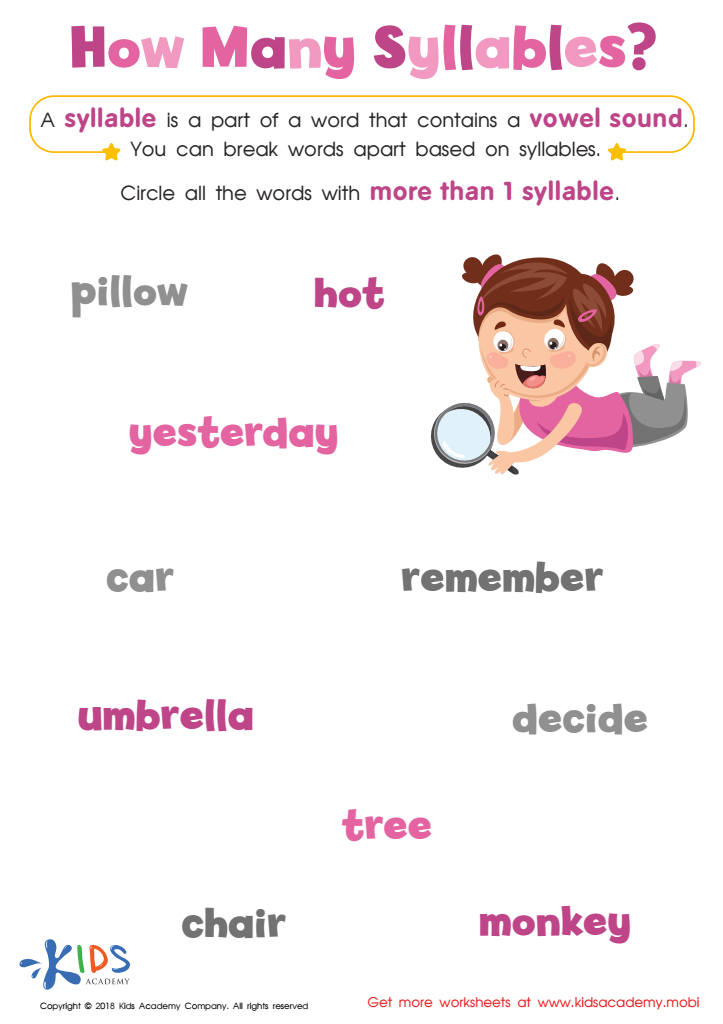
Reading: How Many Syllables Worksheet
 Assign to My Students
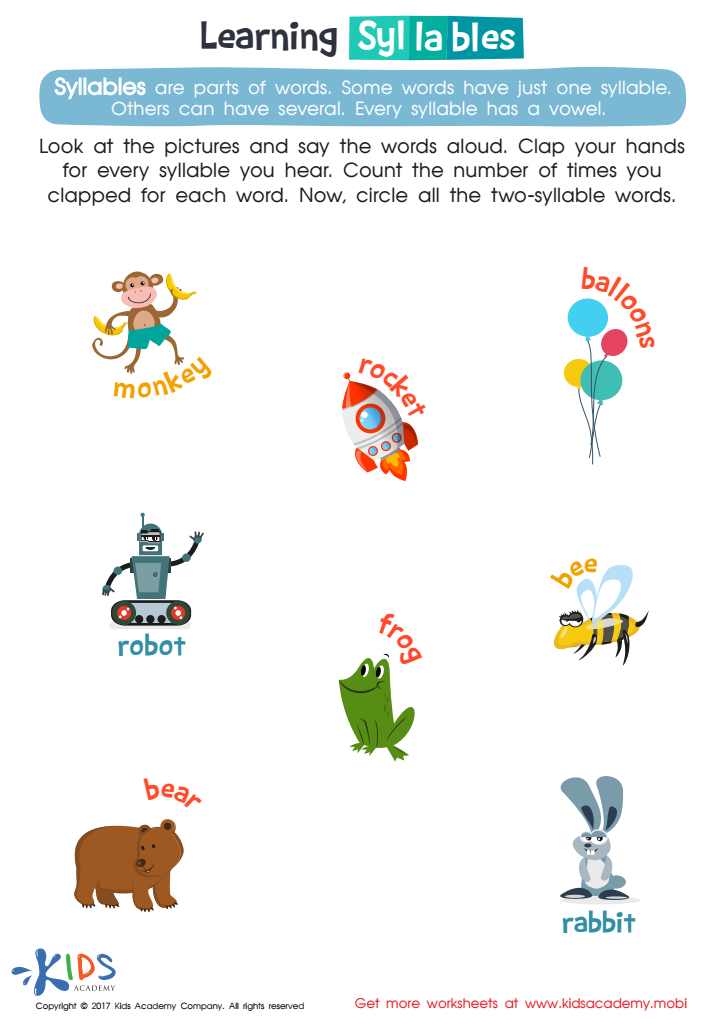
Learning Syllables Word Structure Worksheet
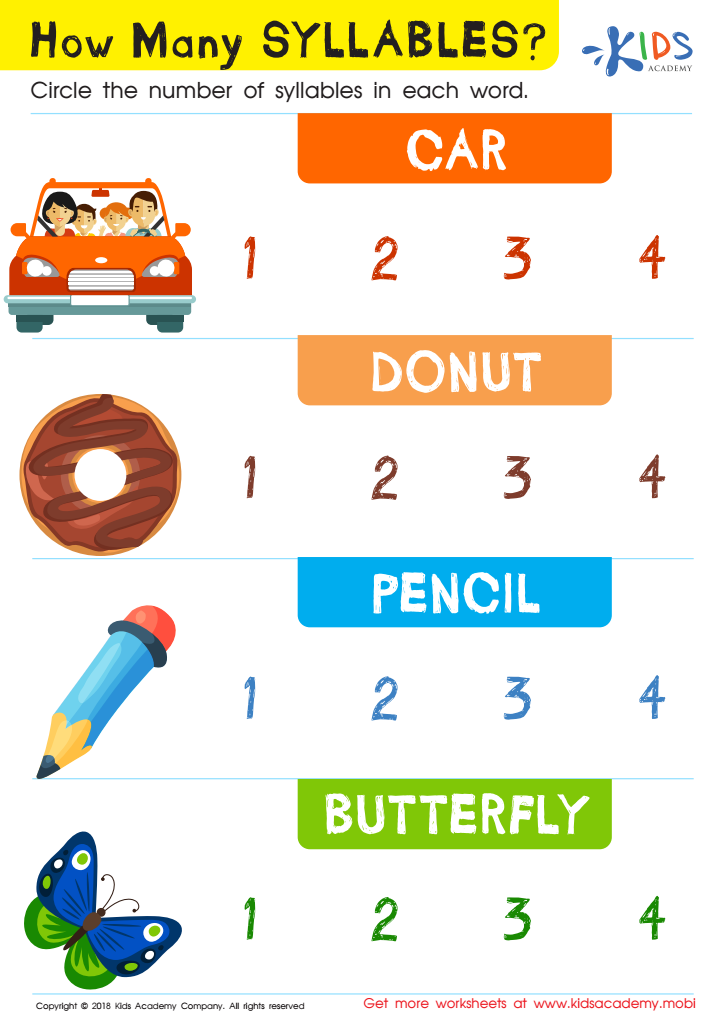
How Many Syllables? Worksheet
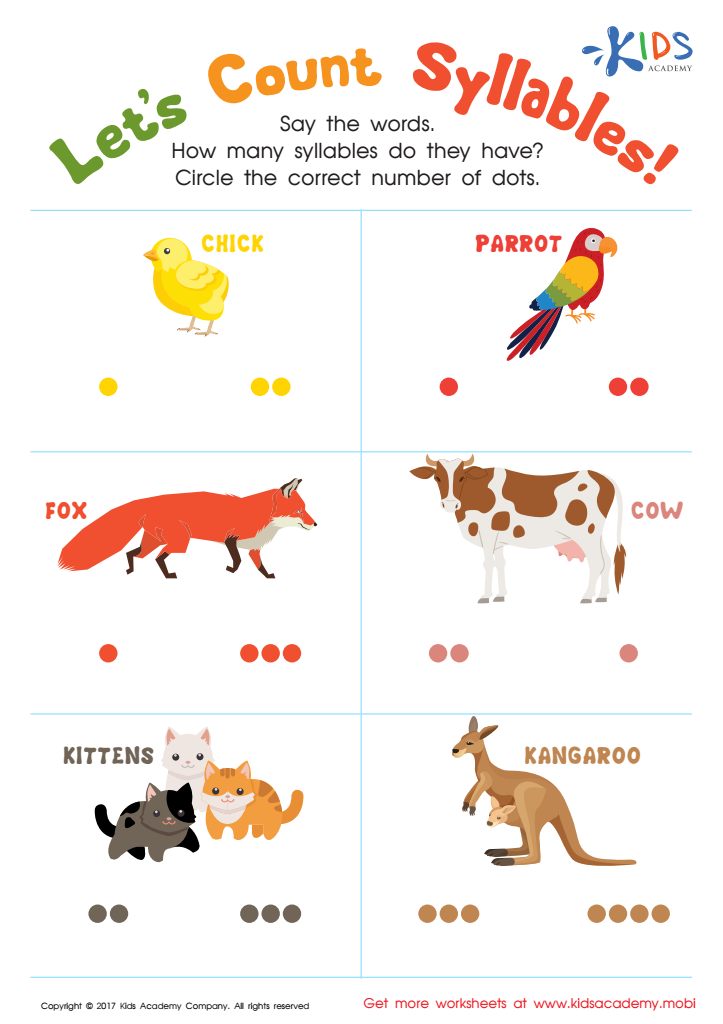
Lets Count Syllables Worksheet








Syllable identification is a crucial literacy skill that significantly impacts young children's reading and language development. For ages 3-7, this skill serves as a foundational building block for phonemic awareness, which is essential for decoding words. When children learn to identify syllables, they begin to grasp the rhythms and patterns of language, making it easier to break down complex words into manageable sounds. This enhances their ability to recognize and pronounce new vocabulary.
In addition, understanding syllables helps improve spelling as children learn to segment words into syllabic units, facilitating the connection between sounds and letters. For teachers and parents, promoting syllable identification can also enhance children's overall language skills, including their listening and speaking abilities.
Incorporating fun activities, such as clapping or tapping to represent syllables in words, can keep young learners engaged. Furthermore, strong syllable recognition contributes to increased confidence in reading, which lays the groundwork for academic success in the future. By prioritizing syllable identification, educators and caregivers can equip children with essential skills that promote not only literacy but also overall cognitive development. Investing time in teaching this skill at an early age pays dividends for a child's long-term educational journey.








