Time calculation skills Worksheets for Ages 3-7
3 filtered results
-
From - To
Enhance your child's understanding of time with our engaging Time Calculation Skills Worksheets designed specifically for ages 3-7. These fun, interactive resources help young learners grasp fundamental concepts such as telling time, sequencing daily activities, and understanding hours and minutes. By incorporating colorful illustrations and age-appropriate activities, children will enjoy mastering time-related skills through a playful learning approach. Whether at home or in the classroom, our worksheets support early math and cognitive development, setting the foundation for lifelong learning. Explore our collection today and watch your child's confidence grow as they become proficient in time calculation!
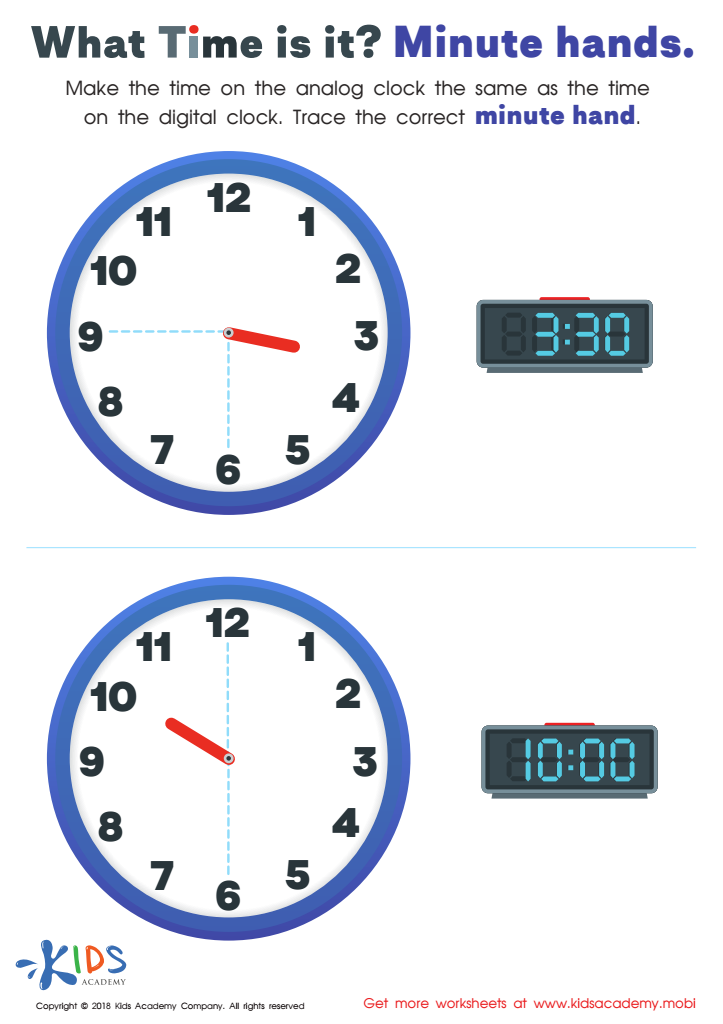
What Time Is it? Minute Hands Worksheet
 Assign to My Students
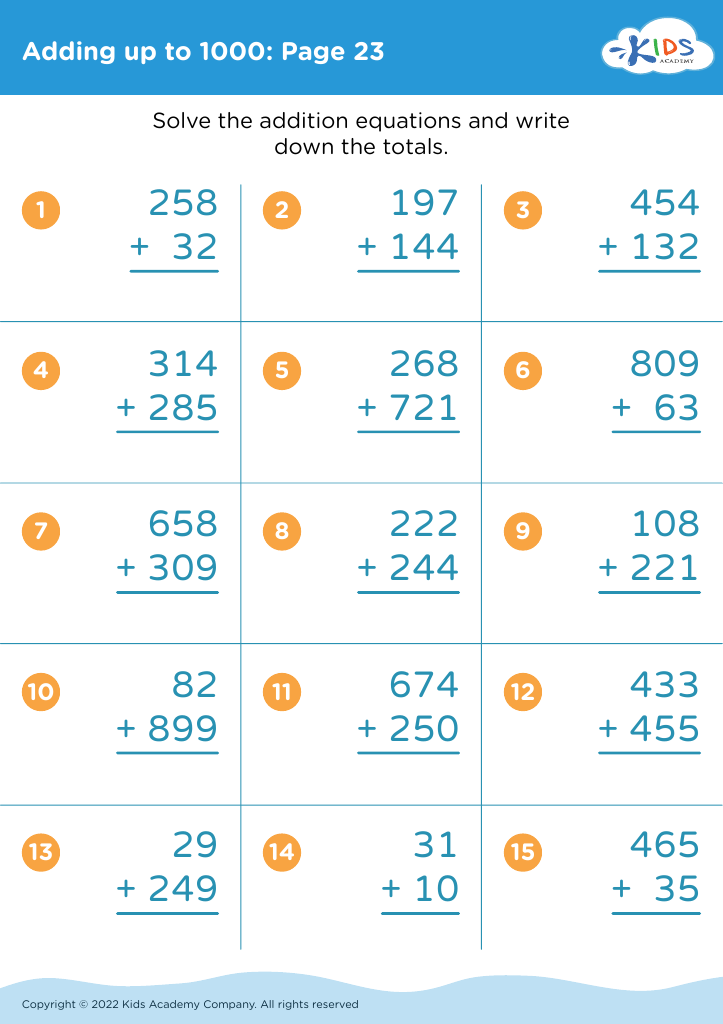
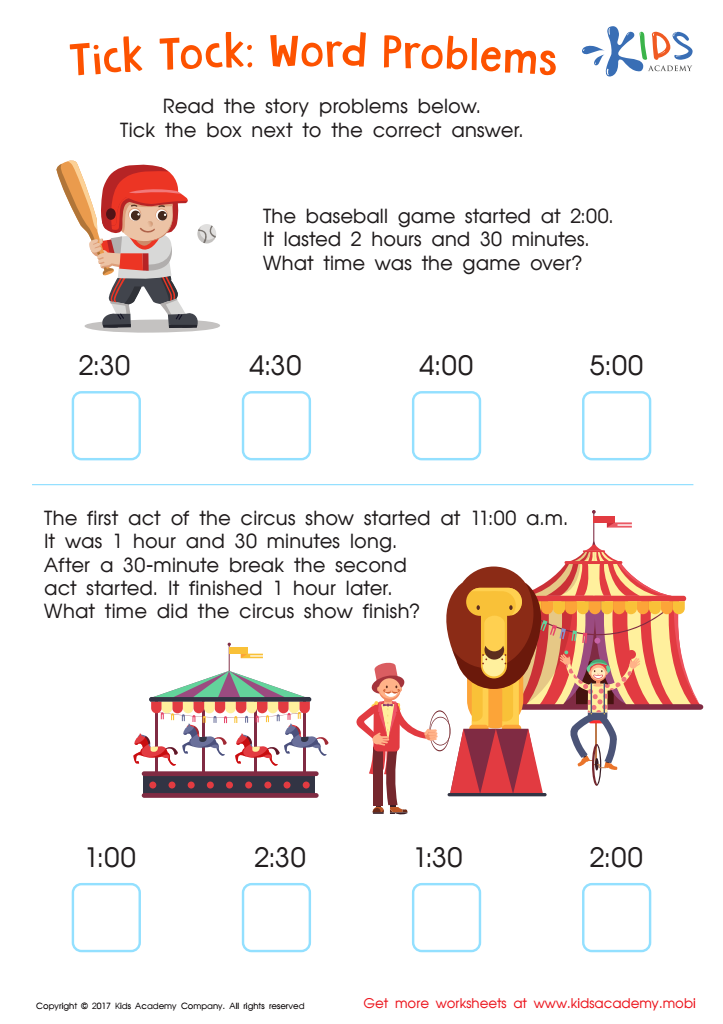
Tick Tock Word Problems Time Worksheet








Parents and teachers play a crucial role in the early cognitive development of children, and time calculation skills are foundational to this process. For children aged 3-7, understanding time helps them navigate their daily routines and fosters independence. Learning to recognize numbers on a clock, comprehend durations, and relate activities to specific times instills a sense of structure.
Developing time calculation skills aids in enhancing critical thinking and problem-solving abilities. Children learn to anticipate events, manage schedules, and develop a sense of responsibility. As they grasp the concepts of past, present, and future, they build a framework for organizing their thoughts and actions in a logical sequence.
Moreover, time-related skills support mathematical proficiency. Recognizing patterns in time intervals and sequencing activities fosters number sense, setting the stage for more advanced math skills later.
Parents and teachers should also recognize that teaching time can promote discussions about various concepts, including cultural perspectives on time and its significance in different contexts, fostering broader social and emotional understanding. Overall, nurturing time calculation skills is vital for a child's holistic development, paving the way for academic success and life skills.








