Understand number relationships Worksheets for Ages 3-7
4 filtered results
-
From - To
Explore our "Understand Number Relationships Worksheets" designed for children ages 3-7! These engaging and interactive resources help young learners grasp essential math concepts through fun activities. From identifying greater and lesser numbers to recognizing patterns and simple addition and subtraction, these worksheets lay a strong foundation for early numeracy skills. Ideal for preschool and kindergarten classrooms or at-home learning, our printable worksheets promote hands-on practice and a deeper understanding of number relationships. Encourage your child's mathematical growth and confidence with these carefully crafted materials that make learning enjoyable and accessible! Start building critical math skills today!
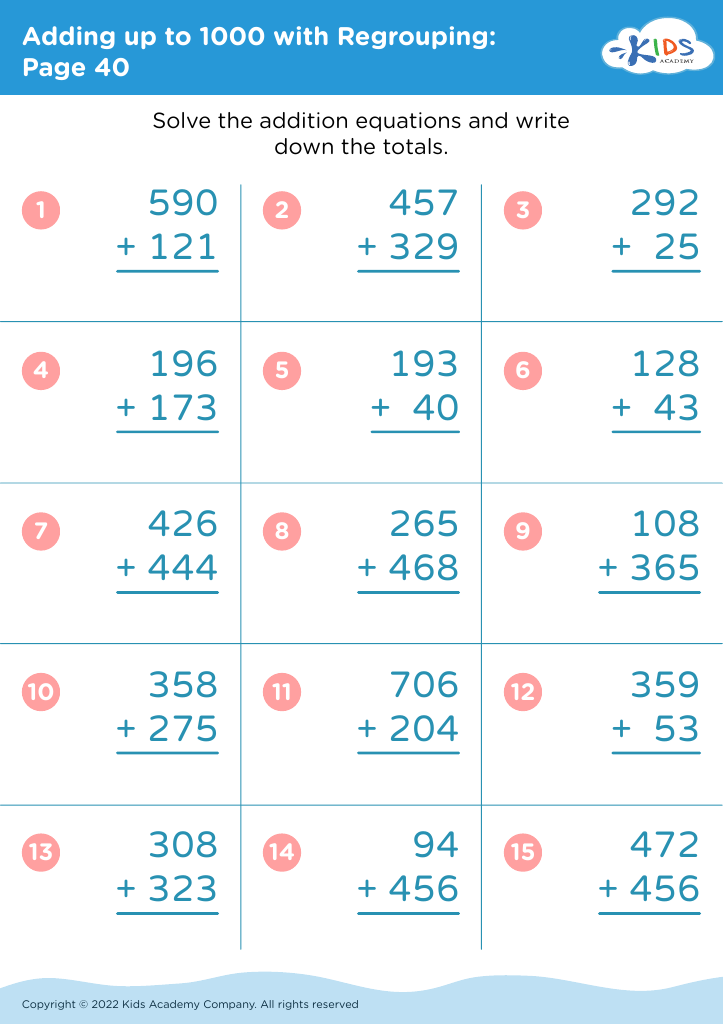
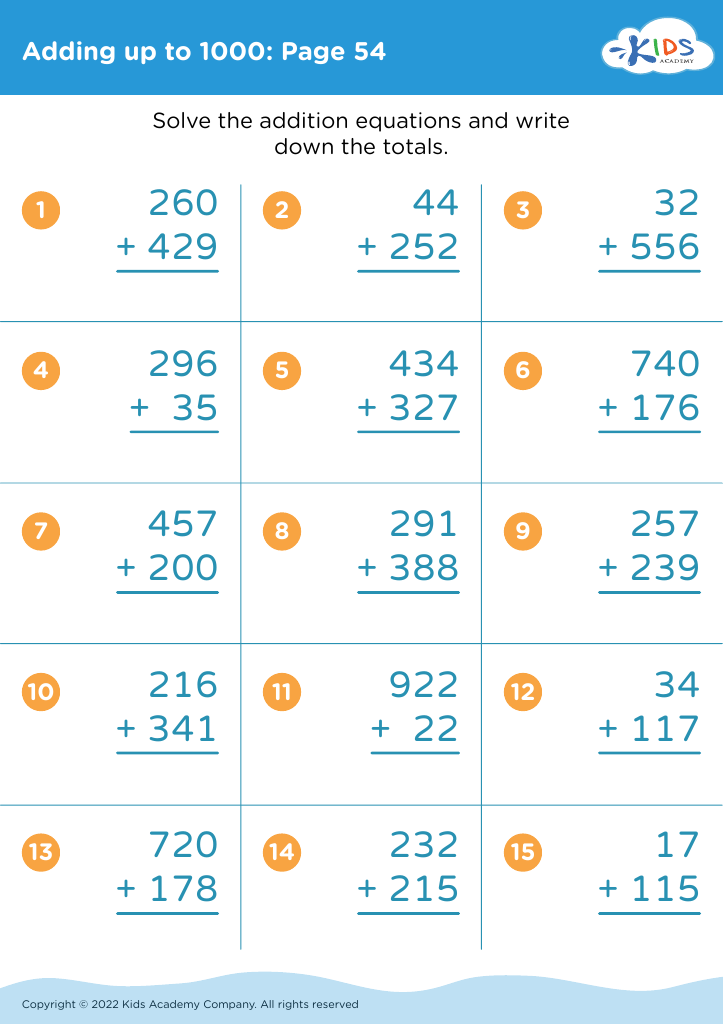
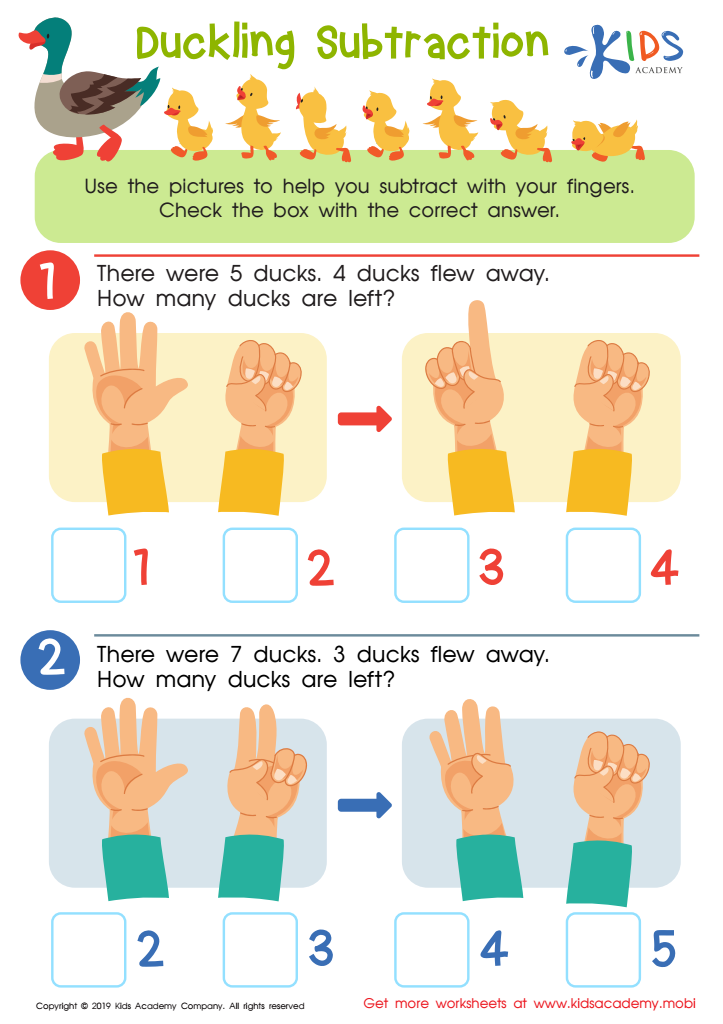
Duckling Subtraction Worksheet
 Assign to My Students
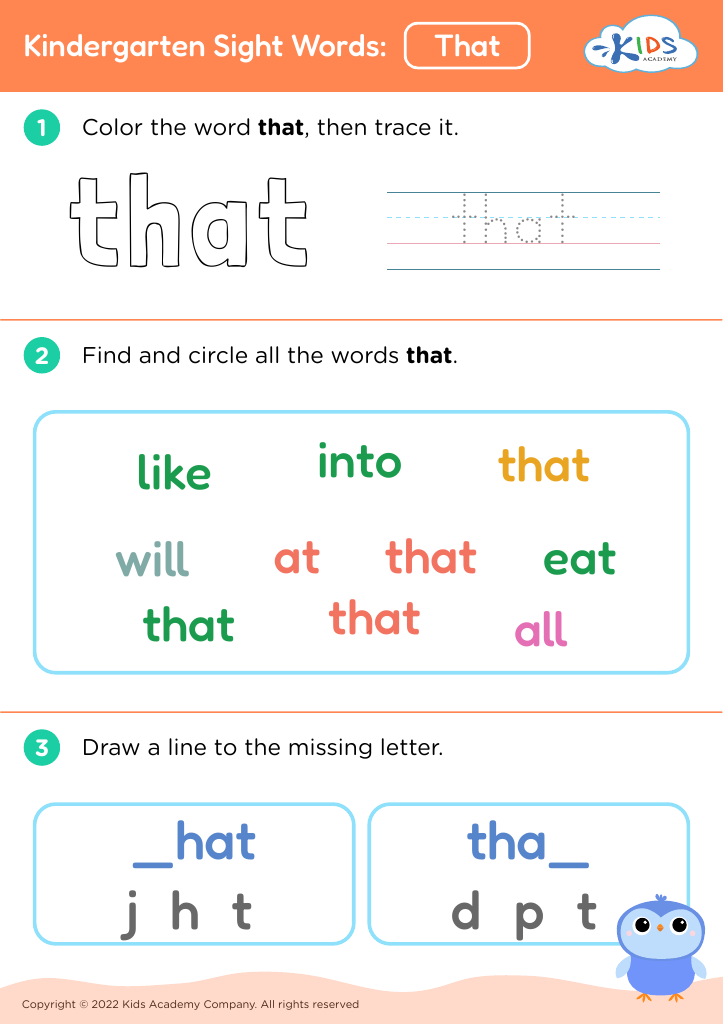








Understanding number relationships is essential for children aged 3 to 7 because it lays the foundation for all future mathematical learning. At this stage, children start to develop critical skills that go beyond rote memorization of numbers. They begin to recognize how numbers relate to one another through concepts such as addition, subtraction, and even early multiplication or division.
When parents or teachers encourage understanding number relationships, they promote critical thinking, problem-solving skills, and cognitive development. Mastering these concepts helps children make sense of the world around them—everything from counting objects and measuring quantities to learning patterns and organizing information.
Moreover, a strong grasp of number relationships encourages resilience and a growth mindset. When children encounter challenges, such as solving a math problem, understanding underlying relationships gives them the tools to approach and navigate those challenges successfully.
Additionally, fostering number sense boosts confidence, making children more willing to explore advanced math concepts later on. By emphasizing this understanding from an early age, parents and teachers can support a child's overall academic success, making mathematics a positive and empowering experience. Therefore, investing in a child's number sense opens doors to lifelong learning and achievement.








