Understanding citizenship Worksheets for Ages 3-7
6 filtered results
-
From - To
Explore our comprehensive "Understanding Citizenship" worksheets designed for children ages 3-7 at Kids Academy. These educational resources are crafted to instill foundational citizenship concepts through engaging activities tailored to young learners. Our worksheets cover essential topics such as community roles, responsibility, and basic rights, helping kids develop an early understanding of what it means to be a good citizen. Through fun exercises and relatable scenarios, children will learn the importance of respecting others, contributing to their community, and recognizing their duties. Download our worksheets to start fostering civic responsibility in your little ones today!
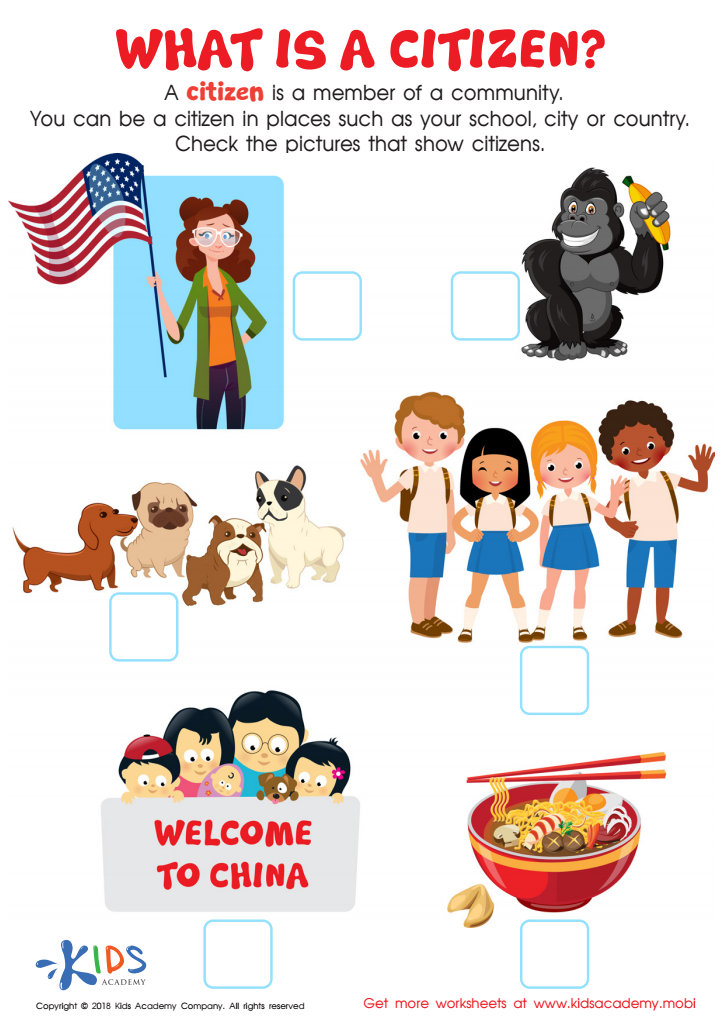
What is a Citizen? Worksheet
 Assign to My Students
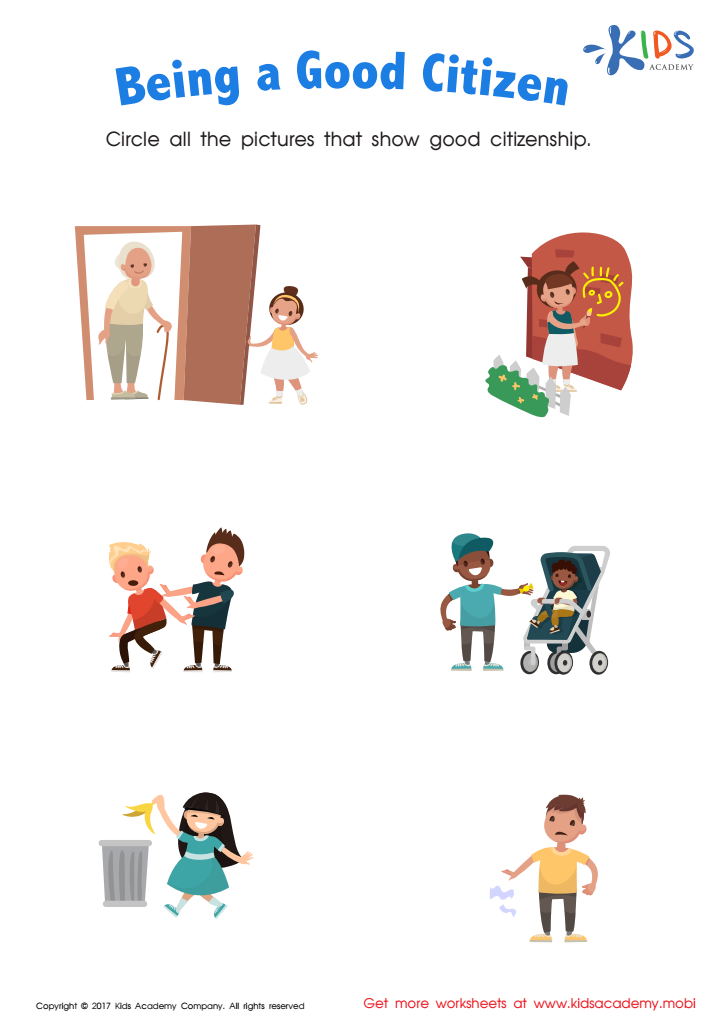
Being a Good Citizen Printable
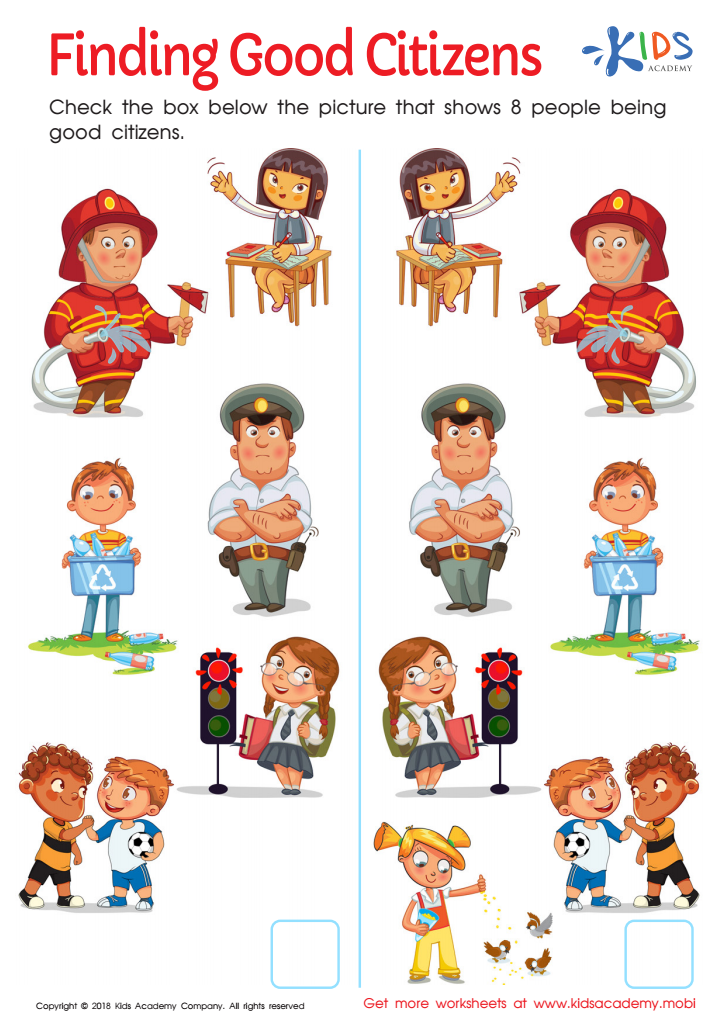
Finding Good Citizens Worksheet
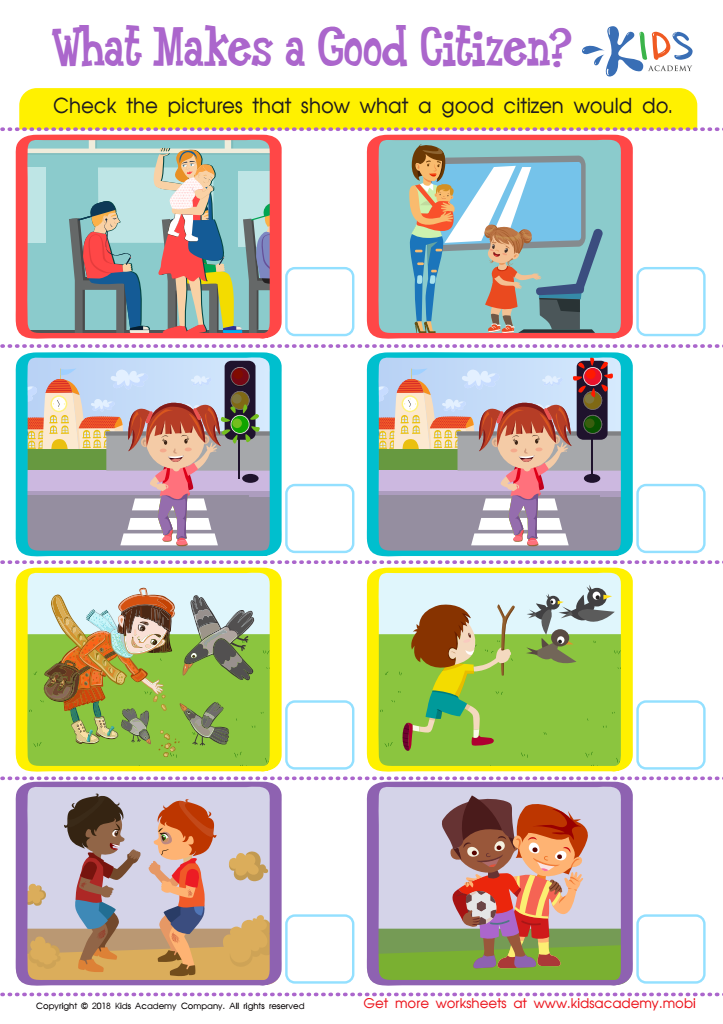
What Makes a Good Citizen? Worksheet
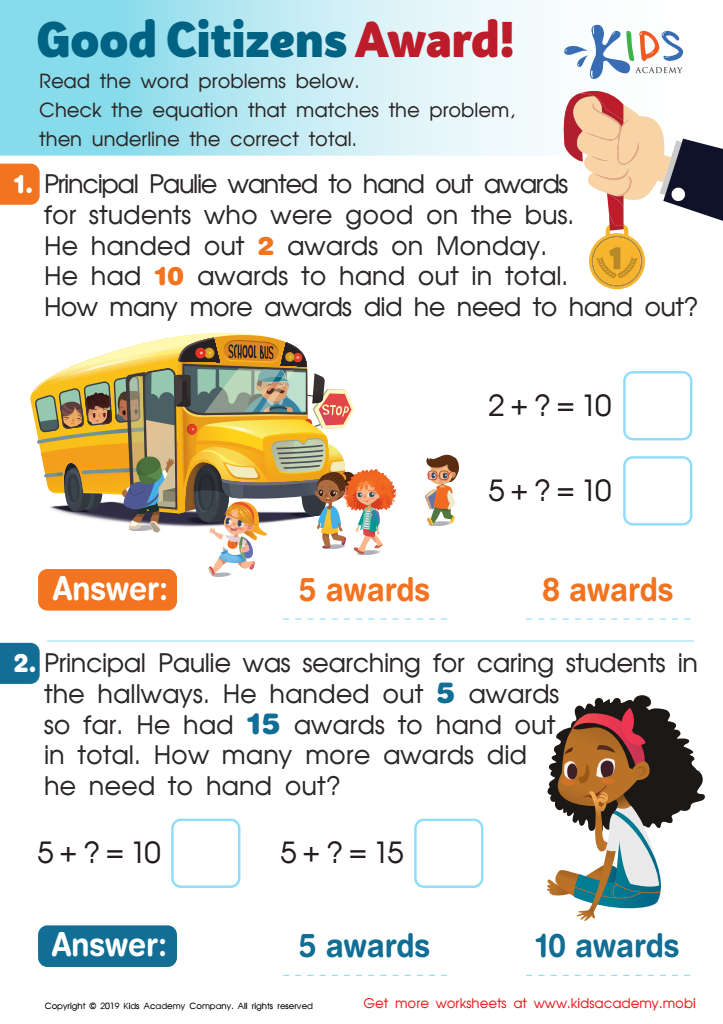
Good Citizens Award! Worksheet
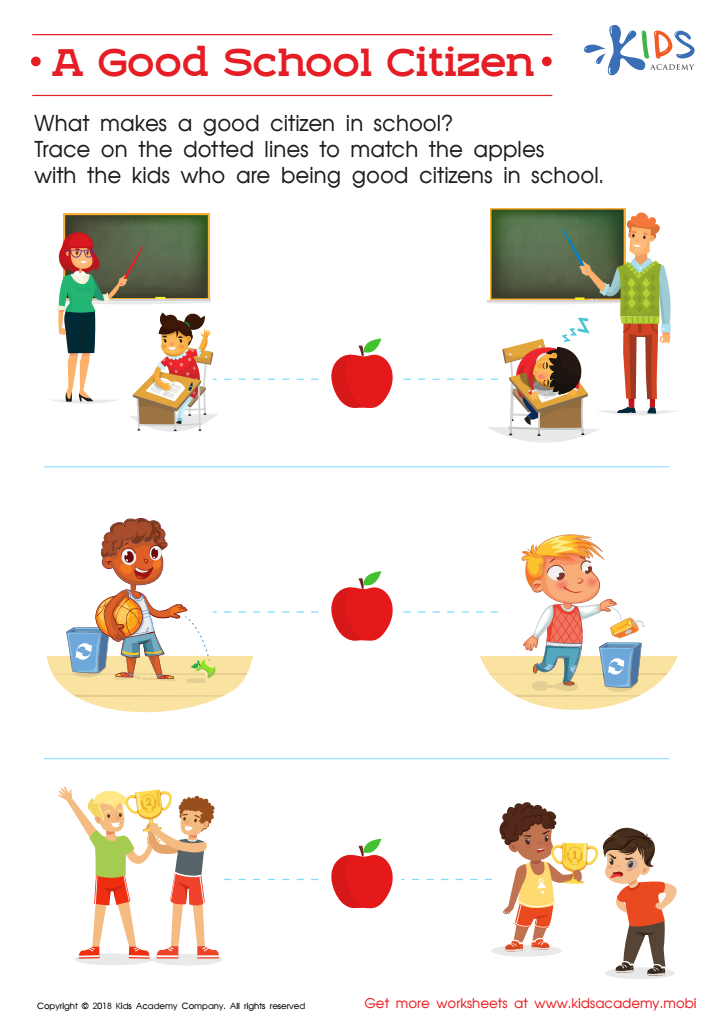
A Good School Citizen Worksheet






Understanding citizenship for children ages 3-7 is crucial because it lays the foundational blocks for becoming responsible, conscious, and compassionate members of their communities. During these formative years, children are highly impressionable and learning skills and behaviors that shape their future interactions and societal contributions.
Firstly, understanding citizenship teaches children about rights, responsibilities, and respect for others, promoting a safer and more inclusive environment. When kids learn to listen, share, and cooperate, they cultivate empathy and teamwork—skills essential for building a cohesive society.
Additionally, early citizenship education fosters a sense of belonging and connection to the community, encouraging students to value their role and impact within it. Activities that involve community beautification, caring for communal resources, or understanding cultural norms help children realize they are part of something larger than themselves, promoting civic-mindedness from a young age.
Moreover, this early education instills critical thinking about societal norms and problem-solving abilities for real-world challenges. Through storytelling, role-playing, and guided discussions, children can explore civics-related scenarios that build their moral compass and decision-making abilities.
Ultimately, understanding citizenship empowers children to grow into engaged, informed, and proactive citizens, ensuring a healthier and more responsible society for future generations. Both parents and teachers play key roles in nurturing these values early on, making long-lasting educational investments.








