Understanding comparisons Worksheets for Ages 3-7
5 filtered results
-
From - To
Enhance your child's learning with our "Understanding Comparisons Worksheets" designed for ages 3-7! These engaging and interactive worksheets help young learners grasp the concept of comparisons through fun activities. Children will explore similarities and differences in size, shape, and quantity, promoting critical thinking and observational skills. Our thoughtfully crafted exercises cater to various learning styles, ensuring that every child can grasp these essential concepts while having fun. Perfect for home or classroom use, these worksheets can boost confidence and inspire curiosity. Start your child's journey to understanding comparisons with our high-quality resources today!
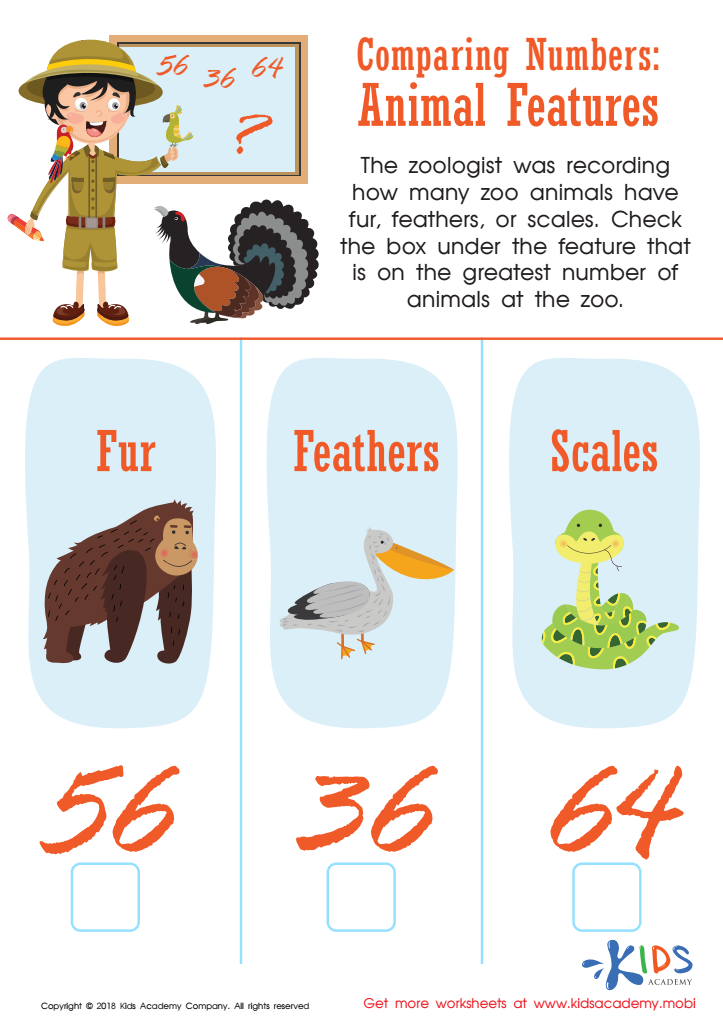
Animal Features Worksheet
 Assign to My Students
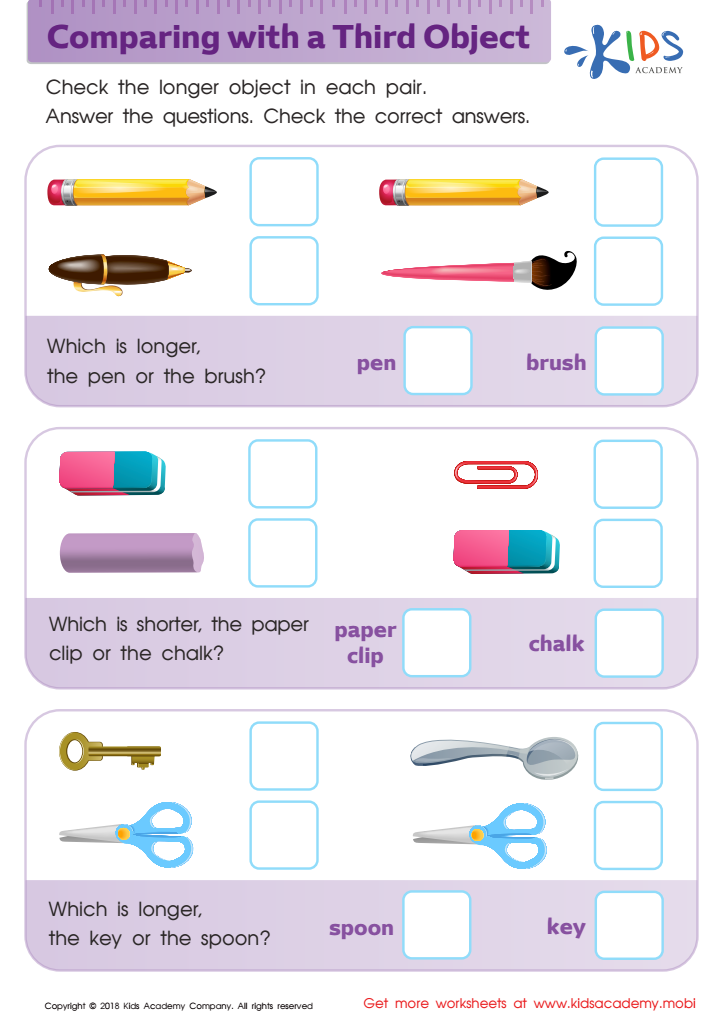
Comparing with a Third Object Worksheet
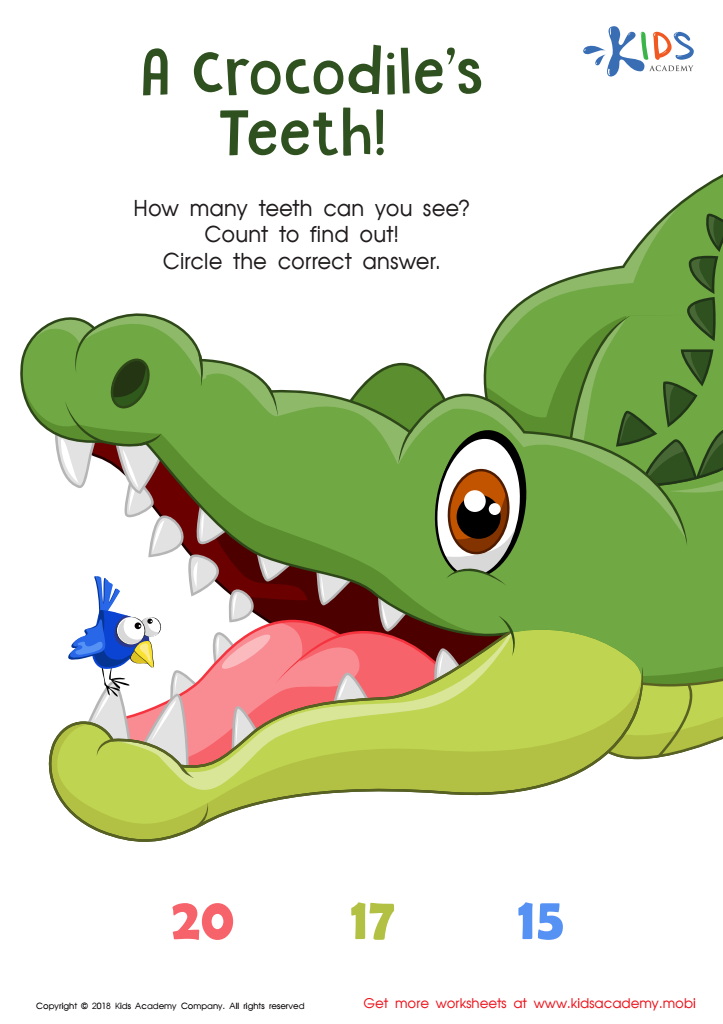
A Crocodile's Teeth Worksheet
Matching: Classifying Toys by Size Worksheet
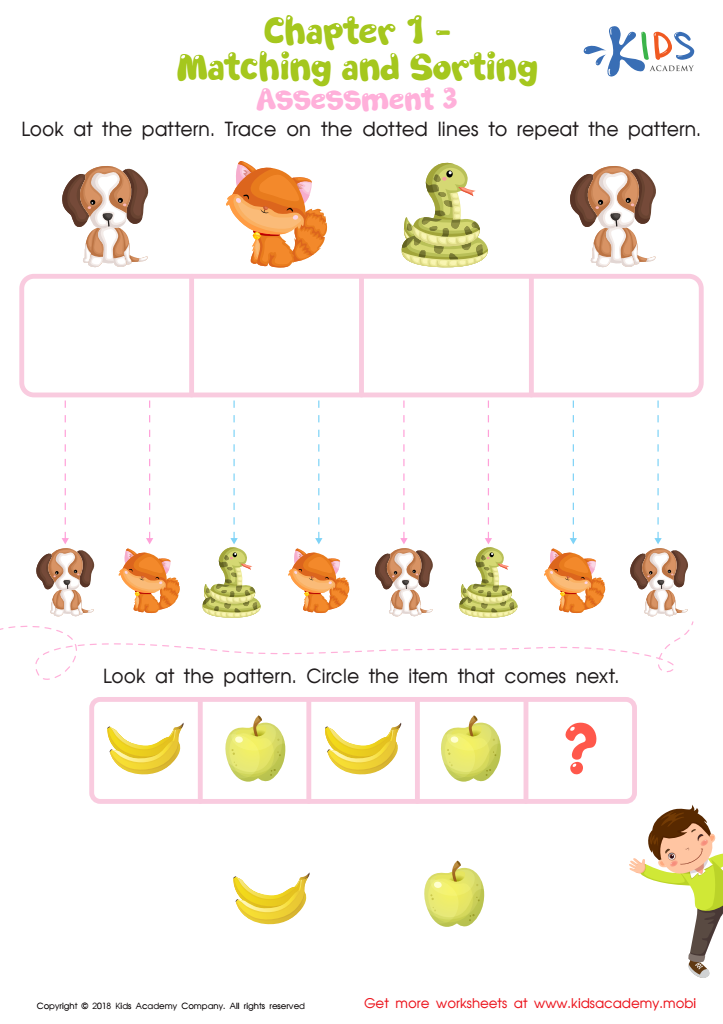
Matching and Sorting for Preschool: Assessment 3 Worksheet


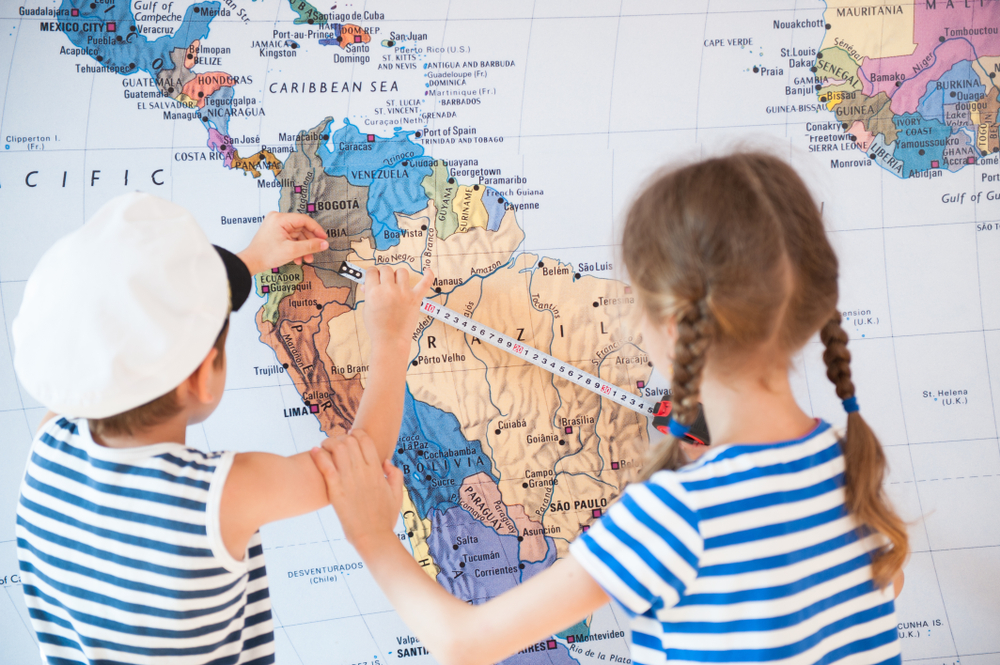




Understanding comparisons is crucial for children aged 3-7 as it fosters essential cognitive and social skills. During this developmental stage, children begin to recognize differences and similarities in their environment, which helps them make sense of the world around them. By learning to compare sizes, shapes, and quantities, they develop critical thinking skills, vital for problem-solving and logical reasoning.
Moreover, comparison aids in language development. Children enhance their vocabulary as they learn to describe attributes, thus improving their communication skills. This is pivotal for interacting with peers and adults, fostering social relationships essential for emotional and social growth.
In early math education, understanding comparisons lays the groundwork for more complex mathematical concepts, such as addition and subtraction. Grasping how numbers relate to one another prepares children for future academic success.
Additionally, comparing ideas and opinions promotes empathy and conflict resolution in social interactions. Children learn to appreciate diverse perspectives, enhancing their social emotional development.
Ultimately, when parents and teachers prioritize these skills, they equate early experiences with foundational learning, ensuring children are equipped not just academically but also socially and emotionally for future challenges.








