Understanding division Worksheets for Ages 3-7
8 filtered results
-
From - To
Unlock the world of division for young learners with our "Understanding Division Worksheets" designed specifically for ages 3-7. These engaging and interactive worksheets simplify the concept of division through age-appropriate visuals and relatable examples. Children will explore basic division using fun themes, like sharing and grouping, to grasp foundational skills in a playful way. Each worksheet is crafted to enhance critical thinking and problem-solving abilities. Perfect for parents and educators, our resources aim to build confidence in early math skills. Dive into a realm of fun learning and instill a lifelong love for mathematics in your child!
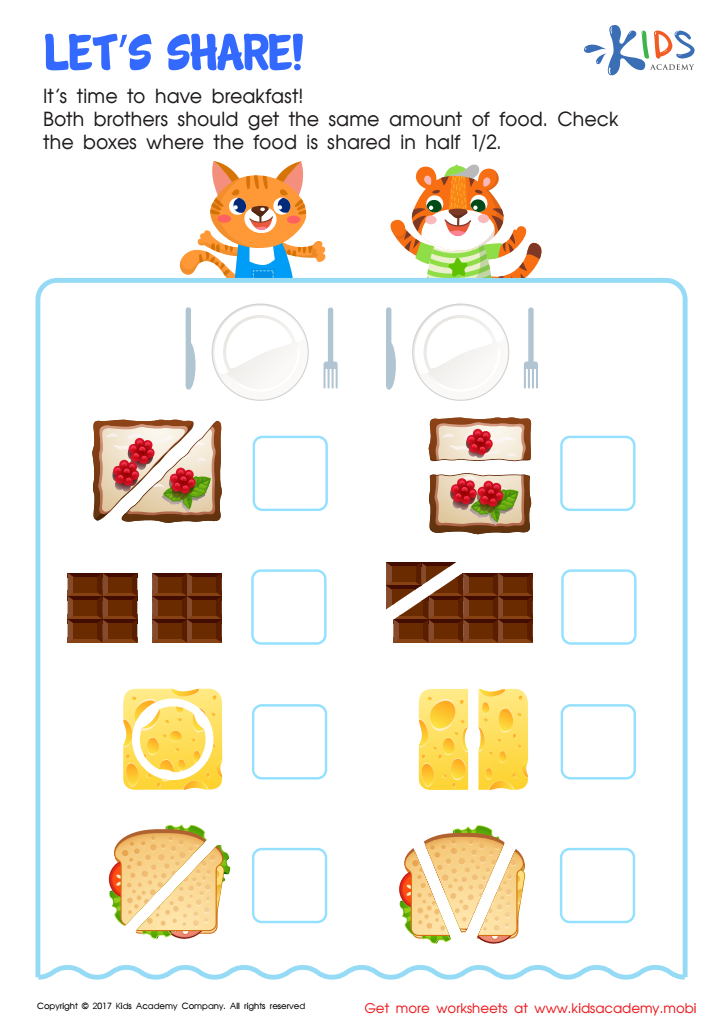
Let's Share Worksheet
 Assign to My Students
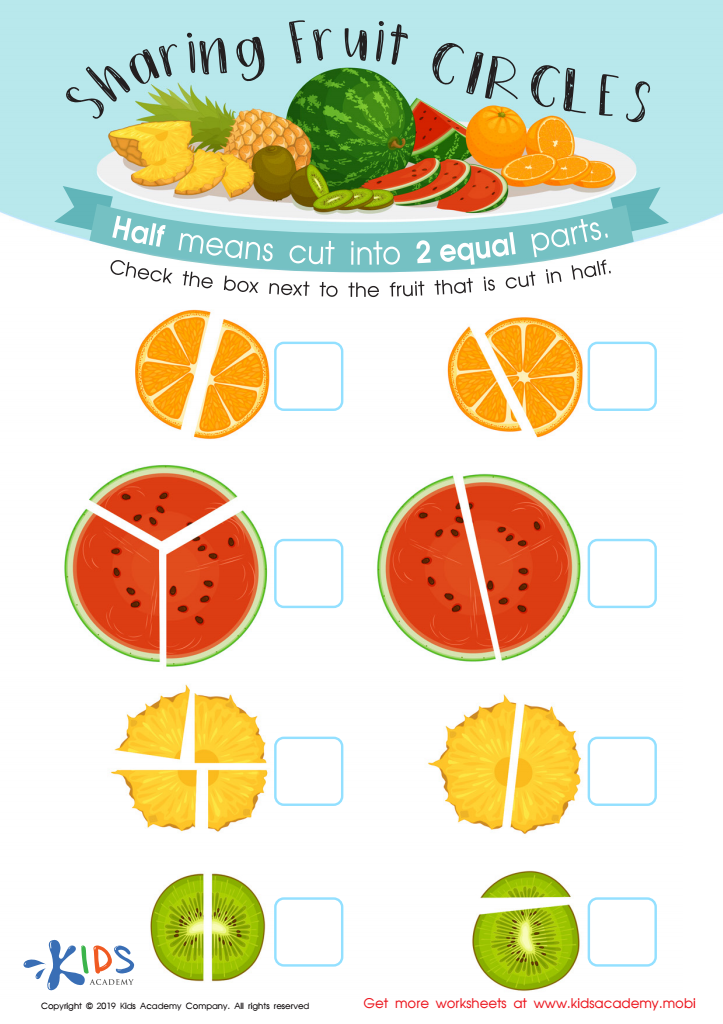
Sharing Fruit Circles Worksheet




.jpg)


Understanding division is crucial for children aged 3-7 as it lays the foundation for their mathematical development. During these formative years, children are naturally curious and eager to learn, making it an ideal time to introduce foundational concepts like division. Mastery of division helps children develop critical thinking and problem-solving skills.
At this age, division can be introduced through simple, relatable examples, such as sharing toys or snacks. These activities not only make learning fun but also foster collaboration among peers. Early exposure to division helps children understand the concept of fairness and sharing, promoting social skills alongside mathematical ones.
Additionally, division is interconnected with other math concepts like multiplication, addition, and subtraction. A strong grasp of division facilitates easier learning of these related topics in later grades, ensuring that children build confidence and competence in their math abilities.
By prioritizing an understanding of division, parents and teachers not only enhance mathematical literacy but also contribute to a child’s overall cognitive development. Encouraging exploration of these early math concepts can positively impact academic performance and instill a love for learning, setting children up for long-term success in their educational journey.








