Welcome to our "Understanding Equations Worksheets" for children ages 3-7! Designed specifically for early learners, these engaging worksheets introduce essential math concepts through fun activities. Children will explore basic equations, develop critical thinking skills, and enhance their problem-solving abilities. With colorful visuals and interactive tasks, our resources encourage a love for math and make learning enjoyable. Perfect for classroom use or at-home practice, these worksheets help young learners build a solid foundation in mathematics. Dive into the world of equations with our thoughtfully crafted materials and watch your child gain confidence in their math skills!

Check out this FREE "Understanding equations" Trial Lesson for age 3-7!

Writing Equations Addition

Favorites
With answer key
Interactive
  • 3-7
  • Understanding equations
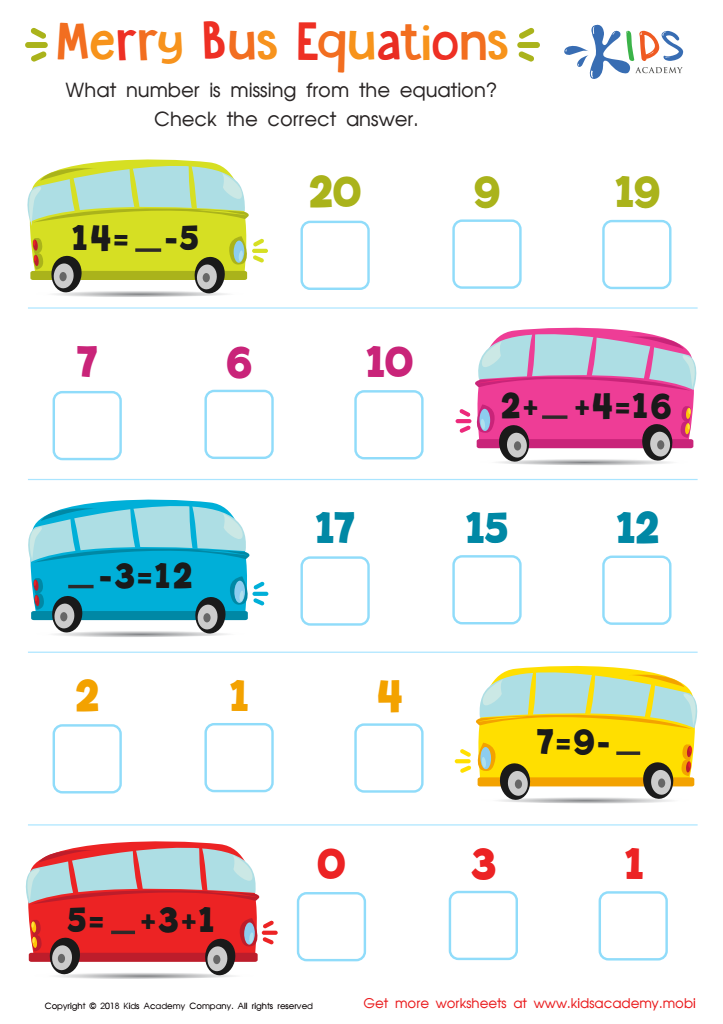
Merry Bus Equations Worksheet

Merry Bus Equations Worksheet

Help your child master elementary math with this fun worksheet! Featuring colorful buses and a variety of addition and subtraction equations, some with 3-digit numbers, it encourages kids to find the missing number and choose the correct answer. Give them the practice they need for success!
Merry Bus Equations Worksheet
Worksheet
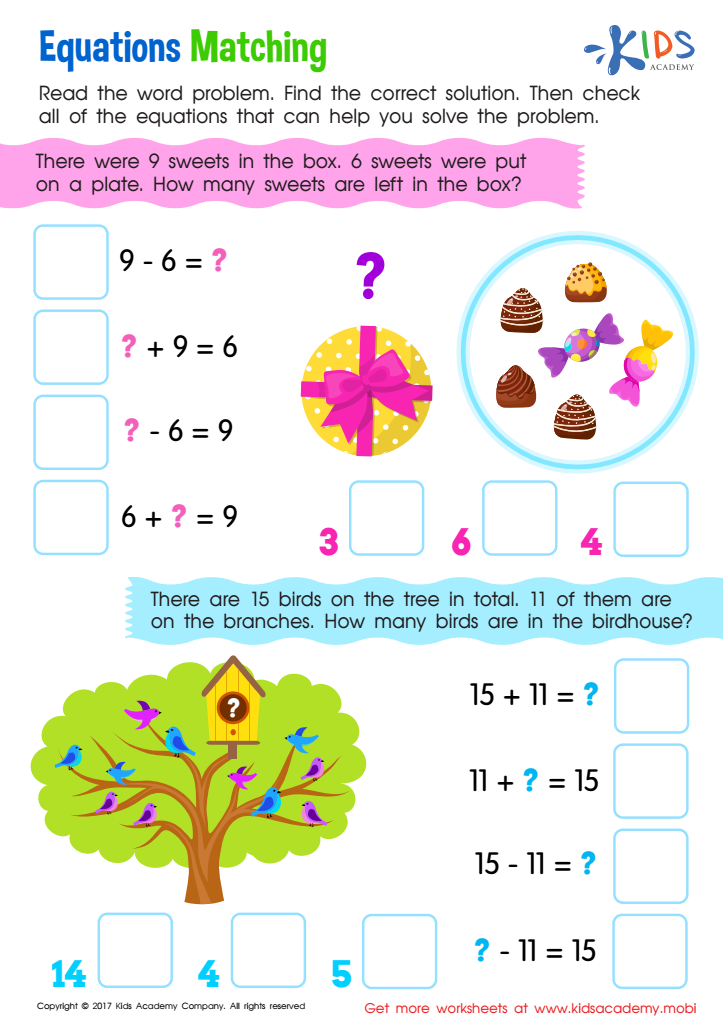
Equations Matching Word Problems Worksheet
Equations Matching Word Problems Worksheet

Download this worksheet and give your young mathematician practice in solving equations using matching numbers and number family facts. They'll solve word problems, develop critical thinking and algebraic reasoning, and gain success with addition and subtraction.
Equations Matching Word Problems Worksheet
Worksheet
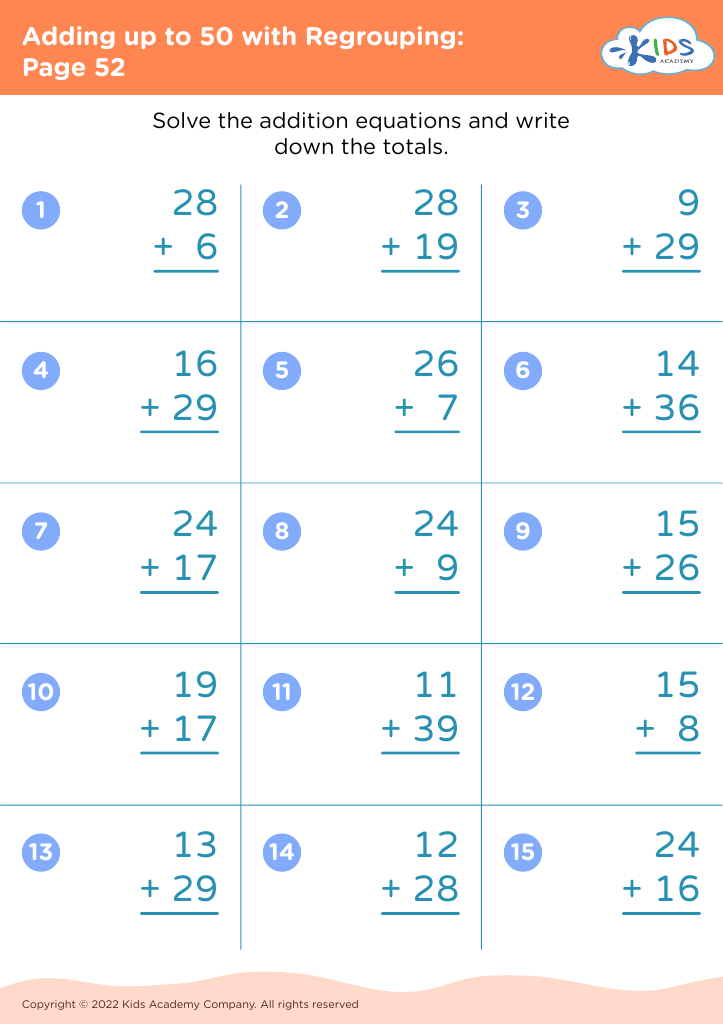
Adding up to 50 with Regrouping: Page 52
Worksheet
Comparing Solutions Worksheet

Comparing Solutions Worksheet

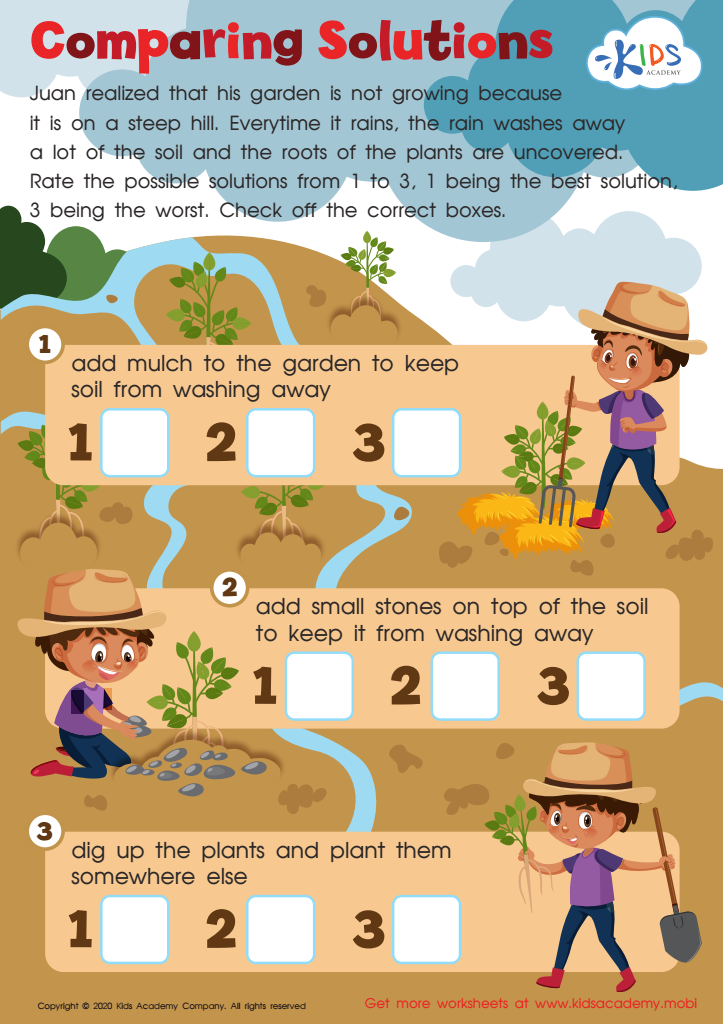
Juan can't get his veg garden growing as he'd like, planted on a steep hill. Help your child practice problem-solving by comparing solutions and rating them from most to least effective. With this thought-provoking worksheet, learners can hone the important skill of finding the best solution from a range of options.
Comparing Solutions Worksheet
Worksheet
Understanding Pictures as Equations Worksheet

Understanding Pictures as Equations Worksheet

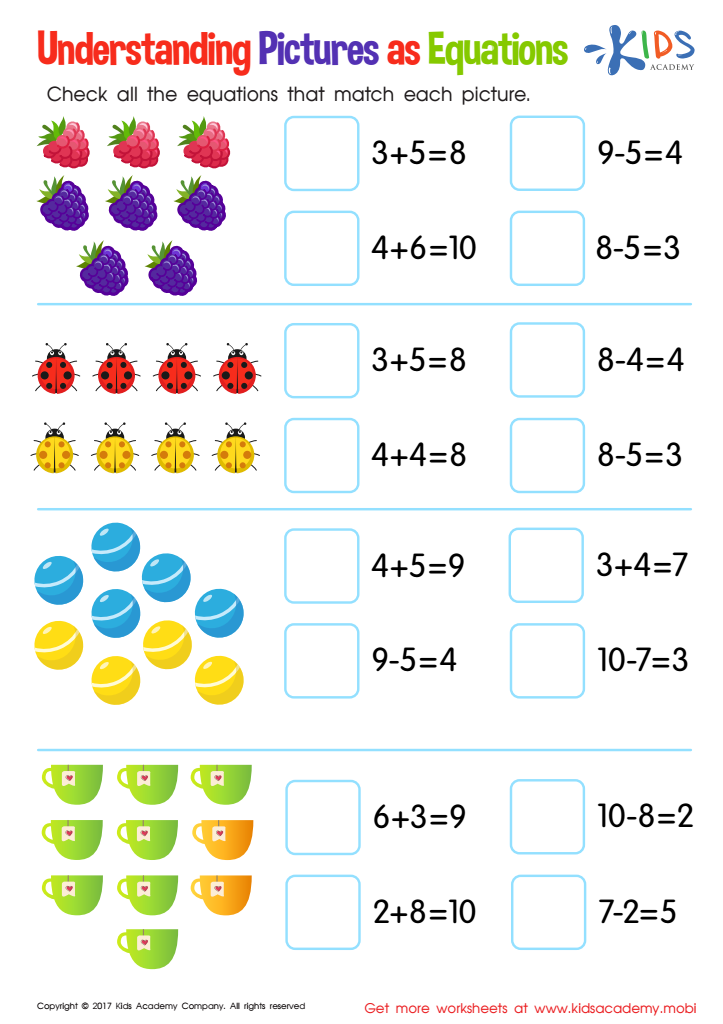
This worksheet helps your child interpret pictures into numbers and equations. Colourful grapes, ladybirds, balls and cups represent numbers which must be added to reach the total. Your child must also choose the equations that match the pictures correctly. A great way to practice math!
Understanding Pictures as Equations Worksheet
Worksheet
The Unknown Number - Assessment 3 Worksheet
The Unknown Number - Assessment 3 Worksheet

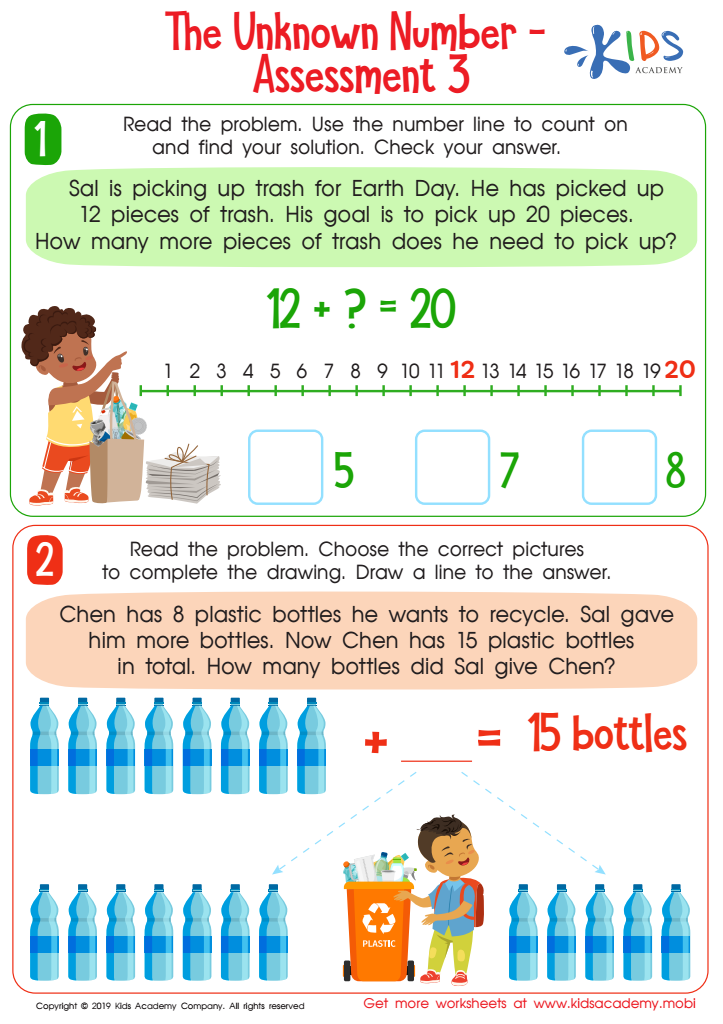
Read the Earth Day-themed word problem aloud to your kids, pointing to the pictures as you go. Use the number line to help them count on and find the answer. Then check it together. Doing this can help them learn more about Earth Day and meet other children who are doing their part to keep it clean.
The Unknown Number - Assessment 3 Worksheet

Worksheet
Adding up to 1000 with Regrouping: Page 2
Worksheet
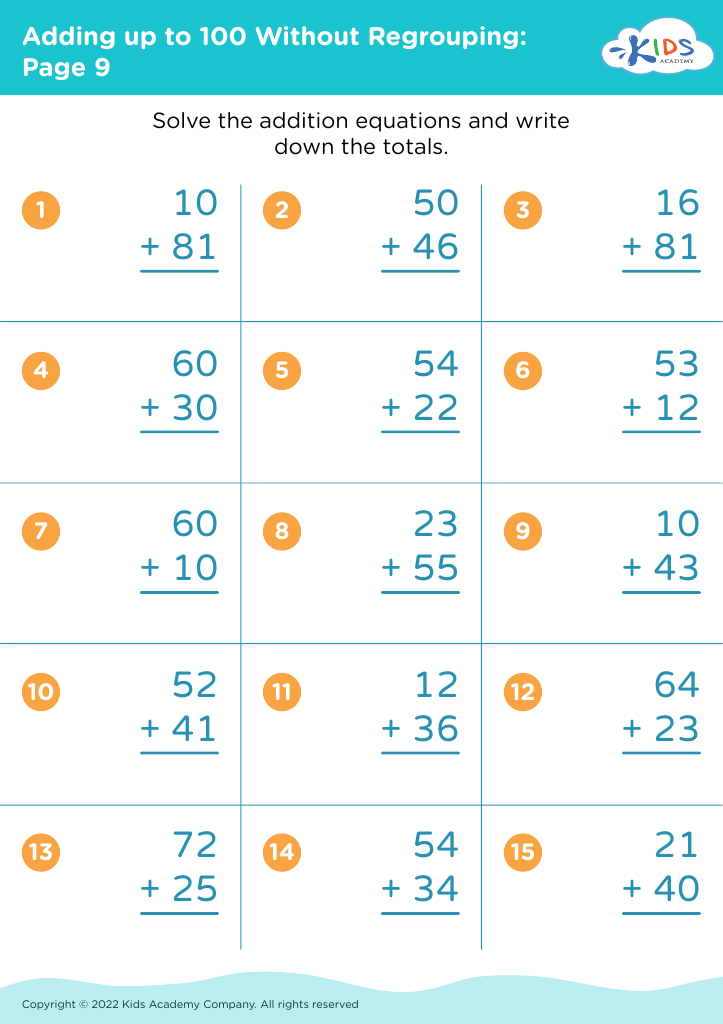
Adding up to 100 Without Regrouping: Page 9
Worksheet


Understanding equations is vital for children aged 3-7 as it lays the groundwork for their mathematical journey. During these formative years, children develop cognitive skills and begin to make sense of the world around them. Introducing them to basic equations fosters critical thinking, problem-solving skills, and logical reasoning.

Equations, even in their simplest forms, help children learn about relationships between numbers and concepts such as equality and balance. Engaging young learners with playful, hands-on activities involving basic equations makes math relevant and enjoyable. It nurtures a positive attitude toward learning and reduces math anxiety in later years.

Furthermore, grasping the concept of equations supports foundational skills necessary for future mathematical concepts. By encouraging early exposure, either at home or in the classroom, teachers and parents can cultivate essential skills that promote higher-order thinking and numerical fluency.

Additionally, equipping young children with a strong mathematical foundation helps bridge the gap to more complex subjects in the future. As they progress, those who have had early experiences with equations are likely to feel more confident in tackling advanced math challenges. Thus, understanding equations at this young age is crucial for lifelong learning and academic success.