Understanding grouping Worksheets for Ages 3-7
3 filtered results
-
From - To
Welcome to our "Understanding Grouping Worksheets for Ages 3-7" page, where early learners develop essential sorting and categorization skills. Our expertly designed worksheets engage children in fun and educational activities that foster critical thinking and problem-solving abilities. By grouping objects by similarities like shape, color, and size, kids will enhance their understanding of patterns and relationships. These activities lay a solid foundation for mathematical concepts and logical reasoning. Perfect for preschoolers and early elementary students, these worksheets provide a joyful pathway to learning, ensuring children build confidence while mastering fundamental skills. Help your child excel with our vibrant, interactive resources today!
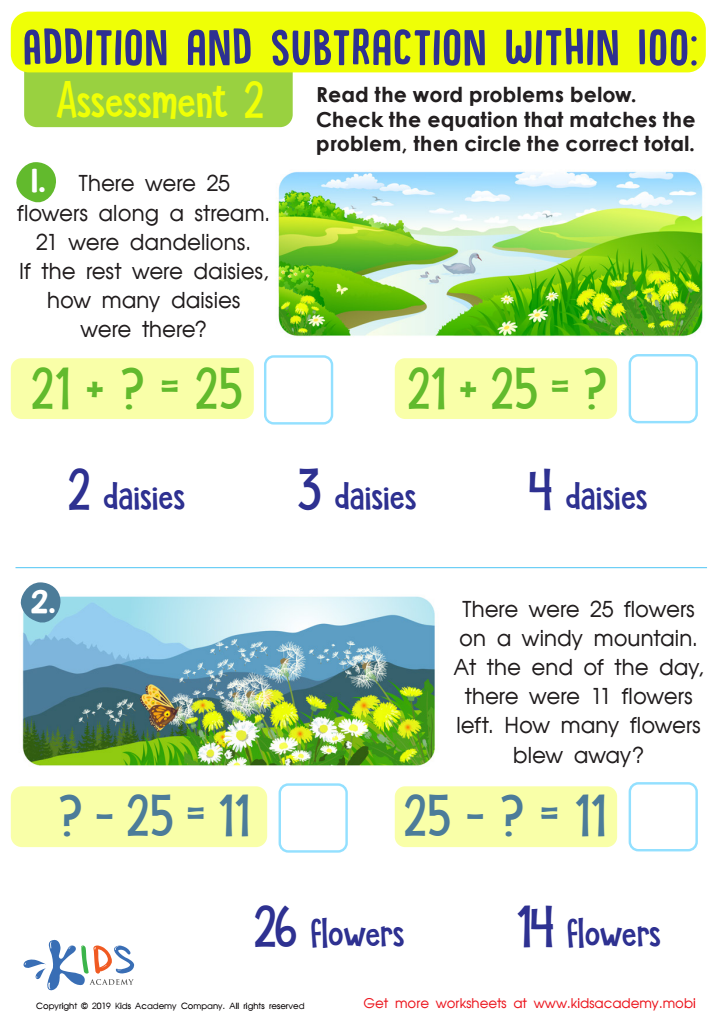
Assessment 2 Math Worksheet
 Assign to My Students
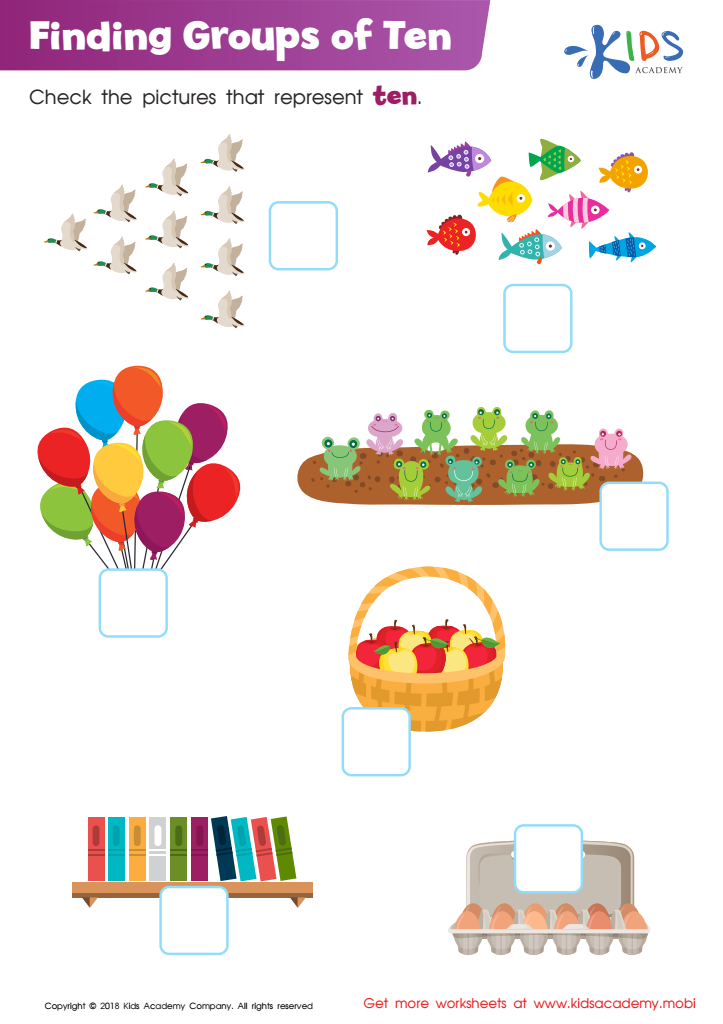
Finding Groups of Ten Worksheet
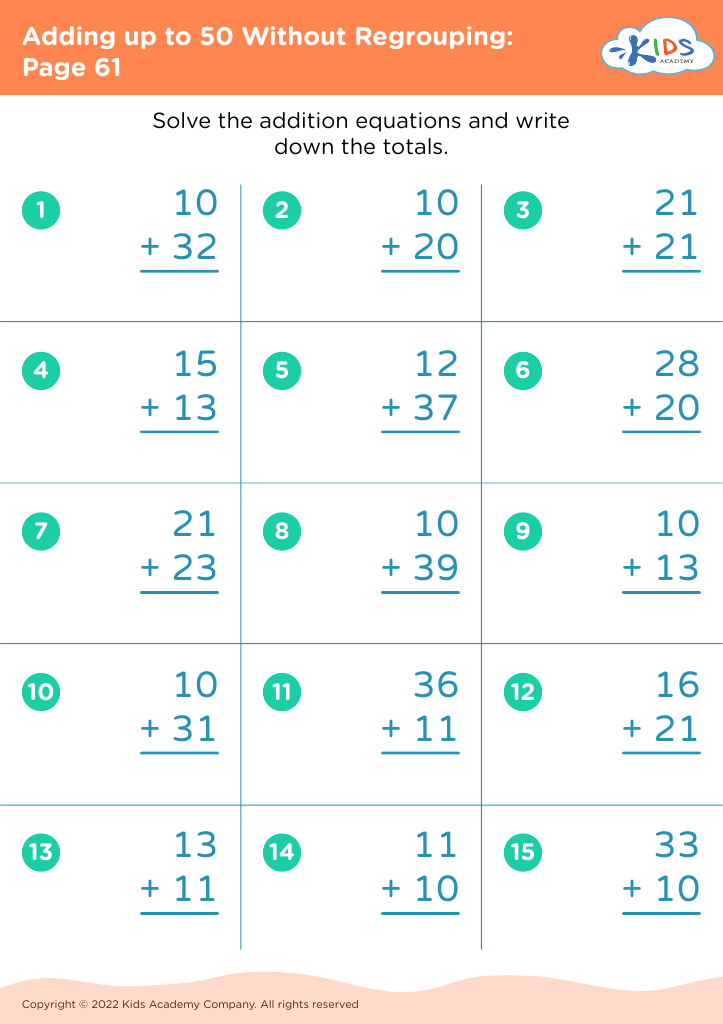







Understanding grouping during ages 3-7 is essential for a child's cognitive development, as it lays the foundation for more advanced mathematical and logical thinking. Grouping, also known as classification or categorization, helps children make sense of the world by organizing information into meaningful sequences. When children learn to group objects based on similarities and differences—such as color, shape, size, or number—they develop critical thinking and problem-solving skills.
For parents and teachers, fostering these grouping skills involves engaging children in activities that require sorting and classifying, like organizing toys, playing memory games, or even basic chores like sorting laundry. These activities not only make learning fun and hands-on but also sharpen a child's ability to observe, compare, and reason.
Moreover, early mastery of grouping concepts supports later academic achievements in subjects such as math and science, where classification and logical structured thinking are crucial. For instance, understanding grouping can ease a child's transition to counting by multiples or even more abstract concepts like fractions and set theory. Socially, grouping helps children develop communication skills as they describe their reasoning and engage with peers in collective tasks.
In conclusion, by emphasizing grouping skills in early childhood, parents and teachers equip children with fundamental cognitive tools. These skills enrich their intellectual development, ease their educational journey, and foster a lifelong love for learning.








