Understanding measurements Worksheets for Ages 3-7 - Page 2
27 filtered results
-
From - To
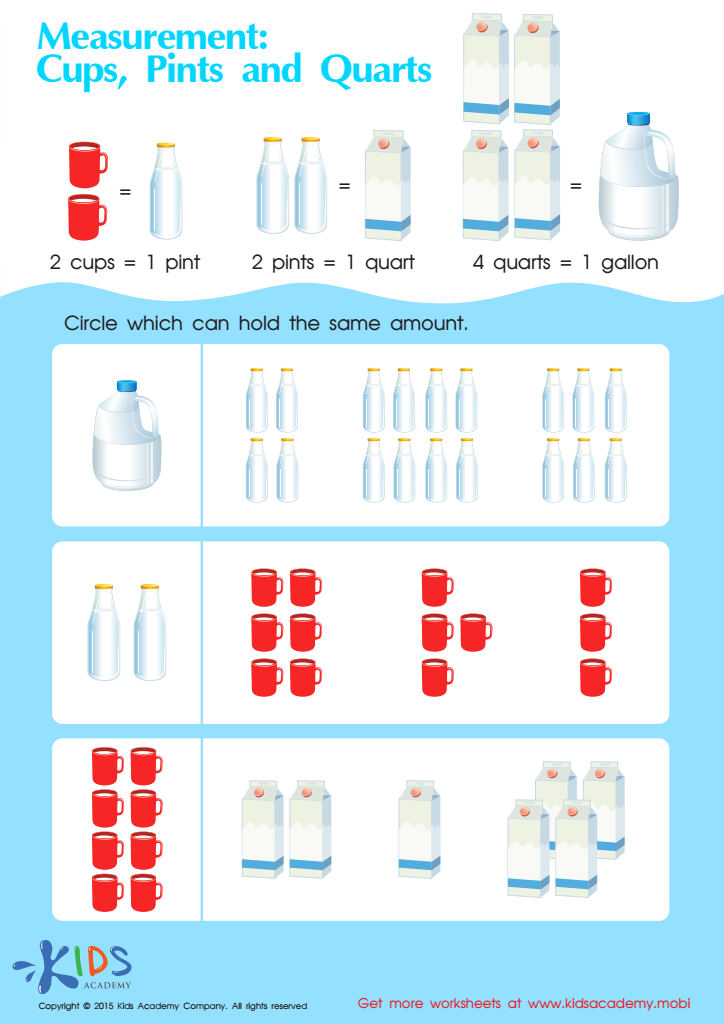
Cups, Pints and Quarts 2 Worksheet
 Assign to My Students
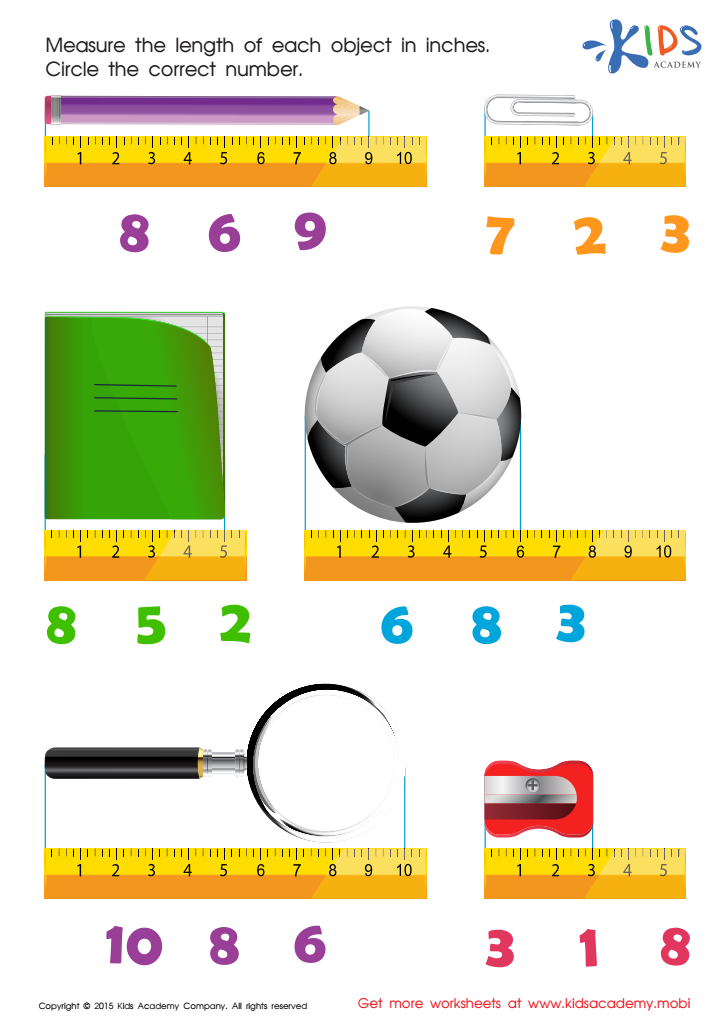
Learning measuring objects in inches Worksheet




Understanding measurements is crucial for children aged 3-7 as it forms the foundation for various essential life skills and academic competencies. At this young age, kids are naturally curious, and teaching them about measurements can provide meaningful context to their exploration and learning. Recognizing concepts like length, weight, height, and volume helps children make sense of the world around them, fostering spatial awareness and critical thinking.
Measurements are not only fundamental in math but also in everyday situations—they help children learn about comparisons, quantities, and the importance of precision. For example, cooking involves measuring ingredients, which can enhance their understanding of fractions and numbers in a practical way. Moreover, engaging in measurement activities can encourage problem-solving skills, collaboration, and perseverance as children tackle challenges like building structures or following a recipe.
Additionally, teaching measurement aligns with early childhood standards and curates an enjoyable learning environment. It prepares children for future academic challenges by building their confidence as critical thinkers. By cultivating these skills during these formative years, parents and teachers equip young learners with valuable tools for success, paving the way for both academic achievements and life-long learning.








