Understanding plurals Worksheets for Ages 3-7
7 filtered results
-
From - To
Discover engaging "Understanding Plurals" worksheets designed for children aged 3-7 at Kids Academy. Our carefully crafted resources make learning fun, helping your child grasp the concept of singular and plural nouns with ease through interactive activities. Each worksheet challenges kids with vibrant images, simple sentences, and playful exercises that cater to young learners' developmental stages. These printable resources support early language skills, enhancing vocabulary, reading, and writing proficiency. Ideal for teachers and parents, the worksheets provide a joyful learning experience that engages and motivates children to master plurals as part of their foundational education.
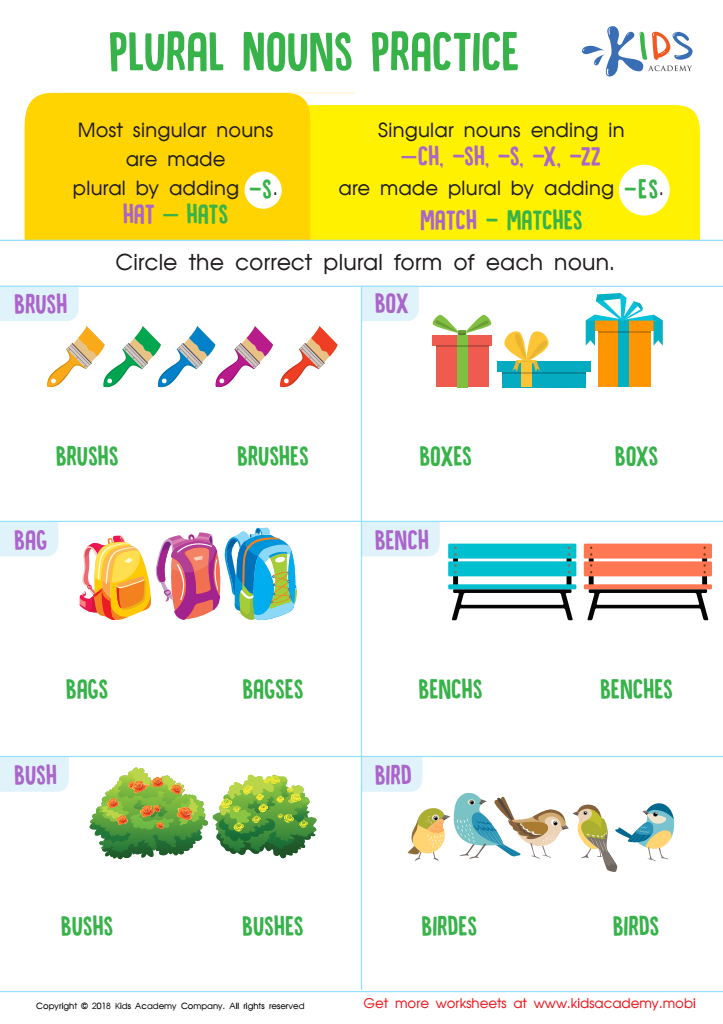
Plural Nouns Practice Worksheet
 Assign to My Students
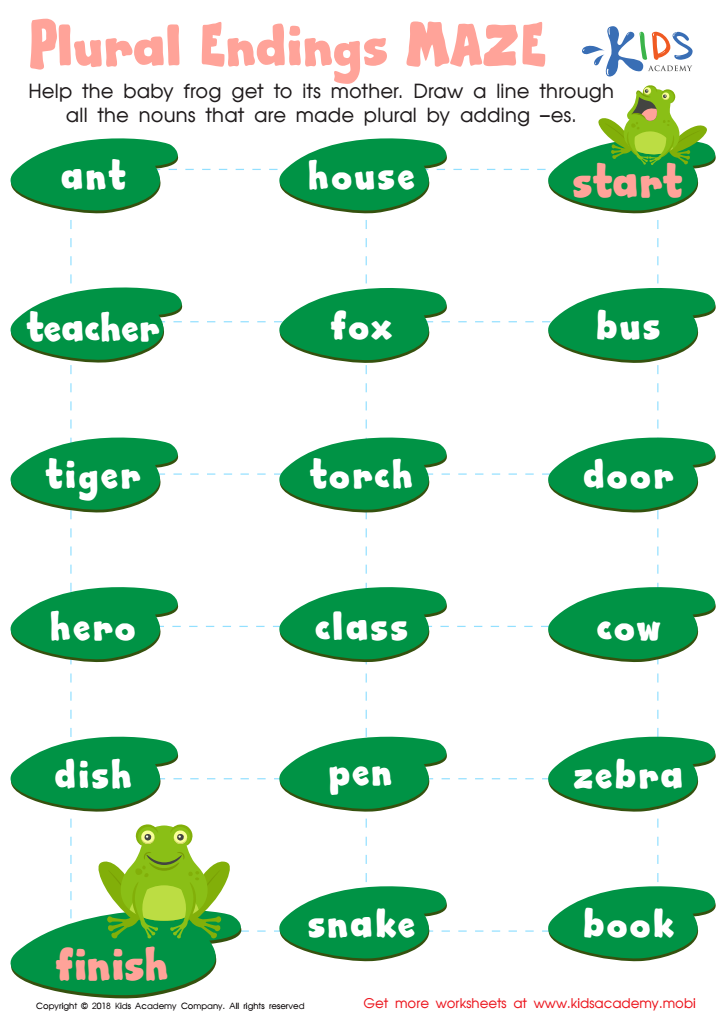
Plural Endings Maze Worksheet
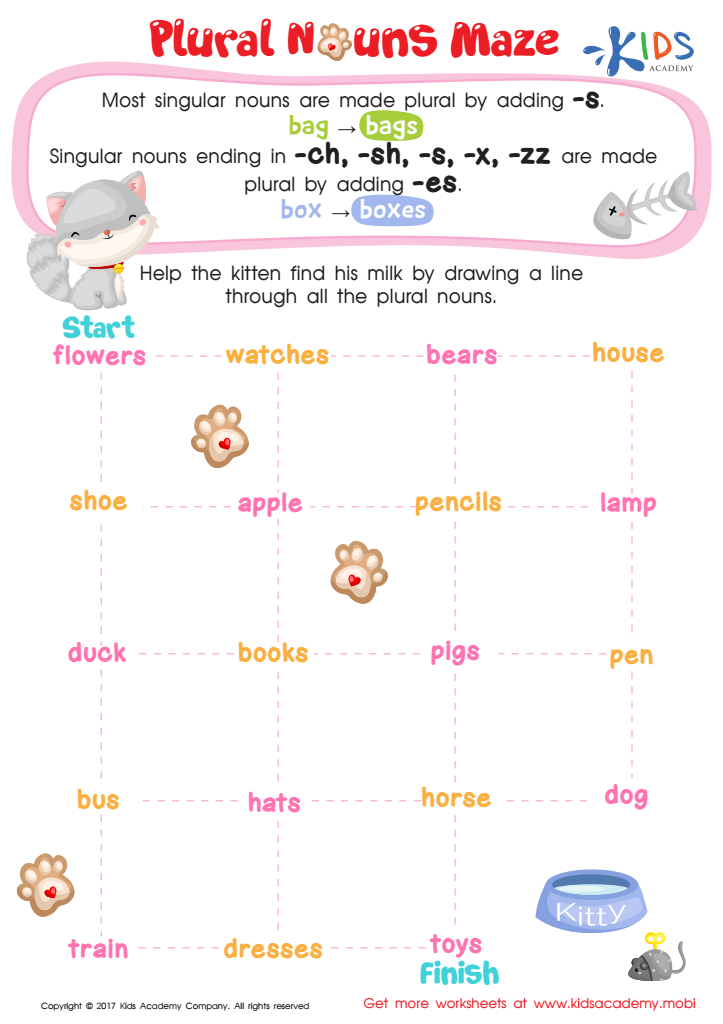
Plural Nouns Maze Worksheet
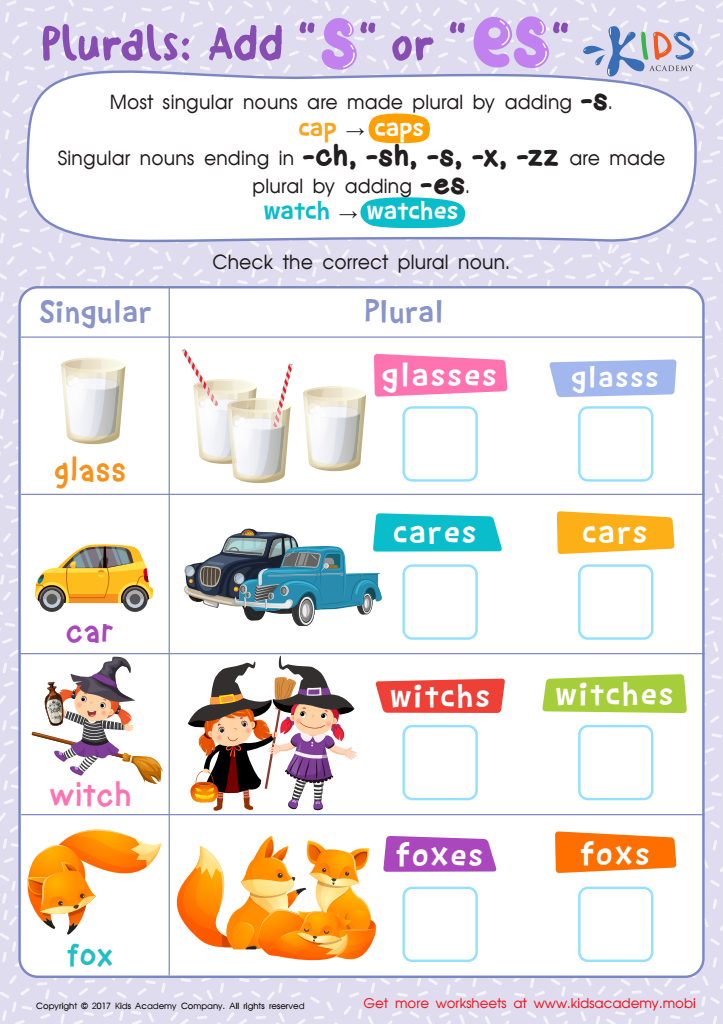
Plurals: "–es" or "–es"? Worksheet
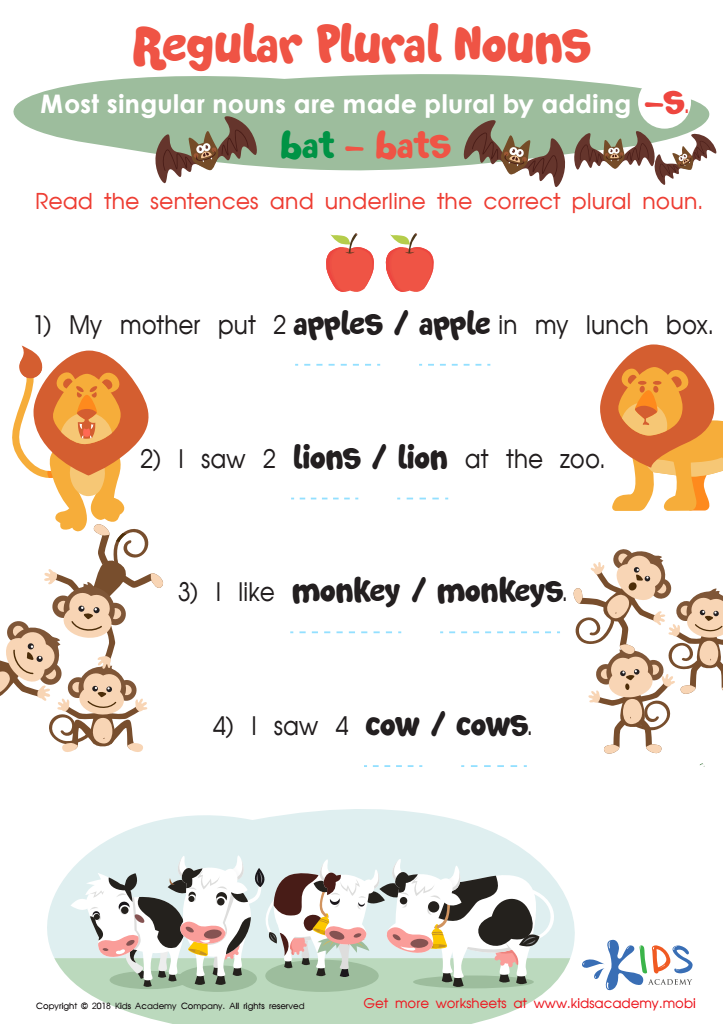
Regular Plural Nouns Worksheet
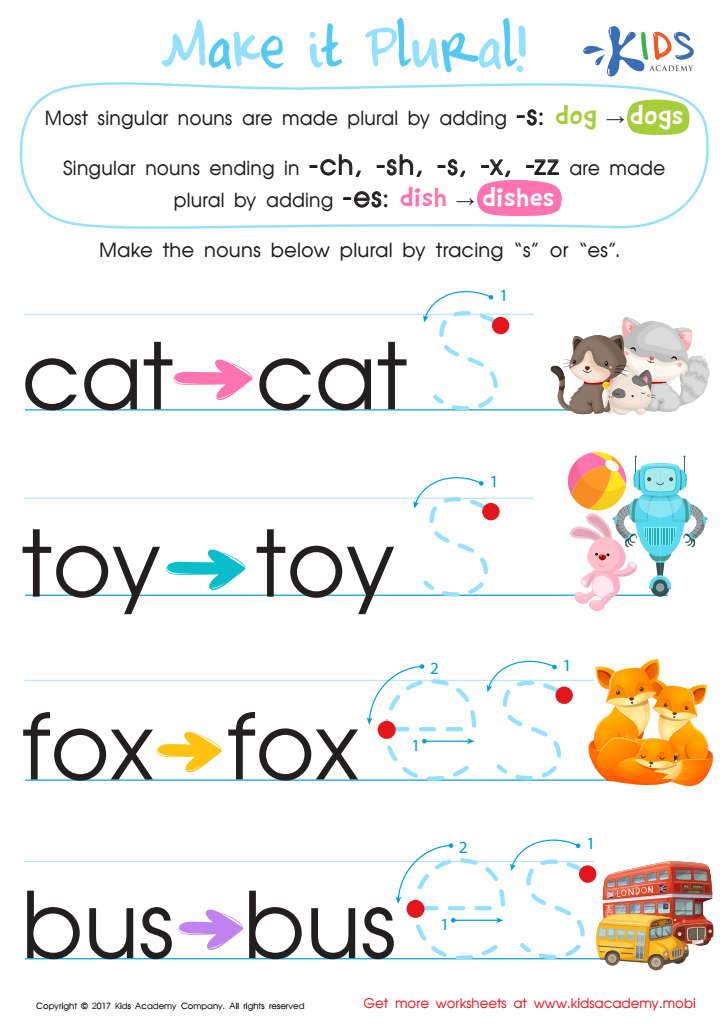
Make it Plural Worksheet







Understanding plurals is fundamental for children aged 3-7, as it's critical to their broader language development and effective communication. At this early stage, children's brains are incredibly malleable, making it the optimal time for learning language rules. Plurals, while seemingly simple, help children grasp the basic concept of quantity and counts, enhancing their vocabulary and comprehension skills.
For teachers and parents, focusing on plurals builds the foundation for more advanced language and grammar. By understanding plurals, children learn to differentiate between singular and multiple objects, which is key for clear and accurate communication. This developmental milestone fosters better reading and writing abilities, assisting children in their academic journey.
Moreover, comprehension of plurals aids in cognitive development, sharpening problem-solving skills and logical thinking. When a child can say "two dogs" instead of "two dog," they're not just learning a language rule; they're understanding an abstract concept that will be pivotal in math and logic later on.
Neglecting this aspect can lead to confusion and communication barriers. Parents and teachers should thus emphasize plurals in everyday talking, reading, and exercises. By incorporating discussions about plurals in daily interactions, they provide a rich, engaging learning environment crucial for the children's future successes both in academic settings and real life.








