Understanding Rhymes Worksheets for Ages 3-7
4 filtered results
-
From - To
Discover our "Understanding Rhymes Worksheets for Ages 3-7," designed to enhance early literacy skills through fun, engaging activities. These worksheets introduce young learners to the concept of rhymes, helping them recognize similarity in sounds and improve phonetic awareness. Each activity is tailored to spark creativity and make learning enjoyable, featuring colorful illustrations and simple exercises that encourage children to think critically about words and sounds. Perfect for home or classroom use, our worksheets provide an effective way to reinforce language skills and foster a love of reading. Explore the joy of rhyming and watch your child's language development flourish!
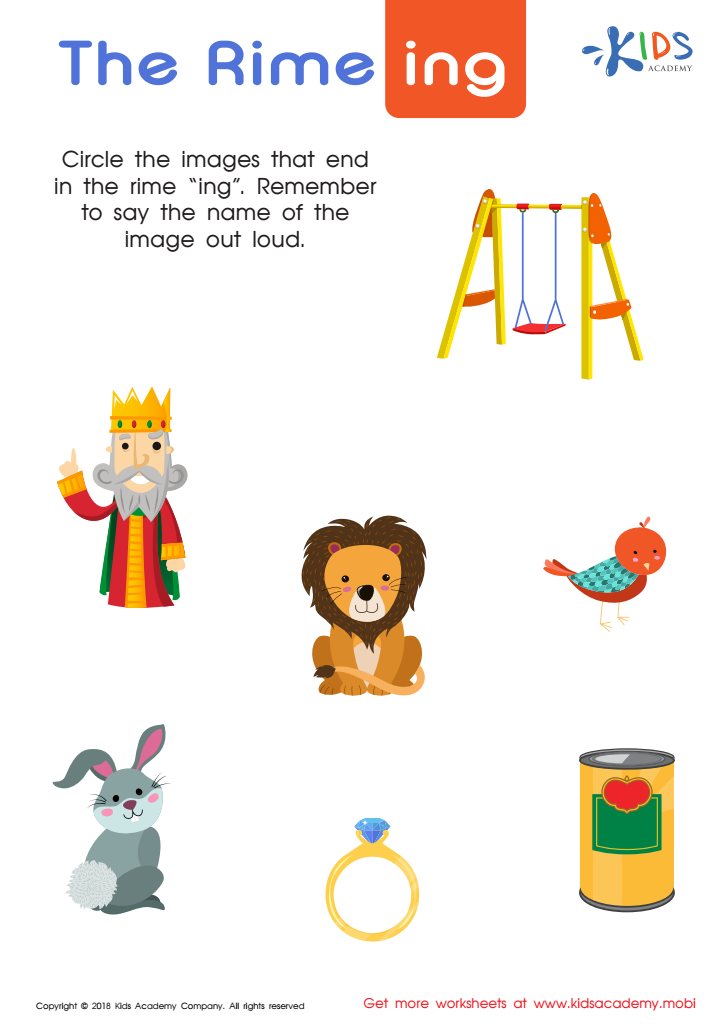
The Rime "ing" Worksheet
 Assign to My Students
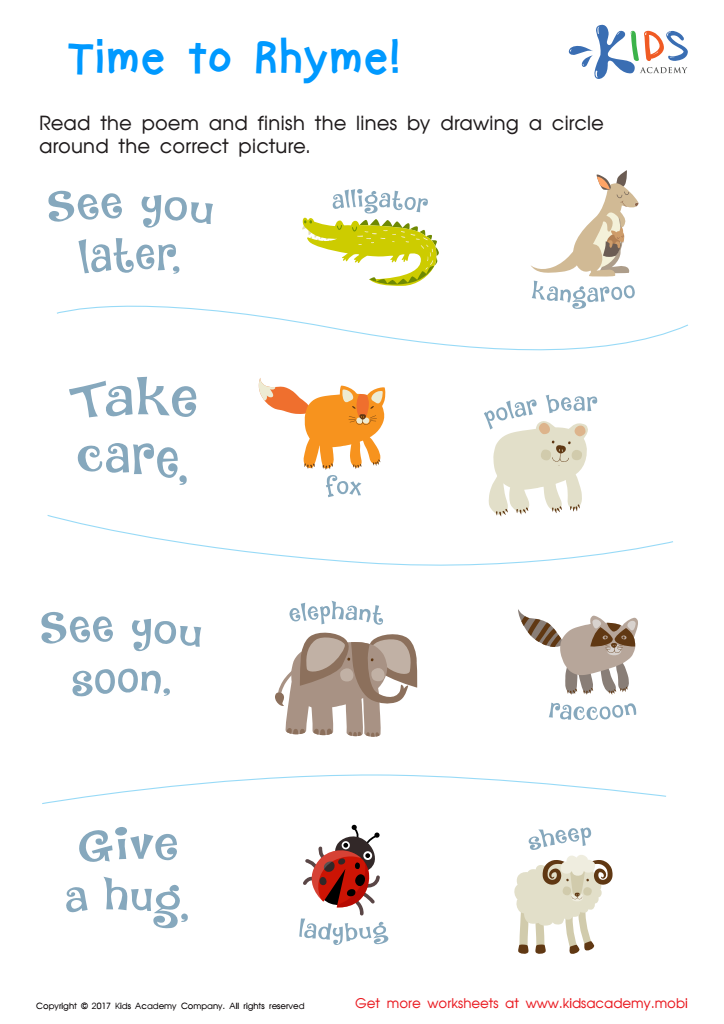
Time to Rhyme Rhyming Worksheet
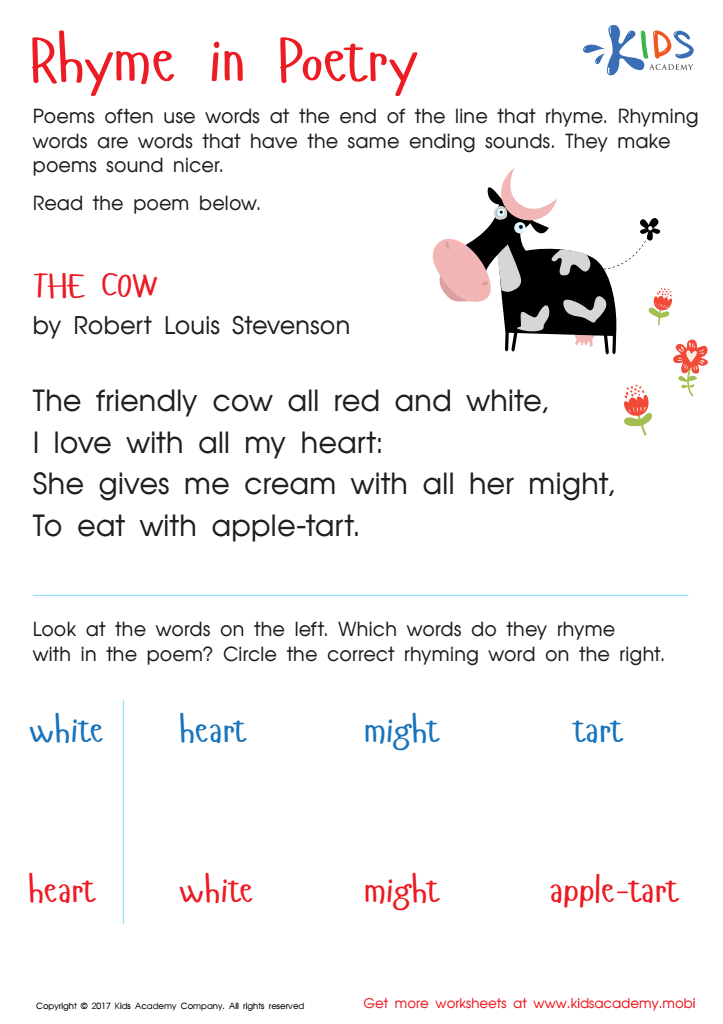
Rhyme In Poetry Worksheet





.jpg)


Understanding rhymes is crucial for children aged 3-7, as it lays the foundation for language development, literacy skills, and overall cognitive growth. Early exposure to rhyming helps kids develop phonemic awareness, which is the ability to recognize and manipulate sounds within words. This skill is essential for reading, as it aids in decoding and spelling.
For parents and teachers, incorporating rhymes into daily routines—through songs, nursery rhymes, and poetry—creates a playful and engaging learning environment. This not only captivates children’s attention but also fosters a love for language and storytelling. Additionally, rhymes enhance memory and recall, making it easier for young learners to retain vocabulary and concepts.
Furthermore, interactions with rhymes encourage social skills and bonding. During group activities, children learn to listen, take turns, and collaborate while exploring sounds and rhythms together. Lastly, recognizing rhymes contributes to emotional development; the fun and rhythmic patterns can elicit joy and make learning seem effortless.
In summary, understanding rhymes for ages 3-7 is essential for promoting literacy development, critical thinking, and social-emotional skills. Parents and teachers should actively support these experiences to nurture well-rounded, confident learners.








