Discover our engaging Visual Interpretation Worksheets designed for children ages 3 to 7! These thoughtfully crafted activities help young learners develop critical observation skills, enhance their ability to interpret images, and foster creativity. With a variety of patterns, colors, and objects, these worksheets promote cognitive growth and support early visual literacy. Ideal for use at home or in the classroom, our fun and interactive materials encourage children to explore and analyze visual elements. Perfect for enhancing fine motor skills and comprehension, our Visual Interpretation Worksheets make learning enjoyable and effective. Start your child’s creative journey today!

Check out this FREE "Visual interpretation" Trial Lesson for age 3-7!

Relationship Between Illustrations and the Story

Favorites
With answer key
Interactive
  • 3-7
  • Visual interpretation
Bugs Tally Worksheet

Bugs Tally Worksheet

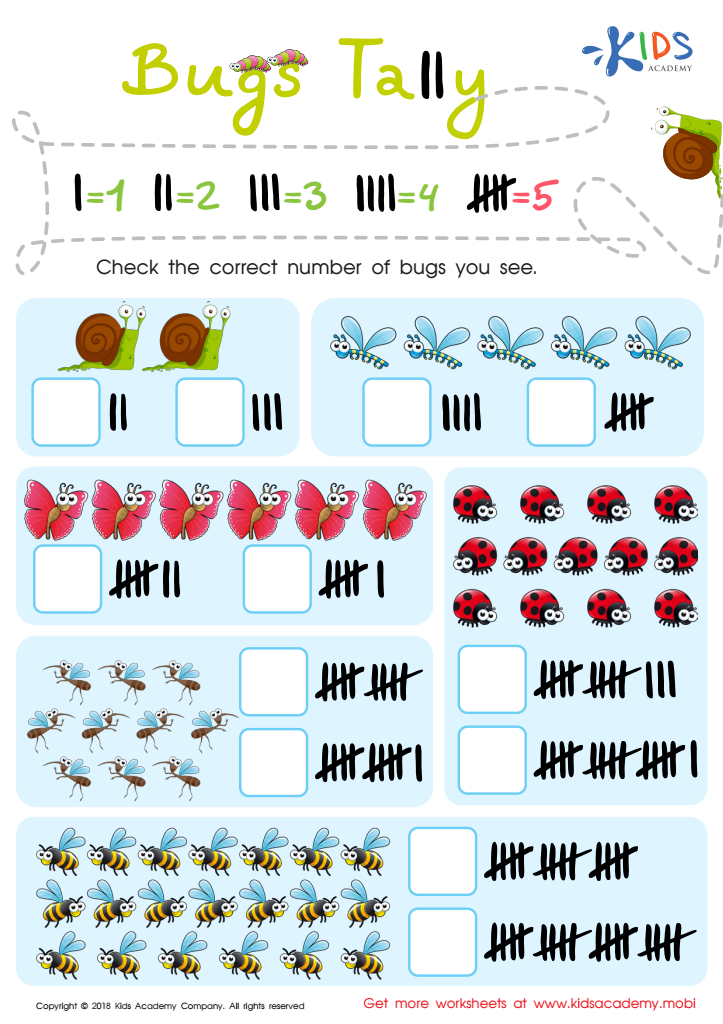
This fun worksheet uses friendly bugs to help young mathematicians learn numbers and tally marks. They'll gain real-world skills to help with adding, subtracting and counting. Representations will solidify number reasoning, aiding with game playing and more.
Bugs Tally Worksheet
Worksheet
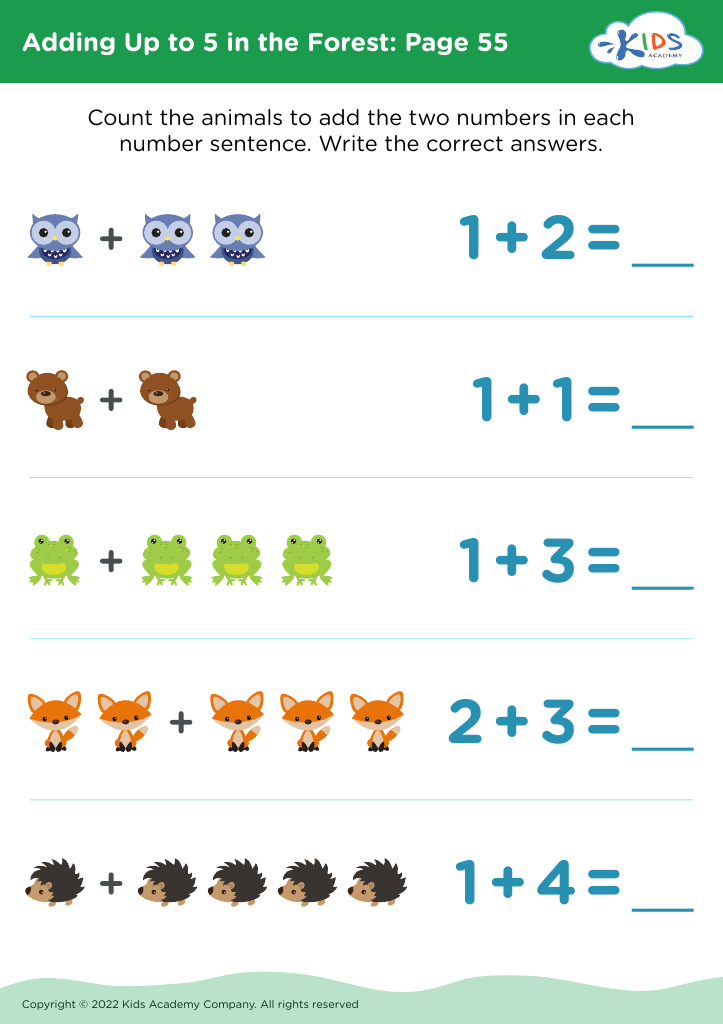
Adding Up to 5 in the Forest: Page 55
Worksheet
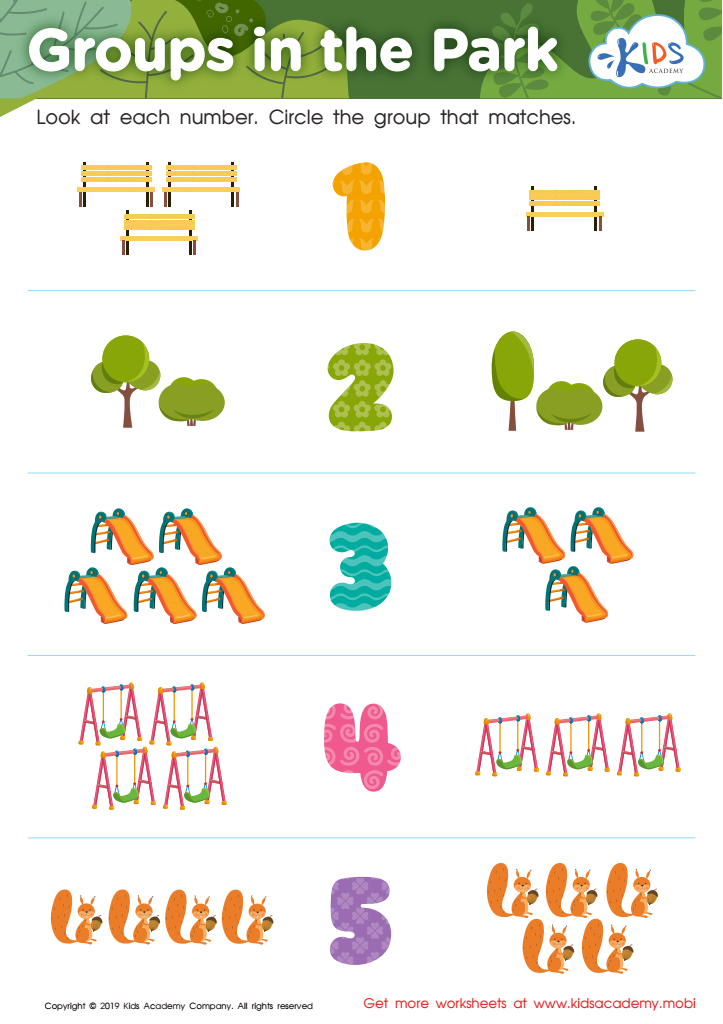
Groups in the Park Worksheet

Groups in the Park Worksheet

Take your kids to the park and let them enjoy the freedom to play! Ask them what they love doing most and study a picture together - name items and count objects in the sets, then circle the correct one. It's a fun way for your kids to learn.
Groups in the Park Worksheet
Worksheet
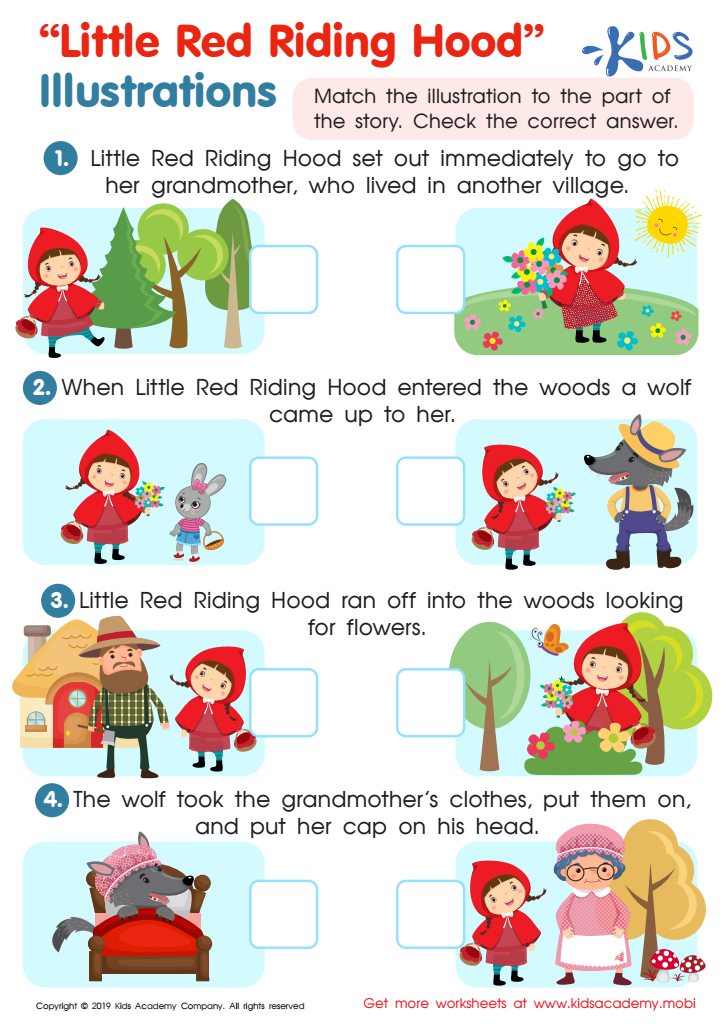
Little Red Riding Hood: Illustrations Worksheet
Little Red Riding Hood: Illustrations Worksheet

Comprehension is improved by having young readers recall and retell stories. This worksheet uses colorful illustrations of the fairytale Little Red Riding Hood. Children use their comprehension skills and strategy to match illustrations to the story parts, check off the appropriate boxes and use the pictures as clues.
Little Red Riding Hood: Illustrations Worksheet
Worksheet
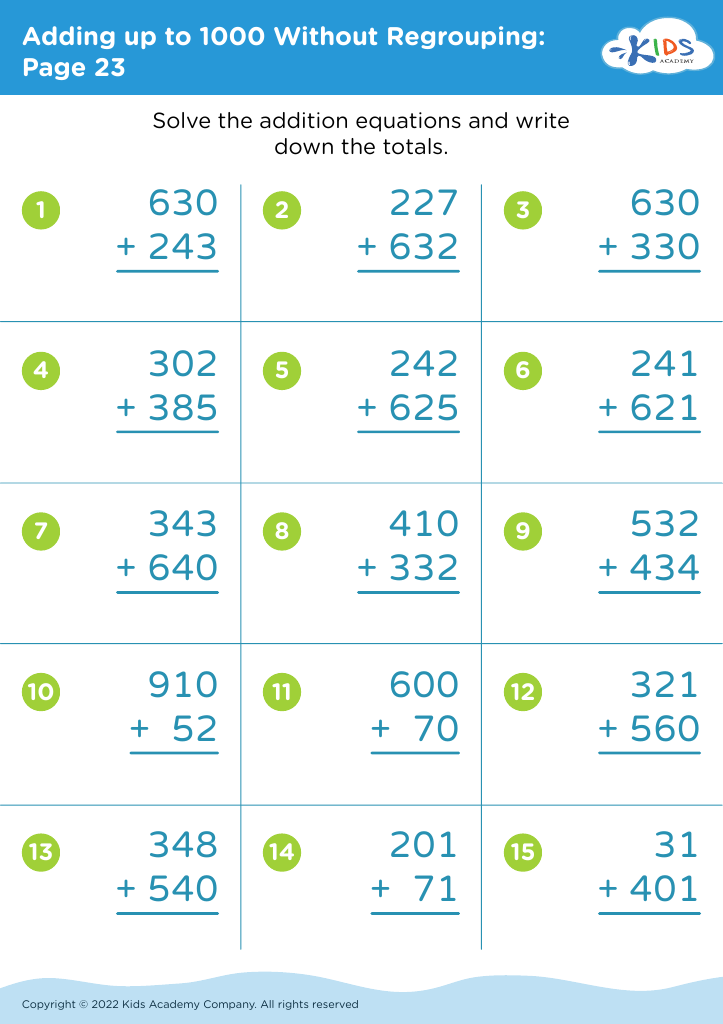
Adding up to 1000 Without Regrouping: Page 23
Worksheet
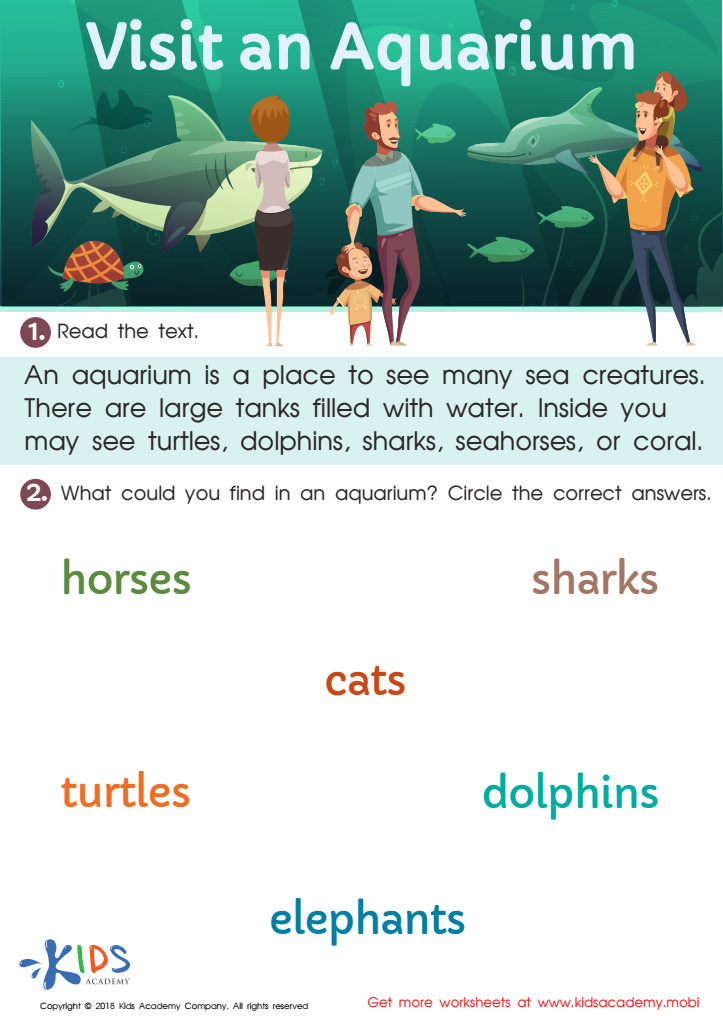
Visit an Aquarium Worksheet
Visit an Aquarium Worksheet

Have your kids ever been to an aquarium? It's a great place to see a variety of sea creatures, like turtles, dolphins, sharks and fish. If they're fascinated by sea life, this worksheet is perfect! Help them circle the aquarium animals among the words in the picture.
Visit an Aquarium Worksheet
Worksheet
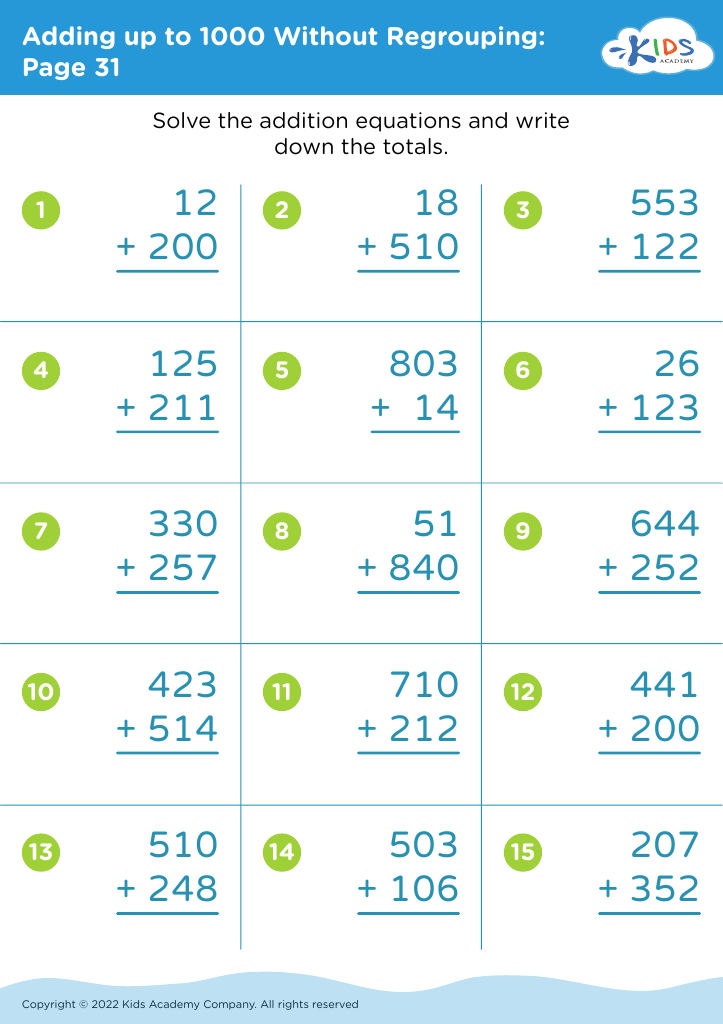
Adding up to 1000 Without Regrouping: Page 31
Worksheet
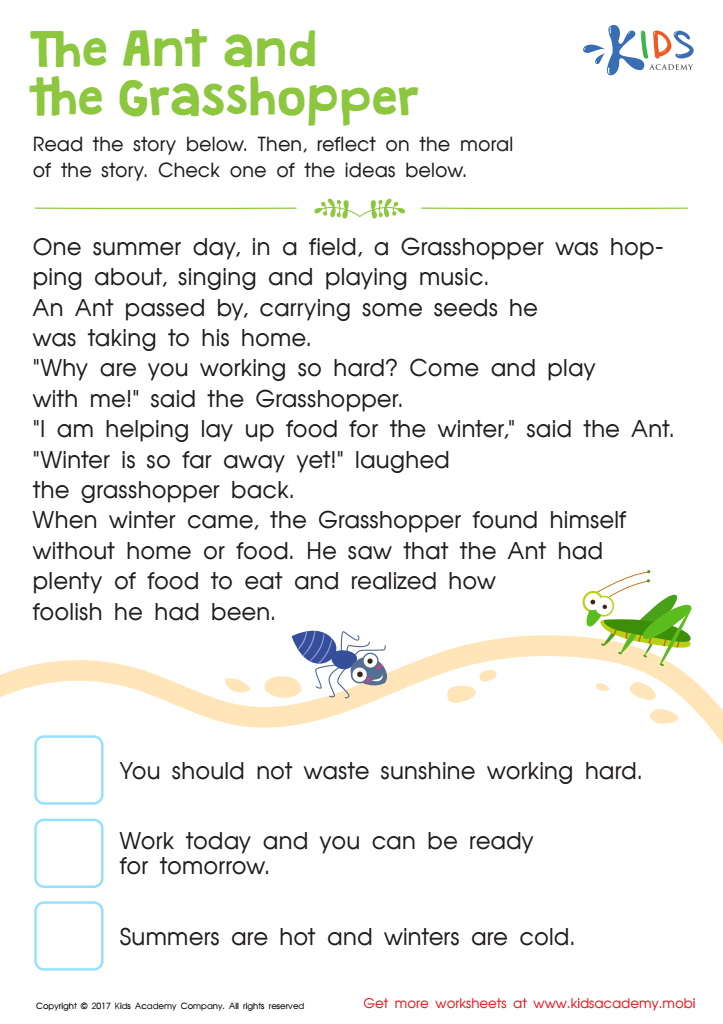
The Ant and the Grasshopper worksheet PDF

The Ant and The Grasshopper Printable
Aesop's fables have clear messages, which make them memorable and loved by children and adults. Use Kids Academy's ant and grasshopper worksheet to help your child reflect on stories and discover the life lesson.
The Ant and The Grasshopper Printable
Worksheet
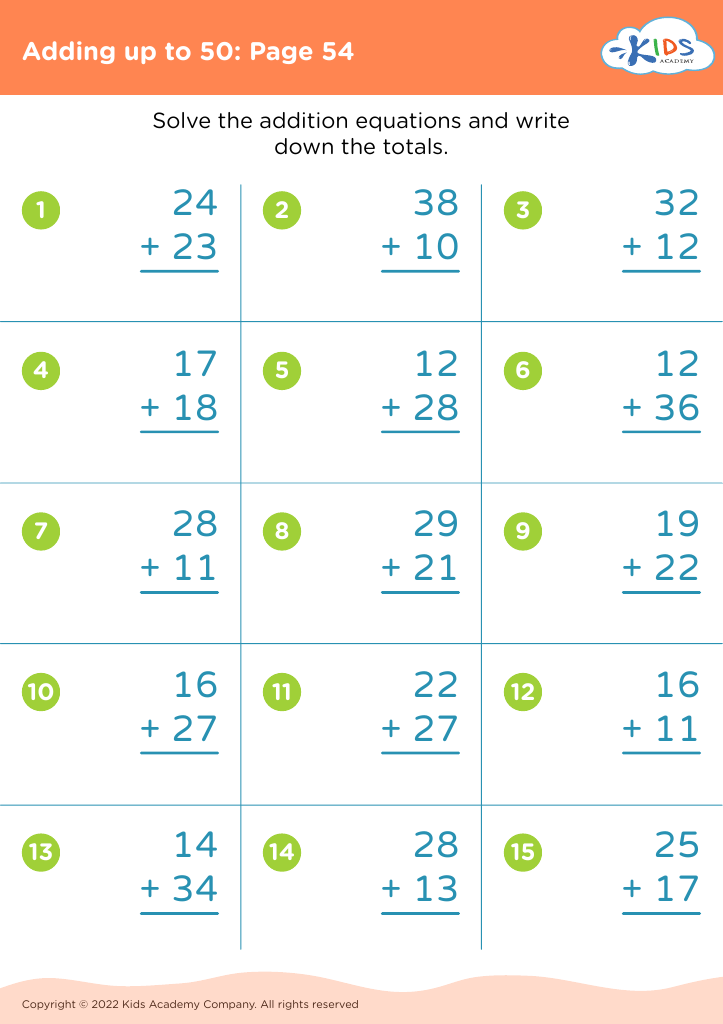
Adding up to 50: Page 54

Adding up to 50: Page 54

Adding up to 50: Page 54
Worksheet
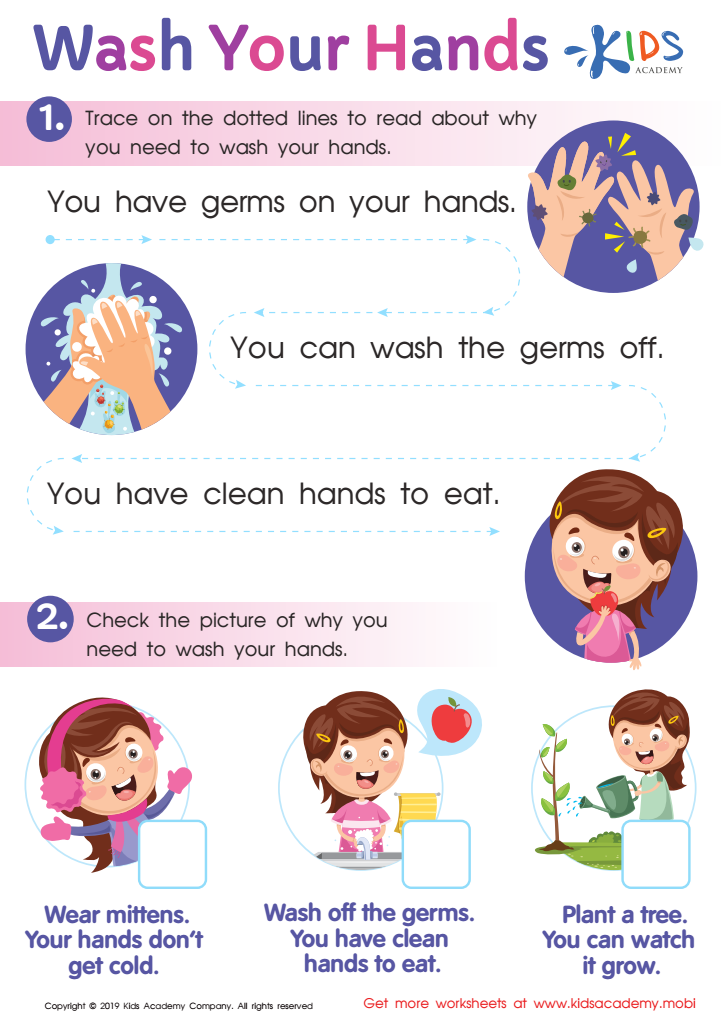
Wash Your Hands Worksheet

Wash Your Hands Worksheet

Kids learn best when they understand why they need to do something. This free worksheet uses traceable lines and pictures to teach them about germs and why washing hands is important. The child follows a left-to-right sequence and must check the correct picture to show they understand.
Wash Your Hands Worksheet
Worksheet
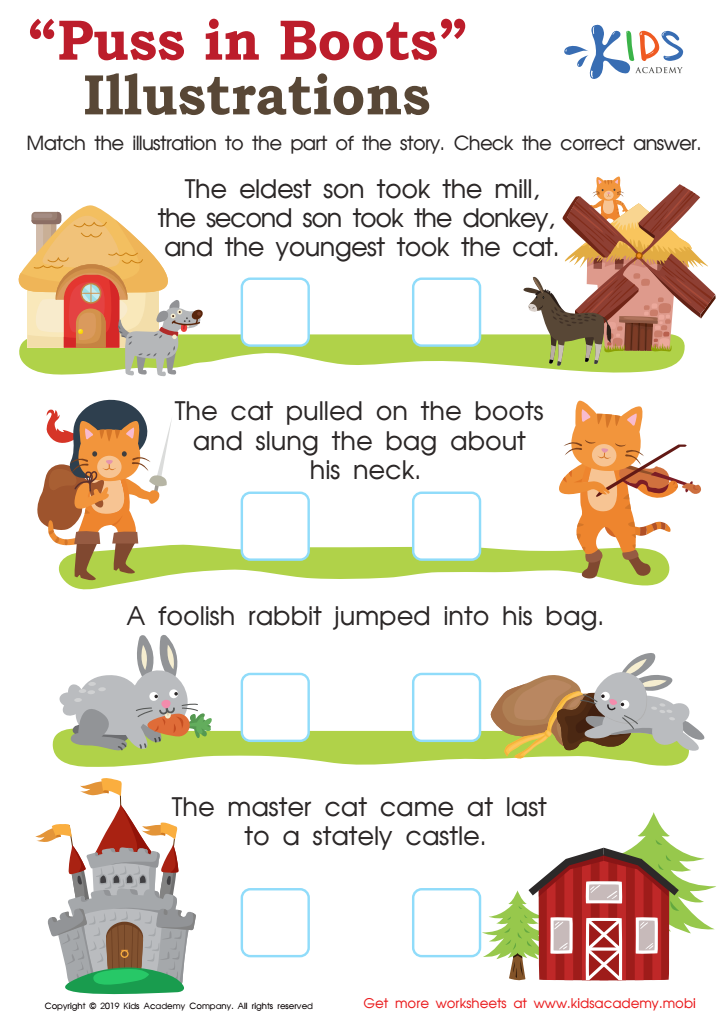
Puss in Boots Illustrations Worksheet
Puss in Boots Illustrations Worksheet

This Puss In Boots Illustrations worksheet is a great way to help kids learn about retelling stories. They'll match images to different parts of the story and check off the correct answer. As they recall events and put them in sequence they'll enjoy this fun and creative activity.
Puss in Boots Illustrations Worksheet
Worksheet
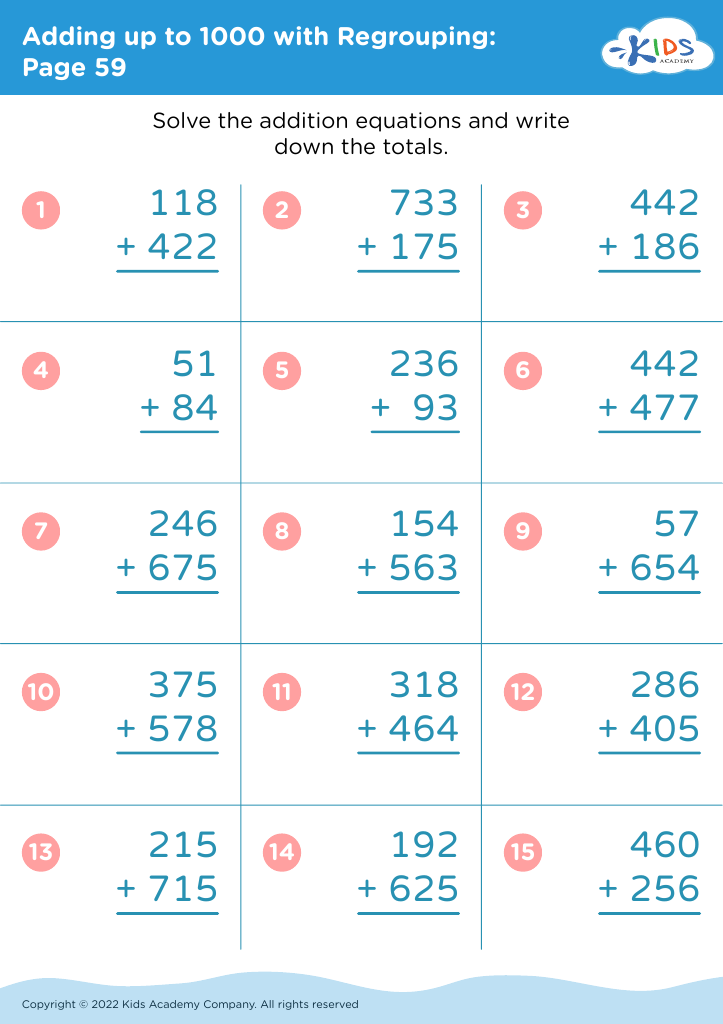
Adding up to 1000 with Regrouping: Page 59
Worksheet
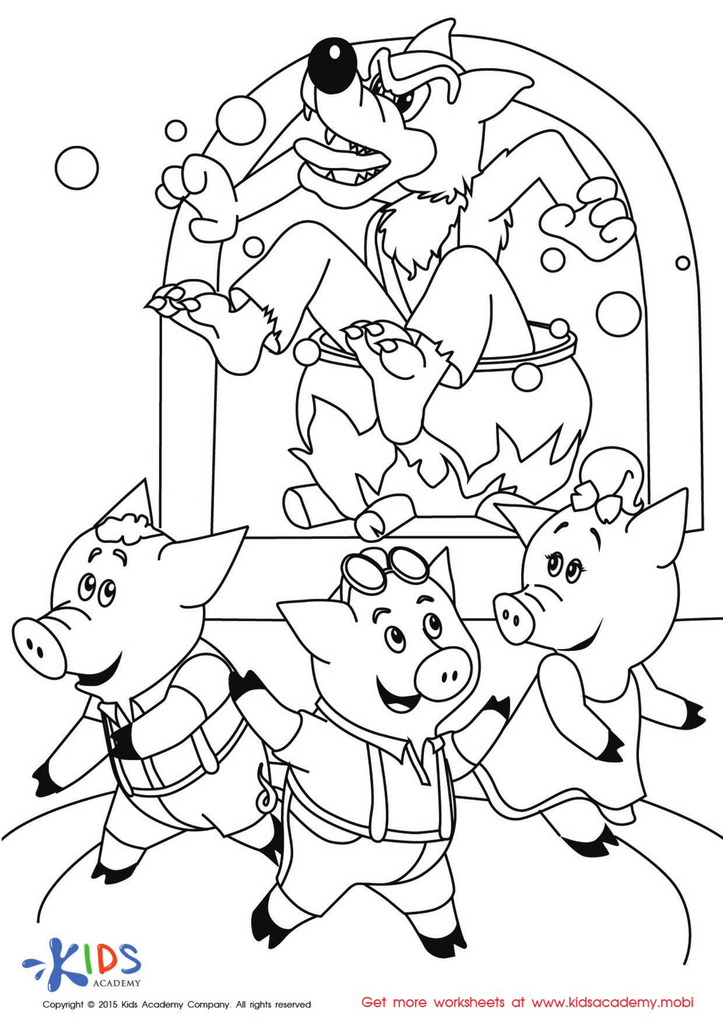
The Three Little Pigs and The Big Bad Wolf

The Three Little Pigs and The Big Bad Wolf Printable
The Big Bad Wolf has learned his lesson: never bully little pigs! This free printable worksheet shows him falling into boiling water, while the three little pigs are safe and happy. Let your kids bring this scene to life by coloring it in whatever way they like. When they're done, ask them if they think the Big Bad Wolf will ever return.
The Three Little Pigs and The Big Bad Wolf Printable

Worksheet
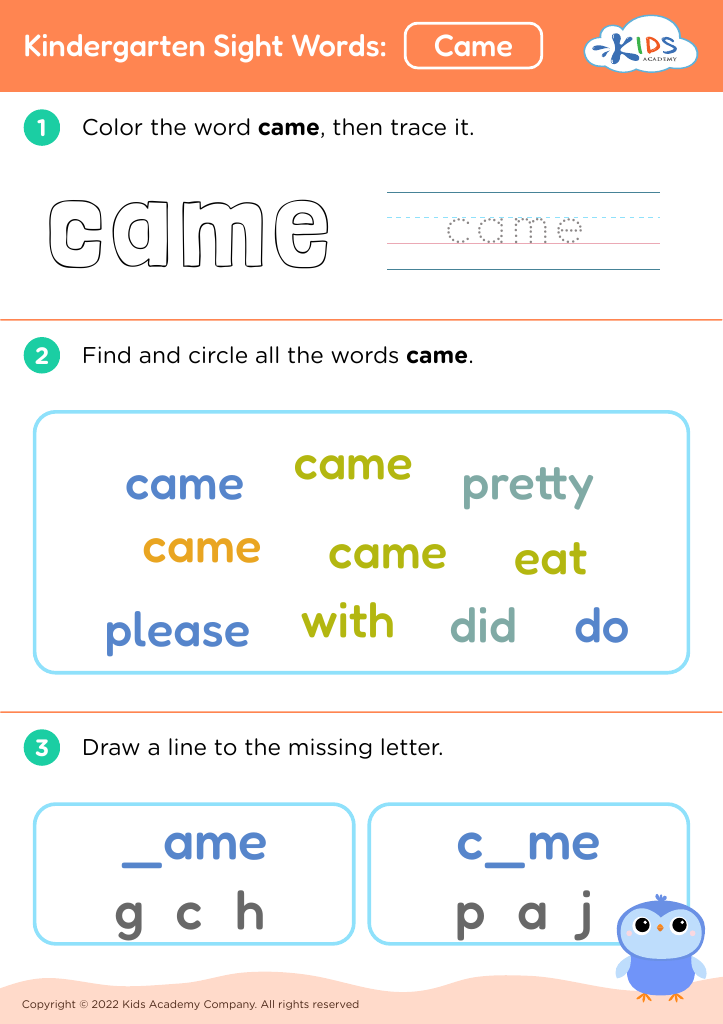
Kindergarten Sight Words: Came

Kindergarten Sight Words: Came

Kindergarten Sight Words: Came
Worksheet


Visual interpretation is a crucial skill for children ages 3-7, as it lays the foundation for effective learning and communication. During these formative years, children engage with a multitude of visual materials—from picture books to educational posters—helping them make sense of the world around them. By nurturing visual interpretation skills, parents and teachers enhance children's ability to decode visuals, which is essential for literacy acquisition and overall cognitive development.

Understanding visuals also fosters creativity, critical thinking, and problem-solving skills. Children learn to interpret colors, shapes, and symbols, all of which contribute to their ability to express ideas and emotions. Furthermore, strong visual interpretation skills support social-emotional development by enabling children to recognize and respond to various facial expressions and body languages, enhancing their empathy and interpersonal relationships.

Additionally, as many modern educational methods incorporate visual aids, equipping children with these skills ensures they can engage fully in their learning environments. By prioritizing visual interpretation, parents and teachers endorse a more holistic educational approach, ultimately nurturing well-rounded, engaged, and forward-thinking individuals ready to tackle future challenges. Therefore, fostering these skills is not just beneficial but vital for young learners' success in and out of the classroom.