
Visual interpretation skills Worksheets for Ages 3-7
3 filtered results
Difficulty Level
Grade
Age
-
From - To
Subject
Activity
Standards
Unlock the potential of young minds with our Visual Interpretation Skills Worksheets designed specifically for ages 3-7. At Kids Academy, we offer engaging and educational worksheets that make learning fun and interactive. Our expertly crafted materials help children develop crucial visual interpretation abilities through vivid images and stimulating activities. These worksheets enhance skills such as pattern recognition, spatial awareness, and critical thinking. Perfect for at-home learning or classroom use, our resources support children's cognitive growth while igniting their imagination. Visit Kids Academy and explore our diverse selection of Visual Interpretation Skills Worksheets to give your child the best start in their educational journey.
Favorites
With answer key
Interactive
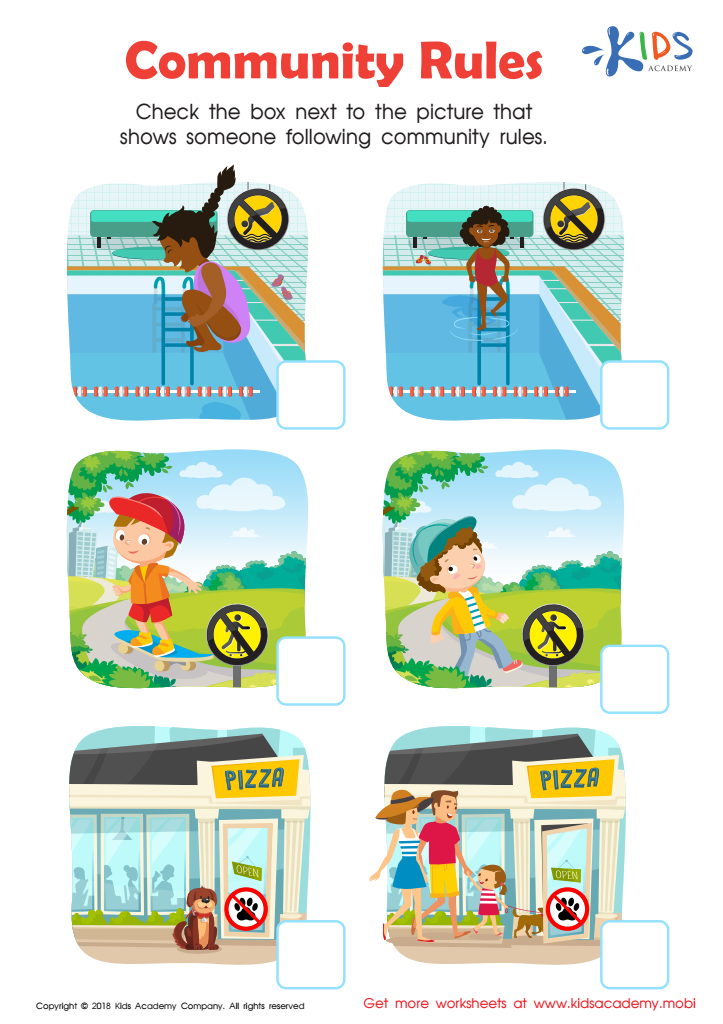
Community Rules Worksheet
Communities are where different people live, work and worship. They're made up of homes, schools, places of worship, businesses and other buildings. To create a healthy, functioning community, it's important for members to follow the rules and guidelines. Use this printout to teach kids about community rules. Ask them to check the box next to the picture that shows someone following them.
 Assign to My Students
Community Rules Worksheet
Worksheet
Join Kids Academy for Free
Who is primarily going to use this learning content?







Visual interpretation skills are crucial for young children, aged 3 to 7, as they significantly contribute to their cognitive, emotional, and social development. These skills help children make sense of the world around them by enabling them to decode and comprehend visual information effectively. For instance, interpreting shapes, colors, and patterns is foundational to early literacy and numeracy. Recognizing letters, numbers, and geometric forms forms the basis for reading and math development, essential skills for academic success.
Furthermore, visual interpretation enhances children’s critical thinking and problem-solving abilities. When engaging with puzzles, picture books, and educational games, children learn to analyze visual stimuli, make connections, and draw conclusions. This analytical thinking is important not only in academic settings but also in everyday decision-making.
Emotionally, visual interpretation skills aid children in understanding facial expressions and body language, fostering empathy and better social interactions. Being able to read these non-verbal cues makes it easier for children to develop strong relationships with peers and adults.
Therefore, parents and teachers should actively nurture and support visual interpretation skills through activities like reading picture books, playing interactive games, and encouraging exploratory play with varied materials. These experiences not only make learning enjoyable but lay a solid groundwork for lifelong cognitive and social growth.








