Reading comprehension 2D Shapes Worksheets for Ages 3-7
4 filtered results
-
From - To
Introduce young learners to the world of geometry with our engaging "Reading Comprehension 2D Shapes Worksheets" designed for ages 3-7. These interactive worksheets combine fun stories with shape recognition, enhancing both reading skills and geometric understanding. Children will confidently identify circles, squares, triangles, and more while developing their reading comprehension. Perfect for early grade classrooms and homeschooling, these printable activities provide a balanced mix of education and entertainment. Empower your child’s learning journey with hands-on exercises that build a solid foundation in both literacy and math. Discover a fun and educational approach to mastering 2D shapes today!
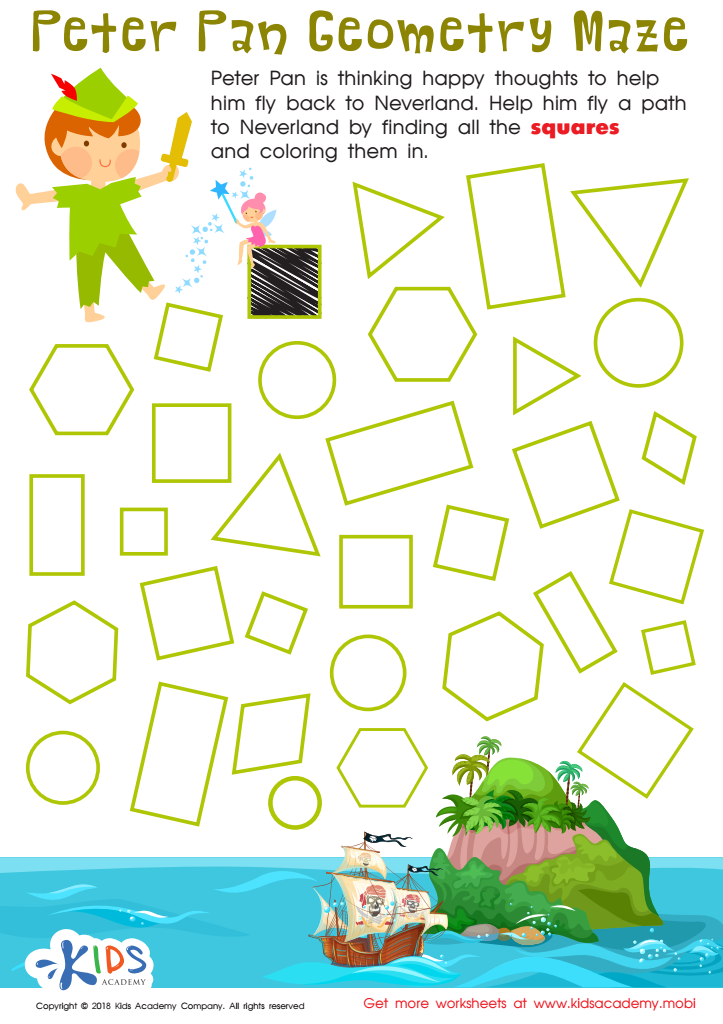
Peter Pan Worksheet
 Assign to My Students

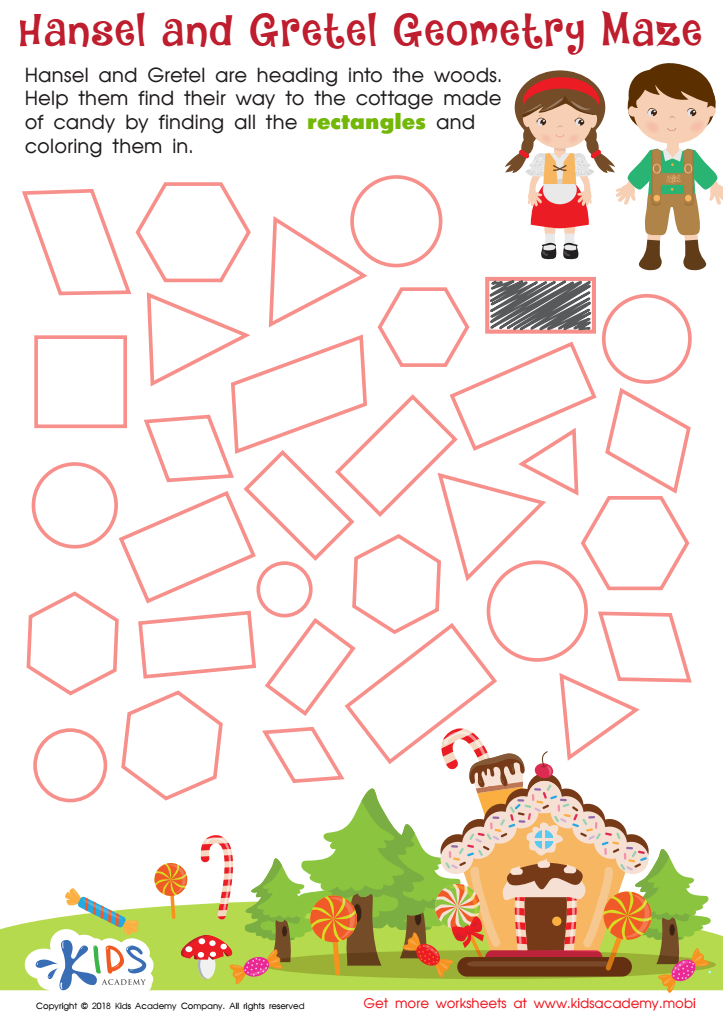
Hansel and Gretel Geometry Maze Worksheet
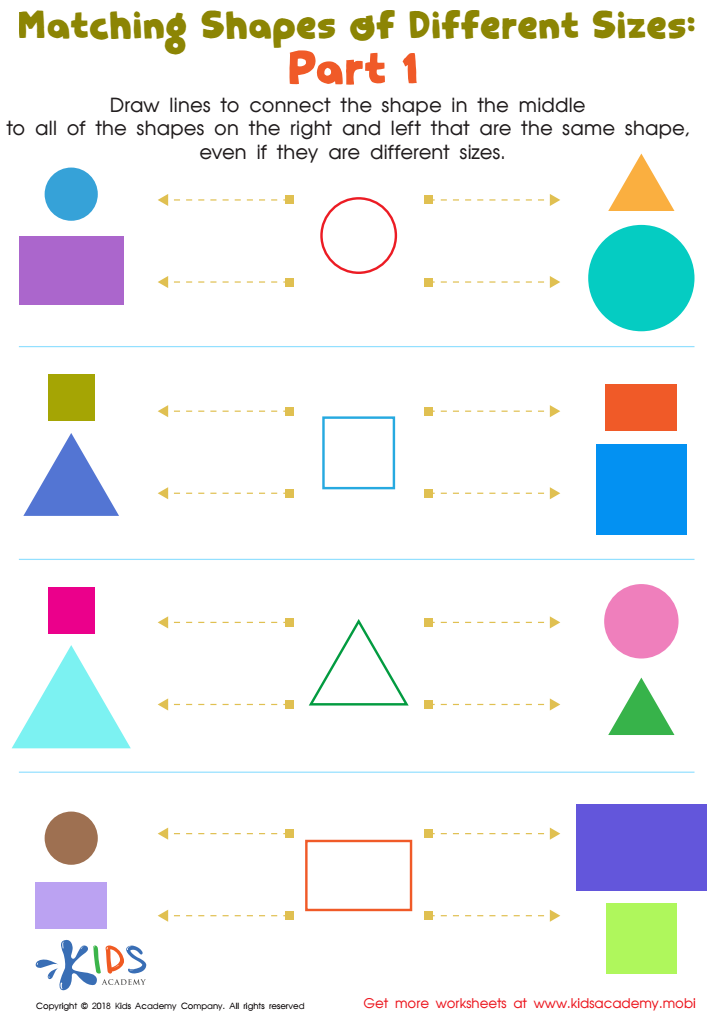
Geometry: part 1 Worksheet
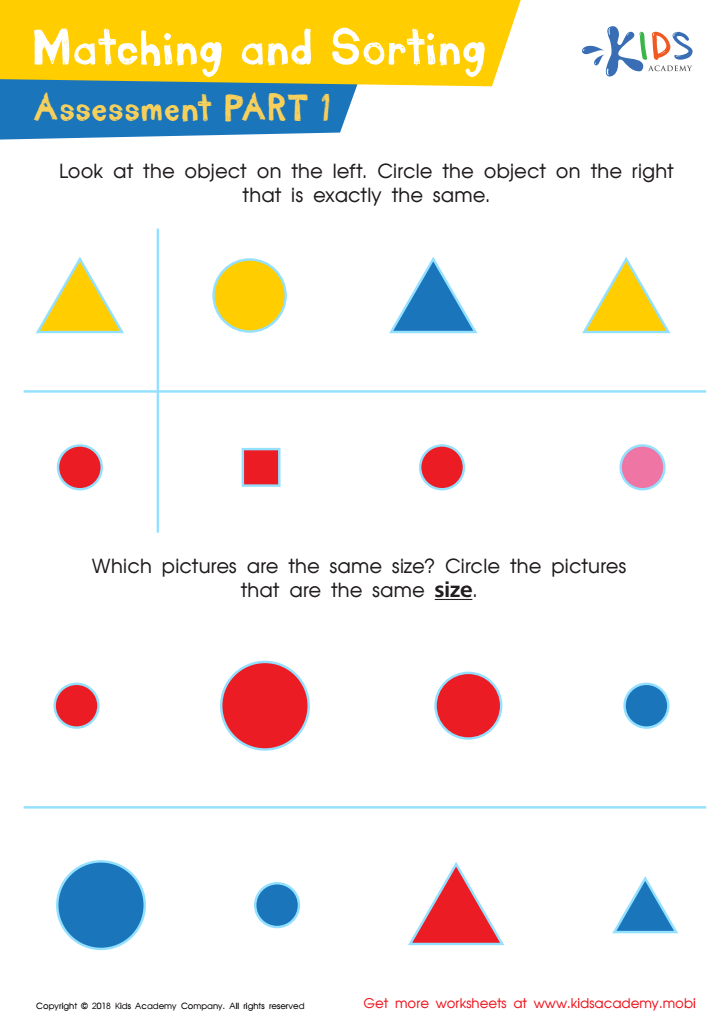
Matching and Sorting for Kindergarten: Assessment 1 Worksheet








Reading comprehension and familiarity with 2D shapes are crucial building blocks for children aged 3-7, impacting both academic and cognitive development. Comprehension skills, developed through reading, enable children to understand and process information, laying the foundation for all future learning. By grasping the meaning behind stories or instructions, children enhance their vocabulary, improve their ability to follow directions, and cultivate critical thinking skills.
Introducing 2D shapes to young learners bolsters their recognition and classification abilities. Shapes serve as one of the first ways children make sense of the world, observing how everyday objects form patterns and structures. Understanding shapes such as squares, triangles, and circles aids in the development of spatial awareness and geometry skills, essential for problem-solving and logic. Early exposure to these concepts also has long-term benefits in subjects like math, science, and art.
Furthermore, integrating reading comprehension with shape recognition can reinforce both sets of skills through engaging, interactive activities. Stories involving different shapes can spark curiosity, bridging literacy and numeracy in a fun and relatable manner. Therefore, parents and teachers should emphasize these combined learning experiences, ensuring children build strong, multifaceted cognitive foundations that will support their future academic journey.