Filters

20 filtered results

Clear all filters
Favorites
With answer key
Interactive

20 filtered results

Difficulty Level

Grade


Discover our "Adding at the Zoo" worksheets, designed for children aged 3-7, to help them master addition skills in a fun, engaging way! Each worksheet features vibrant zoo-themed illustrations, interactive activities, and relatable scenarios to make learning addition enjoyable and relatable. Perfect for early learners, these printable sheets target number recognition, counting, and simple addition problems tailored to youngsters' developmental stages. Foster your child's mathematical growth while igniting their curiosity about animals through these educational and entertaining resources. Make math an adventure with "Adding at the Zoo" today!
Check out this FREE Trial Lesson on Adding at the Zoo for age 3-7!

Z

Favorites
With answer key
Interactive
  • 3-7
  • Addition skills
  • Adding at the Zoo
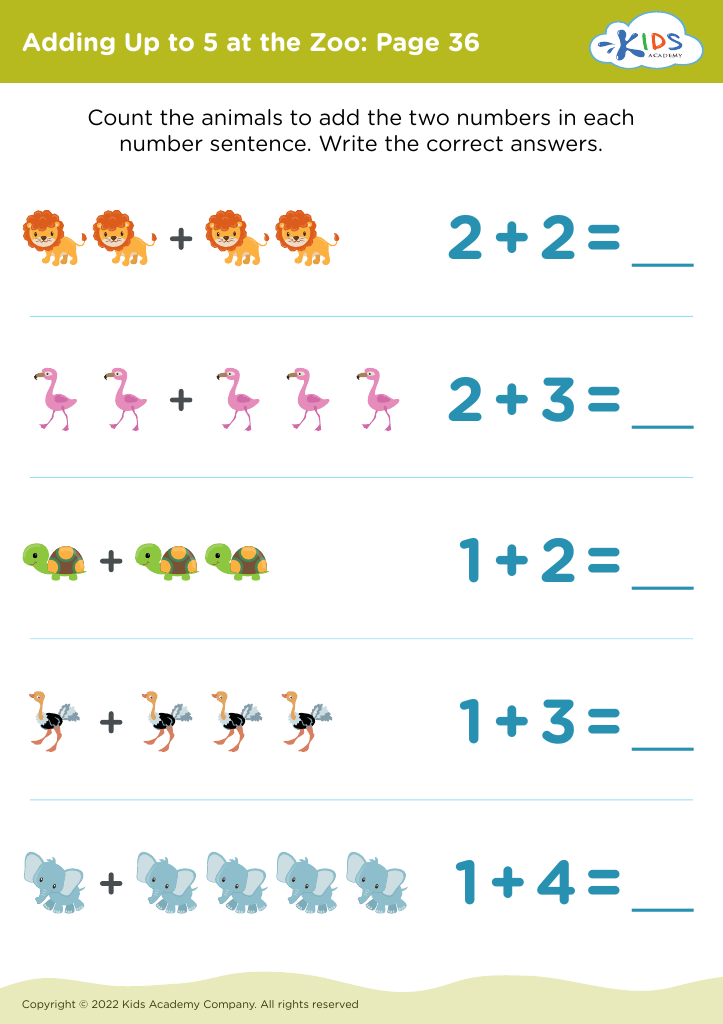
Adding Up to 5 at the Zoo: Page 36
Worksheet
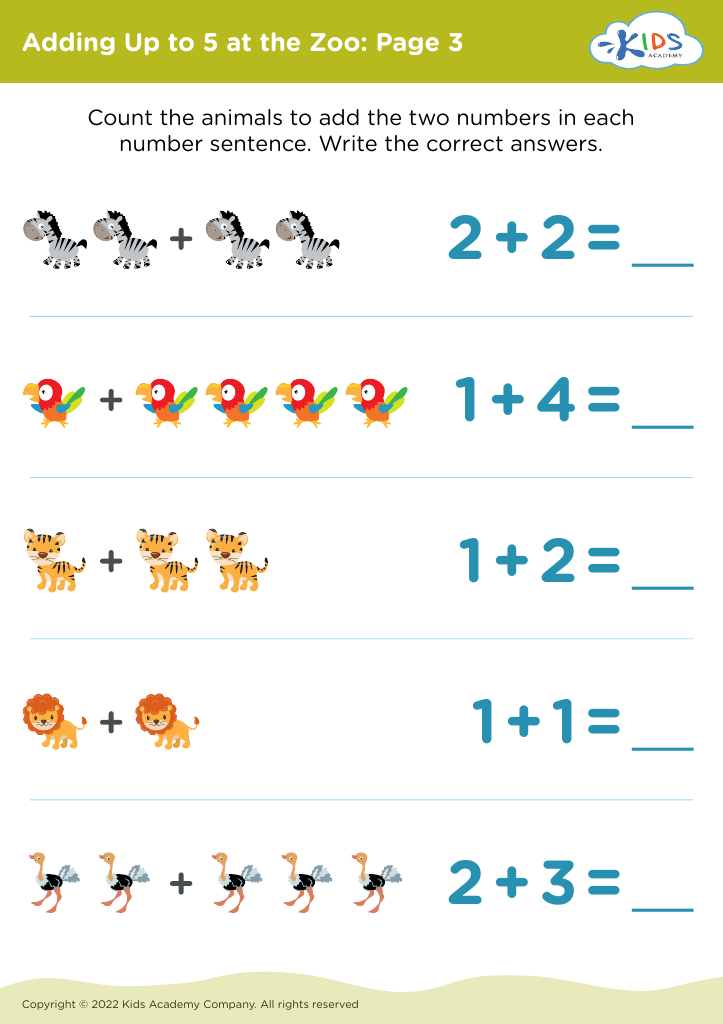
Adding Up to 5 at the Zoo: Page 3

Adding Up to 5 at the Zoo: Page 3

Adding Up to 5 at the Zoo: Page 3
Worksheet
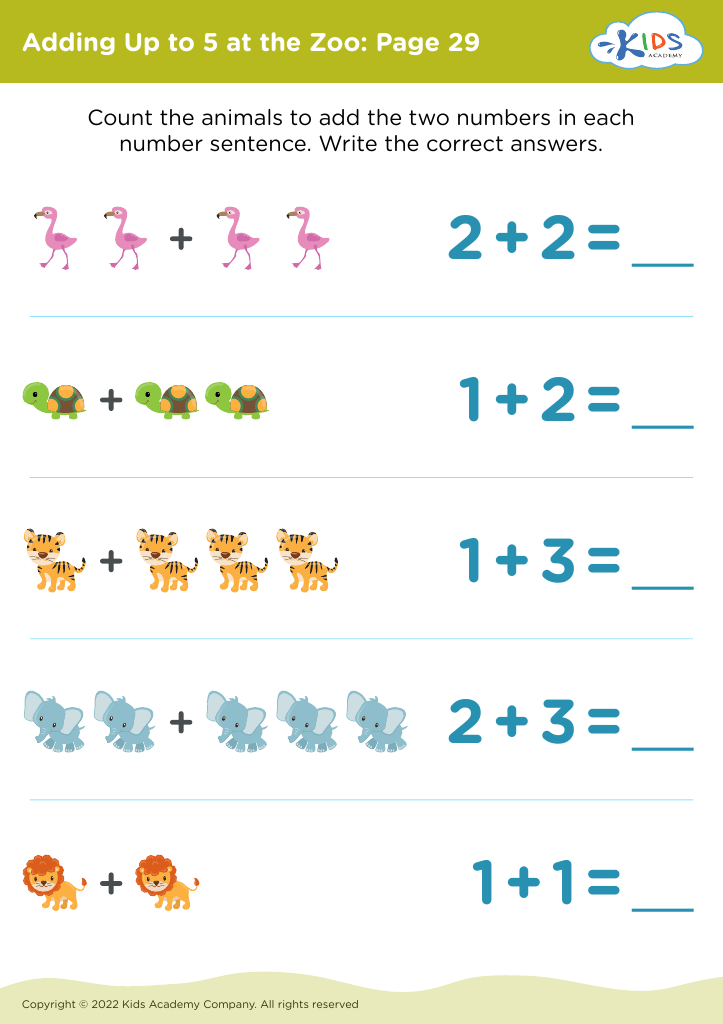
Adding Up to 5 at the Zoo: Page 29
Worksheet
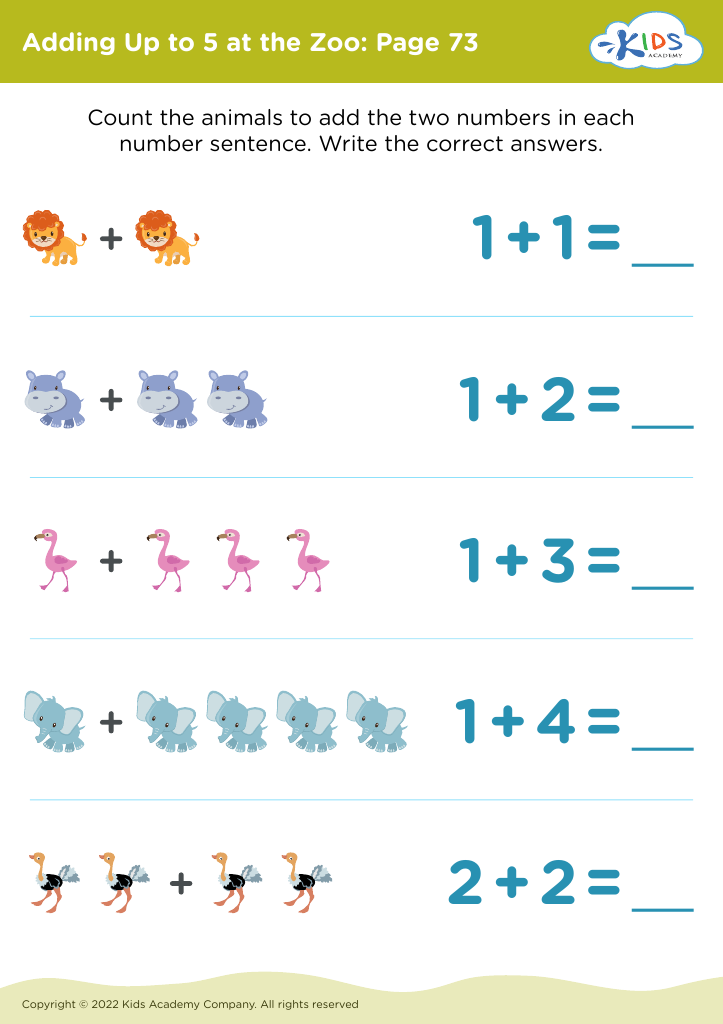
Adding Up to 5 at the Zoo: Page 73
Worksheet
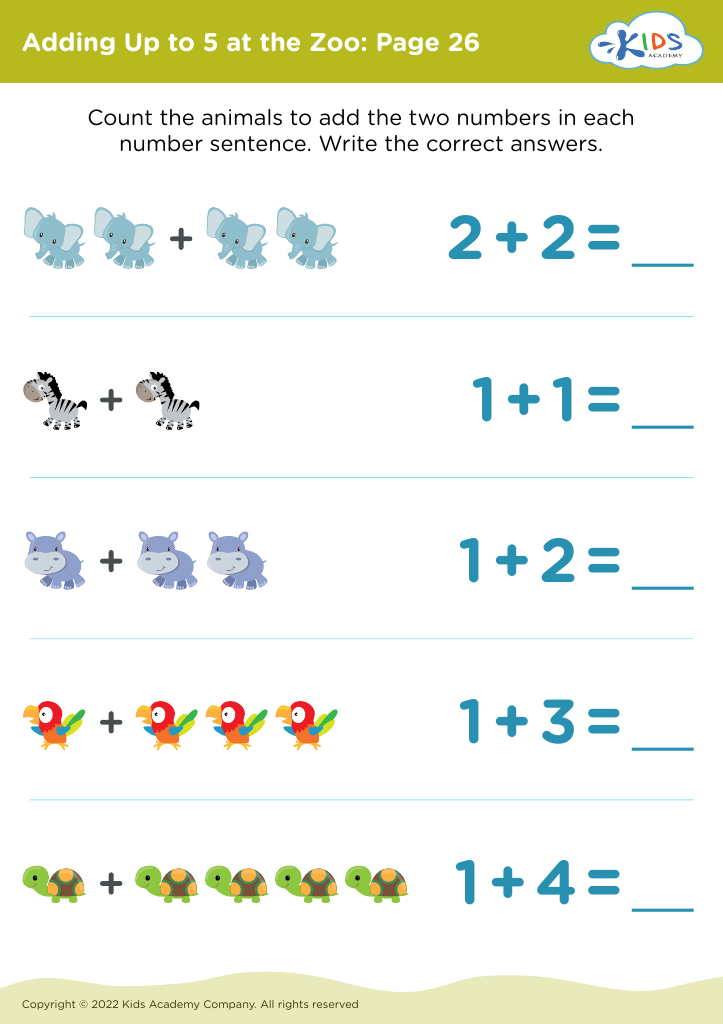
Adding Up to 5 at the Zoo: Page 26
Worksheet
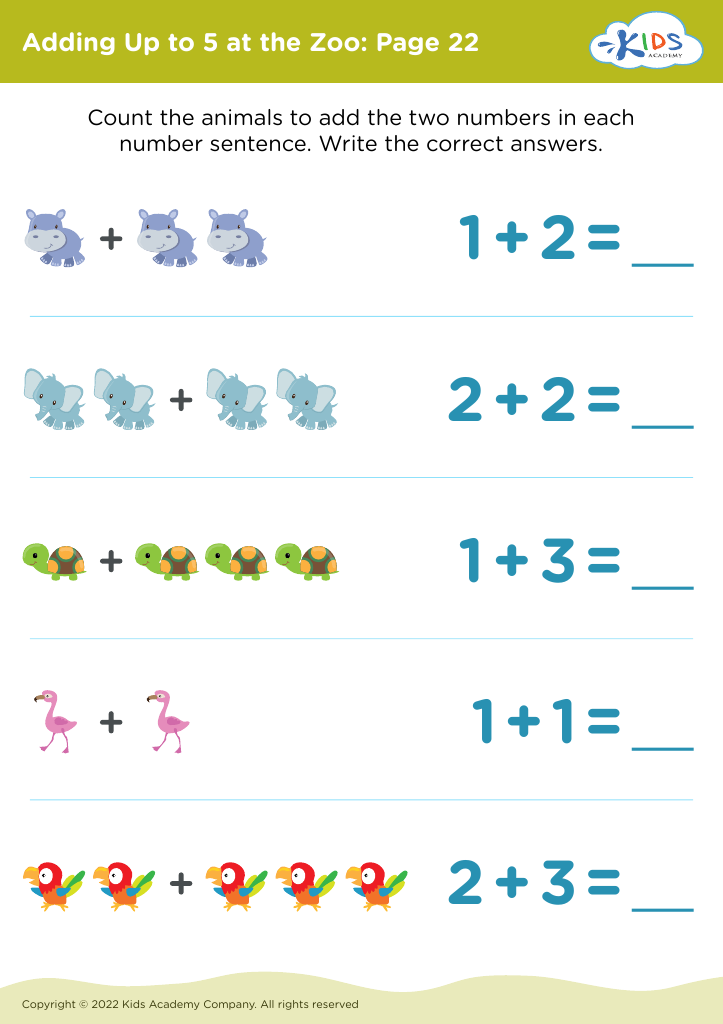
Adding Up to 5 at the Zoo: Page 22
Worksheet
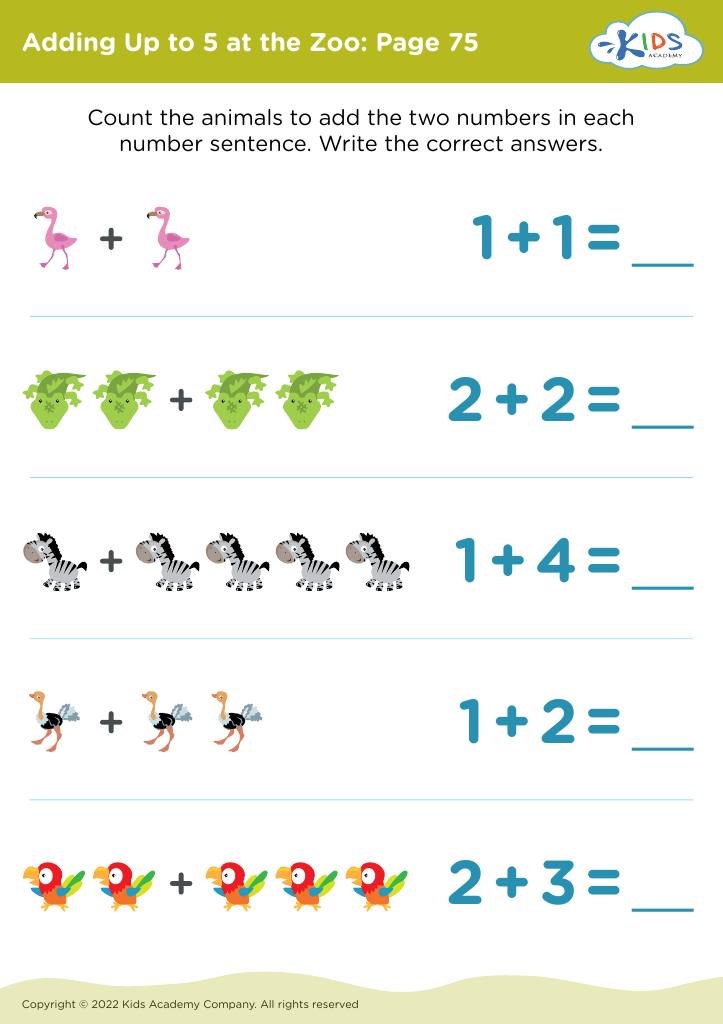
Adding Up to 5 at the Zoo: Page 75
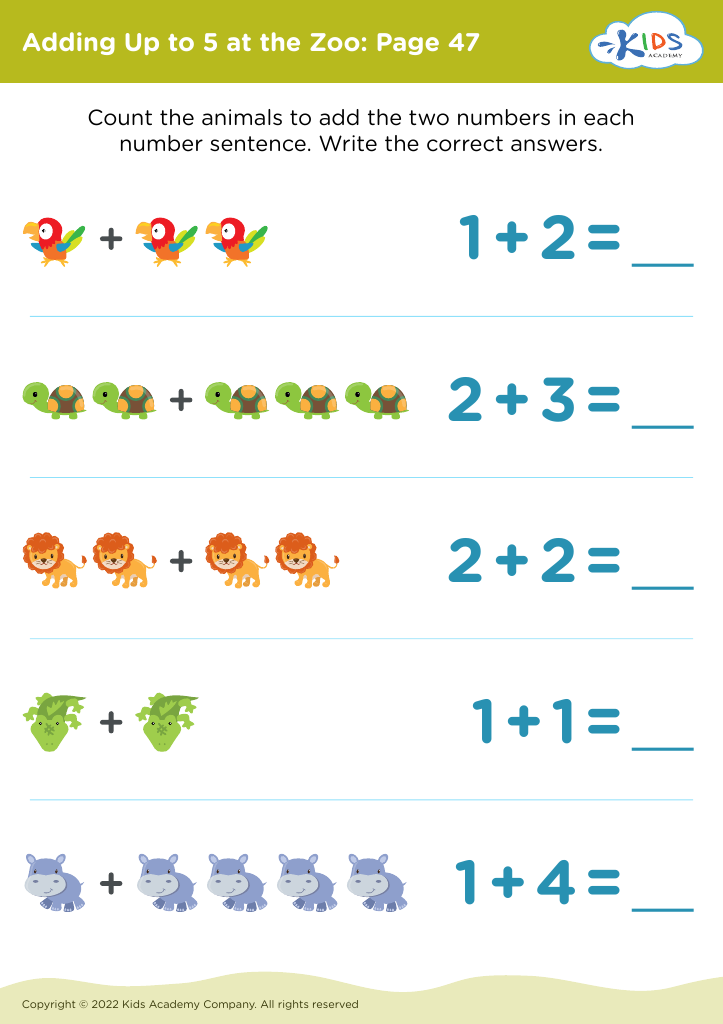
Worksheet
Adding Up to 5 at the Zoo: Page 47
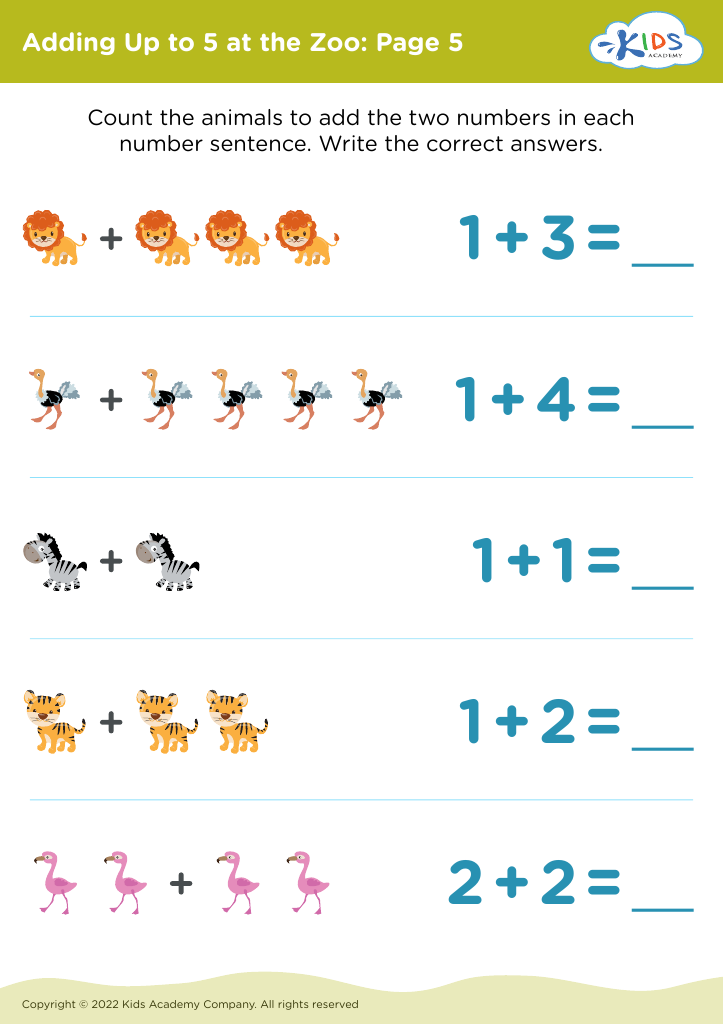
Worksheet
Adding Up to 5 at the Zoo: Page 5

Adding Up to 5 at the Zoo: Page 5

Adding Up to 5 at the Zoo: Page 5
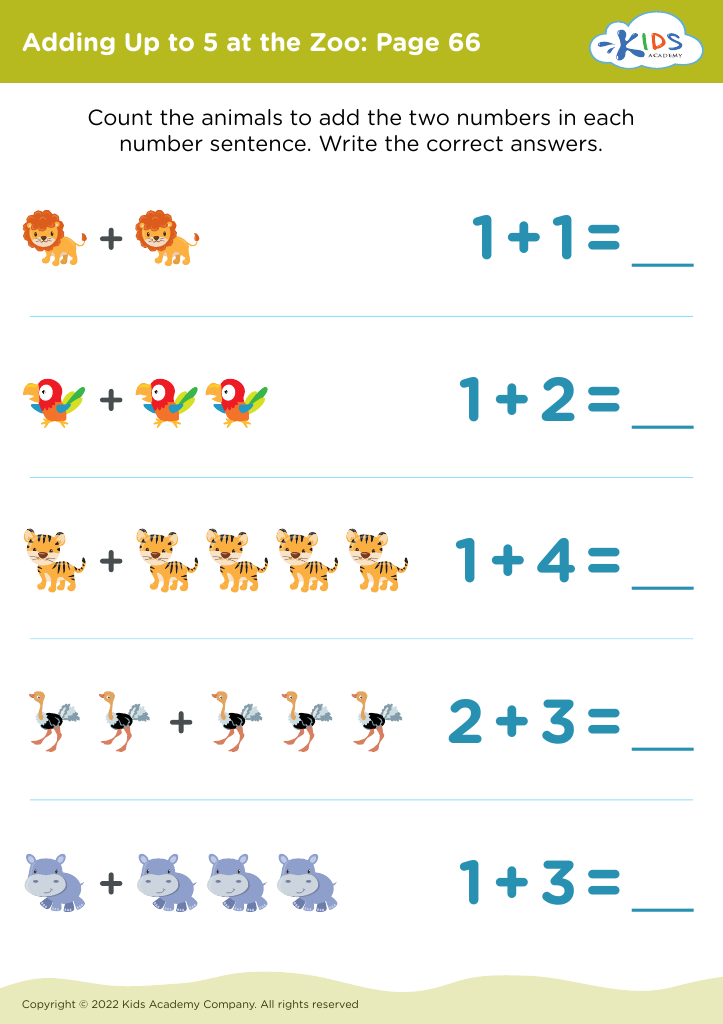
Worksheet
Adding Up to 5 at the Zoo: Page 66
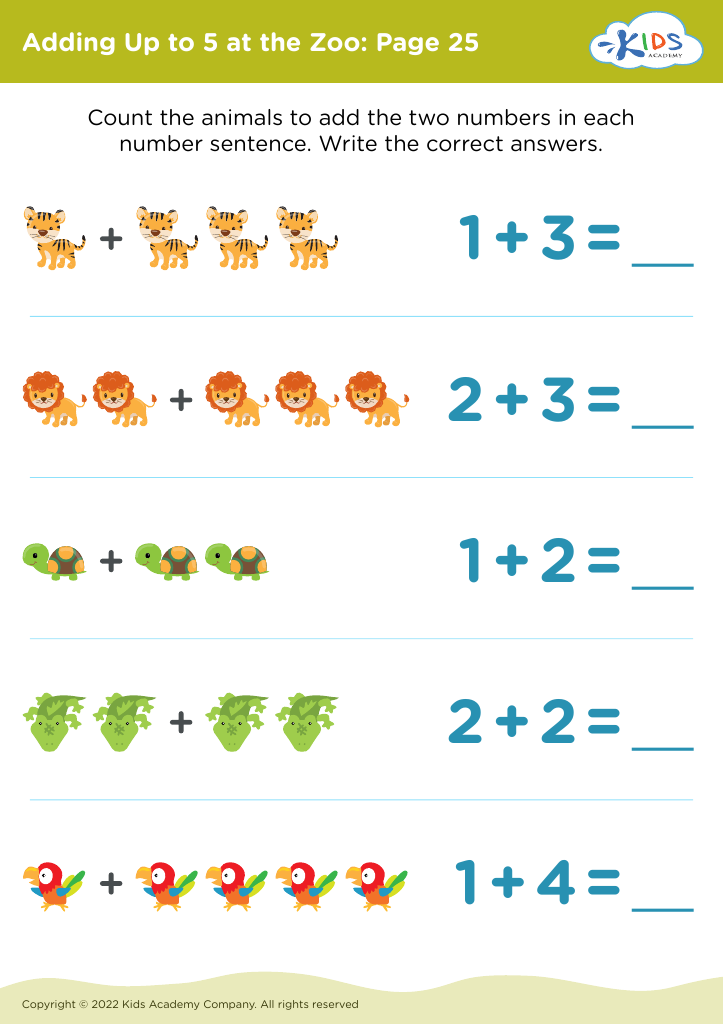
Worksheet
Adding Up to 5 at the Zoo: Page 25
Worksheet
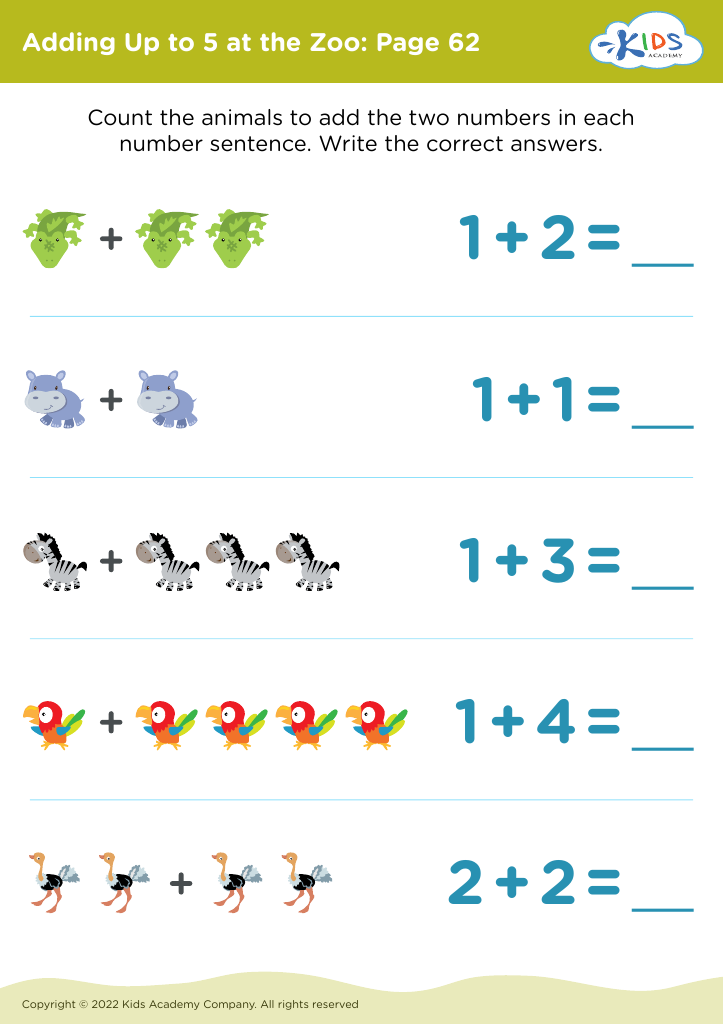
Adding Up to 5 at the Zoo: Page 62
Worksheet
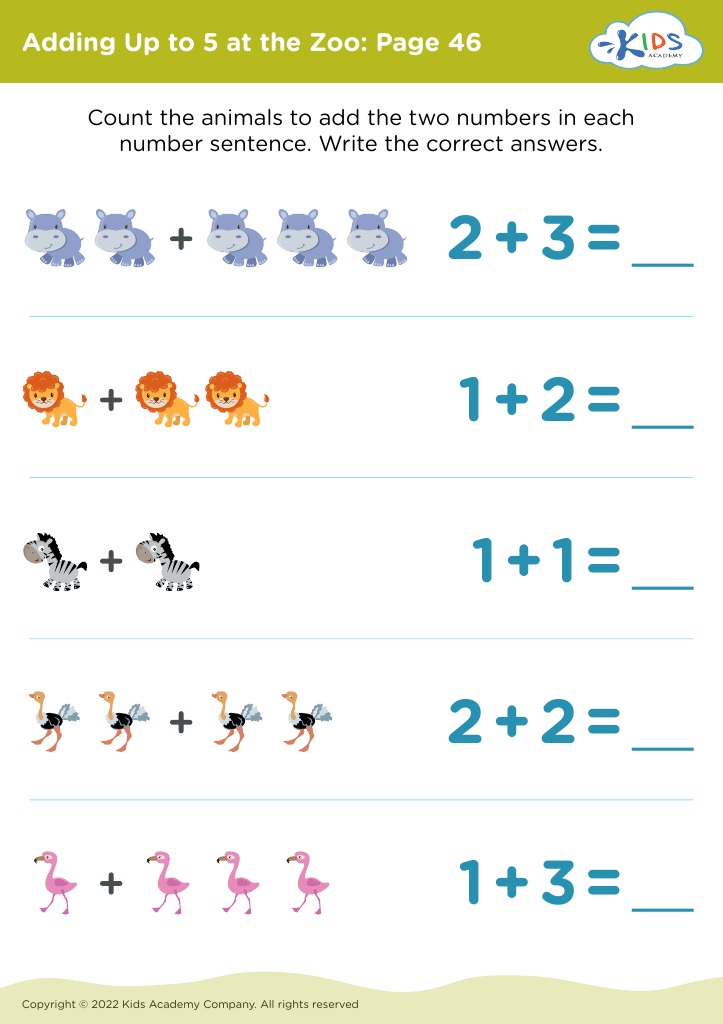
Adding Up to 5 at the Zoo: Page 46
Worksheet
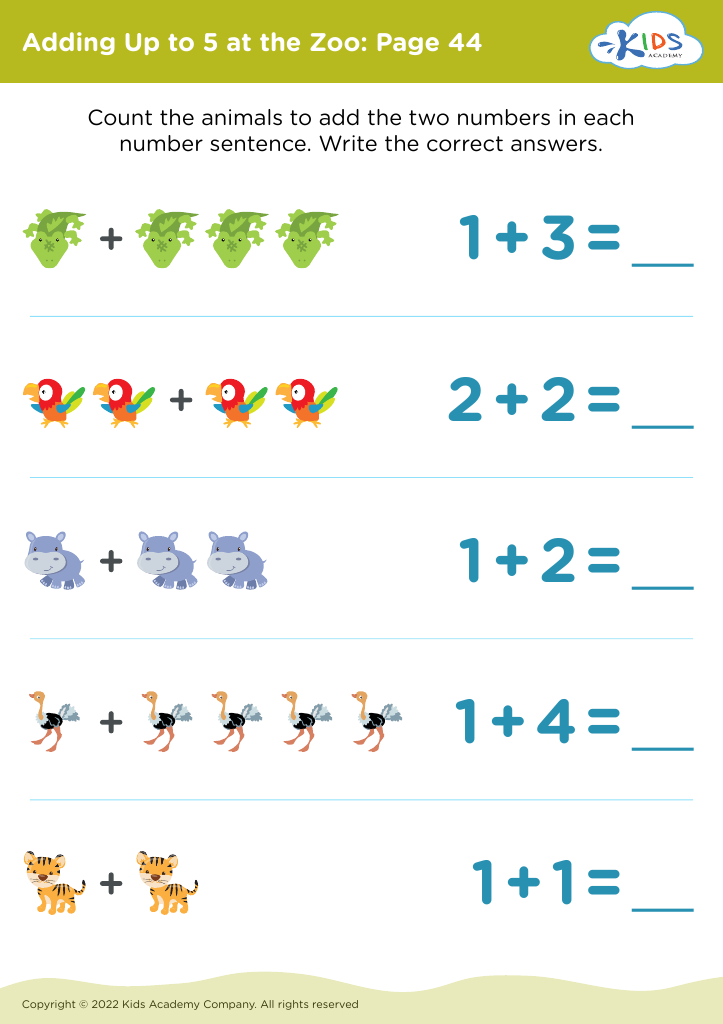
Adding Up to 5 at the Zoo: Page 44
Worksheet
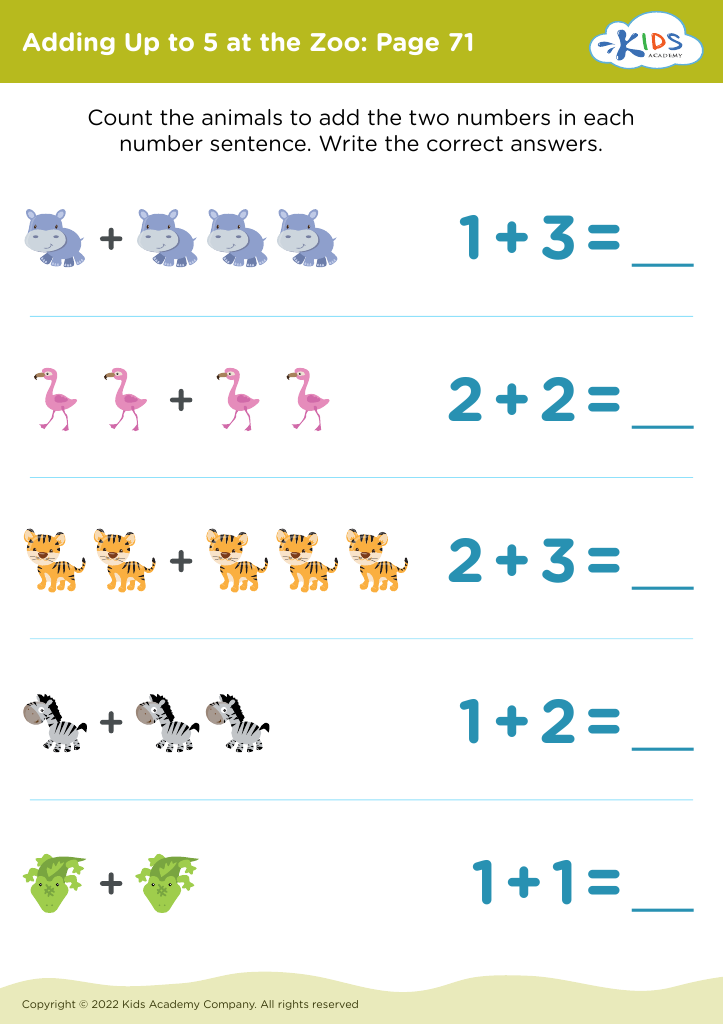
Adding Up to 5 at the Zoo: Page 71
Worksheet
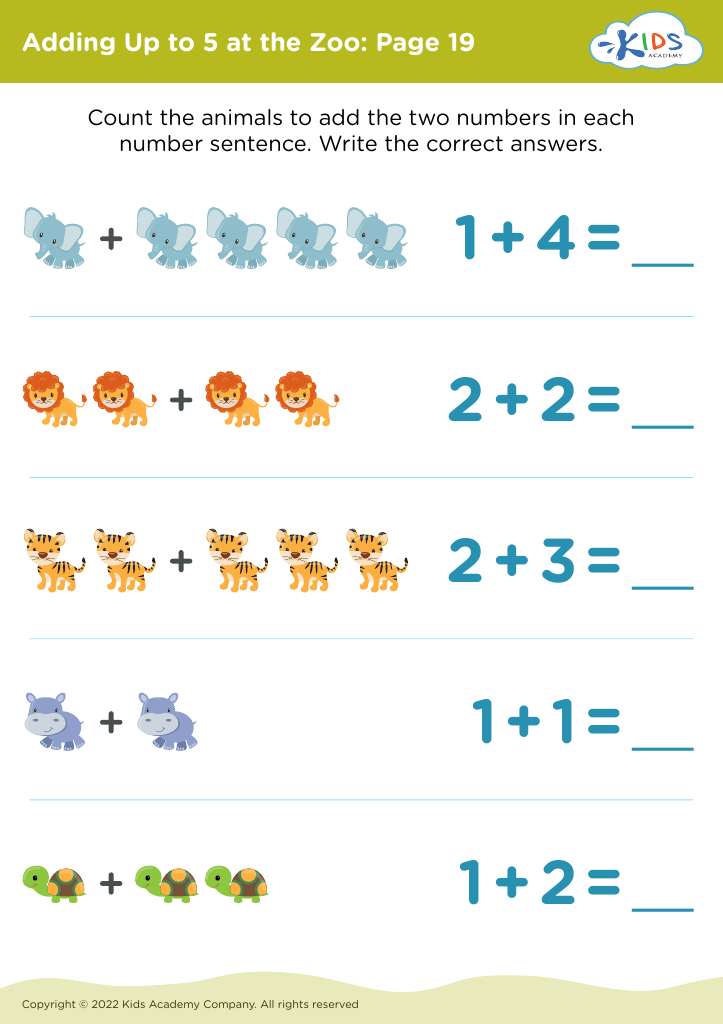
Adding Up to 5 at the Zoo: Page 19
Worksheet
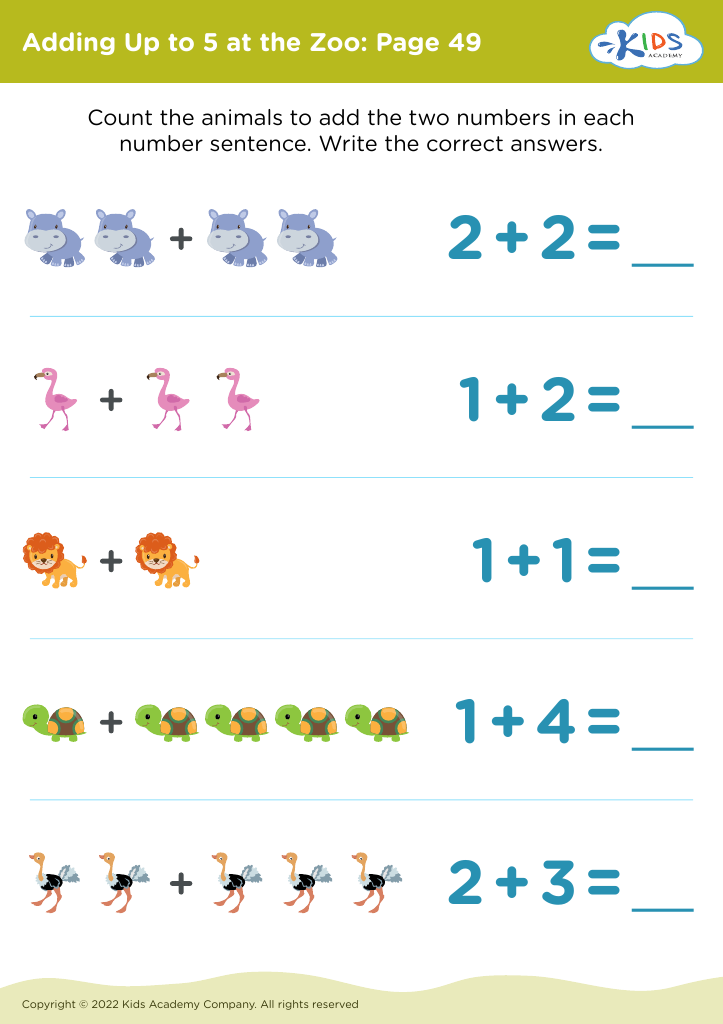
Adding Up to 5 at the Zoo: Page 49
Worksheet
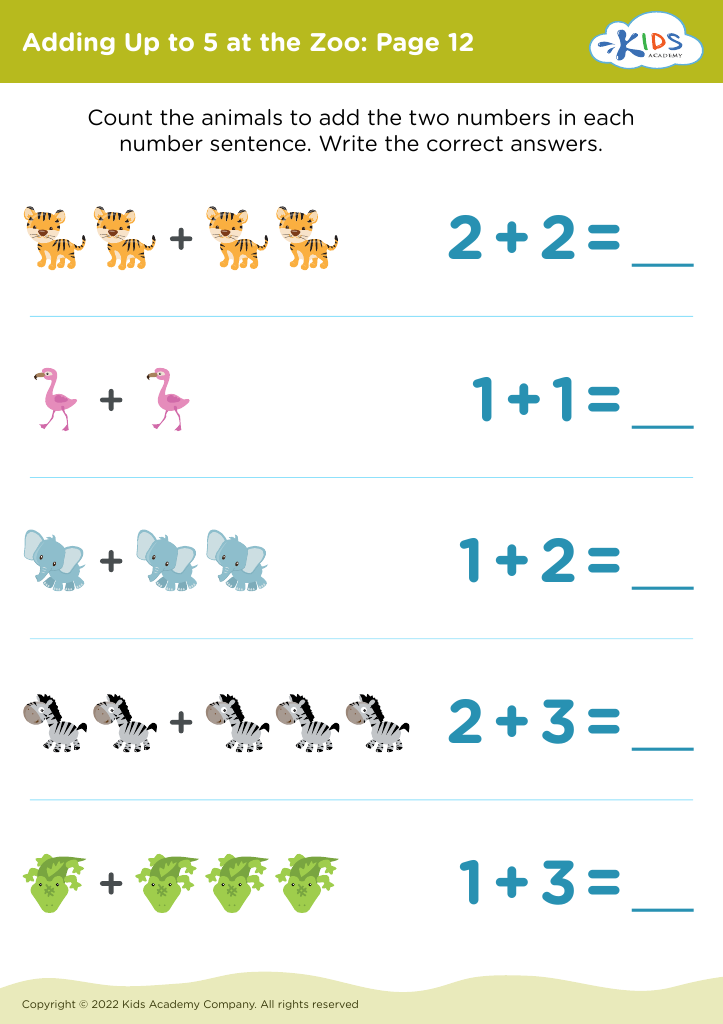
Adding Up to 5 at the Zoo: Page 12
Worksheet
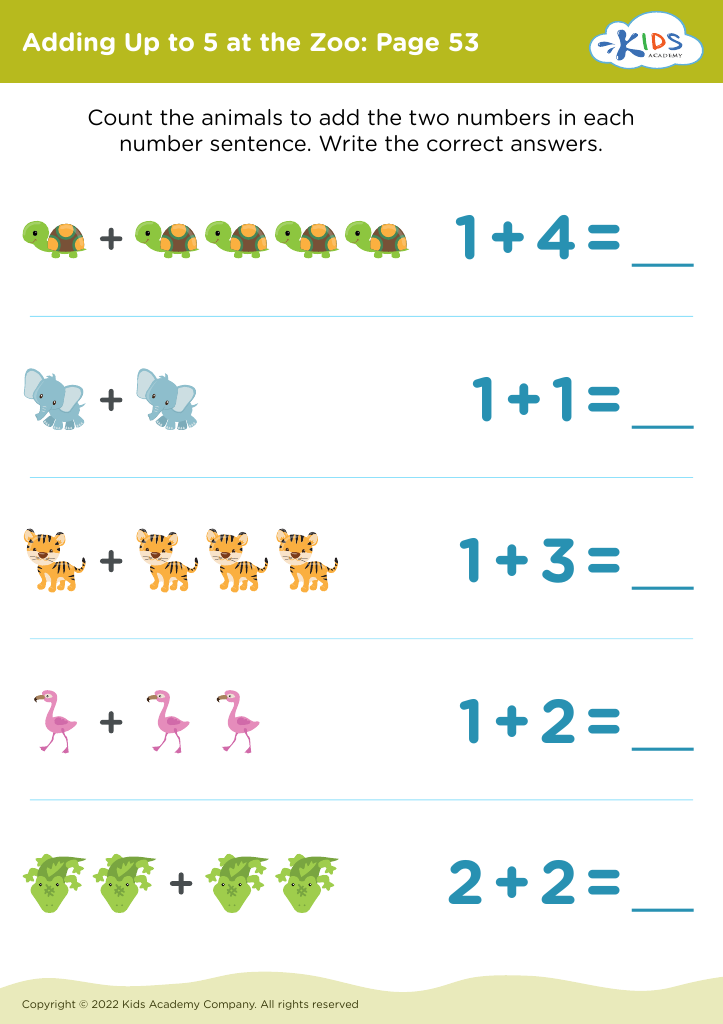
Adding Up to 5 at the Zoo: Page 53
Worksheet
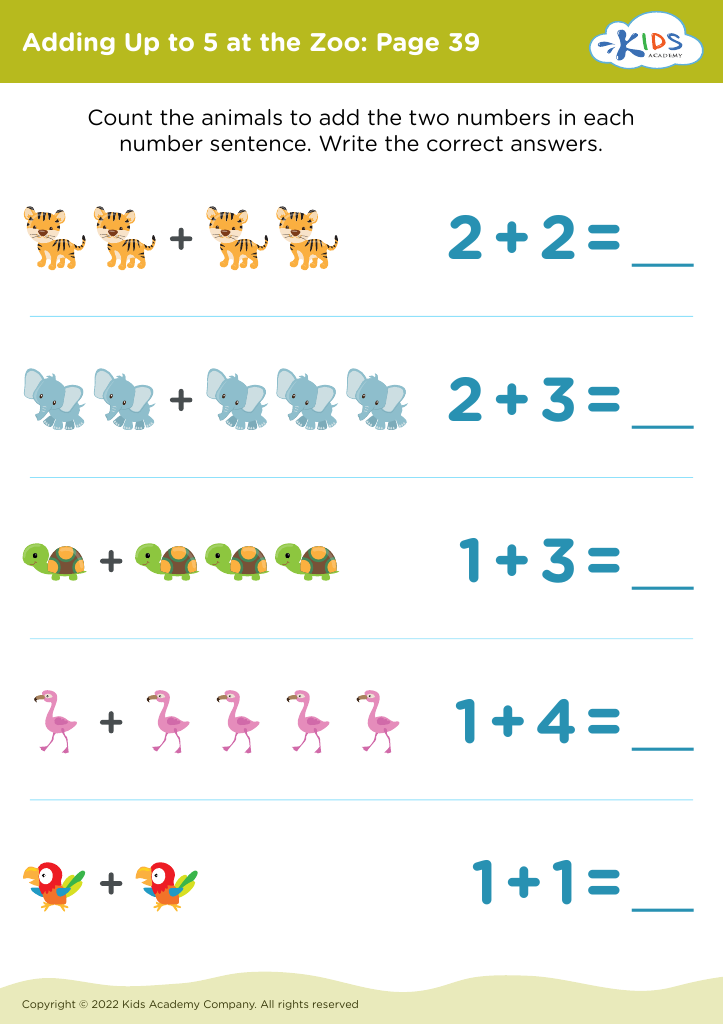
Adding Up to 5 at the Zoo: Page 39
Worksheet


Understanding addition is a fundamental building block of mathematics for young children. Introducing addition through engaging activities like "Adding at the Zoo" for ages 3-7 is highly beneficial for development. Here’s why parents and teachers should prioritize these skills:

  1. Early Numeracy: Addition games help children grasp basic numeracy concepts, facilitating smoother transitions to more complex math. Early exposure to addition can make future learning easier and more intuitive.

  2. Cognitive Development: Adding numbers strengthens cognitive functions such as memory, problem-solving, and logical thinking. Games like “Adding at the Zoo” stimulate young minds by challenging them to think critically.

  3. Engagement and Interest: The zoo theme captures children’s attention, making maths fun and less intimidating. When learning feels like play, kids are more likely to develop a positive attitude towards maths and education in general.

  4. Practical Life Skills: Addition is used in everyday tasks, such as counting toys or figuring out how many treats are needed at snack time. Mastering these skills early in life helps children handle practical responsibilities.

  5. Confidence Building: Successfully learning addition boosts a child’s confidence. This early success encourages a willingness to tackle new challenges both within and outside academic realms.

Integrating addition skills through creative activities like “Adding at the Zoo” ensures that learning is effective, enjoyable, and foundational for future educational success.