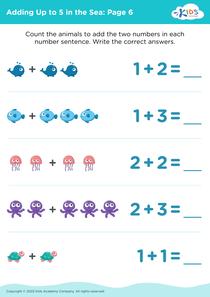
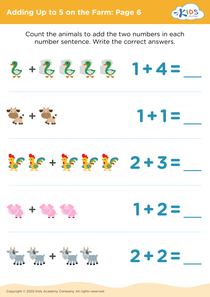
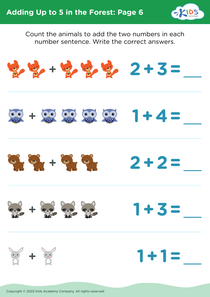
Animal recognition Adding at the Zoo Worksheets for Ages 3-7
43 filtered results
-
From - To
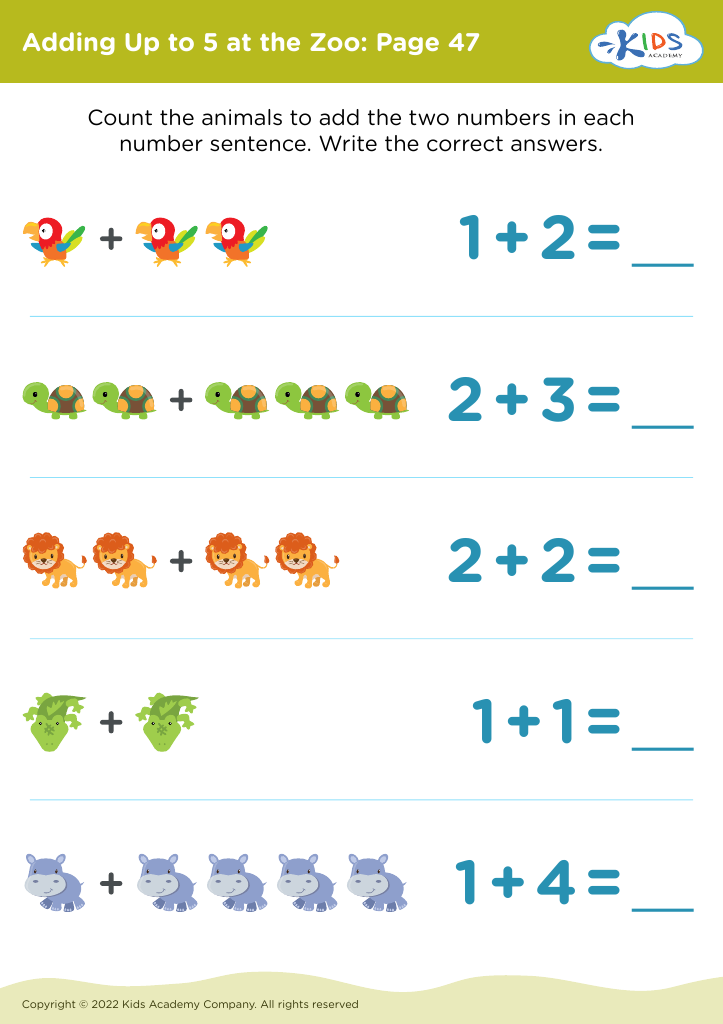
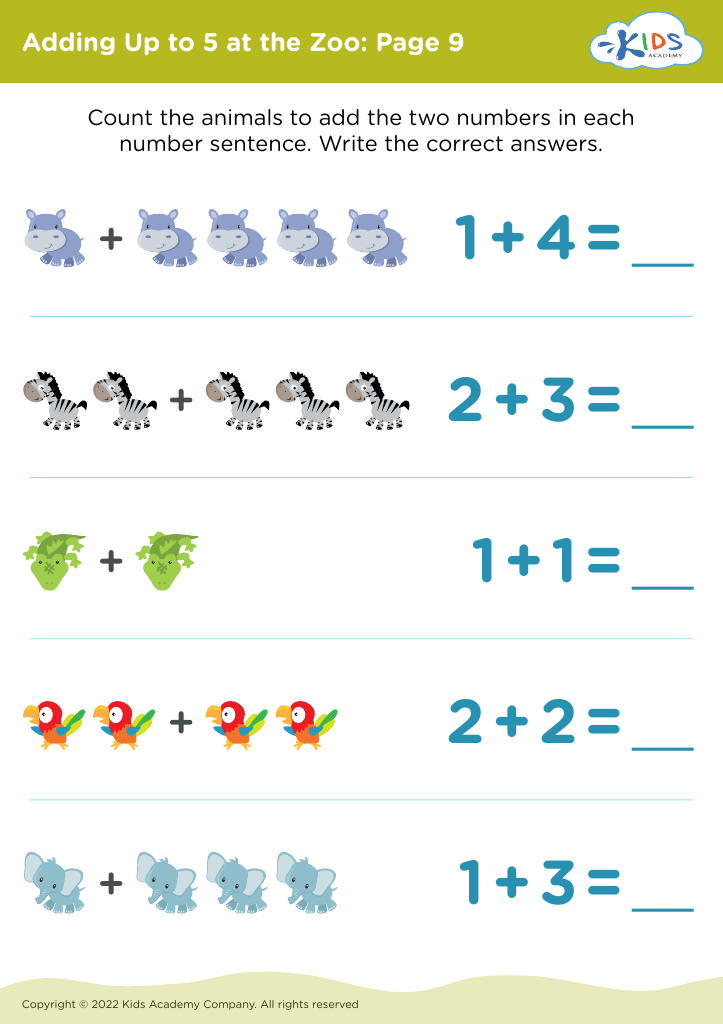
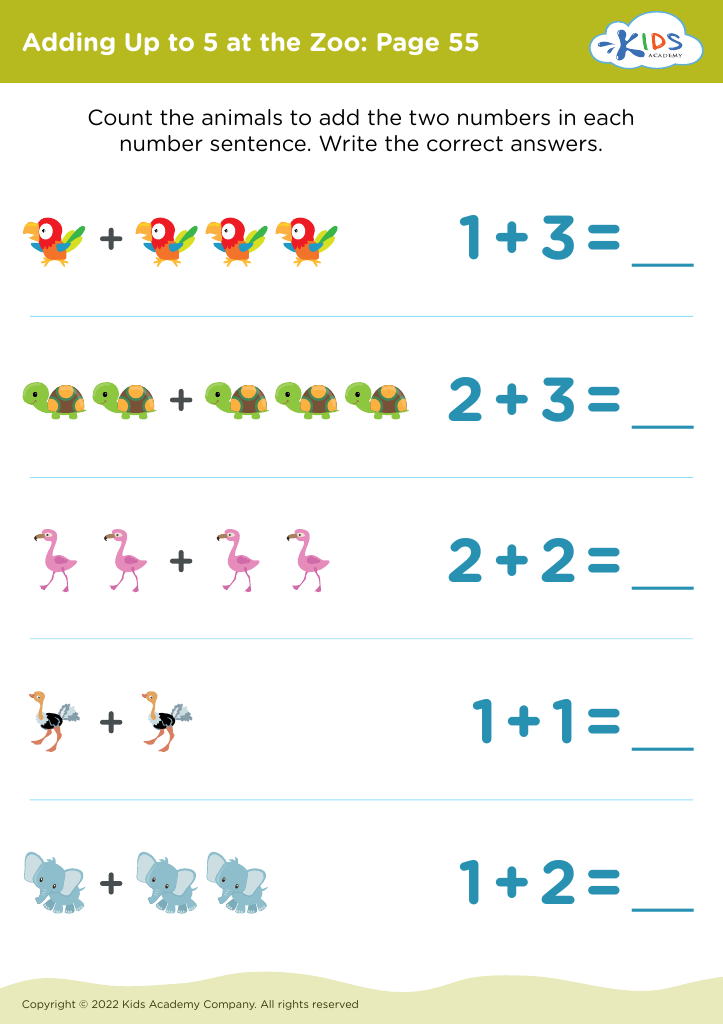
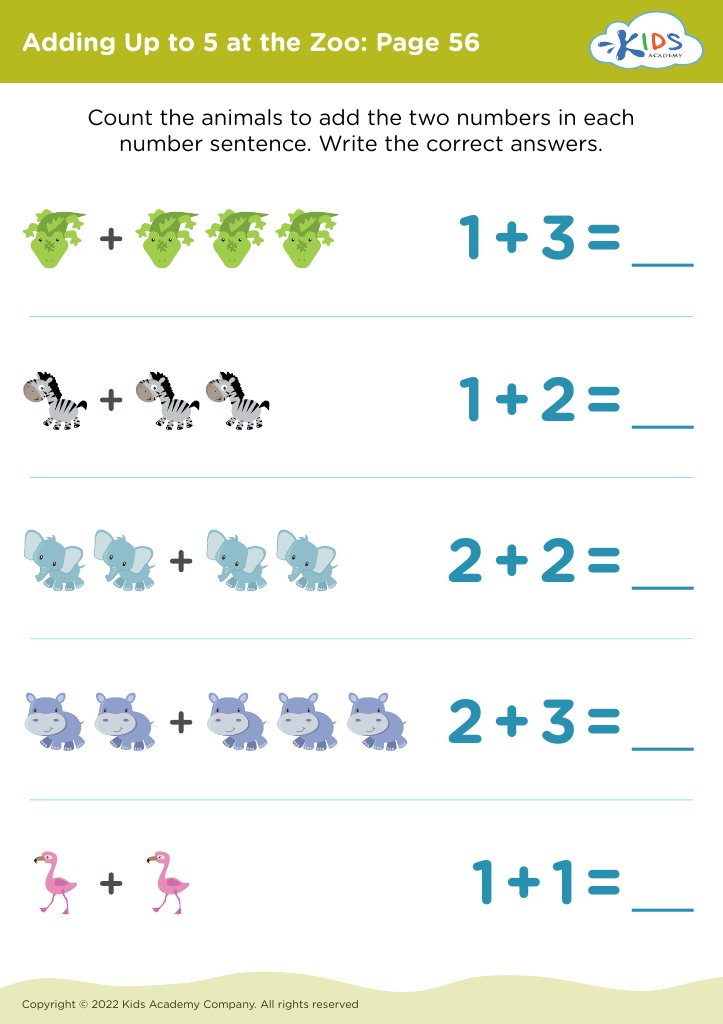
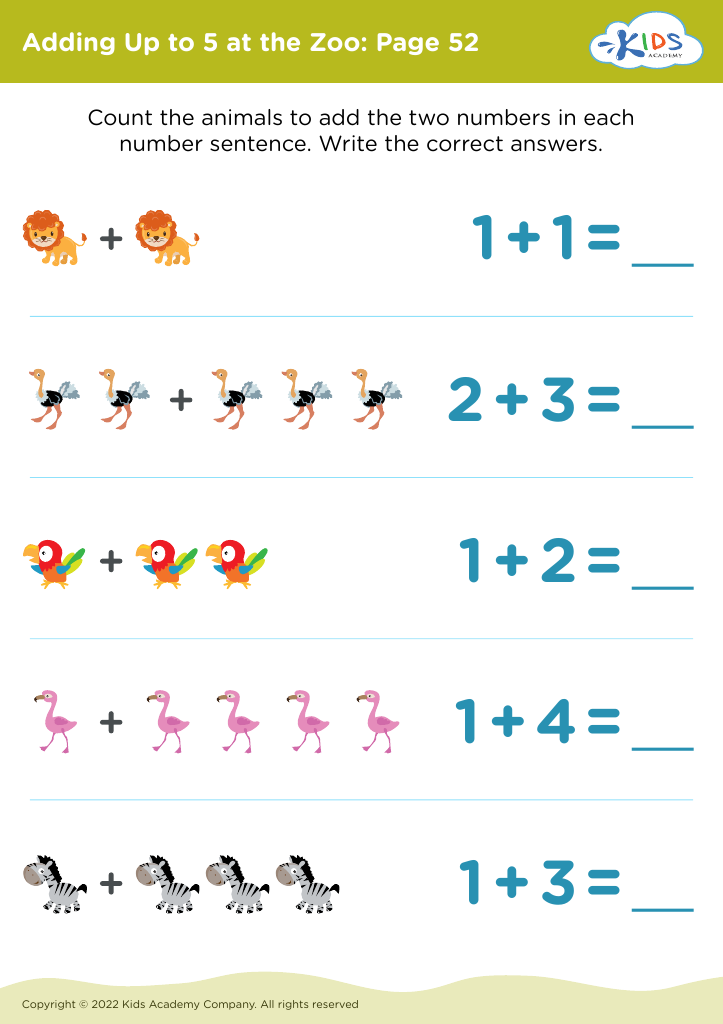
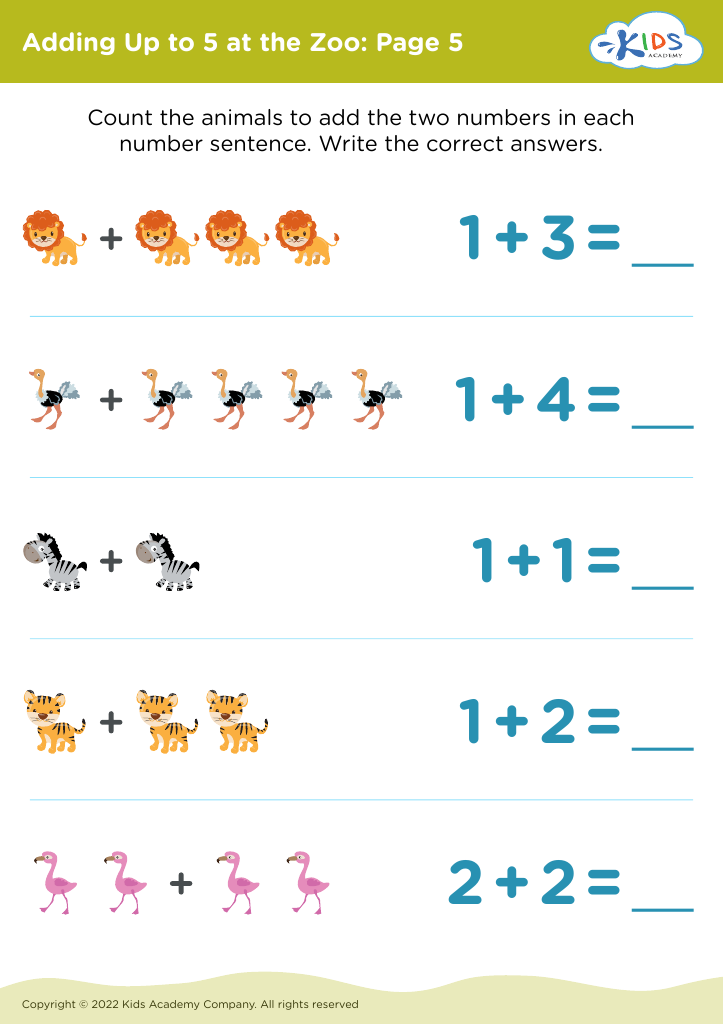
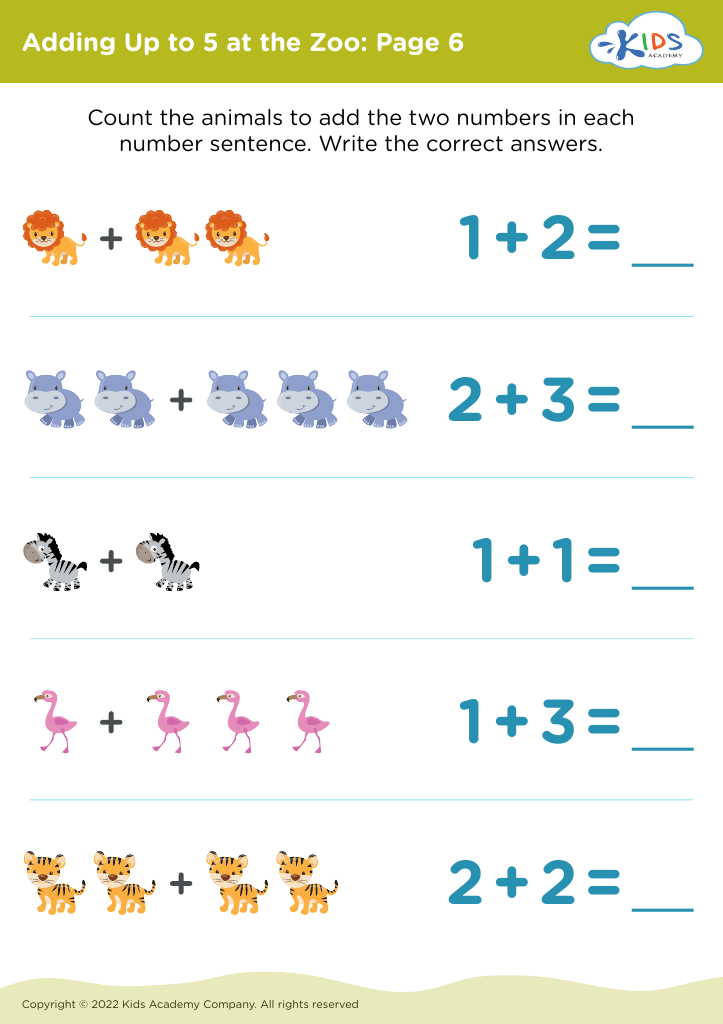
Discover our engaging "Animal Recognition Adding at the Zoo Worksheets," designed for children ages 3-7! These worksheets make learning math fun and interactive by combining essential addition skills with exciting zoo-themed activities. Young learners will identify various animals while practicing basic addition, enhancing their cognitive and observational skills. Perfect for educators and parents alike, these resources encourage a love for learning through playful exploration of the animal kingdom. Watch your child's confidence grow as they connect numbers and names, all while imagining extraordinary zoo adventures. Make math magical with our thoughtfully crafted worksheets, tailored to inspire and educate!
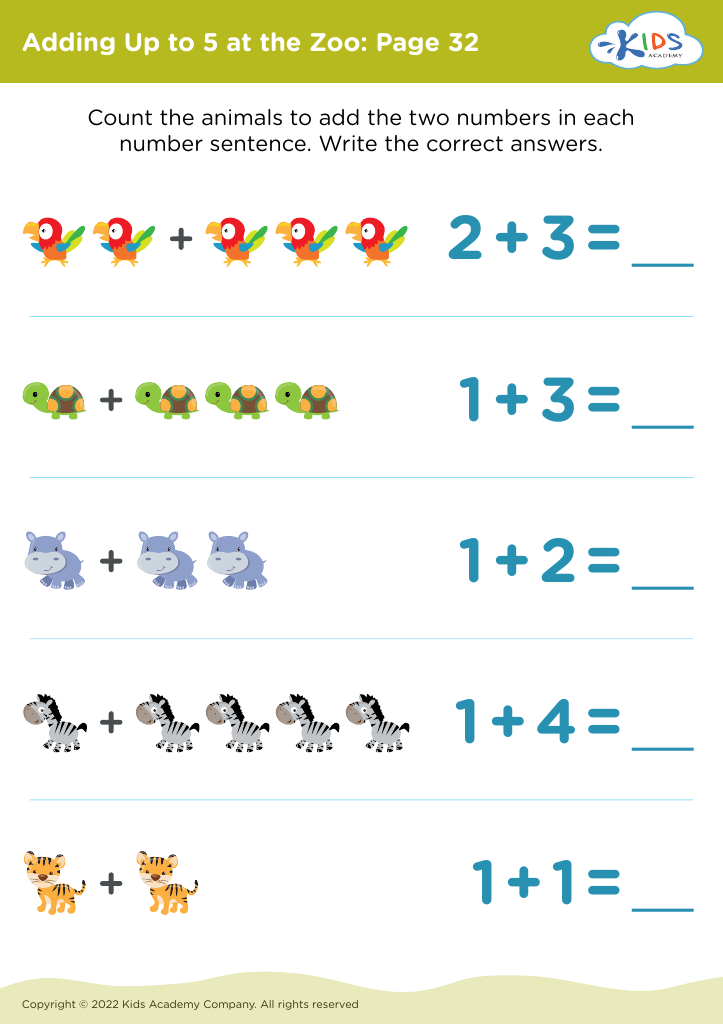
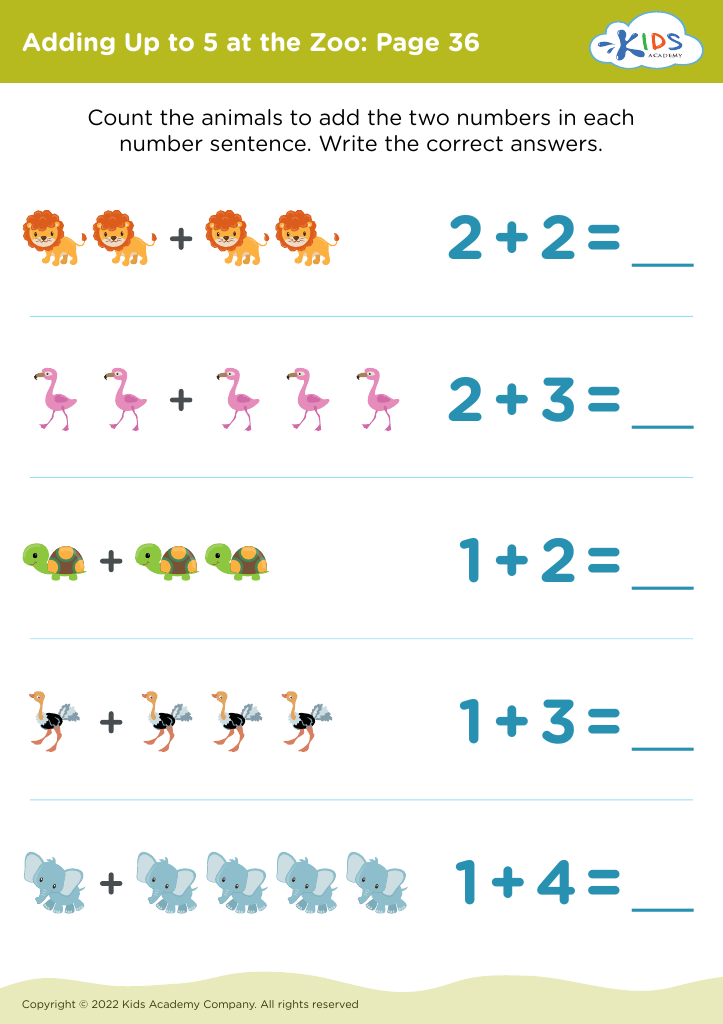
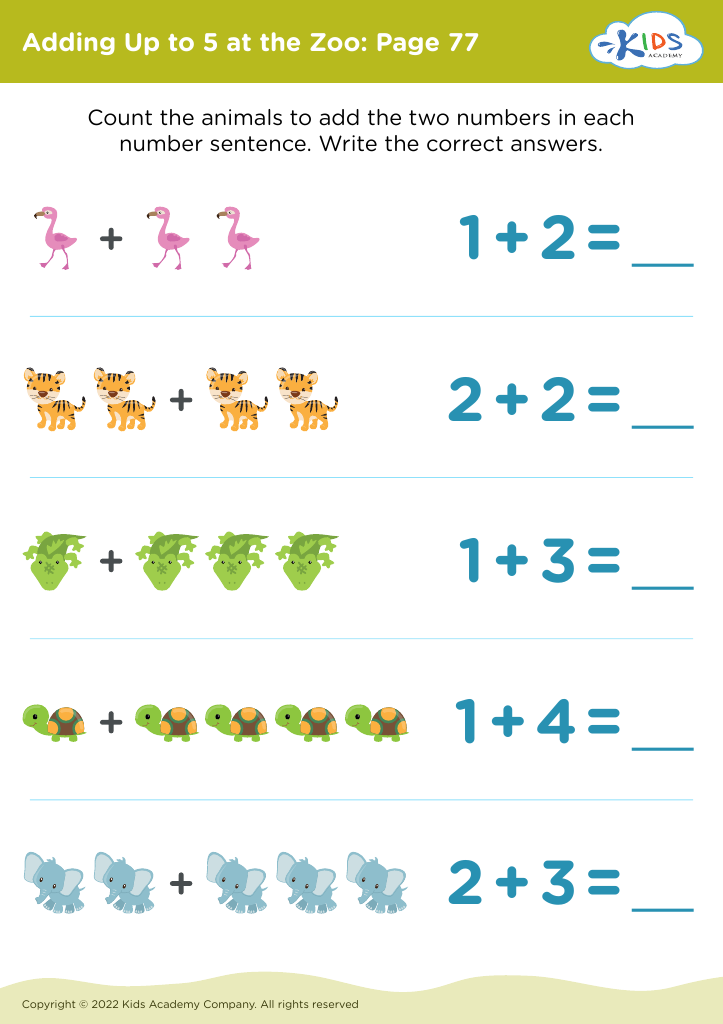
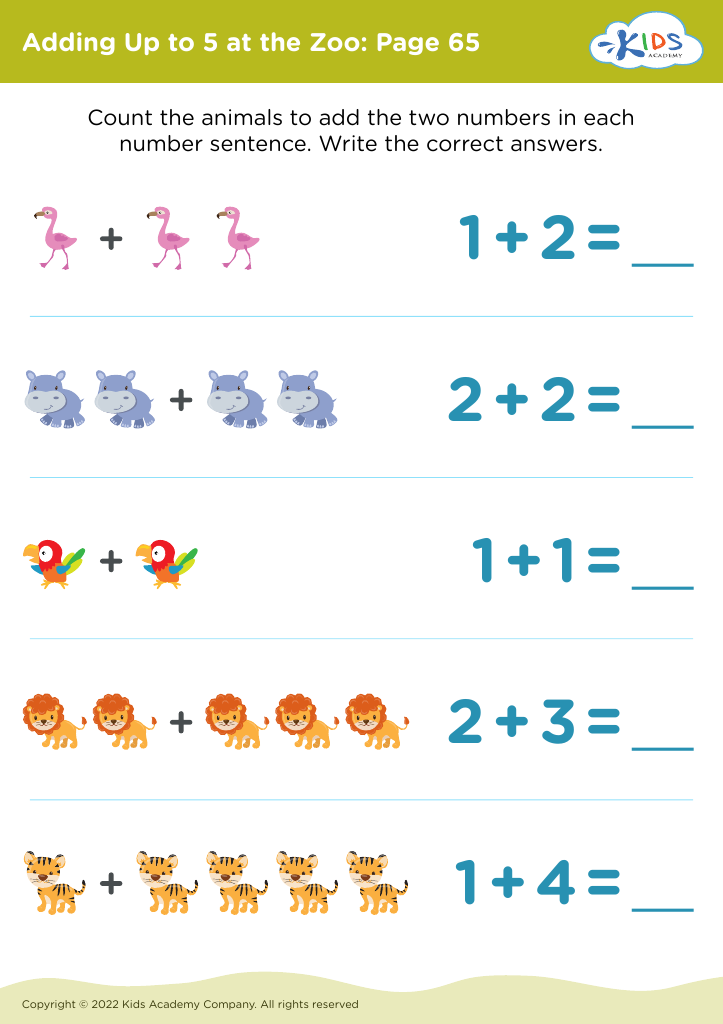
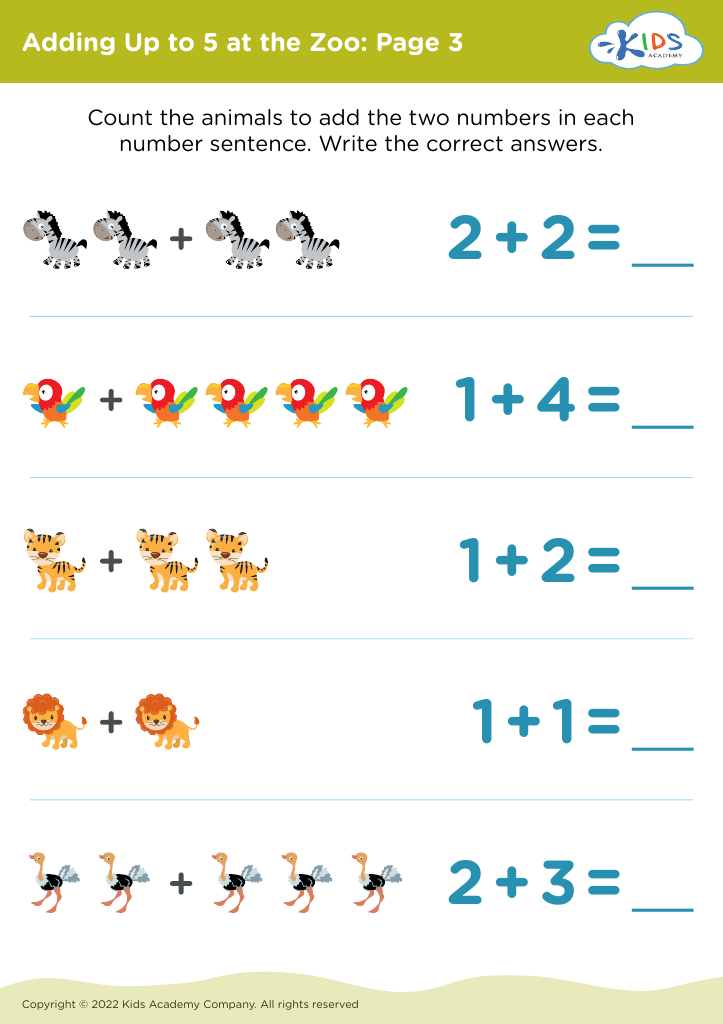
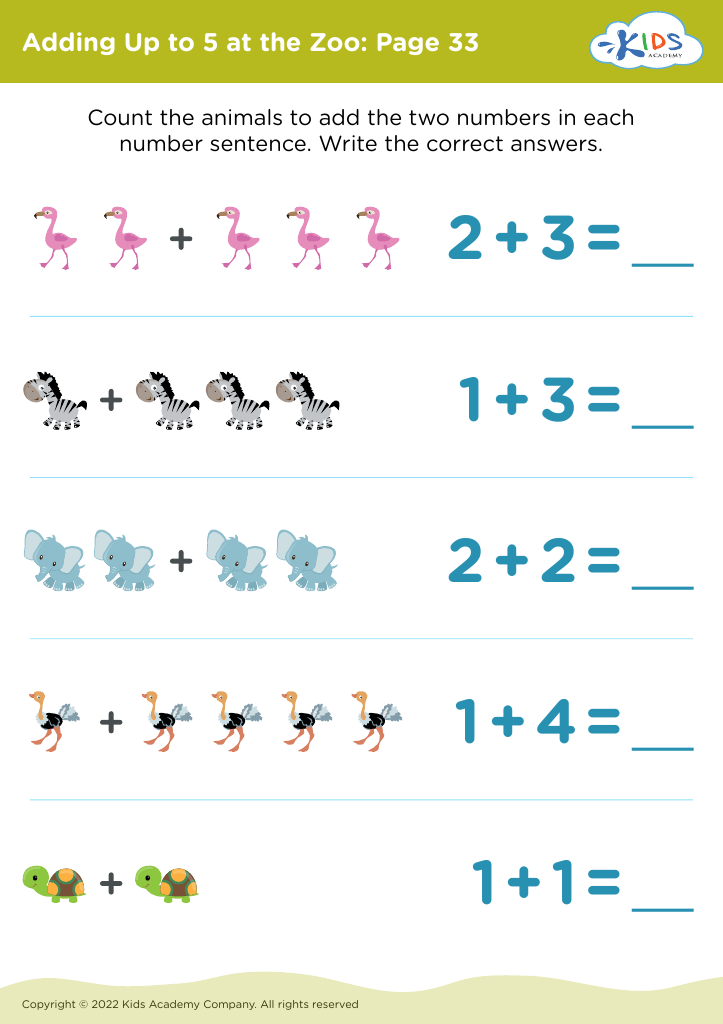
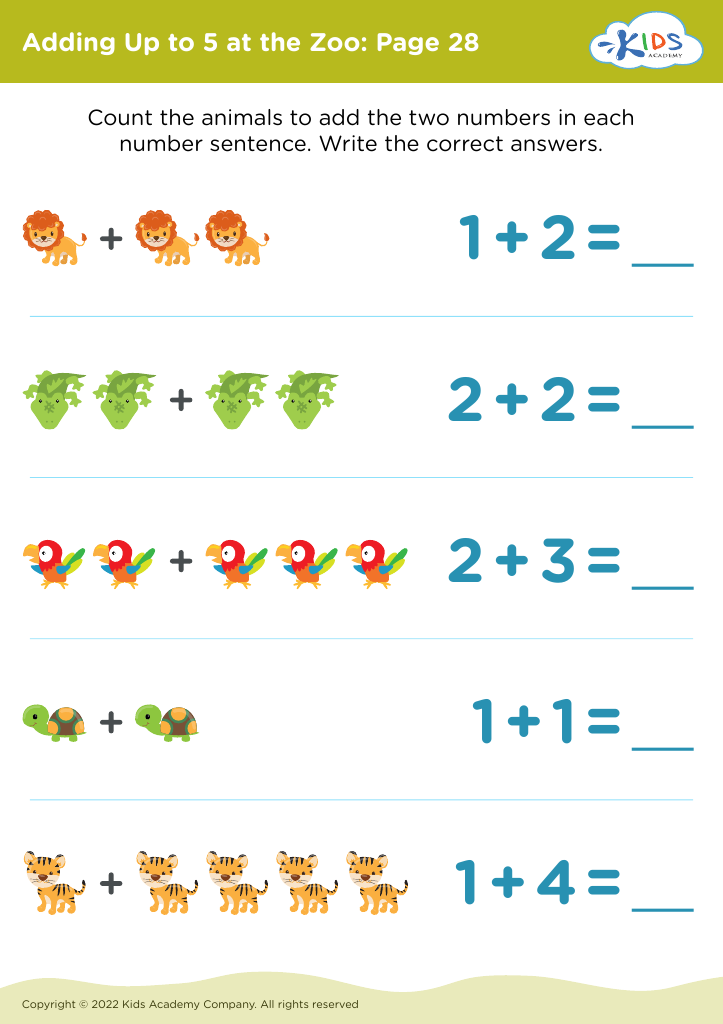
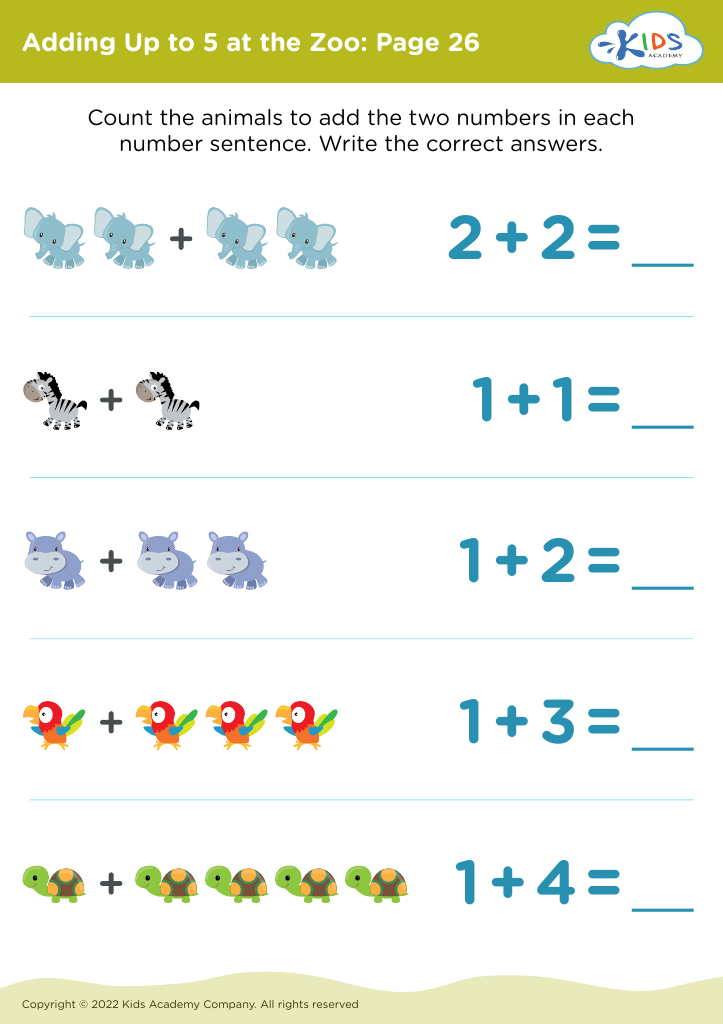
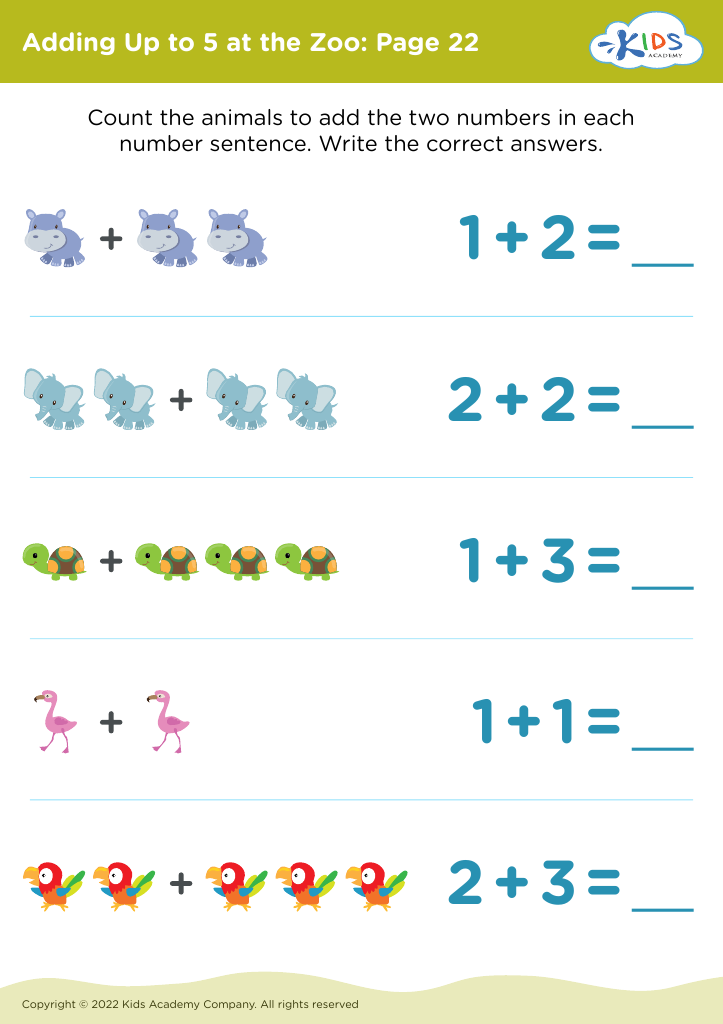
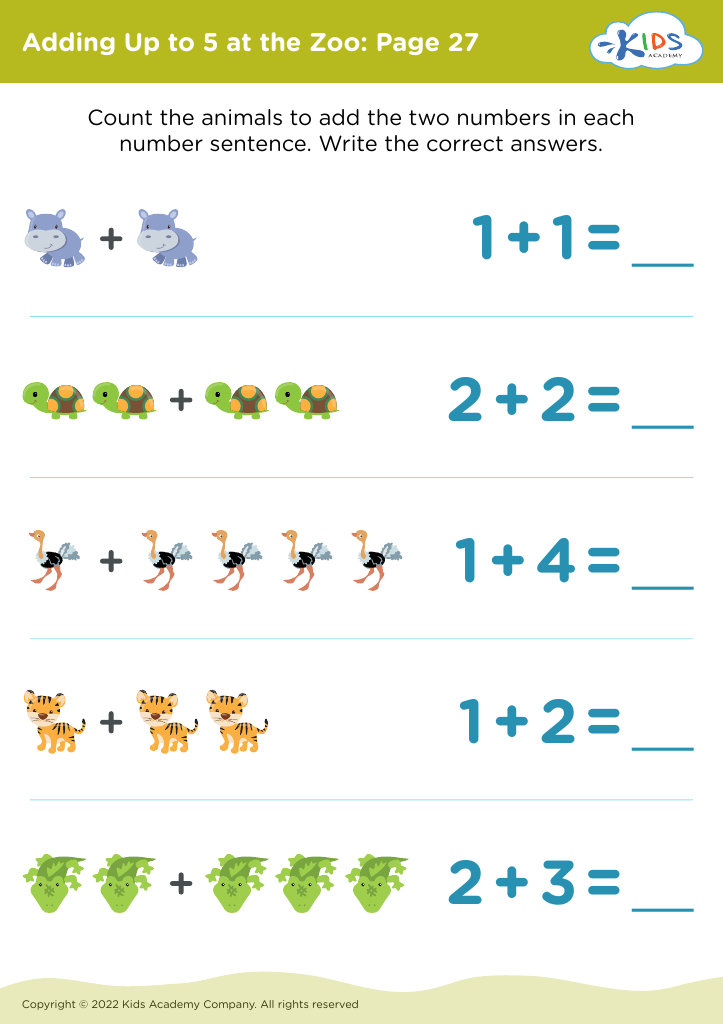
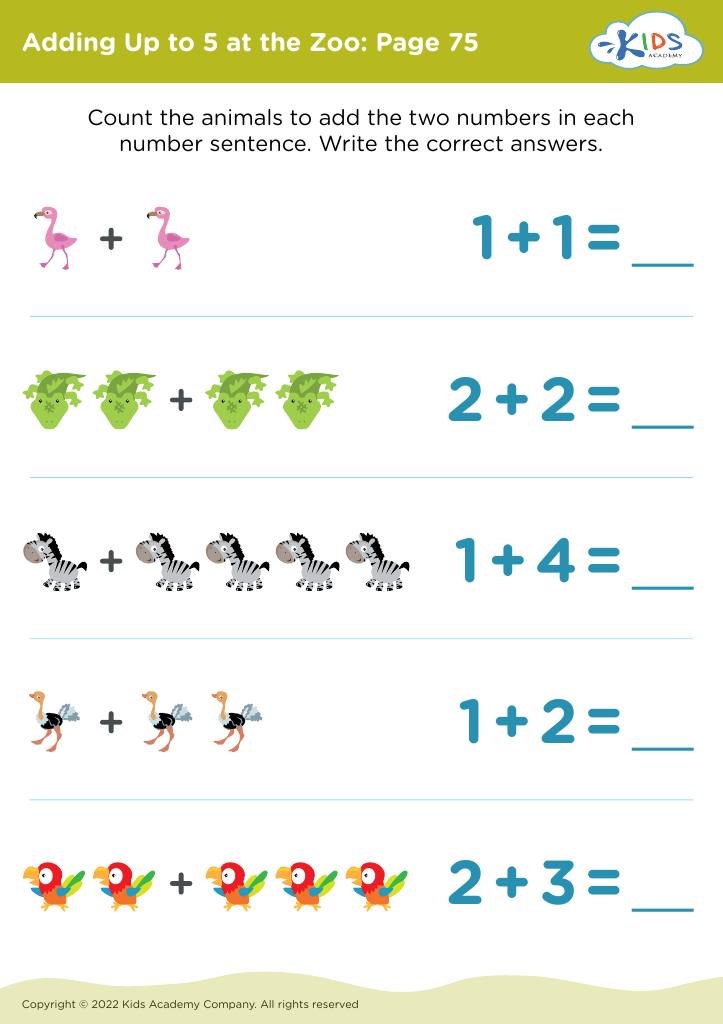
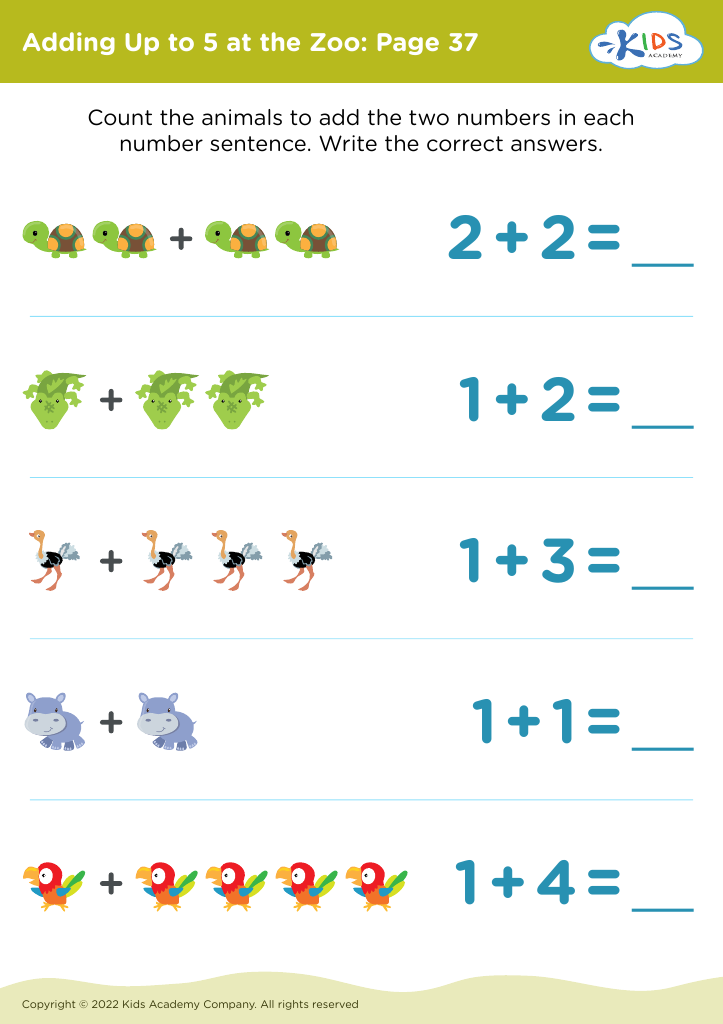
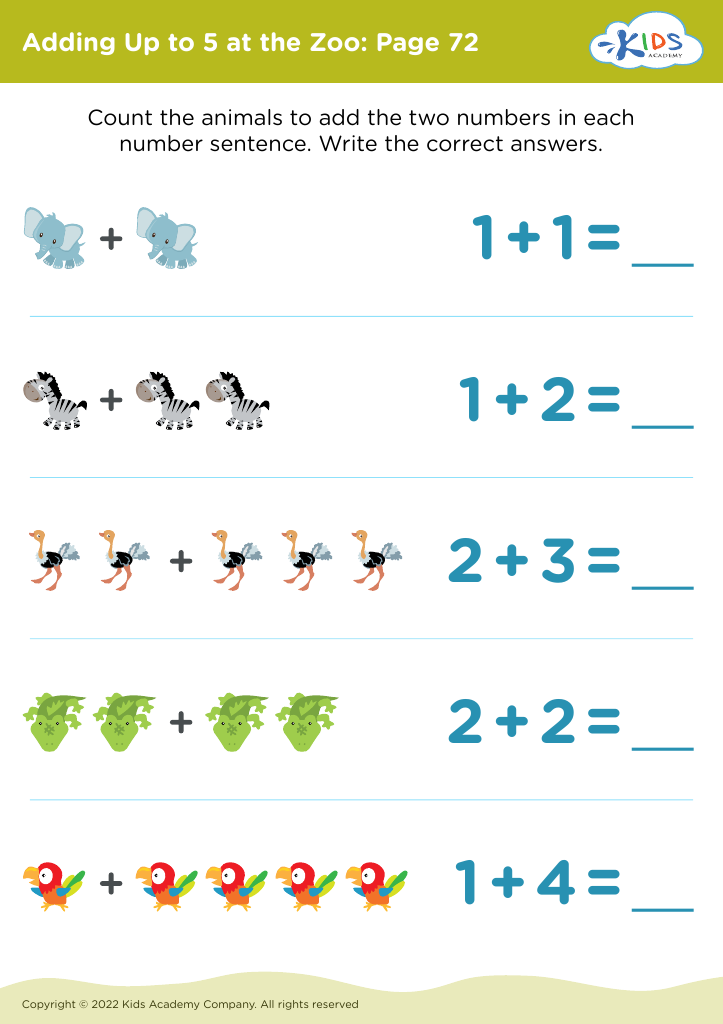
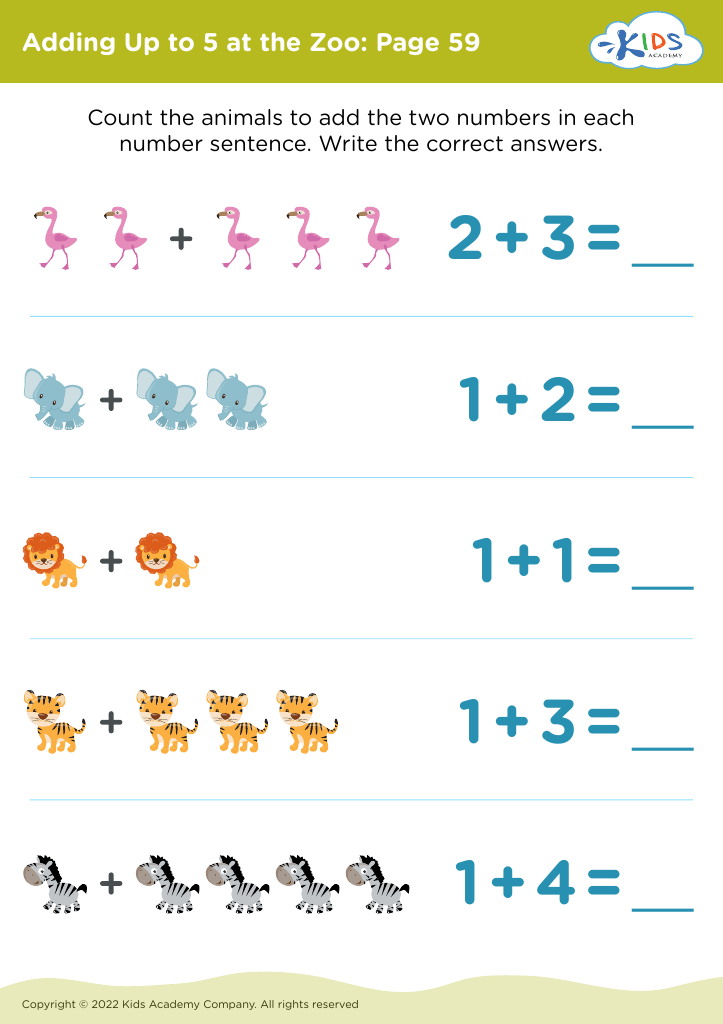
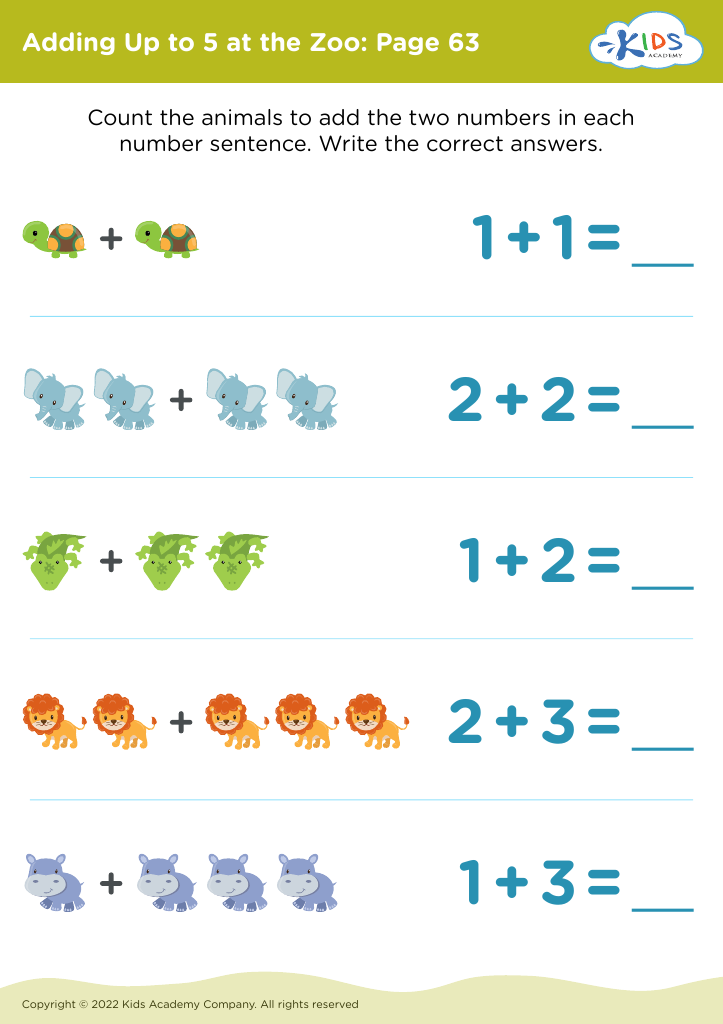
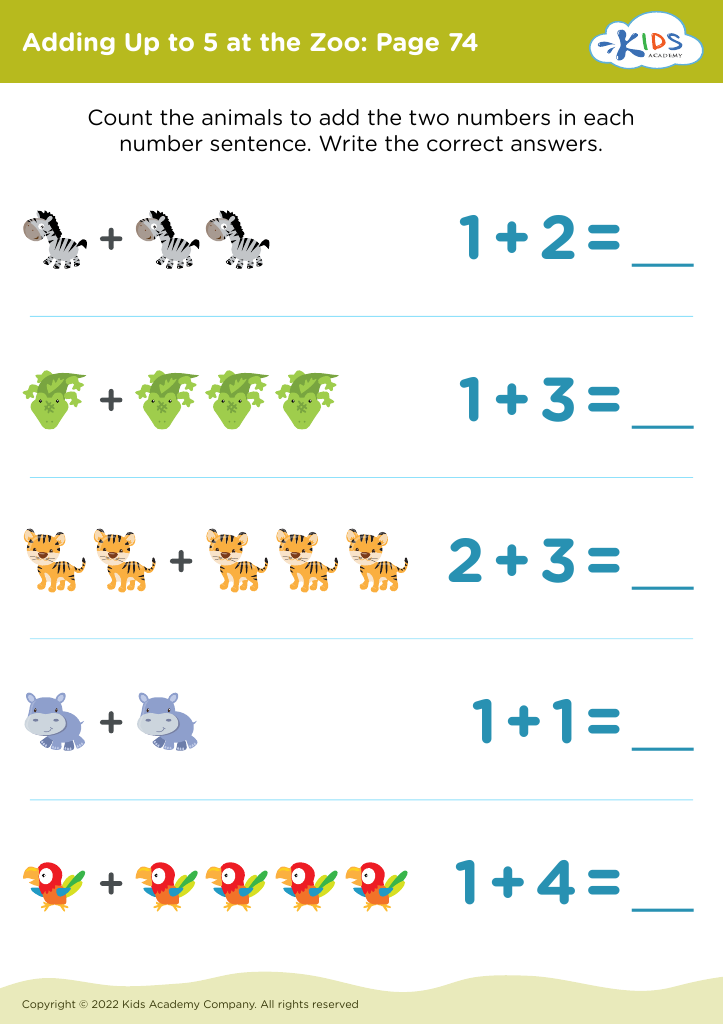
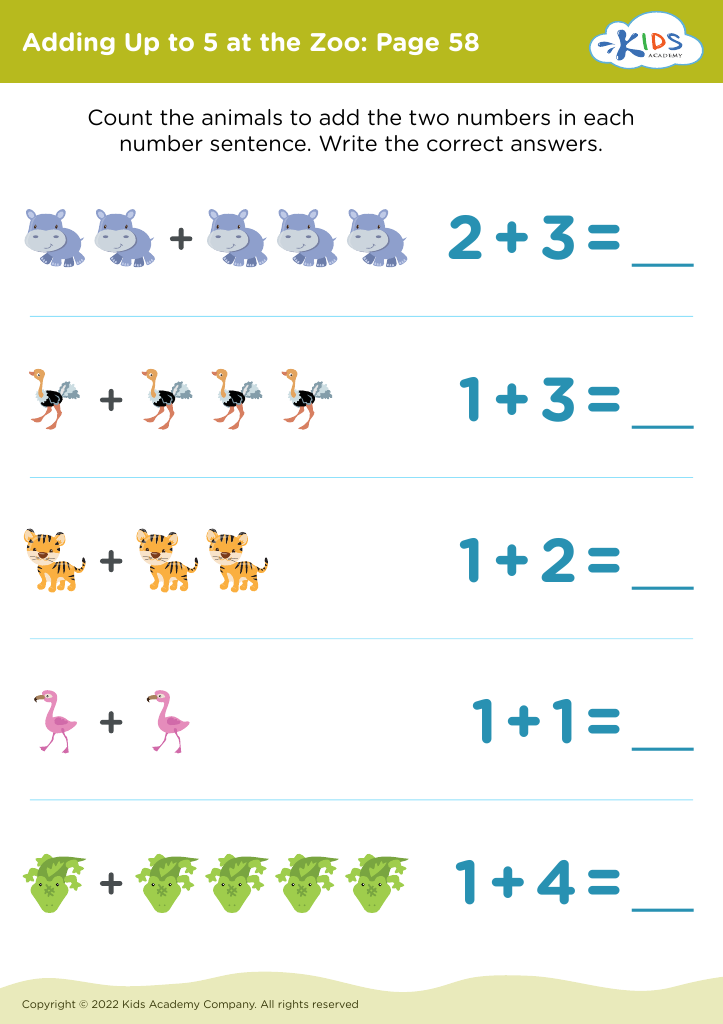



Animal recognition activities at the zoo provide invaluable educational experiences for young children aged 3-7. At this developmental stage, children are naturally curious about the world around them, and zoo visits offer a unique, immersive opportunity to learn about animals in their habitats. Engaging in animal recognition fosters critical observation skills, helping children identify various species, understand their behaviors, and recognize the importance of biodiversity.
For parents and teachers, nurturing this curiosity is essential. Recognizing animals encourages cognitive development, as children learn to categorize and relate information. It also enhances language skills, with opportunities to discuss animal characteristics and behaviors. Vocabulary expansion occurs as children learn specific names, sounds, and facts related to the animals they encounter.
Moreover, these experiences cultivate emotional connections with nature, promoting empathy and a sense of responsibility towards animal conservation. For teachers, incorporating animal recognition into lesson plans can seamlessly integrate science, art, and storytelling, making learning dynamic and engaging.
Ultimately, by helping children recognize and appreciate animals, parents and educators can inspire a lifelong love for nature, awareness of environmental issues, and development of respectful interactions with the animal kingdom. This foundation ultimately lays the groundwork for a more compassionate and informed future generation.