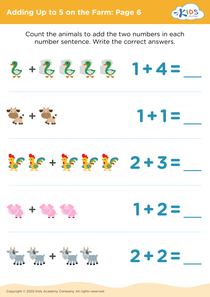
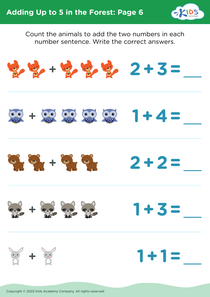
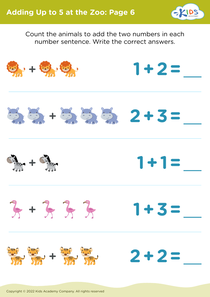
Basic addition practice Adding in the Sea Worksheets for Ages 3-7
3 filtered results
-
From - To
Dive into learning with our "Basic Addition Practice: Adding in the Sea" worksheets, designed for children ages 3-7! These ocean-themed activities make basic addition fun and engaging. Each worksheet features vibrant sea creatures that help young learners grasp addition concepts effortlessly. Perfect for building foundational math skills, these printables encourage problem-solving and critical thinking. Ideal for both classroom and home use, our worksheets foster a love for math from an early age. Swim through addition with your little ones as they enjoy an educational adventure beneath the waves! Download today and see math skills grow.
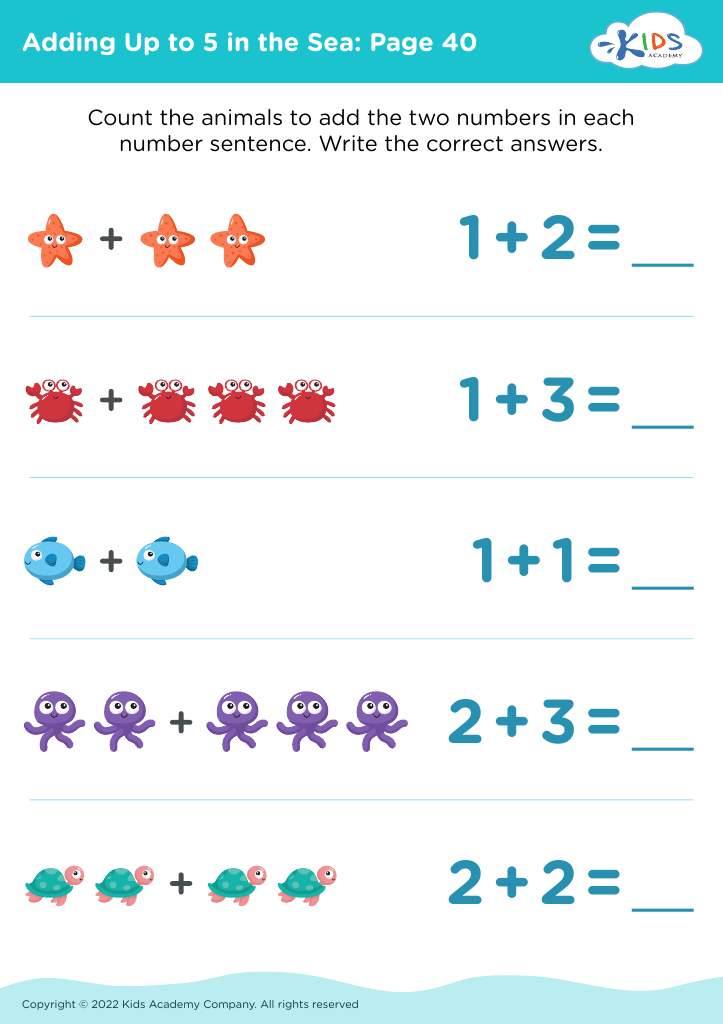
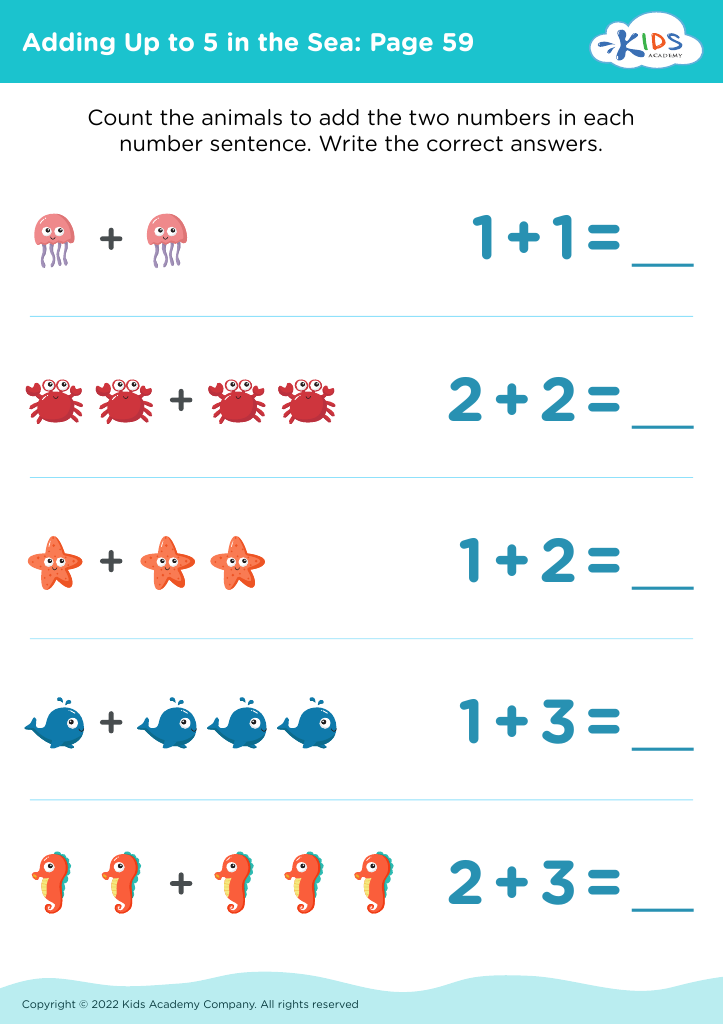
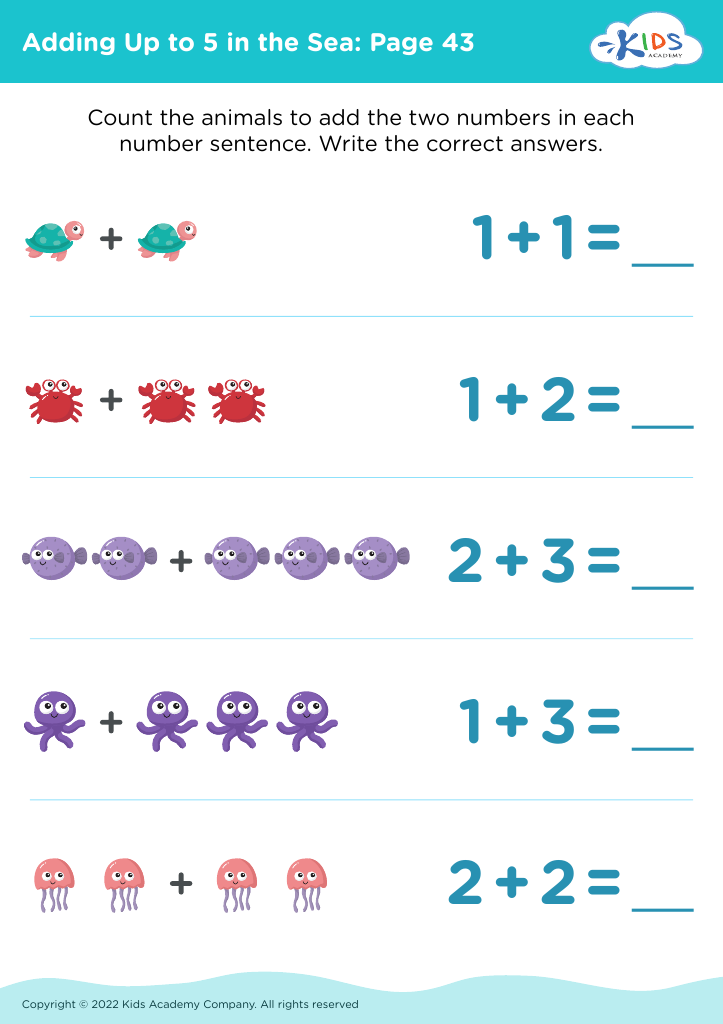



Parents and teachers should care about basic addition practice, such as "Adding in the Sea" for ages 3-7, because it lays a critical foundation for a child's mathematical understanding and future academic success. At this early age, children are highly receptive and learn best through engaging and playful activities. "Adding in the Sea" transforms learning into a fun experience, captivating young minds while teaching them essential math skills.
The game uses sea-themed visuals and interactive elements, which appeal to young children and maintain their interest. This appeal not only helps in grasping the concept of addition but also keeps them motivated to practice and improve. Introducing basic addition early helps in developing number sense—a crucial skill where children understand the relationships between numbers and the value they represent.
In addition, early practice in addition enhances cognitive development. It improves memory, problem-solving skills, and logical thinking. These skills are not only relevant for further mathematical learning but are applicable across all areas of education and daily life. Ensuring children are comfortable with basic addition sets a positive tone for their attitudes toward learning and tackling new challenges. Therefore, integrating such playful educational tools at a young age supports solid academic foundations and lifelong learning skills.