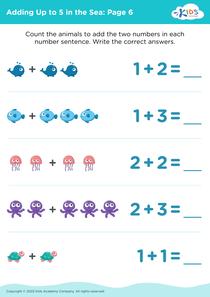
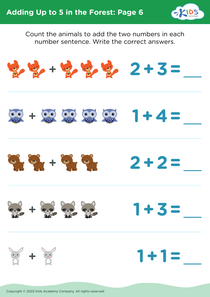
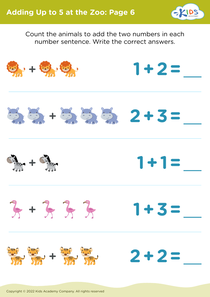
Addition skills Adding on the Farm Worksheets for Ages 3-7
7 filtered results
-
From - To
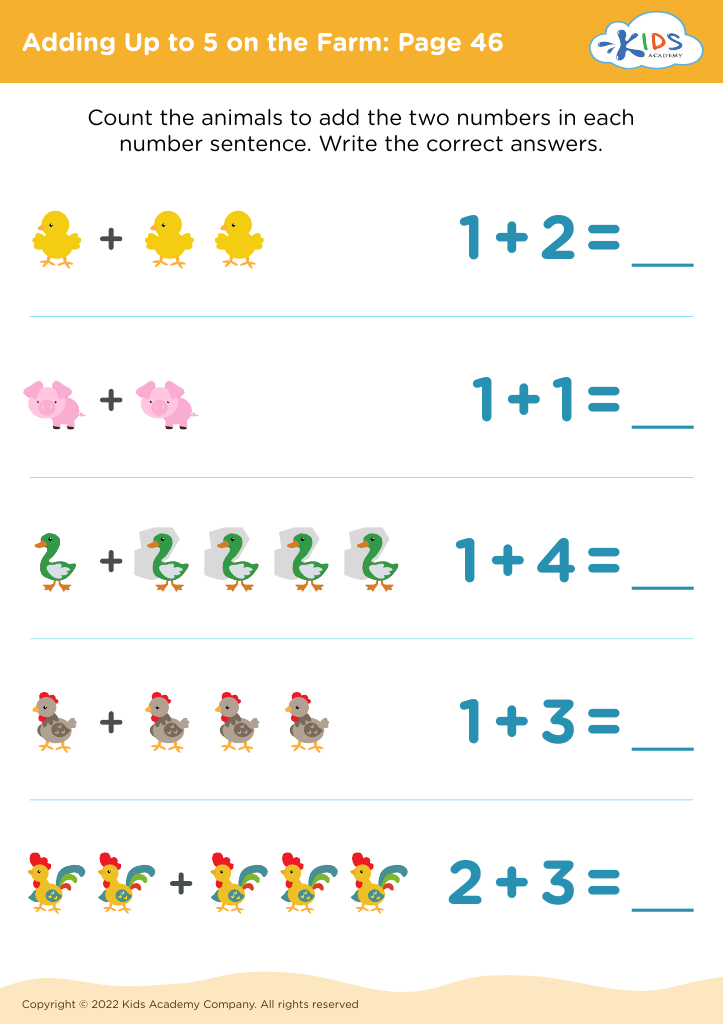
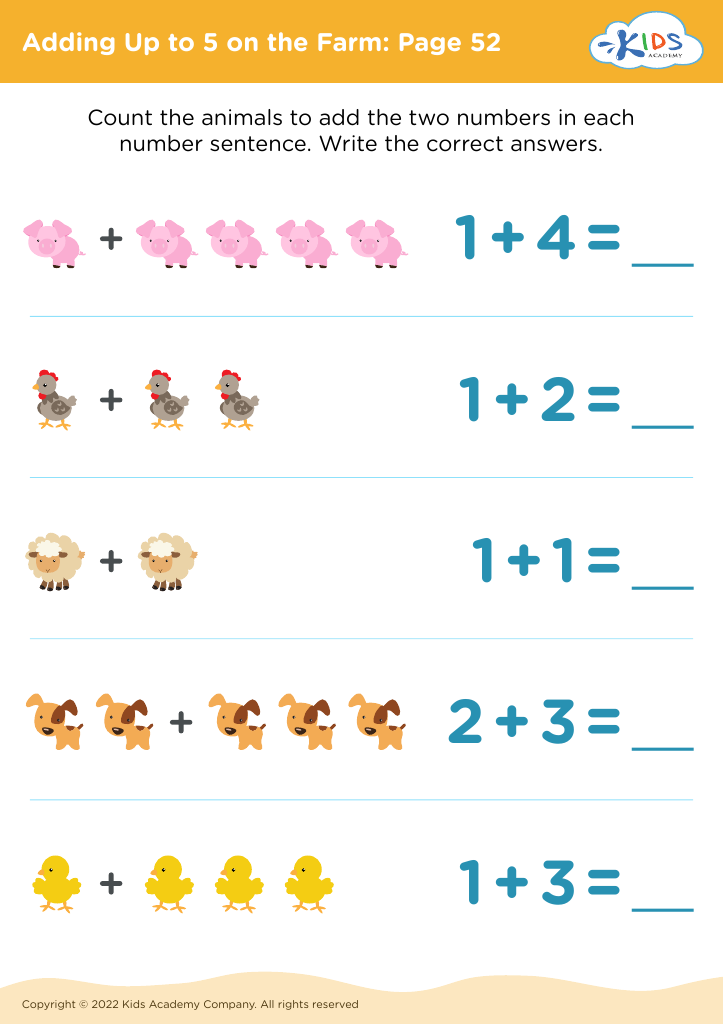
Introduce your child to the world of numbers with our "Addition Skills Adding on the Farm Worksheets for Ages 3-7". These engaging and beautifully illustrated worksheets combine fun farming themes with foundational math concepts to make learning addition an exciting adventure. Ideal for young learners, our worksheets feature easy-to-follow exercises that enhance counting skills, improve mathematical thinking, and build confidence with numbers. Tailored to keep children ages 3-7 captivated, each worksheet encourages practice through charming animal characters and farmyard scenes. Give your child a learning tool that blends education with the joy of farm-life exploration. Check out our free worksheets today!
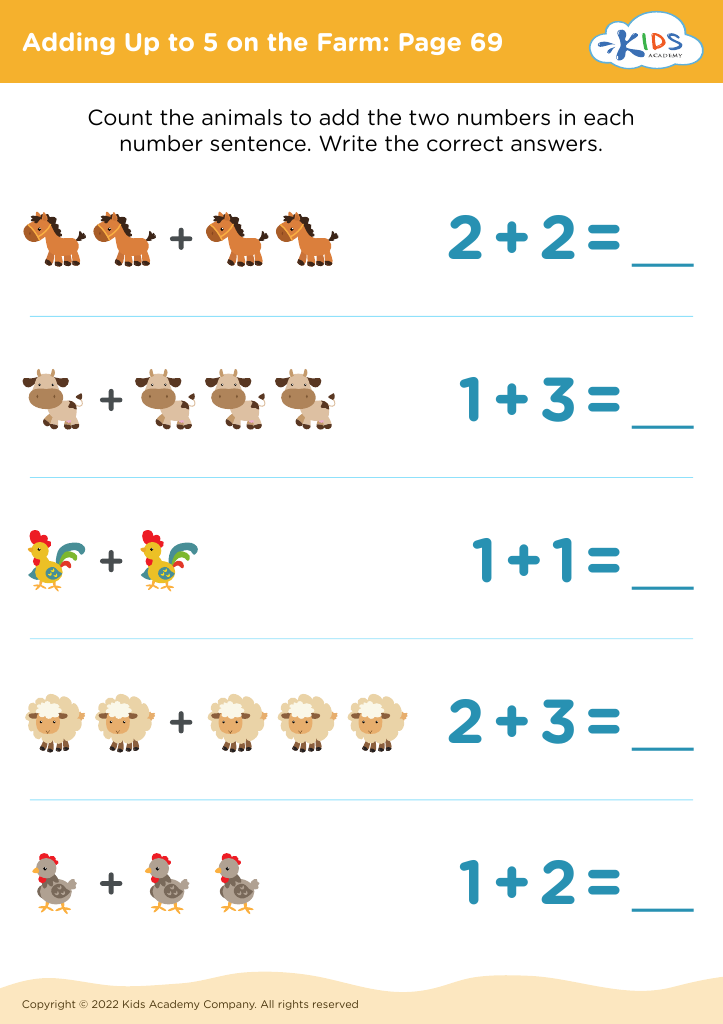
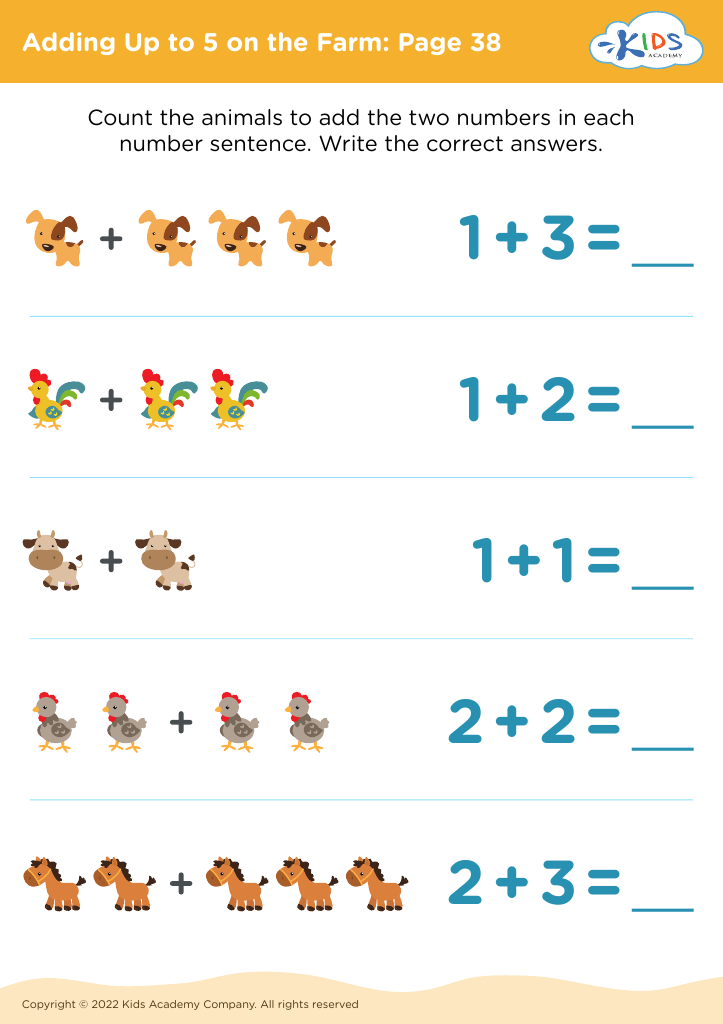
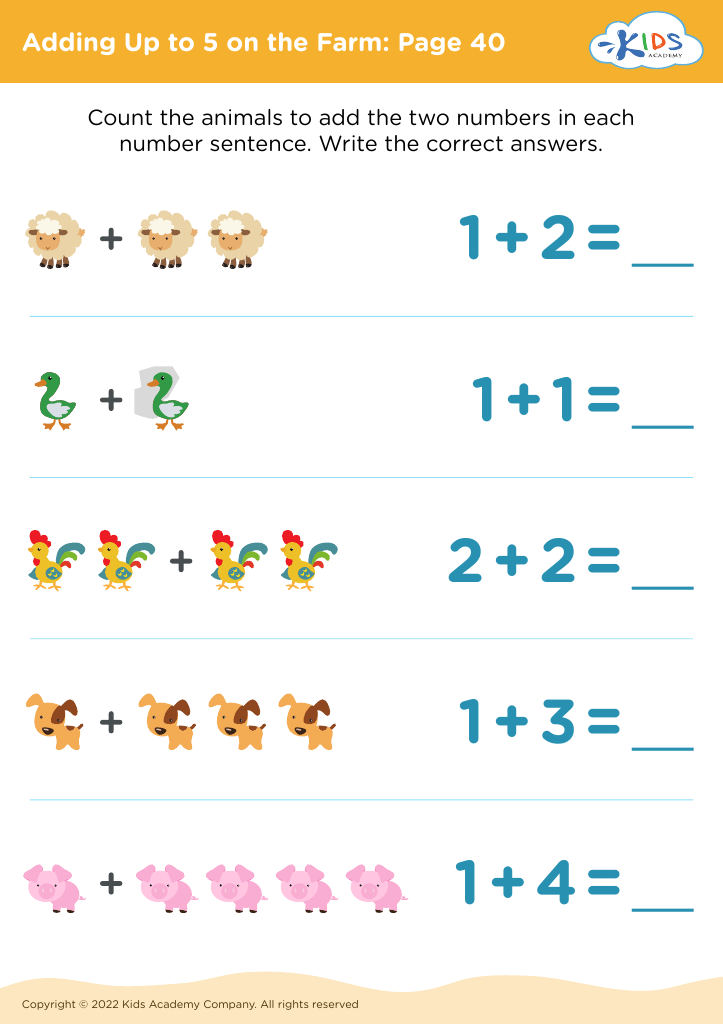
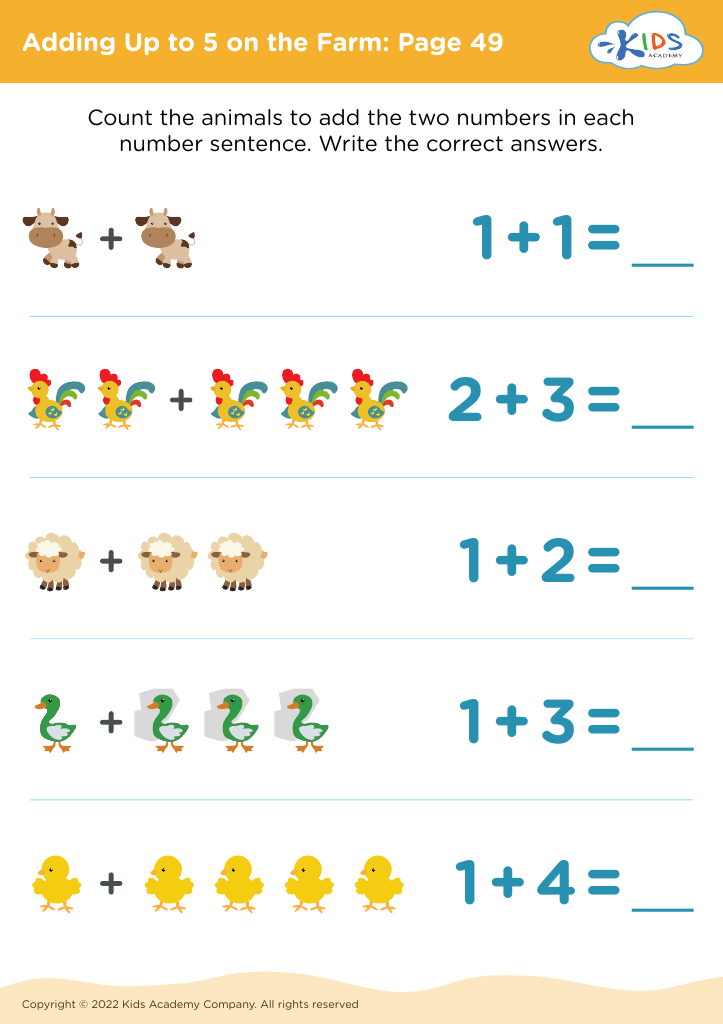
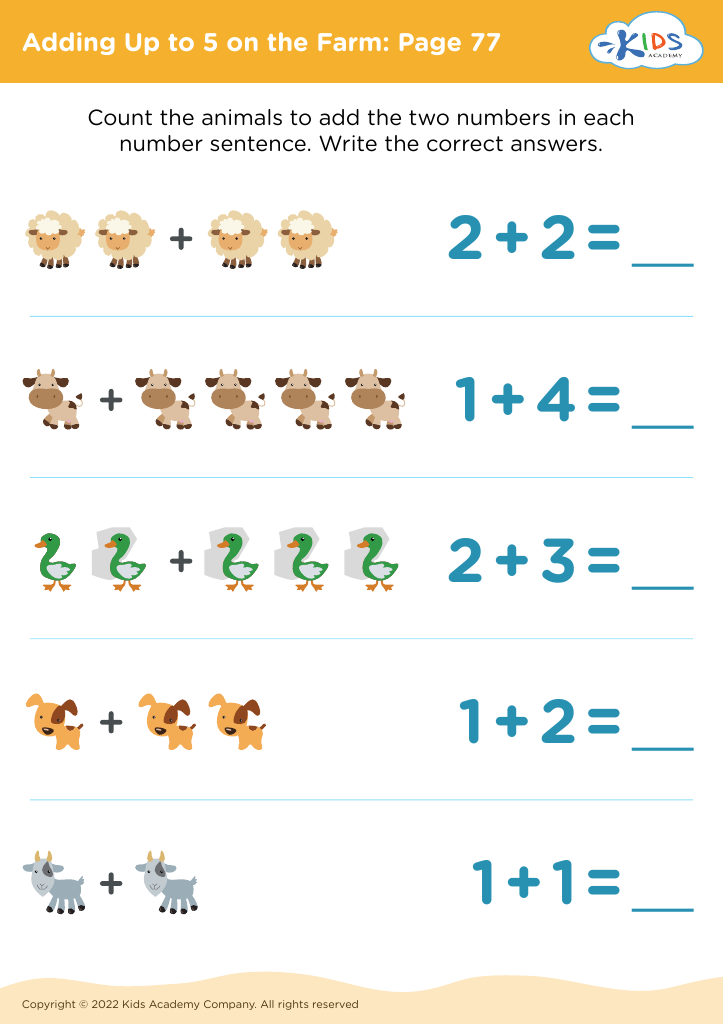



Addition skills form the bedrock of mathematical understanding for young children, ages 3-7. Introducing these skills through an engaging theme, such as "Adding on the Farm," combines education with fun. Parents and teachers should care about fostering these skills for multiple reasons.
First, early mastery of addition builds confidence. When children grasp basic concepts early, they develop a positive attitude toward math, reducing the potential for future math anxiety. Farm-themed addition exercises make learning more relatable and enjoyable, capturing the children’s natural curiosity.
Second, addition skills are fundamental. They pave the way for more complex mathematical operations like subtraction, multiplication, and division. Routine involvement in adding objects, such as farm animals, vegetables, or tools, helps reinforce consistent counting and basic arithmetic practice.
Lastly, these activities enhance overall cognitive development. Early arithmetic fosters logical thinking, problem-solving abilities, and improved memory retention. Themes add context, which supports understanding and retention. When kids are counting cows or chickens, for instance, they are making tangible connections to abstract concepts.
By incorporating "Adding on the Farm," parents and teachers link numbers to real-world contexts children understand. This method not only teaches math but also cultivates broader learning enthusiasm, setting a firm educational foundation.