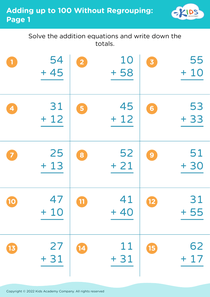
Identify shapes Adding up to 100 with Regrouping Worksheets for Ages 3-7
3 filtered results
-
From - To
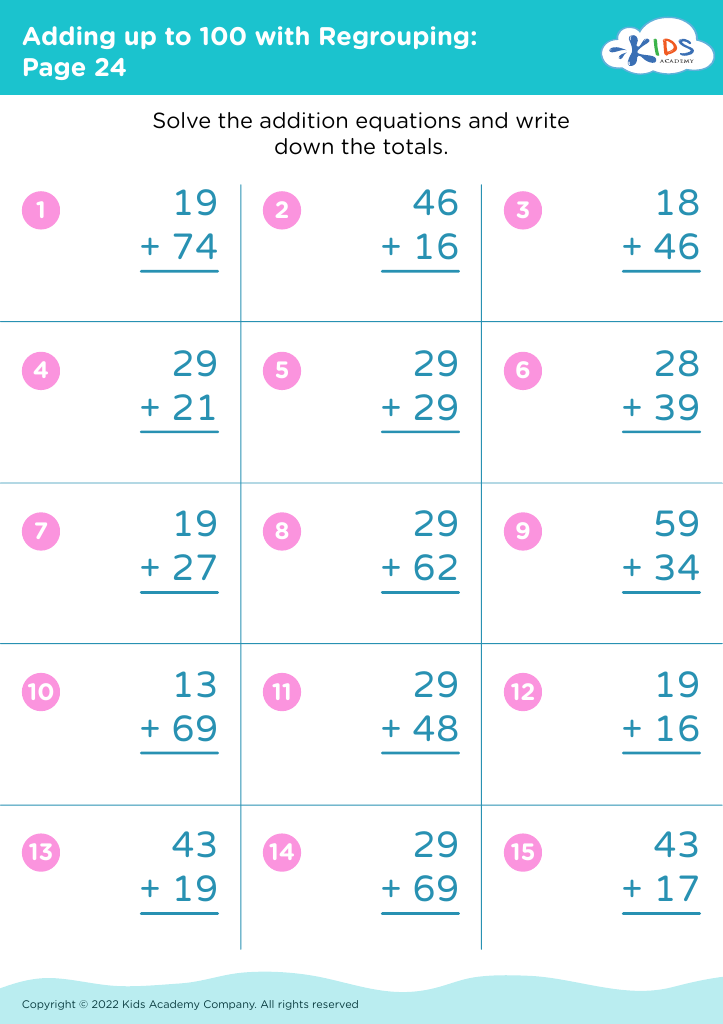
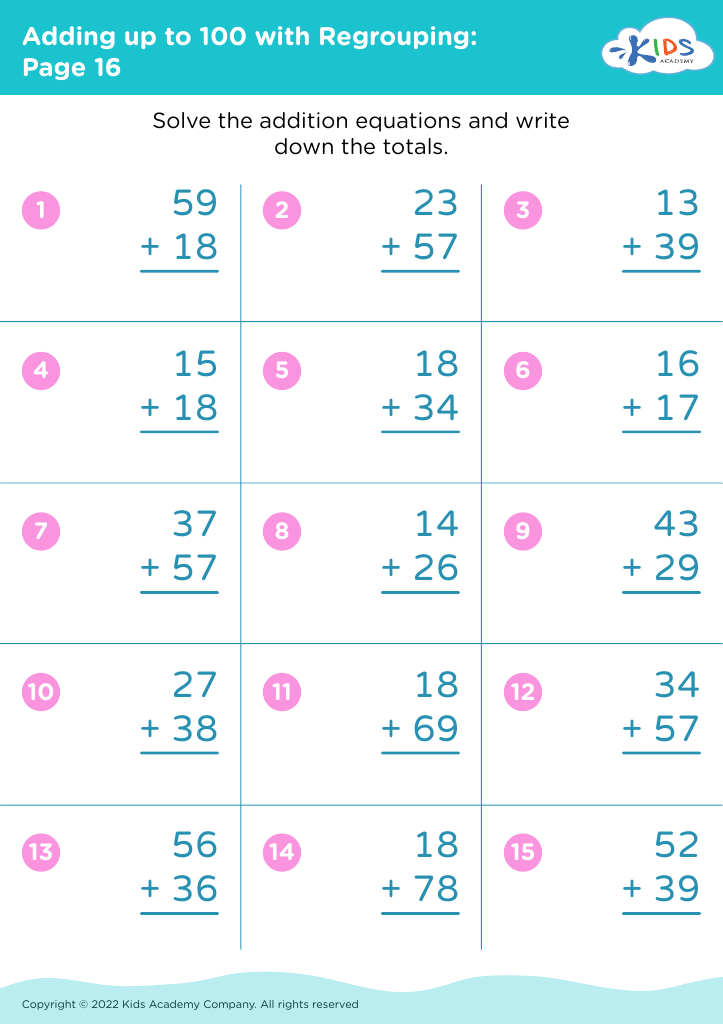
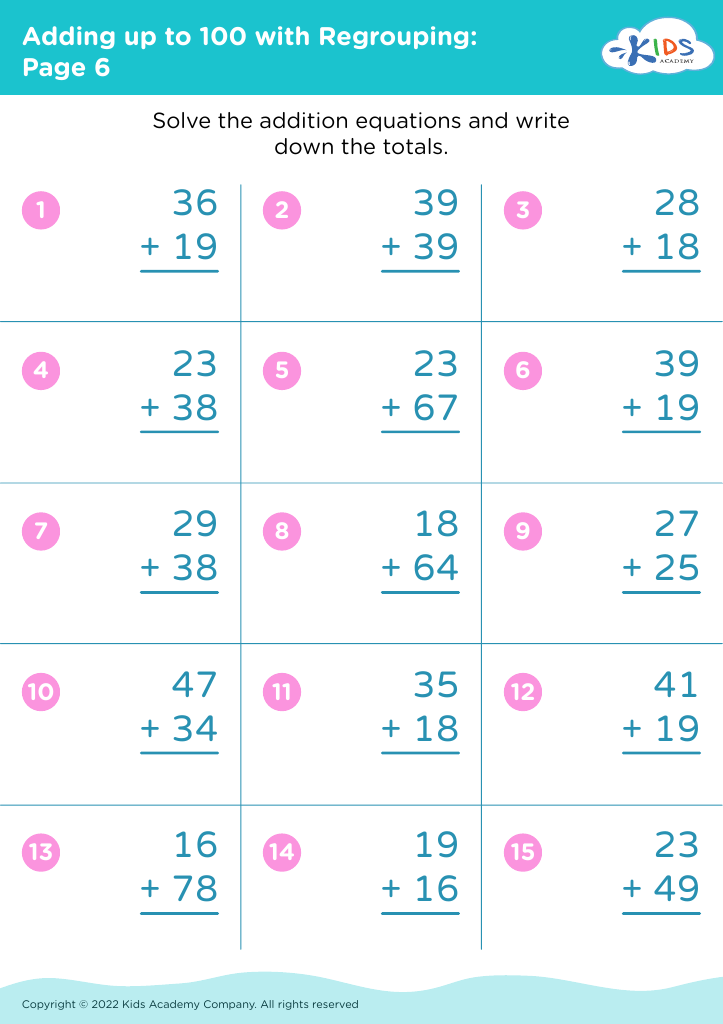
Explore our engaging "Identify Shapes Adding up to 100 with Regrouping Worksheets for Ages 3-7". Perfect for young learners, these worksheets blend shape recognition with foundational math skills. Students will practice adding up to 100 and learn the essential concept of regrouping, all while identifying various shapes. Designed to make learning fun, these worksheets enhance critical thinking, problem-solving, and fine motor skills. Get started now to watch your child excel in math while enjoying colorful, interactive activities that lay the groundwork for future educational success.
Visit our web page to download and support your child’s bright mathematical journey!




Understanding basic math concepts is foundational for young children, and identifying shapes, as well as learning addition up to 100 with regrouping, play crucial roles in cognitive development for ages 3-7. These skills, although seemingly simple, are building blocks for more advanced mathematics and foster critical thinking.
When children recognize shapes, they develop spatial awareness, which is essential not only in math but also in everyday problem-solving situations. Identifying geometric figures helps kids grasp concepts like symmetry, pattern recognition, and geometry fundamentals, all of which are vital for higher-level math learning.
Moreover, mastering addition up to 100 with regrouping teaches children important arithmetic skills. Regrouping, often referred to as carrying or borrowing, enables children to understand place value and the base-ten system. These concepts are critical as they form a bedrock for future learning, including multiplication and division.
Early exposure to these concepts also builds confidence. Success with basic math problems fosters a positive attitude towards mathematics, reducing anxiety and encouraging a lifelong interest in the subject. Therefore, parents and teachers should prioritize these areas to set a strong foundation, ensuring that children develop robust quantitative and critical thinking skills that will benefit them throughout their academic journey and beyond.