Understanding fractions Adding up to 100 Without Regrouping Worksheets for Ages 3-7
19 filtered results
-
From - To
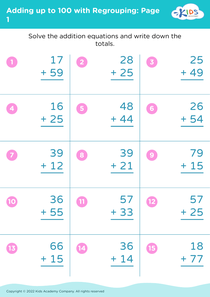
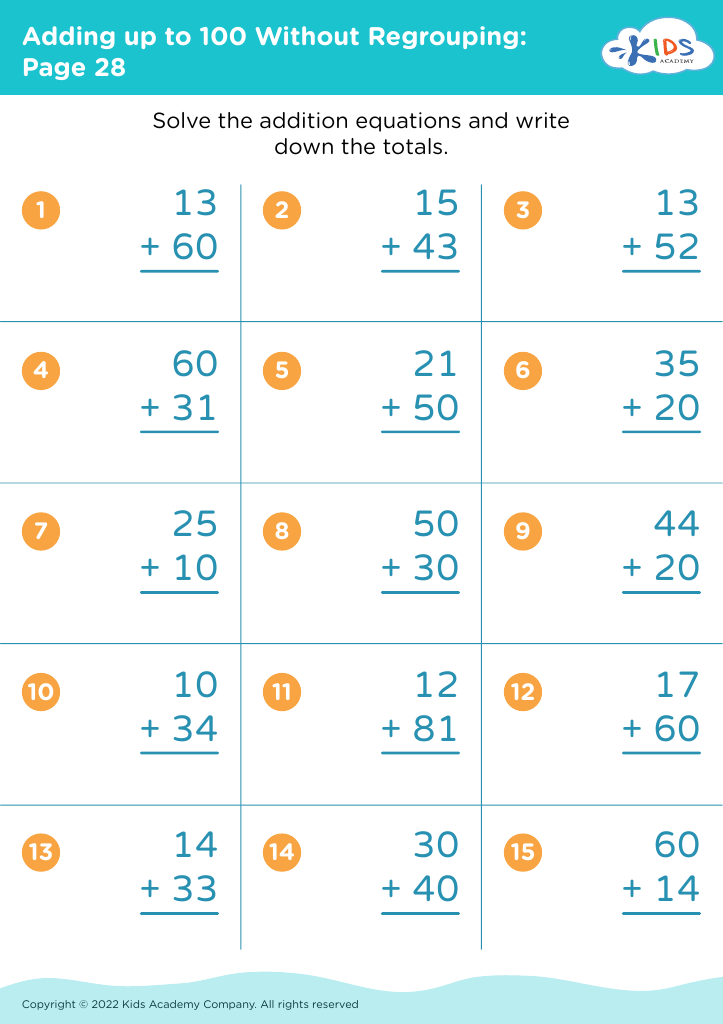
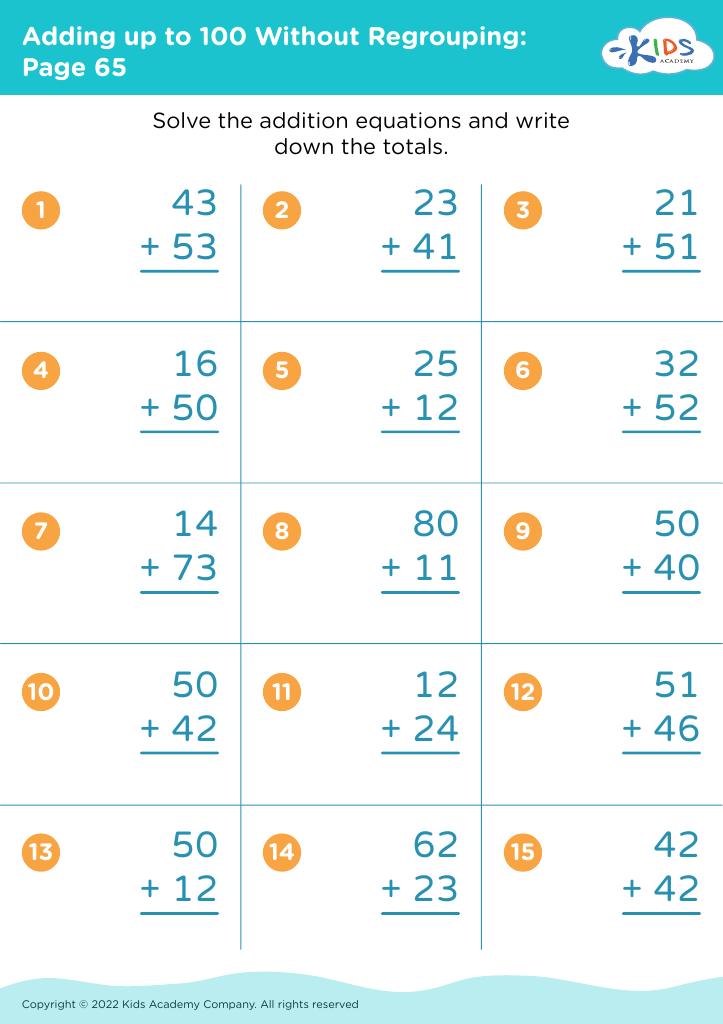
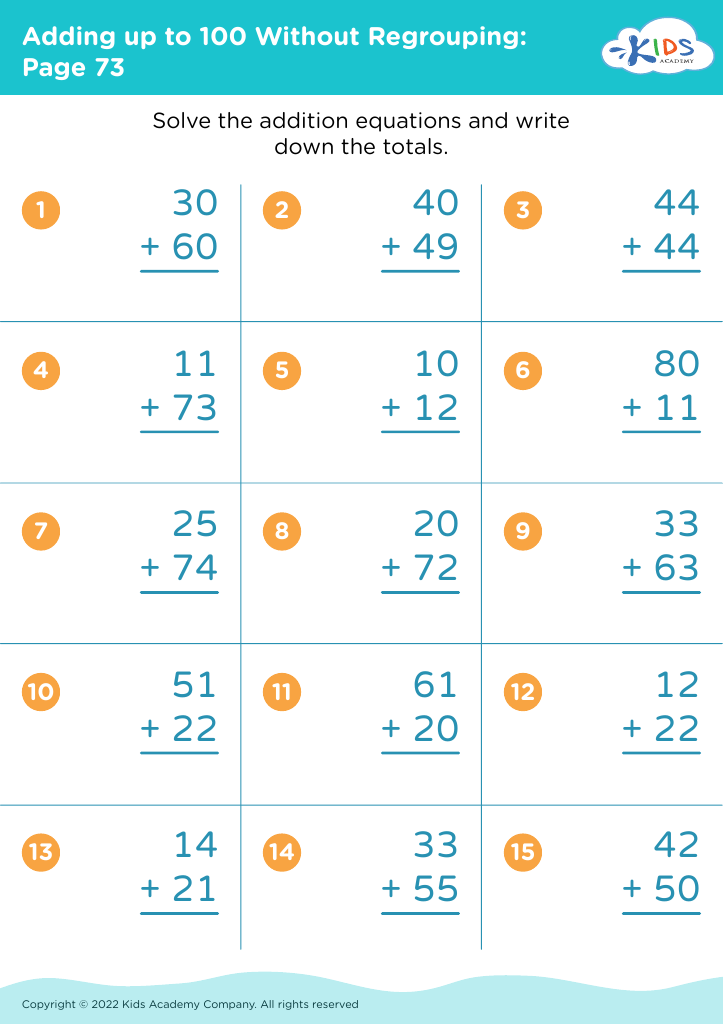
Introduce young learners to the fundamental concepts of fractions and addition with our "Understanding Fractions Adding up to 100 Without Regrouping" worksheets. Tailored for ages 3-7, these engaging printable resources from Kids Academy help children develop essential math skills through interactive exercises. Our worksheets cover easy addition up to 100 without regrouping, providing a solid foundation for future learning. Offering clear instructions and fun activities, these worksheets make understanding fractions intuitive and enjoyable. Perfect for parents and teachers alike, our carefully designed materials inspire a love for math in young students while fostering crucial early learning skills.
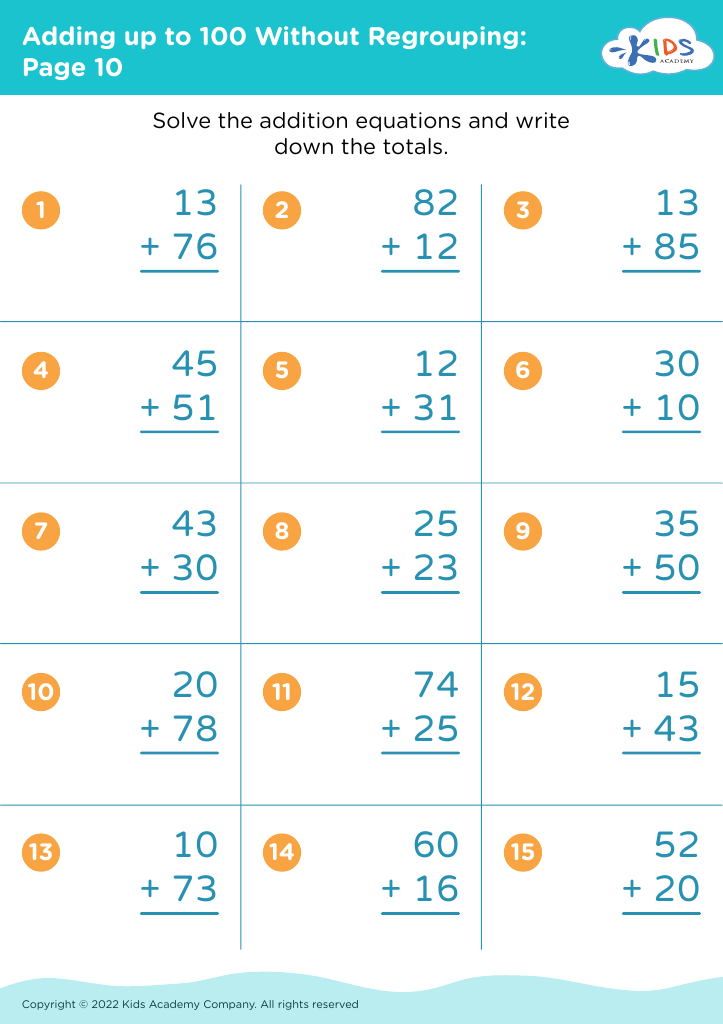
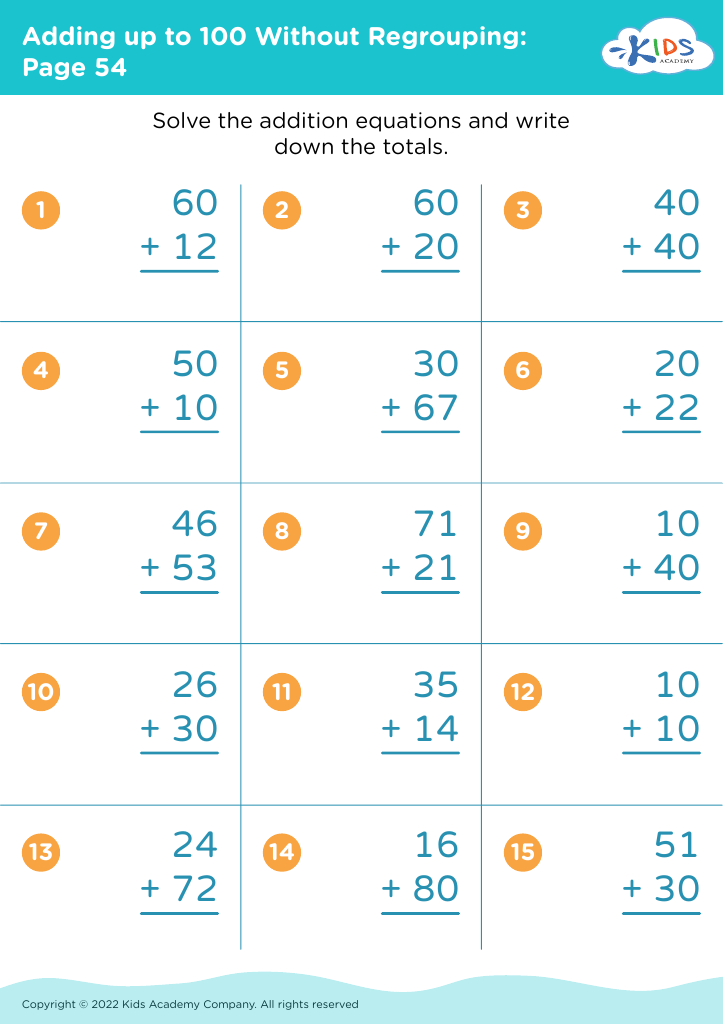
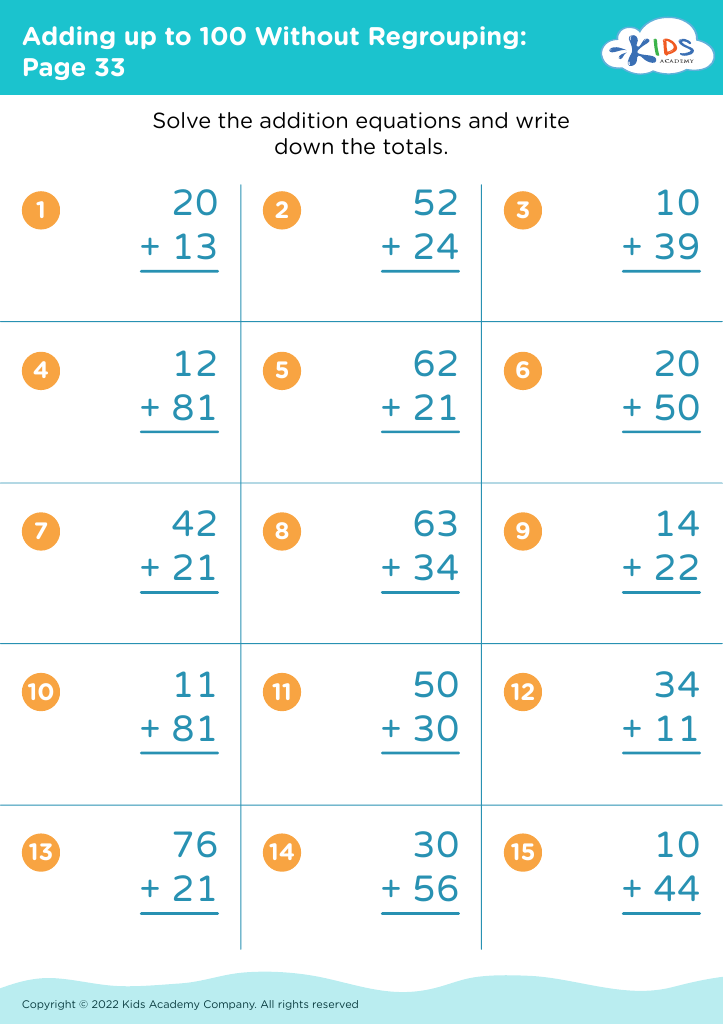
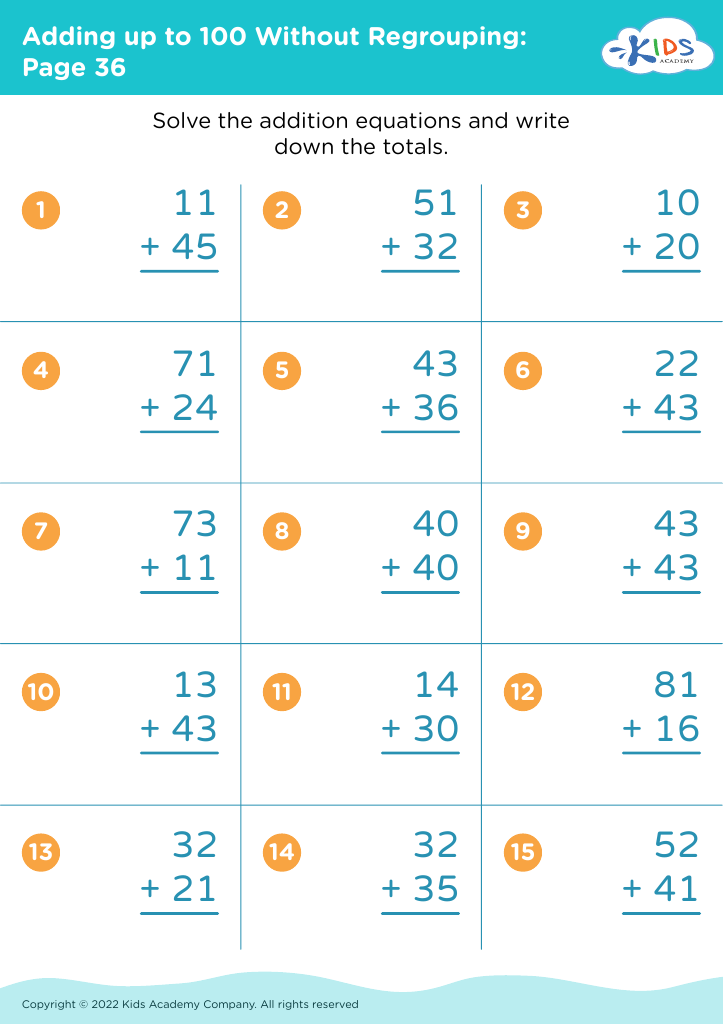
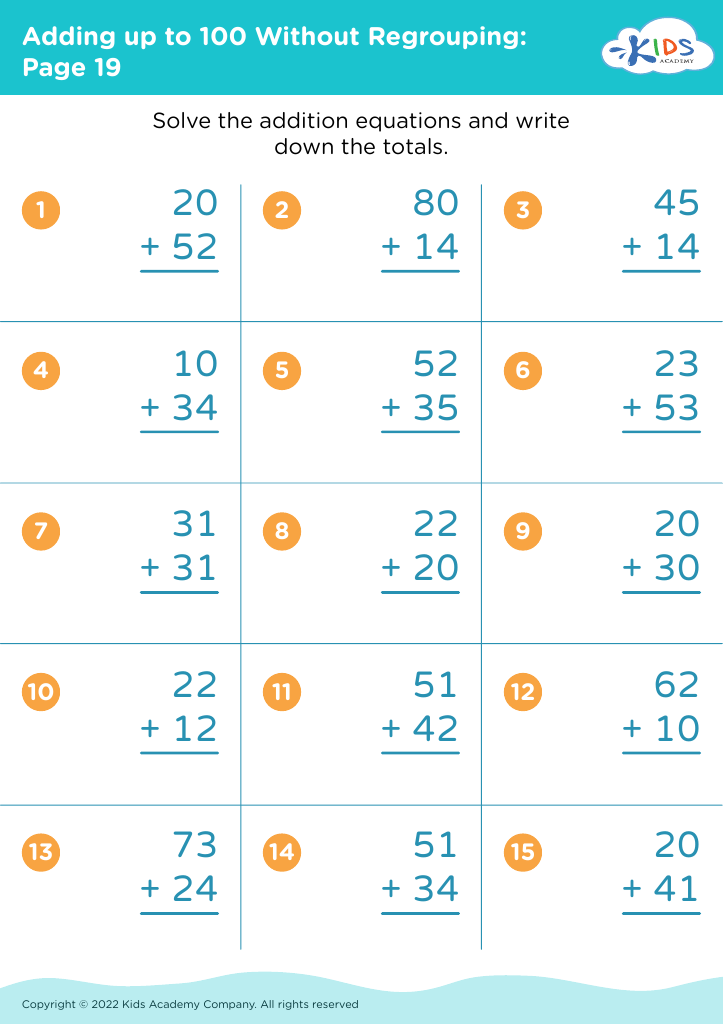
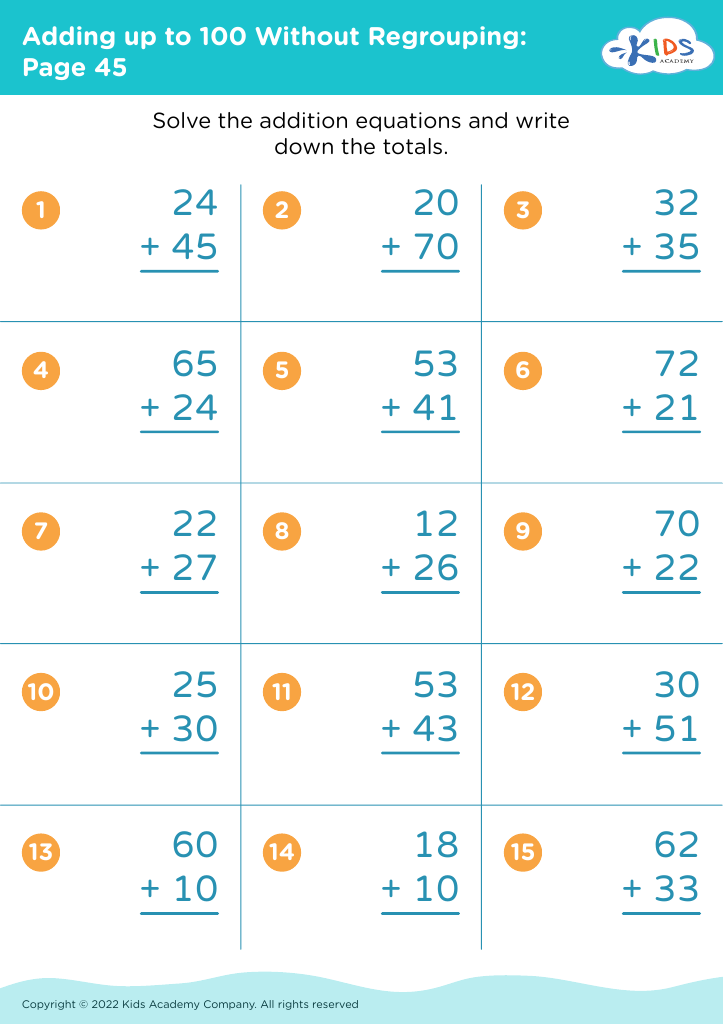
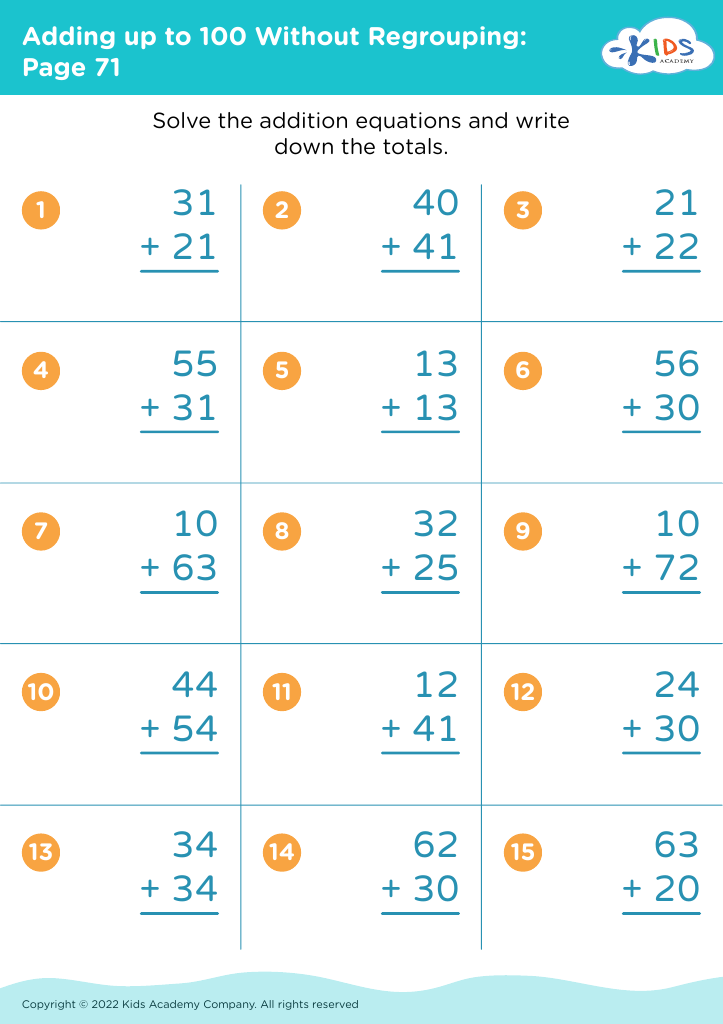
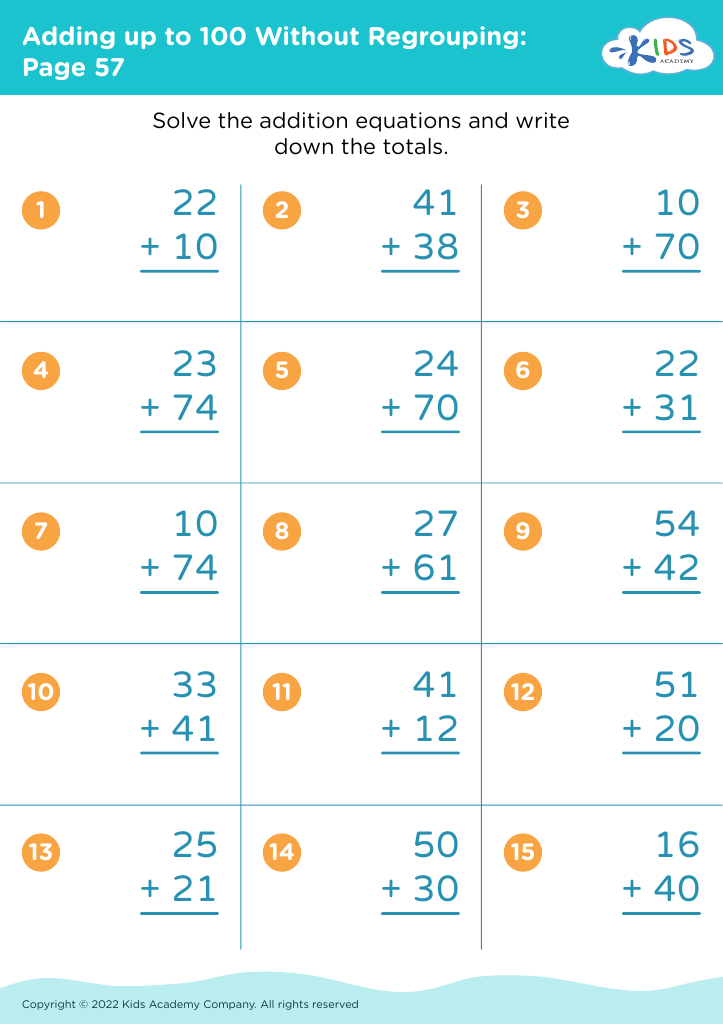
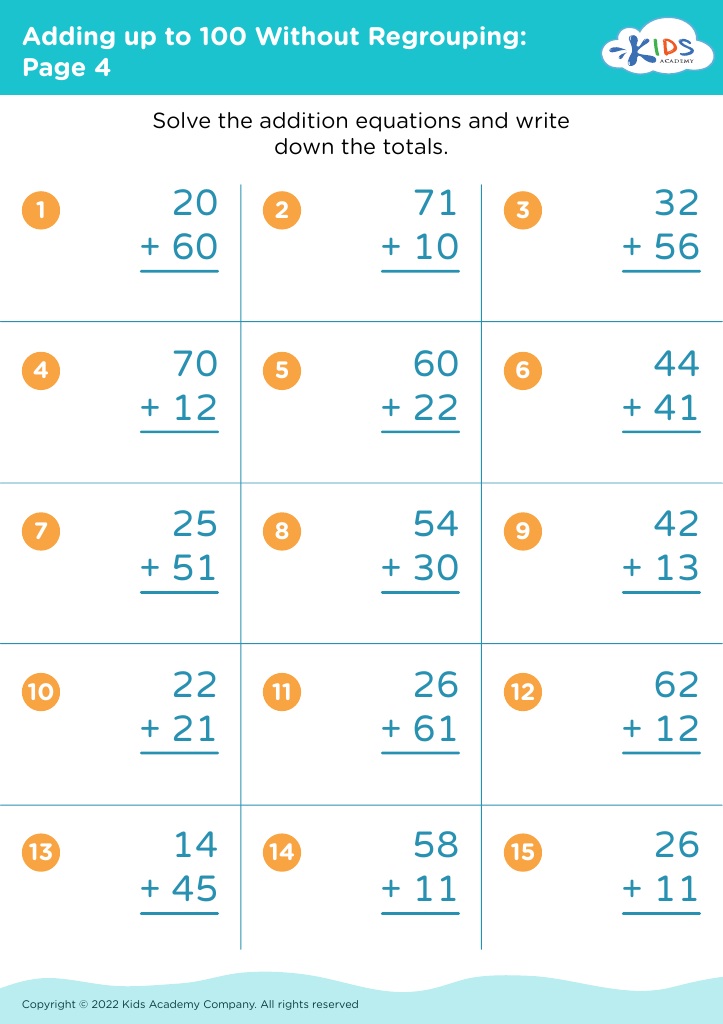
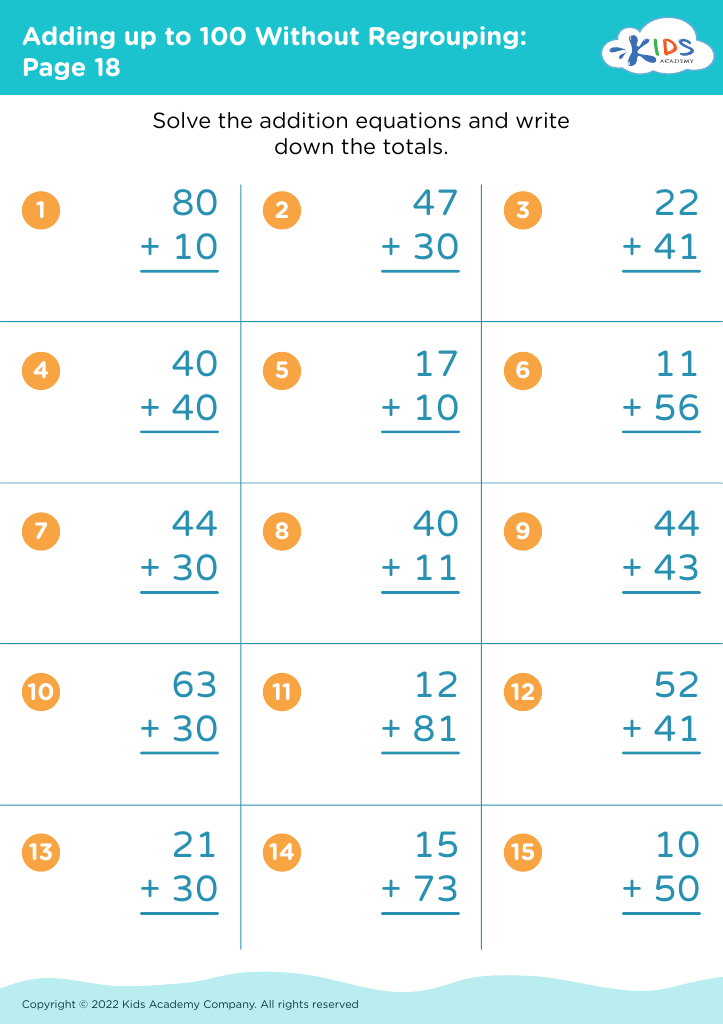
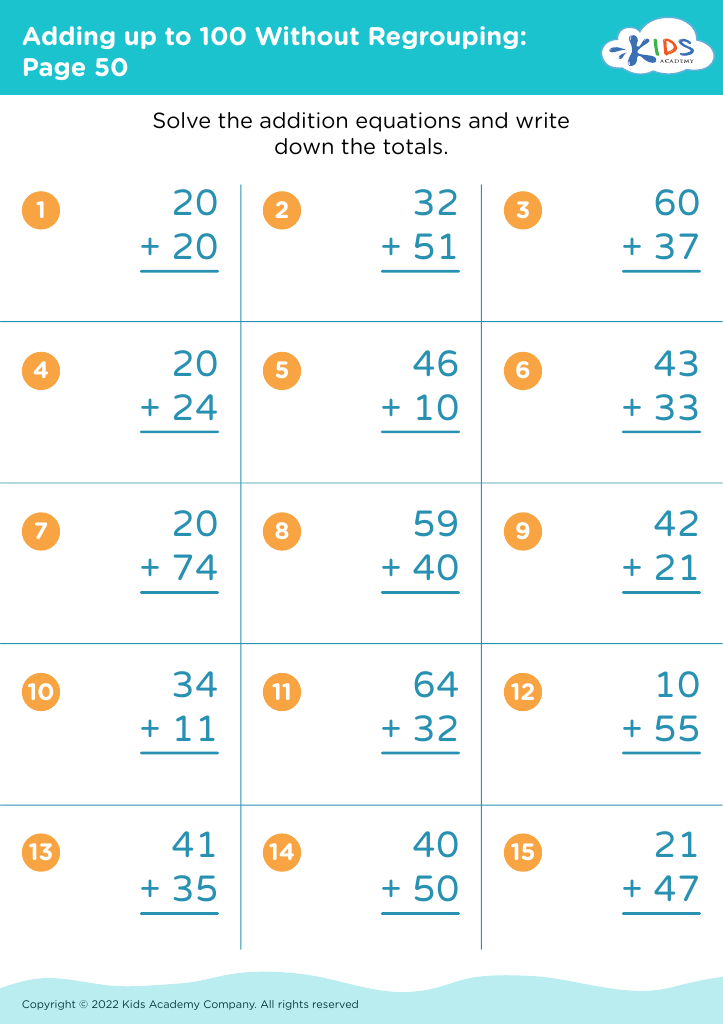
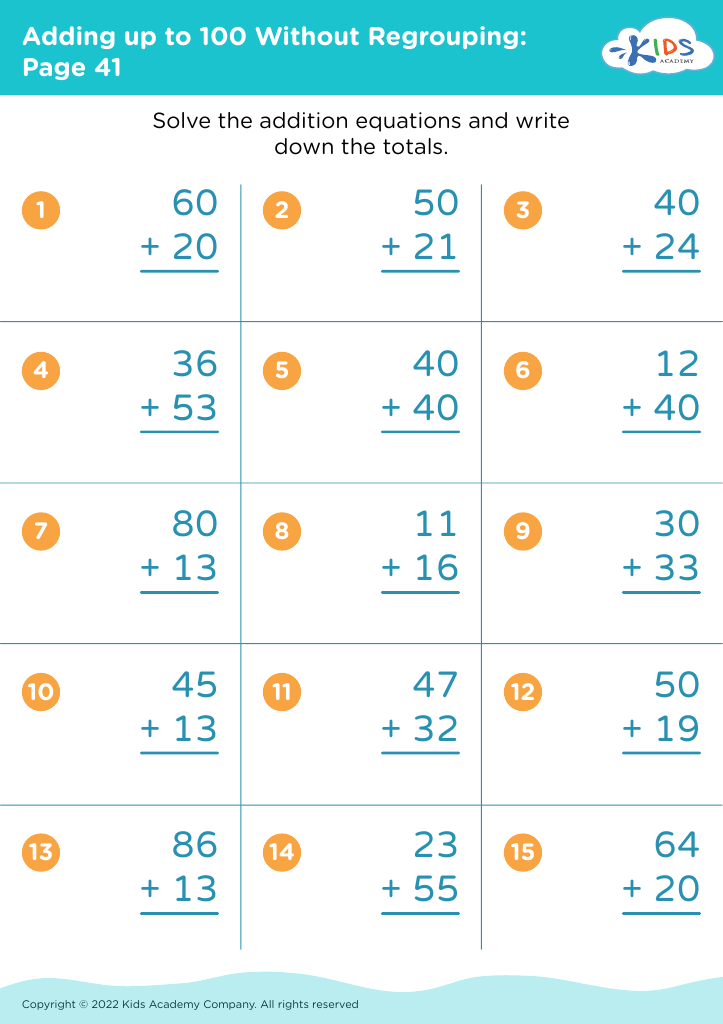
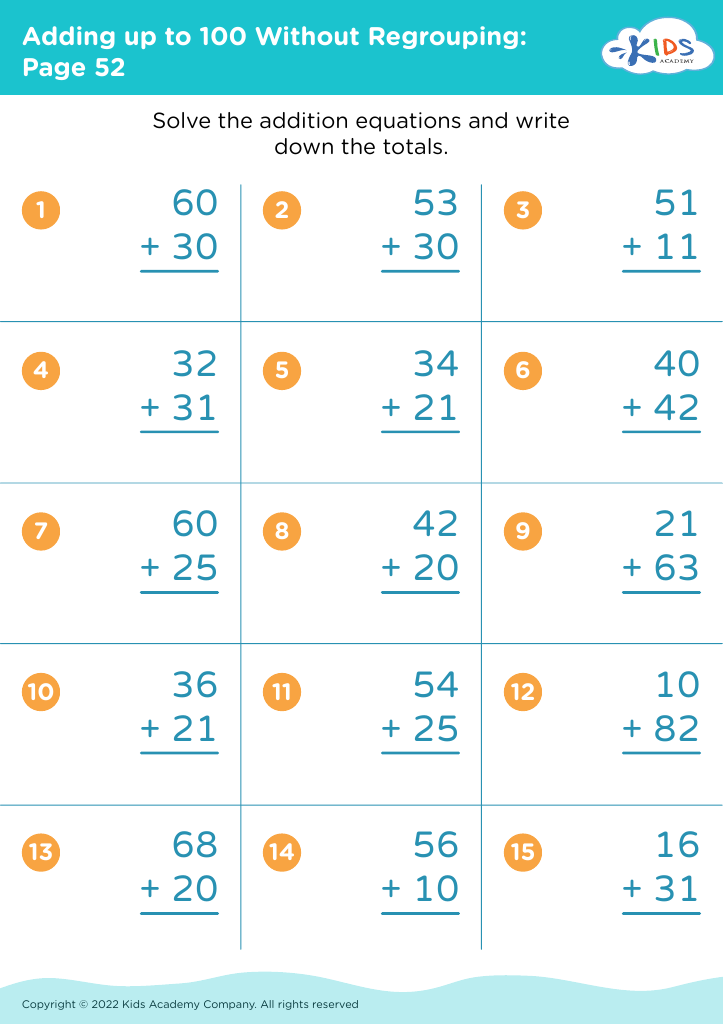
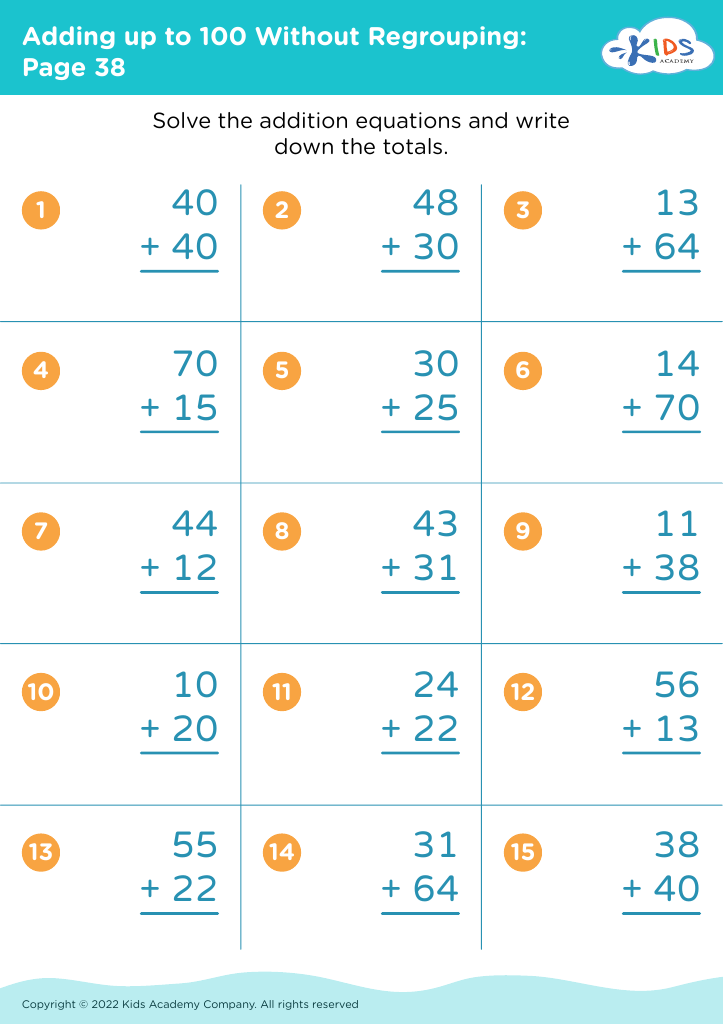
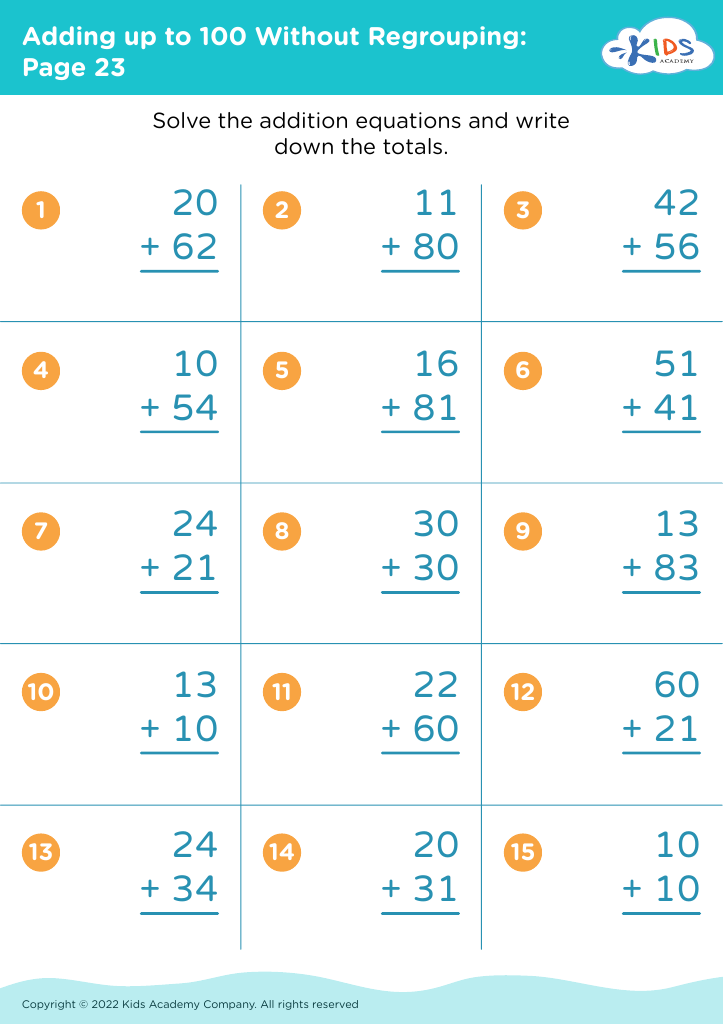
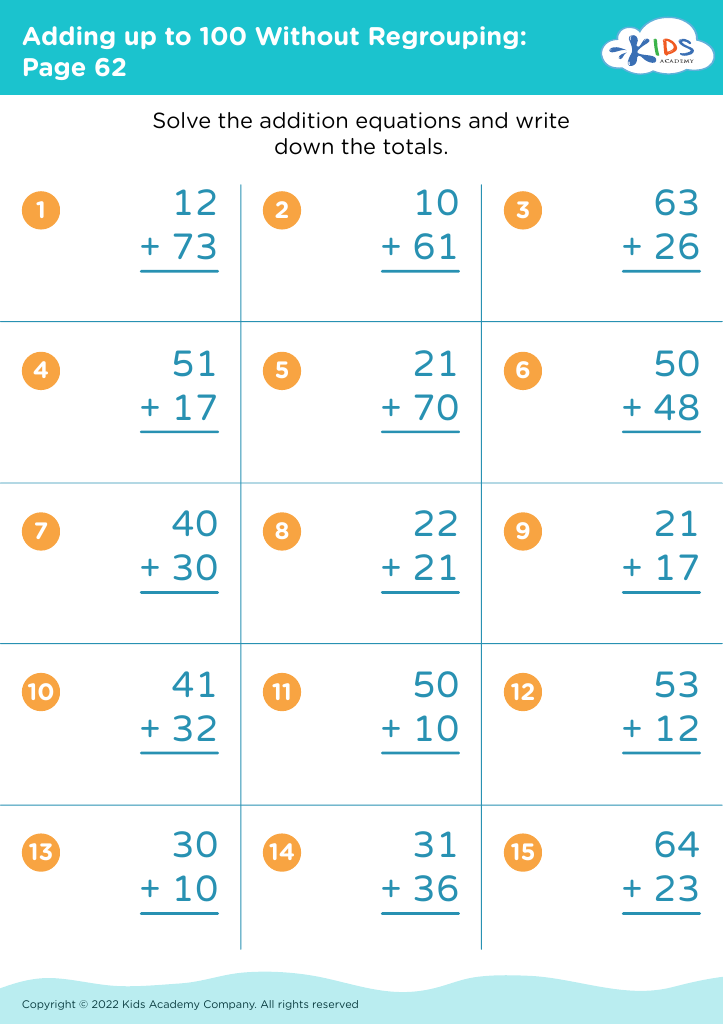




Understanding fractions that add up to 100 without regrouping is a fundamental skill for young children (ages 3-7) that lays a vital groundwork fortheir mathematical development. Early exposure helps youngsters grasp basic mathematical concepts in measurable and comprehensible units. It aids in simplifying math's abstract nature, enabling smoother transitions to more complex topics in the future, like decimal operations or proportions.
Incorporating fractions when learning simple addition promotes cognitive flexibility, teaching the concept of part-to-whole relations, which is applicable in daily situations such as sharing, cooking recipes, or dividing things evenly. Learning to add fractions to 100 fortifies mental math abilities and enhances number sense, ensuring children develop strong problem-solving skills.
Without regrouping, which means no carrying over, the emphasis is on reinforcing understanding and accuracy. It focuses their attention towards comprehending how individual smaller numbers can combine up to a larger whole in simple, digestible steps. This incremental learning approach instills confidence, making math more approachable and enjoyable.
Parents and teachers who prioritize this aspect early on help build a solid academic and analytical foundation. Gradual mastery of these concepts supports better performance in future learning, fostering an enduring love for mathematics along the young learner's educational journey.